We are excited to release our October 2024 Chart Pack, our visual quarterly designed to walk investors through what’s happening in markets.
The unwinding of positions in Treasury futures stands to rekindle a popular bond-market wager that’s been burned as traders pare back expectations for aggressive Federal Reserve interest-rate cuts.
US mortgage rates rose sharply for a second straight week, reaching the highest level since early August while prompting steep declines in both home-purchase and refinance activity.
Taiwan Semiconductor Manufacturing Co. raised its target for 2024 revenue growth after quarterly results beat estimates, allaying concerns about global chip demand and the sustainability of an AI hardware boom.
Boeing Co. is flexing its financial muscle even in light of a crippling labor strike and a disgraceful period of execution that resulted in two deadly plane crashes, the near-disaster of a midair door-panel blowout and whistleblowers who have detailed a culture of putting profit over quality.
When BlackRock Inc. completed its initial public offering in 1999, it fell a bit flat. There was no first day pop; Founder and Chief Executive Officer Larry Fink didn’t even get to ring the opening bell at the New York Stock Exchange. Valued at just under $900 million, the firm was one of 30 large investment-managers in the US, managing $165 billion of assets.
The bar is raised for Q3. With a handful of earnings reports delivered from major banks, companies from other sectors begin now to report results to the street.
My father is 86 and the topic of financial markets and his investment accounts invariably comes up at every family gathering. Mainly, he talks about how my mother and he have lived from their retirement accounts since they both retired more than 25 years ago.
Investor Insights explores current investor sentiment, comments on market participation, and shows the current ranking of market sectors.
This unique bull market is still young relative to history and, for now, supported by relatively healthy breadth and broadening participation.
Toyota Motor Corp.’s research unit and Hyundai Motor Co.’s Boston Dynamics are joining forces to speed up development of humanoid robots with artificial intelligence.
Biden administration officials have discussed capping sales of advanced AI chips from Nvidia Corp. and other American companies on a country-specific basis, people familiar with the matter said.
A rally in Bitcoin paused as traders evaluated whether an improving regulatory outlook in the US and rising exchange-traded fund inflows will be sufficient to spur further gains.
This article will explore how to increase your AUM by capturing assets in trusts and DAFs, explain the difference between directed and traditional trustees, and discuss why designating a directed trustee and an advisor-friendly DAF is in the client’s best interest.
This past week saw a notable surge in the stock market, pushing it to all-time highs, despite mixed economic data. Inflation figures, jobless claims, and sentiment reports have been uneven, but markets remain resilient, with the VIX hovering around 20—a sign that fear persists among investors.
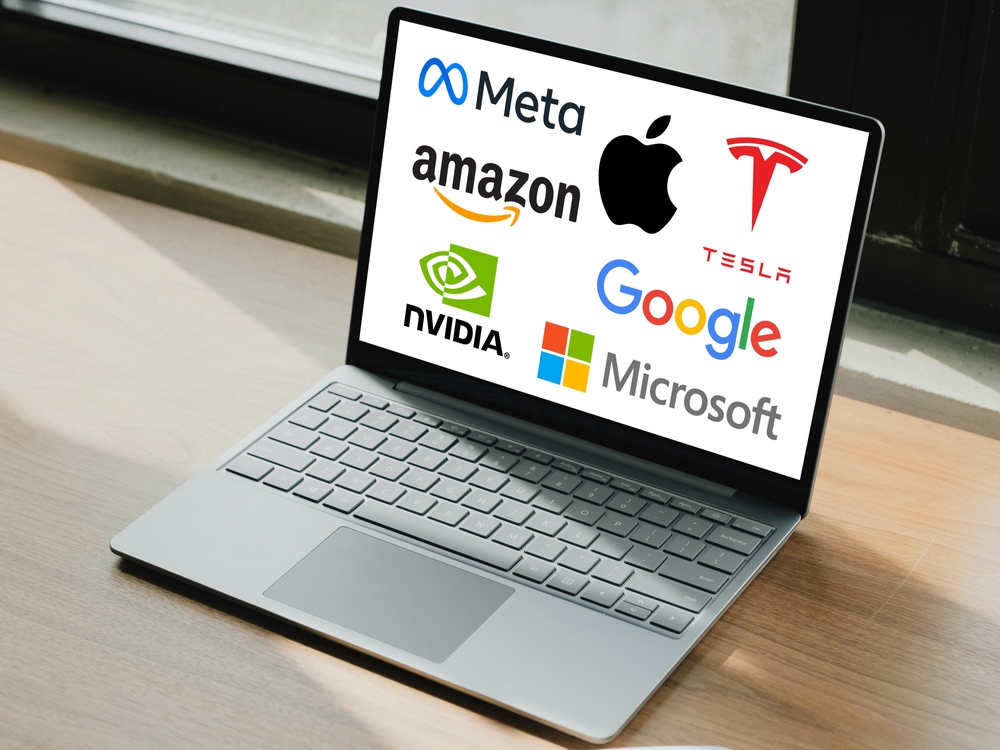
When we look at the Q3 earnings season, the Magnificent Seven have been driving much of the S&P 500’s growth since 2022. As these companies get larger and more mature, maintaining huge growth rates will become more difficult, especially considering the valuations they’re trading at.
The Bureau of Economic Analysis (BEA) recently released its second-quarter GDP report for 2024, showcasing a 2.96% growth rate. This number has sparked discussions among investors and analysts, particularly those predicting an imminent recession.
VettaFi discusses oil’s recent price moves and energy stocks as a geopolitical hedge.
Cash strategies may seem safe, but inflation can bite into returns. Instead, investors can try to outperform inflation with equities.
Digital assets offer investors an ever-expanding range of attractive investment solutions, including crypto-equities, early-stage startups, spot ETFs, and more. With the rapid proliferation of products in the space, developing a strategic approach to investing is crucial.
By adopting best-in-class technologies, wealth management firms can position themselves as leaders in a competitive market, attracting more right-fit clients, and achieving sustainable growth.
Hoya Capital’s David Auerbach delves into the recent performance drivers of REIT ETFs and outlines key considerations for investing in the sector. VettaFi’s Zeno Mercer highlights Tesla’s recent “We, Robot” event and offers perspective on the price of bitcoin moving forward.
How you connect with your prospects and how you position yourself in their eyes is crucial to becoming their Trusted Authority.
Earnings season is here, and the US stock market’s furious $9 trillion 2024 rally is facing perhaps its biggest test of the year.
Vietnam may be quickly outgrowing its role in the global tech industry as the attractive manufacturing sidepiece to China.
If money makes the world go around, it hasn’t been doing a very good job lately. Beyond developed nations — in eastern Europe, Latin America and Africa — people and businesses are increasingly finding themselves cut off from global payments. An unintended consequence of necessary measures to enforce sanctions and thwart criminals, the trend is doing significant damage to trade and economic growth.
When inflation begins to upend financial markets, as it has over the past few years, it represents a tremendous disruption.
The disruptive effects of the pandemic are still reverberating across the economy and giving incorrect signs, in this case, of the U.S. labor market.
Global equity markets continued to rally throughout the third quarter, with strong positive stock performance from the U.S., international developed, and emerging markets. The two biggest narratives that have unfolded recently center on the U.S. and China.
Exchange-traded funds (ETFs) have grown in popularity as one of the most flexible and accessible investment vehicles available today. Offering a blend of stock-like liquidity and mutual fund-like diversification, ETFs can serve as a core component in the portfolios of both novice and experienced investors
The need for old age support is on the rise, as is its cost.
Investors are holding out to see how they can navigate the remaining months of the year, where they should be placing their bets, and what they can do to avoid any unsuspecting pitfalls.
Agency REITs are not for buy-and-hold investors. They tend to perform well in specific economic and interest rate environments and poorly in others. I believe the current bullish steepening shift in the yield curve could offer investors opportunities with the agency REIT sector.
The looming wealth transfer from Baby Boomers and the Silent Generation to younger generations is set to reshape the financial landscape in unprecedented ways. Estimated at $84 trillion, this transition is a huge financial event.
Bond investors are going on defense as the outlook for the Federal Reserve’s interest-rate cutting path turns more uncertain.
Take a snapshot of markets right now, and it’s a picture of health. Stocks are at records, corporate bonds show no signs of worry and commodities remain buoyant on global economic optimism.
It’s almost always bad news when a statement from a prominent company hits late on Friday. For those who missed Boeing Co.’s release at 4:30 p.m. New York Time ahead of a three-day weekend for the bond market, Boeing laid out the ugly truth of blowout operating losses at its commercial aircraft and defense businesses during the third quarter, which combined for about $6.4 billion.
On this episode of the “ETF of the Week” podcast, VettaFi’s Head of Research Todd Rosenbluth discussed the Neuberger Berman Option Strategy ETF (NBOS) with Chuck Jaffe of Money Life. The pair discussed several topics related to the fund to give investors a deeper understanding of the ETF overall.
Chinese stocks overcame a bout of early volatility to post their biggest gain in a week on Monday, suggesting that investors are hopeful the government will deliver on its promise of more fiscal support.
When most people hear the word “risk,” they think about wild market swings, scary headlines, and losing money overnight, but Howard Marks, Co-Chairman and Co-Founder of Oaktree Capital Management, takes a different approach. In his new video series How to Think About Risk, Marks digs deep into what risk is and how investors should handle it. Spoiler alert: It’s not just about volatility.
With over 36,000 metric tons in reserves—about one-fifth of all the gold ever mined—central banks know something we should too: Gold is the ultimate safety net.
As the Fed shifts its stance, investors must now weigh the broader economic implications.
For decades, a key component of many investors’ portfolios was a fixed income ladder. It was intended to provide ballast to the more volatile equity allocation and help reduce interest-rate risk.
In the past few years it certainly has been. No wonder.
Credit indices rallied during the third quarter, despite a variety of economic headwinds, and it appears FOMO (fear of missing out) is fueling the bullish sentiment more than fundamentals.
The latest S&P 500 rebalance introduced Dell and Palantir to the index, and Apple’s weight grew with annual float changes, signaling technology’s ongoing influence.
The US debt is near its highest level in history and on track to grow. Neither political party currently seems intent on making it more sustainable.
The bond market is growing less convinced by the day that the Federal Reserve will embark on two further interest-rate cuts this year.
The market continues to trend higher on Goldilocks pixie dust.
BlackRock Inc. reaching $450 billion in alternative assets is putting a finer point on a case it has been making all year: it’s not just an ETF powerhouse.