An abundance of cash in US funding markets appears to be driven by deeper structural shifts that are unlocking billions of dollars in balance-sheet capacity at the biggest banks, Wall Street strategists say.
Coverage of prediction platform Polymarket has recently converged on a single statistic, delivered with the cadence of a verdict: Most users lose money. The top 1% of accounts capture roughly three-quarters of the gains, while most traders since 2022 are underwater.
Bankers are preparing to sell a jumbo debt package to support the $110 billion acquisition of Warner Bros. Discovery Inc. It’s a risky deal and comes at a moment when the bond markets have been wobbling.
In a relatively light week for traditional economic data, a mix of corporate earnings, business surveys, Federal Reserve minutes, and the latest read on the consumer from the University of Michigan helped paint an increasingly clear picture for investors.
The push for international equities diversification continues amid shifting global macroeconomic conditions. These days, investors have more options when it comes to international exposure. Given the current market uncertainty, they may want to put quality at the forefront of their decision-making process.
It’s the first word that comes to mind to describe Q1 2026 U.S. company earnings. S&P 500 earnings growth is looking set to reach 28% year over year (yoy), more than double the consensus estimate of 12% at the start of the reporting season.
The artificial intelligence (AI) boom has transitioned from an equity market narrative to a defining force in fixed income. Hyperscalers (Amazon (AMZN), Alphabet (GOOG/L), Meta (META), Microsoft (MSFT), and Oracle (ORCL)) are shifting from internal cash flows to substantial bond issuance to fund massive data center, graphics processing unit (GPU), and power infrastructure buildouts.
Thanks to strong gains in markets over recent years, the 60/40 default portfolio has quietly morphed into a bundle of expensive U.S. growth equities and credit exposures offering narrow spreads over Treasuries.
Contrary to what legal television series portray, verdicts rarely turn on a single moment of drama. They take shape gradually, as evidence accumulates and a broader narrative comes into focus.
US growth stocks underperformed in early 2026 amid AI disruption fears and an unresolved conflict in the Middle East. But these stresses could create favorable conditions for selective, diversified investors to unlock long-term growth potential in a rotating market.
Goldman Sachs Asset Management (GSAM) made a big announcement this week, touting $100 billion in total ETF AUM. The milestone comes following the firm’s recent acquisition of Innovator ETFs adding several notable funds to the firm’s overall roster.
Chris Galipeau discusses high-conviction insights that go beyond media headlines.
After three decades of watching market cycles play out from both sides of the trade, I’ve come to a simple conclusion: Wall Street’s love of simple rules is one of the most dangerous aspects of investing.
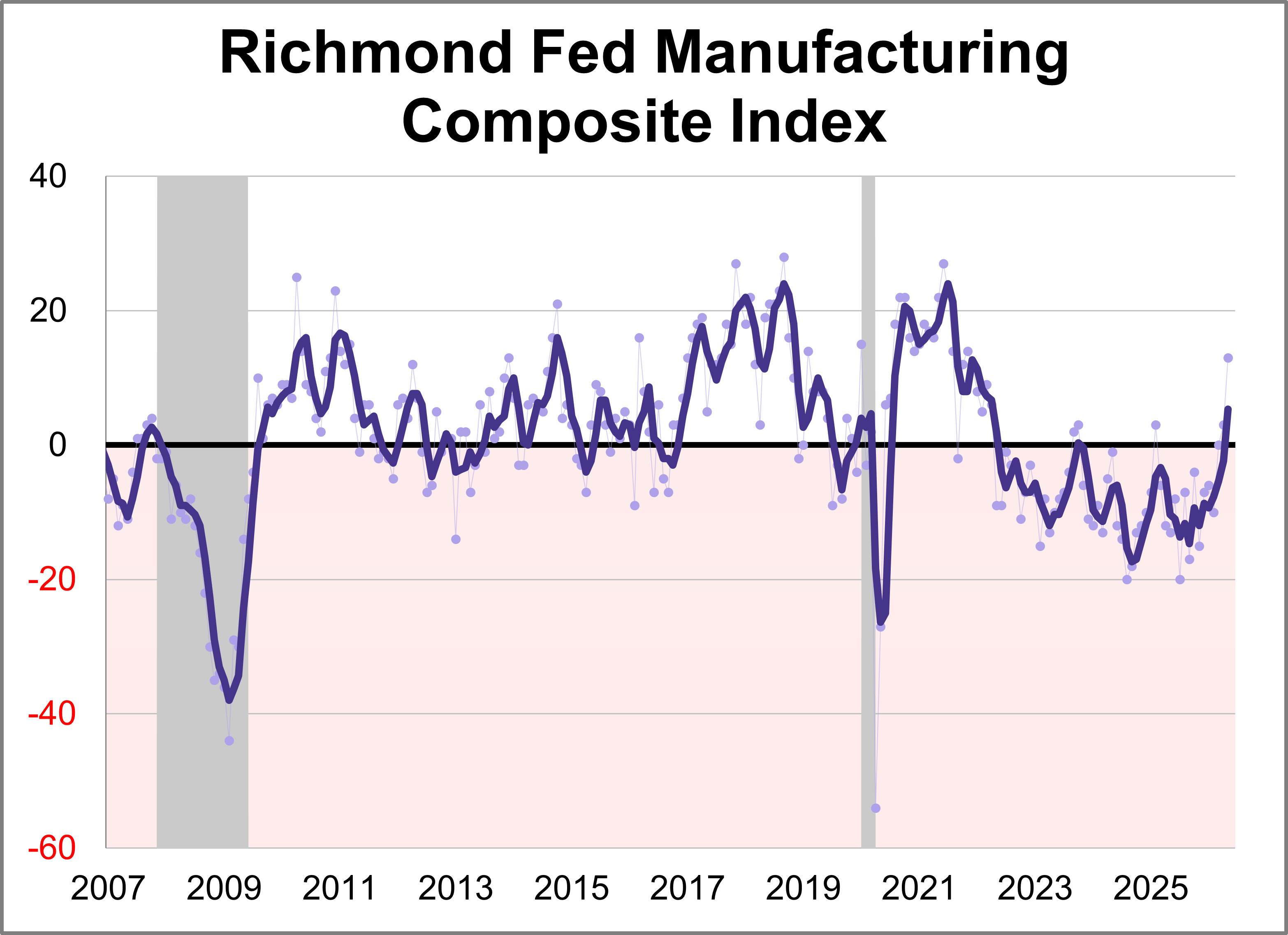
Fifth district manufacturing activity increased in May according to the most recent survey from the Federal Reserve Bank of Richmond. The composite manufacturing index rose ten points points to 13, marking the highest level in nearly five years. This month's reading was above the forecast of 4.
Join the experts at Reckoner for an educational webcast exploring the CLO space and how to navigate it.
Fast-tracking mega IPOs into major indexes and the case for active preferred ETFs were both on the agenda for this week’s ETF Prime. Host Nate Geraci welcomed Rich Lee, head of program trading and execution strategy at Baird, and Douglas Baker, portfolio manager and head of preferred securities at Nuveen.
Advisory firms need tighter integration between their daily work tools and the CRM at the center of their world. When notes sit siloed from the rest of a firm's data and operations, the chance to deepen team collaboration and sharpen client insights goes with them.
Leading with bad news can feel wrong and even confrontational at some level, but the psychology research supports it, the behavioral finance supports it, the career math supports it, and the clients who stay through multiple cycles apply the final confirmation stamp.
Some people do much better with change than others. It isn’t that they can’t change or they actively resist it. Rather, they experience more fear, more concern and they need more clarity about what the change means to them.
Private credit is more inherently complex than the traditional bond market. In comparison, private credit information comes at a deficit. That’s because private credit loans are essentially bespoke agreements between a lender and a private borrower.
The breakneck surge in memory-chip stocks is intensifying, sending the market capitalizations of SK Hynix Inc. and Micron Technology Inc. above $1 trillion for the first time, as investors bet the AI boom will lead to a sustained revaluation of the industry.
Despite the pickup, India’s municipal paper still makes up for less than 1% of the total rupee bond sales. By comparison, the segment represents 7% of the overall bond market in the US, according to CareEdge Ratings’ January report.
Almost two-thirds of fund managers permit some level of “nuclear exposure,” with 34% allowing investments in nuclear weaponry, according to Jefferies Financial Group Inc.’s fourth-annual ESG and defense survey.
Global equity markets moved modestly higher this week as first-quarter earnings season continued to deliver strong results.
Despite the move lower late last week, U.S. Treasury yields are still holding well above recent lows and close to highs not seen in more than a year. By contrast, risk assets are firmly bid: U.S. equities have been routinely touching new historical highs, and credit spreads over Treasuries remain tight.
The White House’s decision to take a 9.9% stake in Intel Corp. is looking like very shrewd business indeed. Since the government bought in at $20.47 a share last August, the American chipmaker’s surging stock price has delivered the US a $43 billion return.
Gold has dropped more than 11 percent from its all-time high of just over $5,102 an ounce in January, and selling pressure continues to dominate the market. A well-established mainstream narrative is driving the bearish sentiment.
Despite these higher costs, a projected 45 million Americans are expected to travel at least 50 miles from home this weekend, setting a new record. Close to 40 million will drive while some 3.7 million will fly.
You don’t have to go very far to find lots of negative commentary in the popular press about the current state of the US economy. High gas prices (due to a “war of choice”) are squeezing consumers’ budgets, and so the economy is headed for a ditch.
Yes, we have been there before, only to be disappointed. But the market smells a real settlement to open Hormuz, and WTI oil briefly dipped below 90 for the first time in weeks. If an opening occurs, expect the market to continue its march upward, as the momentum trade gathers strength.
Despite headwinds from rising oil prices, fundamentals have remained strong. The S&P 500 has notched 18 record highs year to date and, more importantly, surpassed our prior target of 7,250. Following a standout 1Q earnings season, we are raising our 2026 earnings per share (EPS) estimate to $326 from $300.
This week marked the passing of former Massachusetts Congressman Barney Frank. His signature legislation, the Dodd-Frank Act of 2010, was the most recent increment in a long-running history of tighter financial regulation. Some of those rules are now coming under scrutiny, with the goal of making bank lending more competitive.
This piece examines the distinction between volatility and drawdown risk in portfolio construction, and why managing routine market fluctuations may not address the drivers of long-term wealth outcomes. The article is attached as a Word document, and the related chart is included as a separate image file.
The SpaceX initial public offering prospectus is more than 400 pages of rocket fuel-grade ambition. It is also an extended warning for investors in Tesla Inc. who aren’t named Elon Musk.
On May 26, 1896, Charles Dow calculated a simple arithmetic average of 12 industrial stocks and arrived at a closing value of 40.94. Now, exactly 130 years later, that same benchmark has crossed the historic 50,000 threshold.
New AdvizorPro data shows RIAs broadened their ETF lineups in Q1 2026, leaning into real assets, active managers, and defense strategies.
The 2026 tax season is barely in the rearview mirror, but for advisors and their clients, this is when the real work begins. Right after filing, everything is still fresh. Clients remember what surprised them, what felt off, and where they may have missed opportunities. That awareness doesn’t last long.
Those driven to give to the point of harming themselves may be acting less from generosity than from deeply ingrained obligation, guilt, and fear. Helping clients navigate these conflicts requires compassion and a willingness to help them explore the emotional complexity of their money decisions.
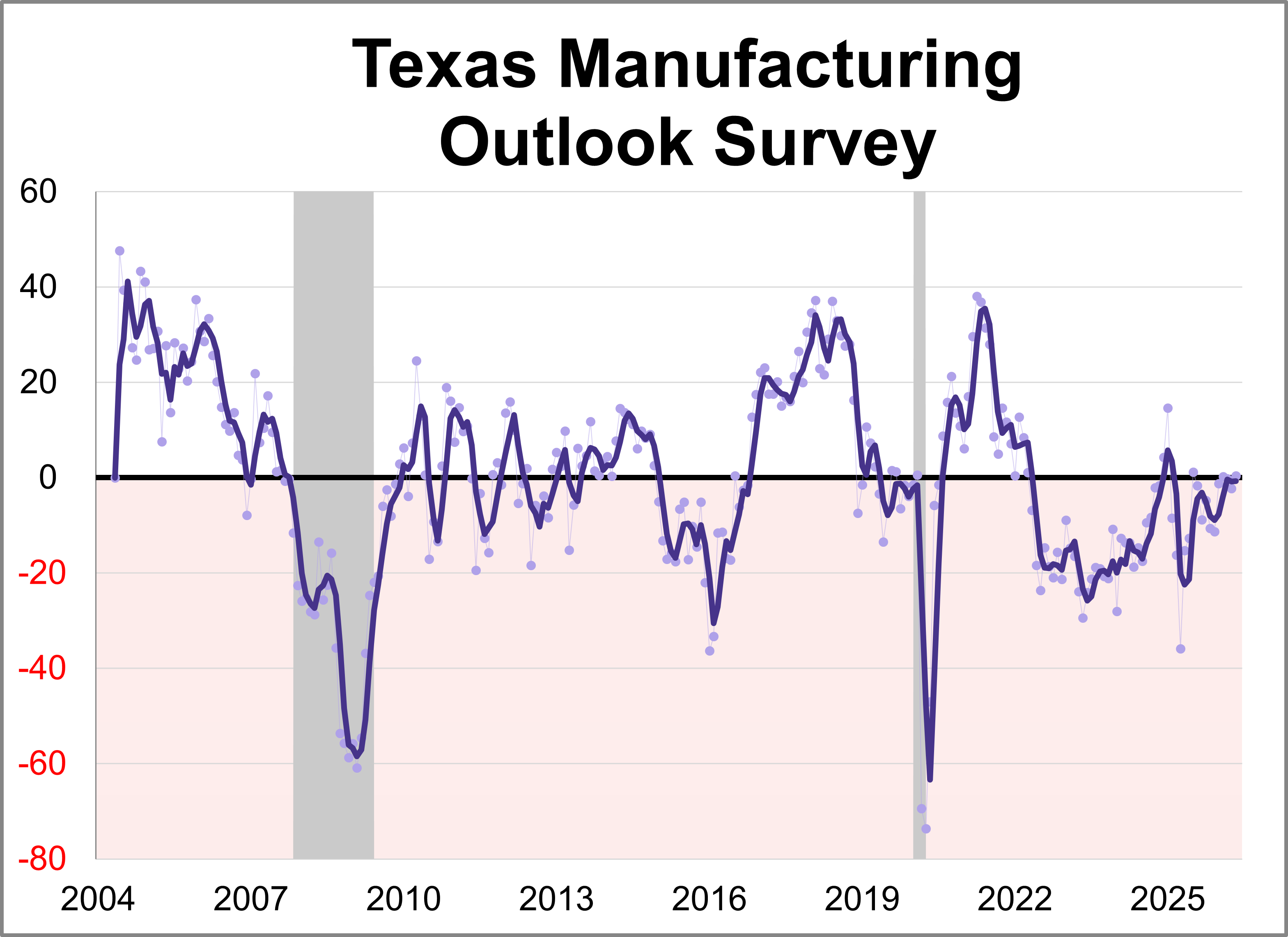
The Dallas Fed released its Texas Manufacturing Outlook Survey (TMOS) for May. The general business activity index rose 2.7 points to 0.4, indicating slower growth of manufacturing activity and stable business conditions perceptions.
Quantinuum Inc., a quantum computing company backed by Honeywell International Inc., is seeking to raise $1.05 billion in its US initial public offering, capitalizing on investor enthusiasm for the technology.
Prudential Financial Inc.’s asset-management arm has financed about $4 billion of land-banking projects through a partnership with Domain Real Estate Partners, part of a push to gain exposure to the US homebuilding industry.
As Kevin Warsh takes the helm at the Federal Reserve, bond investors are betting he’ll prioritize the central bank’s inflation-fighting credibility over President Donald Trump’s push for lower interest rates.
It’s been more than three years since Silicon Valley Bank lost a quarter of its deposits in a day, kicking off a string of bank rescues. The shocking speed of that run was attributed, in part, to the rapid spread of information on social media and the efficiency of digital banking.
I’ve lost count of the praise heaped on US hedge funds for their “historic performance” in April on artificial intelligence-related bets and alleged foresight of a ceasefire in the Iran war.
As more individuals turn to non-traditional financial advice — offered through social media, artificial intelligence, or other online services and platforms — advisors will be tasked with fostering a greater sense of trust with the public.
Last Friday closed with the 10-year Treasury yield at 4.60%, a one-year high, and the doom commentary about rising interest rates was waiting before the bell even rang. Hyperinflation. Bond market breakdown. Paradigm shift. A 1981 fair-value retest.
Private markets (private equity, private credit and real estate) have historically delivered an “illiquidity premium”. Institutions and family offices have recognized this illiquidity premium and have historically allocated significant capital to capture it.
Since the post-COVID recovery began, U.S. nonfinancial corporations have generally managed capital conservatively. They have kept credit metrics stable and, in many cases, actively improved them. That discipline was not entirely voluntary: The sharp adjustment in funding costs triggered by the Federal Reserve’s 2022–2023 rate hiking cycle raised the bar for incremental borrowing and pushed management teams toward balance sheet restraint.
In this video, Chuck Carnevale explains why he believes a diversified dividend-growth stock portfolio can be a better long-term strategy for retirees than the traditional 60/40 stock-and-bond allocation. Using a real-world portfolio he created in August 2021, Chuck demonstrates how an all-equity income portfolio can provide both rising income and capital appreciation while helping investors stay ahead of inflation.
After a slowdown earlier in the year, stronger April and May data support the view that weakness in January and February, followed by a rebound in March, was largely weather-related rather than the start of a broader deterioration in housing demand.