Even if the Middle East war does find a lasting settlement, the specter of inflation appears poised to hang over the markets. Indeed, while employment data had, up until recently, been the primary focus for investors, arguably, inflation reports have now moved into the ‘leaderboard’ position.
Learn what's in store for the remainder of 2026 and the challenges that lie ahead in our mid-year outlook for U.S. stocks and the economy.
A strong business isn’t always a winning stock at every moment, and 2025 was a good reminder of that. Developed market equities finished the year up more than 20%, but quality stocks lagged. That’s why Parametric favors a multifactor approach to capture factor risk premia.
Get ready for a magnificent month, and then some. Mega-cap tech stocks dominate the corporate event calendar in June, already highlighted by NVIDIA (NVDA) CEO Jensen Huang’s keynote address at Computex 2026 in Taiwan earlier this week, one of many major conferences.
Last week, several Fed members signaled the central bank may have to raise interest rates to cool price inflation.
Wellington Management Co. agreed to buy the asset-management division of Hartford Insurance Group Inc. as the Boston-based investment firm pushes ahead with a wealth expansion.
Join the Dallas-based experts from the Texas Stock Exchange, Texas Capital, and VettaFi as they discuss the business landscape in Texas and related investment opportunities.
Given its focus, the launch presents a milestone for the asset management community. ASD blends a sophisticated index design with structural corporate philanthropy to create an ETF that resonates with those invested financially and emotionally.
Space ETFs have seen strong inflows coupled with standout performance, capturing significant market attention. For investors, the rapid pace of capital deployment into the space economy underscores a compelling investment opportunity. For this edition of Bull vs Bear, writers Zandile Chiwanza and Elle Caruso Fitzgerald debate the use cases for space ETFs in portfolios.
The top ETF launches of the past decade were the focus on this week’s ETF Prime. Host Nate Geraci and Cynthia Murphy, director of research at VettaFi, counted down the 10 most successful debuts by current assets. Murphy noted that the S&P 500’s roughly 13% annualized gain over that span helped shape many of the performance stories on the list.
It’s so hard in our industry to “benchmark” things like comp, benefits and work-from-home philosophies, because if you show me 15 teams or firms, I’ll show you 15 different ways to answer these questions. I know the WFH question is a big one, and many teams are struggling with it.
More and more Americans are feeling financially behind in 2026. More than eight in 10 have reported having at least one financial regret from 2025, according to a recent survey from Omni Calculator. 28% said making rushed decisions without enough planning were the leading cause of financial mistakes.
As billions of dollars leave Bitcoin and Ether funds, money is flowing into a corner of crypto that promises something investors have long struggled to find in digital assets: a clearer path from economic activity to token value.
When clients sense that nothing is expected of their answer, they relax. They pause. They speak more slowly. They wander a little as they search for words, and in that wandering, something real often appears. This is where conversations change.
A private credit fund jointly managed by Future Standard and KKR & Co. sold $900 million of junk bonds on Monday, according to people familiar with the matter, in a rare high-yield offering by a publicly traded credit fund.
Blackstone Inc. has entered an agreement to provide Nippon Life Insurance Co. with investment services, adding to an increasing number of tie-ups between private investment firms and Japanese insurers.
Google parent Alphabet Inc. is poised to enter the municipal-bond market’s prepaid energy space by participating in a $1 billion transaction out of California, a major development in the evolution of a booming segment.
A key source of demand for corporate bonds may be fading now that managers of company pension funds have more than enough money on hand to pay their retirees.
US equities continued to climb higher in May, with the S&P 500 Index rising 5.1%. Further de-escalation of geopolitical tension in the Middle East has paved the way for the market’s 19.5% advance from the late-March lows.
Private markets have become integral to modern portfolios, with many investors searching for higher returns and diversification, including from public markets. But recent fund redemptions have reinforced that illiquidity isn’t theoretical, raising questions about the benefits of giving up liquidity. We see several—but investors must understand the trade-offs.
For the dollar-denominated investor weighing how to position for the back half of 2026, last week tightened a thesis we have been building all year.
Reducing equity exposure during periods of elevated risk is not the same as market timing. The financial industry has spend decades blurring that distinction.
Would I be better off waiting for the Fed to make its move on rates before investing?” “Should I wait to increase duration because a blocked Strait of Hormuz could push oil prices higher and push rates even higher?” “Should I invest in bonds gradually to reduce the risk of missing the rate peak?
Rising office delinquencies within commercial mortgage-backed securities (CMBS) reflect genuine pressures from shifting work patterns, higher interest rates, and greater refinancing risk.
Taylor Topoussis and Chris Galipeau discuss high-conviction insights that go beyond media headlines.
LPL Research analyzes stock valuations, finding them fair given growth, rates, inflation, and AI-driven earnings outlook despite risks.
AI is a transformative technology with both near-term and long-term implications for the economy. For investors, while the debt-funded AI buildout has the potential to become a secular driver of risk premia, we believe any such shift would only play out through a multi-year adjustment and would not override the cyclical forces that affect markets.
Every family has a money story. It gets passed down quietly, invisibly, in the way families talk around the dinner table or on long walks together.
May’s 5.3% S&P 500 gain masked a deeply uneven market: technology surged 16% on AI spending momentum while most sectors declined, and a surprise inflation rebound flipped the Fed narrative from cuts to potential hikes.
Join Dan Chung, CFA, CEO at Alger, as he explains how his role as Chief Investment Officer makes him uniquely positioned to see across all of Alger’s product portfolios to identify the “best ideas” for ATFV.
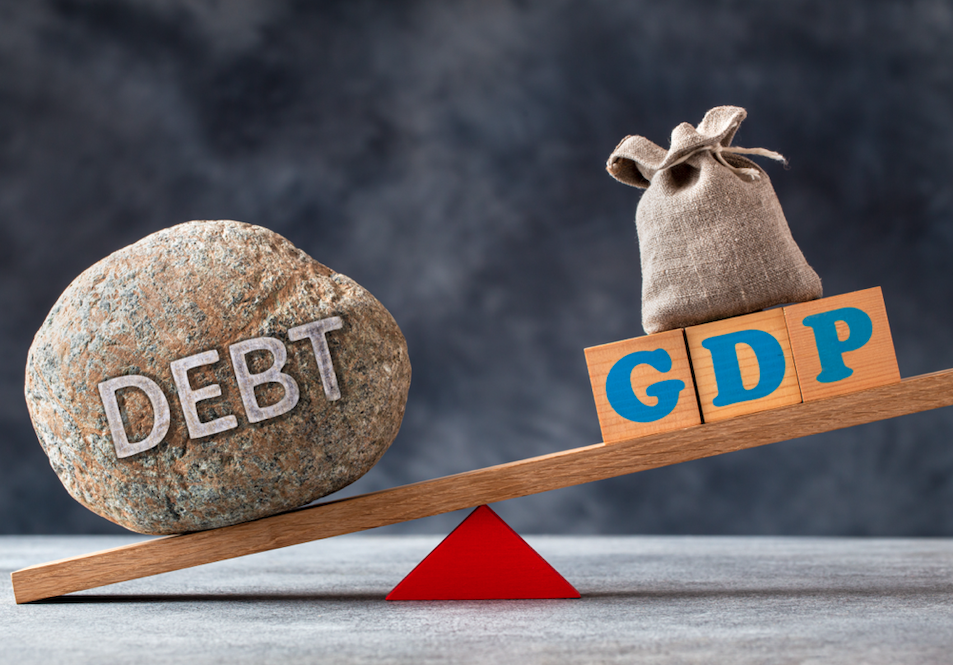
As advisors, our role is not to solve fiscal policy; it is to ensure our clients are positioned to weather the uncertainty that comes from that gap, stay committed to their long-term plans, and not let macroeconomic anxiety drive short-term decisions they will regret.
Individual expertise matters. But in complex situations, making good decisions also depends on your financial professionals sharing information. When you support and expect their collaboration, you are no longer the communication relay.
While the mass affluent market may not be feeling the brunt of inflation woes or the rising cost of living, its financial planning is still being impacted by current economic headwinds.
Investors are about to get a read on the durability of the soaring rally in cybersecurity stocks when two of the industry’s major players report earnings in the coming days.
Elon Musk’s SpaceX is negotiating to pay razor-thin fees to Wall Street firms handling its IPO — but banks are still likely to rake in about $500 million from the record-setting market debut.
The announced expansion comes as the US races to provide huge amounts of electricity for AI data centers, with nuclear power emerging as one of the big winners. The Trump administration is pushing to quadruple output from nuclear plants which will require a leap in uranium fuel production to meet the challenge.
Caution has become the most expensive position on Wall Street. A hot inflation reading this week — sending the annual gauge to its highest in about three years — landed alongside fresh strikes in the Persian Gulf and enduring expectations that the Federal Reserve may need to keep policy tight.
Investors are pouring money back into municipal bonds as higher yields and the approaching summer reinvestment season draw cash into the tax-exempt market.
Geopolitical risks are still lingering in the background, but the story lately has been all about earnings. A strong 1Q26 season, paired with a steady drumbeat of upbeat management commentary, has helped push the S&P 500 to 21 record highs this year.
Businesses are racing to build the physical infrastructure that makes AI usable at scale – data centers, the graphics processing unit (GPU) hardware stack, power, and cooling.
The market continues to demonstrate remarkable resilience. Lower oil prices, easing Treasury yields, and the relentless buildout of artificial intelligence infrastructure are still providing a favorable backdrop for risk assets.
If you’re not familiar with the name Leopold Aschenbrenner, you should be. A 24-year-old wunderkind, Aschenbrenner was hired by OpenAI in 2023 to work on the company’s “superalignment” team, essentially trying to figure out how to keep AI systems safe once they become smarter than the people building them.
Economies around the world aren’t just reliant on AI investments for growth. The appreciation of AI stocks has supported spending, which is following “K-shaped” patterns. A significant correction to the valuations of tech leaders would therefore be even more likely to result in recession.
A little more than six months ago there were narratives circulating that national housing prices were in an even bigger bubble than the one twenty years ago and headed for an “inevitable” collapse. Given that national home prices dropped about 27% from peak to bottom in the last housing bust, that would be something to worry about.
The global defense industry continues to move rapidly from legacy, heavy-hardware platforms to agile, unmanned systems. Today, the Trump Administration announced that it’s pursuing funding deals for drone companies in an effort to increase domestic production in today’s defensive landscape.
Vocabulary is a power builder. Every time I use the word “hegemonic” in a conversation, I see my listeners’ eyebrows go up as if to say, “what does this guy know that I don’t?” Then again maybe they’re just signaling that I’m full of more than baked beans.
The ETF landscape includes a wide variety of innovative, intriguing funds that look to meet investor goals. From equities to fixed income, all kinds of strategies offer intriguing spins on areas like income and dividends.
J.P. Morgan Asset Management has expanded its alternative lineup with the launch of the JPMorgan Managed Futures Plus ETF (JPFP) on the Nasdaq. The actively managed fund combines a core U.S. equity allocation with a systematic managed futures strategy spanning equities, bonds, currencies, and commodities.
Join the experts at VettaFi and Exchange Traded Concepts for a 60-minute discussion on the investment opportunities related to the rapid expansion of the world's large and small reactor fleets.
Join the experts at J.P.Morgan and VettaFi for a timely, 30-minute discussion on Monday, June 1, at 12:30 p.m. ET as they discuss the outlook for MLPs, key fundamentals for the space, and expectations for distribution growth.