On Wednesday, April 8, 2026, Morgan Stanley announced the launch of the Morgan Stanley Bitcoin Trust ETP (MSBT). As Morgan Stanley notes, the launch of MSBT marks the first time a U.S. bank-affiliated asset manager is offering a crypto ETP.
Tesla Inc. and its Chief Executive Officer Elon Musk are a font of big numbers, real or imagined: A million robotaxis deployed, 20 million electric vehicles sold per year, “tens of billions” of Optimus robots stalking the Earth.
Investors are starting to understand that robotics and AI each represent an industry of industries. Not a sector. Not a theme. The foundational technology stack that every other industry increasingly depends on. In Q1, the market decided to stress-test that thesis, and the results tell a more nuanced story than the headline numbers suggest.
Cinthia Murphy, investment strategist at VettaFi, joined Nate Geraci on this week’s ETF Prime to discuss record ETF flows in the first quarter despite challenging market conditions. The industry exceeded $460 billion in total flows, a 50% year-over-year increase from Q1 2025, according to Murphy.
For centuries the so-called cannon shot rule determined who controlled the seas. The legal concept, codified by Dutch jurist Cornelius van Bynkershoek in 1702, was simple: The distance a cannonball reached from shore set the maritime boundary of a coastal state.
US stocks rallied after President Donald Trump’s announcement of a two-week ceasefire in the Iran war spurred relief across markets.
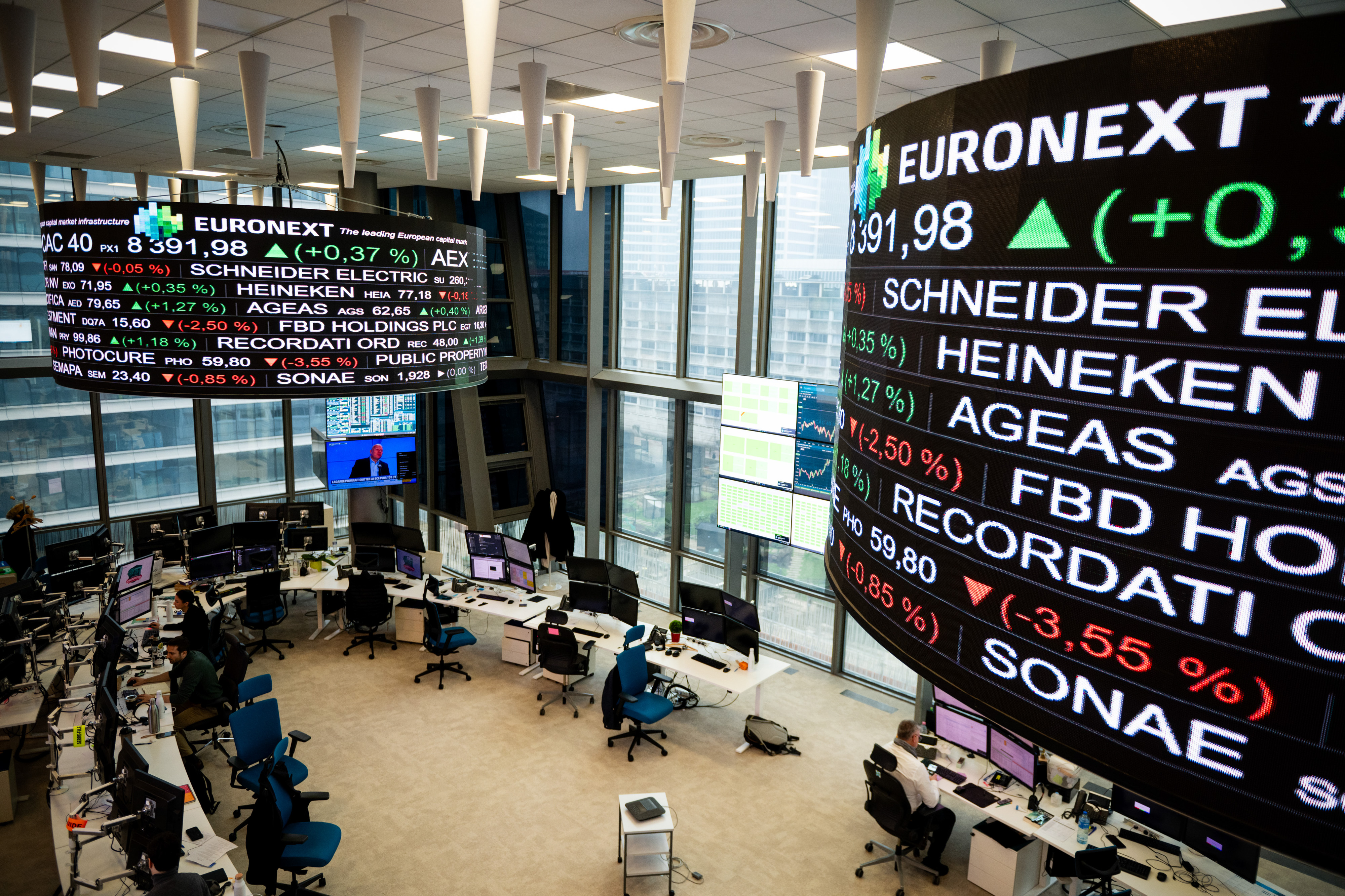
European stocks soared the most in a year as investors rushed to buy stocks in the wake of the US and Iran agreeing to a two-week ceasefire in exchange for Tehran reopening the Strait of Hormuz.
Last month at the Exchange conference in Las Vegas, Anna Paglia, State Street Investment Management’s chief business officer, discussed how the firm’s private credit lineup came to be and how the firm sets about developing some of its products.
At Exchange 2026, key thought leaders from firms across the country gathered in Las Vegas to share their ideas for navigating today’s macroeconomic uncertainty and the future of ETFs.
Across corporate lending markets, some investments are easier to trade and exit than others – differences that deserve particular attention today.
529 Plans are a huge part of many families' investing lives, but up until recently rarely involved advisors. Could that change?
At this point, we think the odds are very high that the Democrats win back the House in the mid-term election in November. Compared to how they did in 2024, the Democrats only have to gain three seats to take back the House.
Financial therapy can help men explore their internal parts to learn to recognize and begin to heal the emotional beliefs driving their economic behavior. The point of financial therapy is not to dampen ambition, but to heal beliefs that may be souring it.
Cybersecurity stocks have sold off this year alongside the rest of the software sector, but with artificial intelligence increasing the potential threats from bad actors, investors risk missing out on the burgeoning demand for their services.
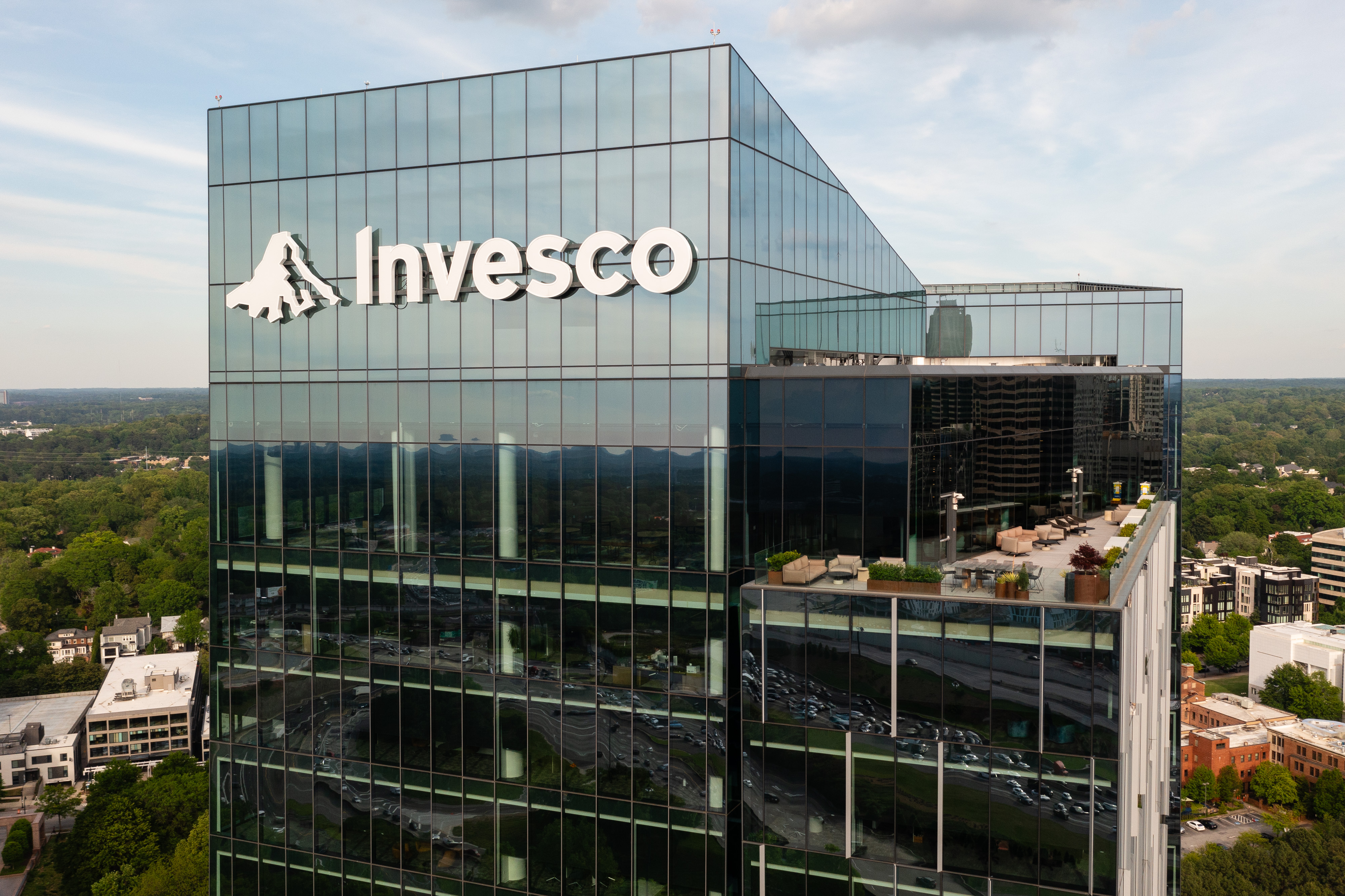
Wall Street’s biggest ETF issuers are circling Invesco Ltd.’s Nasdaq 100 franchise, threatening to end its near-exclusive hold on the index.
Since the U.S. and Israel launched strikes on Iran on February 28, jet fuel prices in the U.S. have more than doubled. According to data from the Energy Information Administration (EIA), the year-to-date percent change in U.S. jet fuel prices stood above 120% as of the end of March.
With the conclusion of a volatile first quarter in 2026, the Amplify Energy & Natural Resources Covered Call ETF (NDIV) demonstrated the resilience of its underlying index (VettaFi Energy and Natural Resources Covered Call Index).
Gold’s recent drop from $5,600 to $4,400 is a classic liquidity story where investors are selling their most liquid winners to raise cash.
The middle is typically not where you want to be. In American sports, teams in the middle of the standings aren’t contenders for either a championship or a high draft choice. The middle seat on an airplane, subject to incursions from either side, is not very comfortable. The middle manager is accountable in every direction, empowered in none.
An Exchange conference panel explored bitcoin's evolving role, allocation tactics, and ETF structures for advisors building crypto portfolios.
Join the experts at Goldman Sachs Asset Management as they explore the current state of the fixed income market and discuss why a "set-it-and-forget-it" approach to fixed income may no longer be sufficient as investors consider actively managed fixed income ETFs to help navigate today’s environment.
With oil prices spiking and inflation concerns remaining elevated, many investors are looking for ways to diversify beyond the S&P 500. This week, Chuck Jaffe and Todd Rosenbluth, dive into the FlexShares Morningstar Global Upstream Natural Resources Index Fund (GUNR).
When investors want to reduce risk, one commonly used tool is beta. For instance, an investor may sell higher-beta stocks and replace them with lower-beta ones to cushion against an expected market decline. Such a strategy is intuitive and widely used; however, it can be greatly flawed.
The debate over ETFs versus mutual funds has never been particularly useful for advisors who actually build portfolios. In practice, the question was never which vehicle is better — it was always which vehicle is better for this objective, in this sleeve, for this client. In 2026, that discipline matters more than ever.
I have written for years that oil prices act like a tax on the economy, both in the US and globally. It is actually simply the price paid, but the effect on the economy is similar to a tax. If the price goes up, it takes more money from individual consumers that would otherwise be saved or spent somewhere else. Just like taxes.
March 2026 was a rough month for financial markets. Broad indexes experienced large selloffs, led by international stocks, though many of these still remain up in 2026. The dollar rallied strongly, breaking its year-plus downtrend.
BlackRock Inc. is setting its sights on a corner of the $13.7 trillion US exchange-traded fund industry long controlled by Invesco Ltd: tracking the Nasdaq 100 Index.
For much of the past decade, U.S. investors didn’t need much convincing to stay close to home. But according to experts at a recent AllianceBernstein (AB) Product Due Diligence Session, the tide shifted dramatically in 2025, signaling a “new dawn” for non-US stocks.
Amid hopes that the conflict in Iran will soon de-escalate, stocks rallied in recent days. This provided some much needed relief for the growth-heavy Nasdaq-100 Index (NDX). However, advisors and experienced investors know that things can change in a heartbeat.
Markets often react sharply to geopolitical developments, but just as often, they overreact. Investors today are grappling with heightened global tensions, rising oil prices and uncertainty around central bank policy. The key question is whether these risks meaningfully alter the economic outlook or simply create short-term volatility.
Exchange-traded fund issuers are shutting new products at the fastest pace in years as competition for investor money intensifies.
March 2026 ETFs: Investors pivot to safety with $29B in short-term bonds and a record $5B in Energy as Tech faced a Q1 recalibration.
Income ETFs using options have been one of the biggest categories in recent years. As global volatility has risen, advisor clients and investors of all kinds have clamored for some added income.
A look at ETF flows for the month of March suggests caution is back in vogue. Fixed income ETFs showed serious muscle in the asset gathering race last month, capturing nearly 45% of net creations.
It has now been over three years since GMO launched our Small Cap Quality Strategy in September 2022. During that period, the world has shifted, and we have navigated unexpected market conditions.
Every March people around the country start talking about their brackets. Most are referring to their basketball tournament bracket, hoping to predict the winners and maybe earn some office bragging rights.
Big names in crypto, payments and cloud infrastructure are racing to build the financial plumbing for a world in which AI agents — not humans — handle transactions on the internet.
Unilever Plc’s Fernando Fernandez haslucked out by selling the company’s food businesses, including Hellmann’s mayonnaise and Knorr stock cubes, to McCormick & Co. But Fernandez, who’s been chief executive officer for just over a year, shouldn’t squander his good fortune; he needs a clear vision for what comes next.
Systematic equity investing is a way to invest in the stock market using clear rules and data, rather than guesswork or hunches. Instead of trying to pick stocks based on trends or headlines, this approach uses research, data, and technology to systematically identify opportunities across global markets.
Systematic indexing removes the psychological stress of timing crypto markets by allowing advisors to capture broad asset-class returns through disciplined rebalancing.
DoubleLine continues to fortify its presence in the ETF market, adding a new active fixed income solution designed for today’s complex interest rate environment. The DoubleLine Ultrashort Income ETF (DLUX) launched on NYSE Arca on April 1, marking the latest expansion of the firm’s rapidly growing ETF lineup.
All eyes were turned toward the Middle East throughout the month of March, with the US and Israel’s ongoing conflict with Iran causing energy prices to surge. The closure of the Strait of Hormuz, alongside damage to energy infrastructure across the gulf region, caused crude to rise above $100 a barrel for the first time since 2022.
How should RIAs think about advisor cash compensation? This article focuses on the salary, bonus, and benefits arrangements commonly used in the industry and typically documented in investment advisor representative (IAR) agreements.
The market environment of 2025 provided a compelling example of the benefits of multi-asset investing. Importantly, it is possible that the conditions that supported diversified, multi-asset portfolios last year may persist in 2026 and well beyond.
At ETF Exchange 2026, TMX VettaFi caught up with Dave Mazza, CEO of Roundhill Investments, to discuss the firm’s evolving strategy for ETF innovation in a market that’s continuously seeking specialized exposure.
Now that Nelson Peltz has won a surprise bidding war for Janus Henderson Group Plc, the activist investor can start to revamp the $493 billion asset manager he has circled for years.
Eli Lilly & Co.’s Zepbound is helping to solve one of the most intractable health challenges of our time: Obesity. Now, the drugmaker hopes to crack another significant public health problem: Sleep disorders.
OpenAI has completed a deal to raise $122 billion from investors at an $852 billion valuation, marking the company’s largest funding round to date by far and bolstering its costly push for more chips, data centers and talent.
Department of Homeland Security shutdown continues, and Congress considers addressing growing concern over prediction markets.
The fiat currency collapse narrative is one of the most emotionally satisfying arguments in all of financial punditry. It feels intellectually rigorous, draws on genuine history, and speaks to deep and legitimate anxieties about government overreach, monetary recklessness, and the long-term consequences of unlimited debt creation.