Elon Musk’s decision to wade into US mobile-phone services sets up a challenge distinct from anything he’s previously pursued. This is not a new market or an added twist that fills an industry gap such as his innovations with electric vehicles, broadband from low-earth orbit or an online payment system — the areas where Musk made his riches.
CoreWeave Inc. has become caught in a tug of war between investors who see rising bond yields as a potential rally killer for the AI trade and those who think demand for computing power will make those concerns seem passe before long.
In a potential test of the law of unintended consequences, the Securities and Exchange Commission has released a rule proposal that would make it far easier for private equity, venture capital and private capital fund managers to attract — and tap into — the savings of retail investors.
Big bank earnings offered little to alter the dimming views on the sector mired in the longest losing streak since the financial crisis. The bright spot: equities trading.
With Brent crude above $100 a barrel for most of the past month and diesel prices more than twice as high, you might imagine that the world’s poorest fossil fuel importers would be hitting crisis conditions right now.
Project Vault, the US government-backed critical-minerals stockpile, plans to choose an initial group of more than a dozen American manufacturers that could receive up to $1 billion in loans to help procure key materials.
Charles Schwab Corp. reported earnings that beat estimates as retail investors continue to pile into the stock market.
An AI rendering of a 19th-century Jon Gray, complete with pitchfork, waistcoat and straw hat, flashed up behind the Blackstone Inc. president at a recent meeting with investors.
As chip stocks shed $1 trillion in market value, ETF investors are pouring billions into the selloff, putting a fund that triples their daily exposure to the sector on pace for record weekly inflows.
US Treasuries led a global bond rally as a selloff in artificial-intelligence shares deepened, spurring demand for haven assets.
Monthly checks for nearly 72 million Americans receiving Social Security benefits will increase by 3.6% in 2027, the most in four years.
Your leaders probably don’t know what the right thing is to measure and motivate, so they just picked something. Give them an alternative, while showing them you are engaged and want to grow. Their approach to motivation might change as a result.
Technology can make individual marketing tasks faster, but it doesn't address who is responsible for keeping the larger process coordinated and moving. What’s missing is a marketing integration owner: one person with explicit responsibility for making sure the marketing system works as a whole.
Was Anthropic’s Claude for Financial Advisors announcement a heavily glossed nothingburger, or a seismic shift in advisor tech? Time will soon tell, but what’s undeniable are the significant questions (and concerns) echoed by firms across North America in response.
Leaders at advisor firms generally see two paths for using artificial intelligence tools: broaden capacity downmarket through efficiency, or swim upstream through excellence. It’s fair to say our industry has done a better job with the efficiency part of the equation.
Apple unveiled its new attempt at a home device at an event in New York on Tuesday, the company’s second attempt to “win” the home. The first was its HomePod, released in 2018, and it left very little impression on consumers (other than those who owned one and found it left a little white stain on their furniture).
JPMorgan Chase & Co. has updated its approach to financing the energy transition, in a move the biggest US bank says will help it meet a historic surge in demand while also supporting affordability and security.
US consumer prices advanced in September at the fastest pace in five months and a gauge of underlying price pressures rose by more than expected, keeping the squeeze on household budgets ahead of November’s midterm elections.
The dollar strengthened to the highest level in over a year as a hot US inflation reading pushed traders to add to bets that the Federal Reserve will raise interest rates.
BlackRock Inc. pulled in $205 billion of new money in the third quarter as revenue surged at the world’s largest asset manager, which is now a full year into a major transformation to push further into higher-fee private markets.
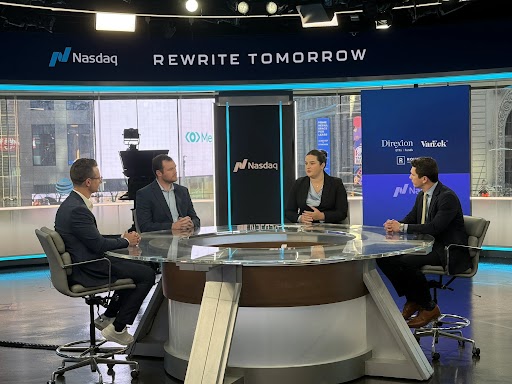
The recent Nasdaq Vettafi summit on asset allocation saw issuer leaders talk thematic ETFs, AI, and leveraged ETFs.
Assets under management tell you what a client is worth today. Upward mobility and enjoyment tell you what the relationship is worth. Build your practice around the second number, and the first one tends to follow.
If you already own a home, the purpose of this process is not to second-guess your home-buying choices or put pressure on yourself to sell a house you love. The point is to consider the value of your living space and the price you pay for it in a personalized, emotional way.
Small-capitalization stocks may now provide greater diversification and less valuation risk than many of the market’s largest blue-chip companies. Moreover, it appears to us that this is just the beginning stages of a change in leadership, and it is possible small-capitalization stocks could outperform large stocks for the next few years.
Americans have been relentlessly spending their paychecks despite rising prices, buying pickup trucks with diesel near record highs and steak dinners even as the cost of beef soars.
US equity futures held firm Tuesday despite a deepening selloff in chipmakers, as traders sorted through a slew of bank results from JPMorgan Chase & Co., Goldman Sachs Group Inc. and other lenders in the start to third-quarter corporate earnings season.
You’ve surely heard the standard advice that people should own more bonds than stocks as they age because stocks are riskier and older investors have less time to recover losses. I’ve always thought it was a half-baked idea, and rising interest rates show how costly it can be.
UnitedHealth Group Inc. raised its profit outlook for the year after reporting better-than-expected earnings in the third quarter, a sign of progress in the turnaround of the largest US healthcare conglomerate following a disastrous 2025.
Skeptics of the artificial investment boom are doubling down. Billionaire Ray Dalio warned last week that the bubble was near its bursting point, while Michael Burry of the Big Short fame brought forward the timeline for his bearish thesis. SoftBank Group Corp. founder Masayoshi Son’s attempt to set up another $100 billion AI-focused venture capital fund will only give the doubters more ammunition.
Tokenization has taken hold in money market funds, leaving ETFs room to grow, while Cerulli eyes private markets as the long-term prize.
Microsoft Corp. is gearing up to install the latest version of its own chips in data centers, with the aim of powering its AI software using mostly homegrown hardware.
We are all investors now, or at least the majority of us are. More Americans than ever are investing in the stock market, and surveys show a large share of Gen Z and millennials actively trade individual stocks as their preferred investment strategy. Most people lose money or underperform with this latter endeavor.
Gold edged higher as sliding oil prices eased inflation concerns, giving traders some optimism the Federal Reserve could hold off on further interest-rate hikes.
Strong corporate earnings will be pivotal to hopes for a year-end rally in global stocks, as flare-ups in fears over inflation, bond volatility and artificial intelligence spending weigh on sentiment.
You can barely take a step on the New York subway lately without seeing the face of Meta Platforms Inc.’s furry Muse AI assistant. I’ve written already about how impressed I’ve been with the form and function of the breakthrough bot. Now, attention must move to assessing whether Muse has long-term staying power — or whether its launch will be just a flash in the pan.
What matters most now is not merely whether I can improve a client's financial position. It is how I help advance the financial and personal direction of that client's life in a meaningful way.
For nearly four years, economists have been predicting that consumers would fail to sustain the economy. Yet despite many reasons for consumers to retrench, real personal consumption expenditures (PCE) grew 2.6% through September. The bottom line: Consumers keep worrying but keep spending.
The dollar rally is forging ahead as soaring oil prices weigh on currencies of energy importing nations and global inflation fears persist.
SpaceX investors are finally getting some reprieve after months of being whipsawed by volatility as the Elon Musk-led company’s stock breaks above the level it’s been stuck below since July.
Wall Street’s biggest banks are expected to unveil a quarterly stock-trading haul of nearly $19 billion when the firms report earnings next week.
Gold advanced as oil fell and an auction of 30-year US debt on Thursday drew solid demand, helping to pull long-dated yields from the highest levels in more than two decades.
The bull market in US stocks is showing few signs of stress as it approaches its fourth anniversary: Corporate profits are rock-solid, the S&P 500 Index is near a record and volatility appears subdued.
Is it time to bail out of stocks — or to stay the course? Who knows? In the meantime, we can array recent stock returns against history to put 2026 into context and allow readers to judge for themselves.
“Nobody knows anything,” the screenwriter William Goldman famously said of the movie business. Much the same can be said today for artificial intelligence, a technology that’s moving fast, destination unknown.
Consumer confidence is collapsing, hiring is weak and the housing market is largely frozen. All of which serves to underscore that the US economy is only holding up because of the boom in artificial intelligence and an aging population spending ever more on healthcare.
Wall Street’s biggest banks are set to extend a months-long borrowing binge and issue more bonds than usual in the fourth quarter, raising funds to meet the insatiable financing needs fueling the artificial intelligence boom.
Amid heated discussion of the astonishing (and also rather worrying) capabilities of artificial intelligence, investors are realizing that the underlying computing and energy infrastructure relied upon by OpenAI, Anthropic PBC and their ilk is much harder to construct than a chatbot prompt.
Morgan Stanley Investment Management’s Vishal Khanduja, a top-performing bond investor, is turning bullish on US debt for the first time in a decade, with yields at two-decade highs serving as a check on economic growth.
Free-market-oriented economists probably live in a state of perpetual despair these days. Politicians and voters on both the left and right are turning on markets. Polls suggest widespread support for interventionist policies that economists long discarded for causing more harm than good.
Interest rates are on the rise, and, according to market expectations, the ascension may not be over quite yet.