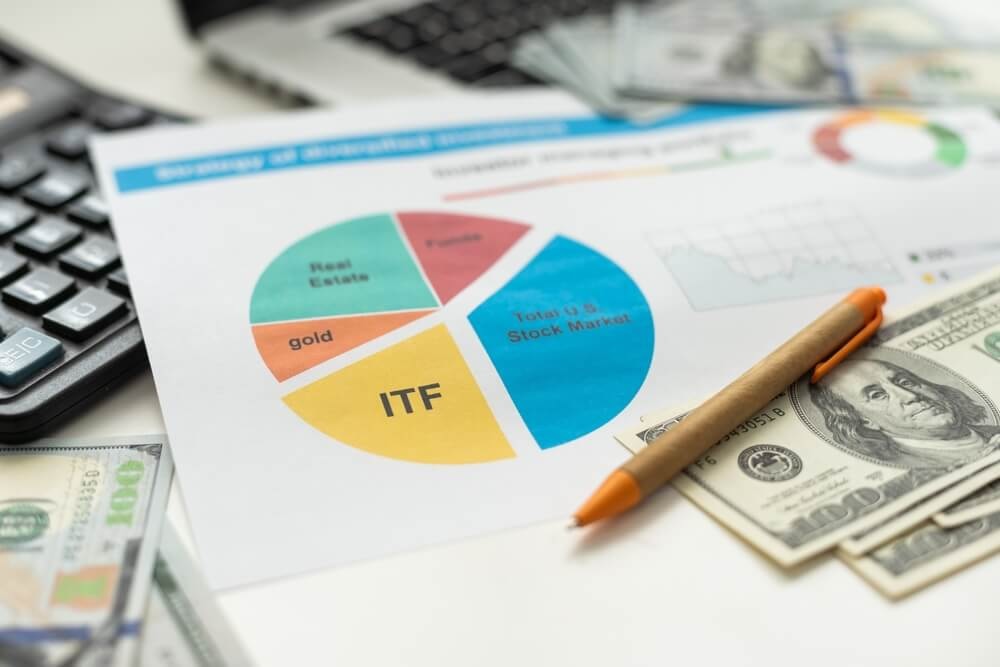
Russ Koesterich explains gold’s recent fall and lays out his argument for why investors should continue to hold a modest position in their portfolios.
It's difficult to call any stretch a calm, quiet summer week, but this one would seemingly fit the bill. Earnings from Alphabet (GOOGL), Tesla (TSLA), and IBM (IBM) are the standouts, along with a slew of cyclicals reporting Q2 results.
Electricity demand is surging all over the world. To meet this demand, vast investments in power generation need to be made, and grids need to be overhauled and expanded. Ramping up electricity generation and delivery is extremely expensive, and electricity prices have spiked up throughout much of the developed world.
Resilient earnings, improving industrial activity and the AI investment cycle should continue to support equities, according to Putnam Equity’s Shep Perkins. But the same forces driving the market higher are also making companies harder to value.
The summer has once again brought a miasma of wildfire smoke across wide stretches of the nation, leading to hazy views and slower activity. The clouds in our outlook are not merely atmospheric. A failed ceasefire and renewed conflict in the Middle East have created new reasons to worry about economic performance.
From severe wildfires in northern Ontario to record heat across Europe, extreme weather is back in the headlines. Such events are becoming more frequent and intense, and the risks associated with them are testing the limits of insurability. With our research partners at Columbia Climate School, we examine how strains on the insurance system can transmit climate-related risks through the capital markets.
Inflation remains above target, especially the Federal Reserve’s preferred core Personal Consumption Expenditures (PCE) inflation measure, as choppy data have challenged the view that disinflation will proceed smoothly.
Kevin Warsh’s early overhaul of Federal Reserve communication and policymaking suggests investors should prepare for a higher-for-longer rate environment with greater uncertainty around policy signals.
The World Cup games that went into extra time were reminders of just how tough it can be for players to keep up their momentum over the long haul.
Small-cap and mid-cap stocks are outrunning large caps in 2026, and one portfolio manager says the shift has room to run.
Investors continue to benefit from two powerful tailwinds: strong stock-market performance and bond yields that remain attractive compared with much of the post-financial-crisis period. Higher yields have improved the income generated by fixed income portfolios and given investors more flexibility to balance income, liquidity, and interest rate risk.
Making his first appearance on Capitol Hill since becoming Fed Chair in May, Kevin Warsh delivered the chair's semi-annual testimony on monetary policy and the state of the economy to the U.S. House Committee on Financial Services on July 14 and the Senate Banking Committee on July 15.
AI continues to evolve. Early offerings in the 2010s around machine learning, natural language processing, and predictive analytics helped ignite the Big Data era and allow for the ingestion and processing of both structured and unstructured data at previously unimaginable speeds and volumes.
Silver is becoming increasingly discounted relative to gold, as indicated by the widening of the gold-silver ratio. In other words, silver is on sale once again.
In the Warsh Fed's new era of two-way risk, bonds offer something rare: potential downside risk mitigation that investors get paid to hold.
Last week’s dominant story was the sharp unwinding of the momentum trade that has carried the market for months. The Philadelphia Semiconductor Index (SOX) declined 10 per cent over the week and is down 21 per cent from June’s peak. Bear markets are defined as drawdowns of 20 per cent or more.
The prime culprit was renewed questioning of the artificial intelligence (AI) buildout given the increasing amount of capital investment needed to bring it to life and the corresponding costs for those who use the technology weighed against its potential productivity benefits.
Lock, stock and barrel, a British phrase, originally referred to the three essential components of a firearm. Over time, it evolved into shorthand for the whole package. When tensions flare in the Middle East, the global economy often feels the consequences lock, stock and barrel.
According to Bankrate’s Mortgage Rates, the national average for a 30-year fixed mortgage is 6.61%. That’s uncomfortably high and a major headwind to many prospective homebuyers, particularly those in the first-time category.
As developed economies grapple with higher debt burdens and elevated interest rates, the UK's gilt market offers important lessons for investors evaluating sovereign bonds around the world.
A major milestone for the story of the stock market this year looms this evening. Alphabet (GOOGL) will report its earnings today after the bell. Reports suggest the firm will have big, positive news to share, so investors may have questions.
The first half of 2026 was shaped by market-moving headlines. The conflict in the Middle East was the most significant story, triggering a short-term market sell-off.
The relative cheapness of Treasuries versus interest rate swaps mechanically affects how corporate bond spreads are measured, but it appears to have limited influence on how corporate bond spreads actually behave.
Chris Galipeau discusses high-conviction insights that go beyond media headlines.
The equity bull market is expected to continue through the second half of 2026, supported by resilient U.S. growth, AI investment and solid earnings.
For a Federal Reserve (Fed) chairman committed to reducing noise coming from the institution and/or to changing how the Fed communicates, his first attempt to do so was not very promising. Just after Chair Warsh’s first press conference, we argued that inflation was not a choice, as he suggested during the press conference.
The market received encouraging inflation news last week as both the CPI and PPI came in below expectations, as inflation pressures moderate. A negative monthly CPI print effectively removed any concern about an immediate Federal Reserve rate hike.
LPL Research analyzes China’s declining crude imports, inflation risks, and the resilient U.S. economy driving above-trend growth.
A Roland Berger study finds family offices moving capital into infrastructure and private equity while retreating from riskier bets abroad.
VettaFi’s Midyear Market Outlook symposium Thursday saw industry leaders take on the big questions. Where is the market going? How should investors and advisors navigate uncertainty and potential volatility? Leaders from Fidelity Investments and Invesco both joined for one of the early segments, focused on innovative U.S. strategies.
GMO has posted a new 7-Year asset class forecast for 2Q 2026.
When you measure home affordability today against the metric that actually governs the check you write each month, the picture flips. By that measure, buying a home may be easier now than it was for the Boomers and Gen Xers who get blamed for everything.
As we move into the second half of 2026, U.S. large-cap stocks may be on pace to deliver their fourth straight year of double-digit gains, with the S&P 500 Index up 11.4% through July 10, 2026.
Financial markets were eventful this week, with key inflation reports, Federal Reserve (Fed) Chair Warsh’s first semiannual testimony to Congress, renewed Middle East tensions, and the start of earnings season all helping shape the narrative.
The shine has come off silver since it skyrocketed to over $100 an ounce in January. The price has dropped by over 50 percent from the record high. However, there are still reasons to be bullish on silver moving forward, including persistent supply deficits and growing industrial demand.
I really struggle to understand my utility bills. They often run to several pages, with sections describing just how difficult it is to get water from the source to your faucet, or internet service from a satellite to your home router. At the end, there is a long list of charges from a range of payors that adds up to an astronomical sum.
We’re back to reading tea leaves! Hooray! Next week the Federal Reserve will have its second meeting since Kevin Warsh officially took the helm. And, at this point, the outcome is far from certain, which is unusual given that ever since Ben Bernanke instituted “forward guidance” the market usually knew what to expect.
The second-quarter earnings season kicked off last week with a resounding statement from Wall Street, led by stellar results across the nation's six largest banking institutions.
AI is changing the investment landscape, but fundamentals still matter, and we remain focused on quality companies with growing free cash flow.
Whenever I speak at investment conferences, I like to point out that we invest in a number of publicly traded airports. I even list them: Spain’s Aena. Aeroports de Paris. Zurich Airport. Airports of Thailand. Two of the world’s largest operators, Grupo Aeroportuario del Sureste and Grupo Aeroportuario del Pacifico, trade in Mexico.
I’ve been writing about inflation more in recent months and quarters because inflation has become the major driver of the US macroeconomic landscape. This week, we take a deep dive into inflation and interest rates, and at the end, I talk about why I am buying gold for my grandkids.
Decades of data across global markets reach the same verdict: the more frequently retail traders trade, the worse they perform. The infrastructure has never been more inviting. The losses have never been more documented. Here are some key statistics we will dive into further.
Chairman Warsh has made clear his aim to be a strong leader, neither shackled by any attempts by his predecessor to shift policymaking power to the voting members of the FOMC nor susceptible to political pressures or past policy precedents to deter data-driven monetary policy decisions.
It seems to be the end of the Great Moderation Era for the U.S. economy. The Great Moderation Era—which marked most of the two decades leading up to the COVID-19 pandemic—is drifting away into what we call the new Temperamental Era.
In this video, Chuck Carnevale, co-founder of FAST Graphs and known as "Mr. Valuation," explains why overpaying for a stock is often the greatest threat to long-term investment success. Using over 30 real-world examples, Chuck demonstrates how even outstanding companies can deliver poor returns when investors buy them at excessive valuations.
So far in 2026, we’ve seen that benchmark index returns can obscure important market dynamics. Even during a historically strong quarter, underlying dispersion created meaningful opportunities for tax-loss harvesting in custom equity portfolios.
The measurement of inflation has been getting a lot of attention lately. Some modifications are underway, with more potentially to follow.
The first half of 2026 reinforced the importance of balance, selectivity and income generation. Franklin Income Investors Chief Investment Officer Ed Perks discusses how markets have evolved, where opportunities are emerging, and why diversification remains critical heading into the second half of the year.
Investors must determine what the AI capital-spending surge means for long-term business durability.
For physicians, major financial decisions may rarely affect just one area of their financial life. The real potential risk is failing to understand how those decisions impact everything else.