It’s easy to understand why investors are skeptical about value stocks. After nearly two decades of chronic weakness, value’s strong rebound since early 2025 hasn’t offered enough proof that the turnaround has staying power.
THOR builds upon the success of the firm’s Thornburg Investment Income Builder Strategy, bringing that same income generation expertise into a flexible, actively managed ETF.
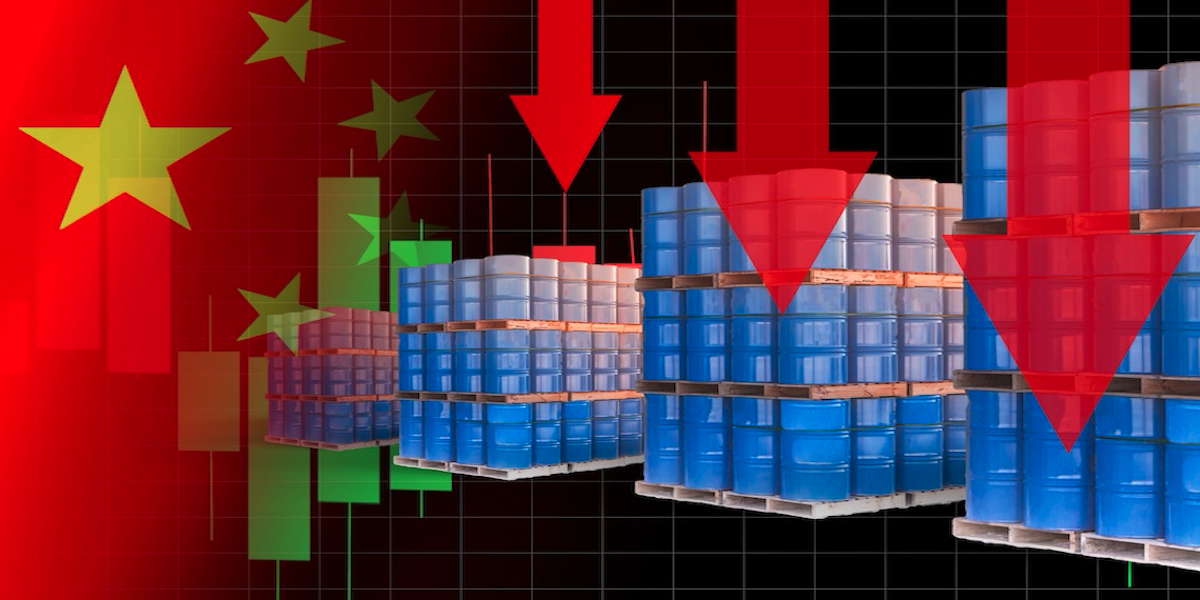
The most important development this week was not the Federal Reserve meeting itself, but the sharp and unexpected decline in oil prices. Just days ago, many market participants expected crude to remain elevated amid ongoing tensions in the Middle East. Instead, WTI crude briefly traded with a 73 handle, only modestly above its pre-conflict levels and far below the $90-$100 range that many feared.
There’s a new sheriff in town over at the Federal Reserve. He sounds a lot different than the old sheriff, but one would be wise to remember that Kevin Warsh is enforcing the same laws in the same town as Jerome Powell did.
Equities rallied after President Trump announced an agreement with Iran to end their conflict and reopen the Strait of Hormuz. The S&P 500 and the NASDAQ finished the holiday-shortened week with solid gains, led by the technology sector.
Kevin Warsh, the newly appointed Federal Reserve chair, led his first committee meeting in June. The decision to leave short-term interest rates unchanged didn’t surprise anybody, but there was plenty for markets to chew on.
The ongoing World Cup showcases three countries working together. The USMCA review will reveal whether that cooperation extends beyond sport. A shared platform can continue to deliver strong outcomes, but only if the rules remain clear, stable and broadly accepted.
While the market-cap methodology has been the guiding principle for equity index creators, it’s increasingly viewed as a structural error in the world of fixed income. Today, TMX VettaFi is helping to spearhead a growing movement of index innovators who are inclined to challenge the fixed income status quo.
U.S. equities posted a modest advance during the holiday-shortened trading week despite a Wednesday sell-off following a more hawkish than expected Federal Reserve meeting under its new chair, Kevin Warsh.
The rising debt burden of the U.S. government is becoming an increasingly serious economic concern. While it may not be an immediate crisis, it has the characteristics of a slow-moving domestic pandemic.
The corporate world is awash in capex. Leaders in the artificial intelligence (AI) arms race are pouring hundreds of billions of dollars into tech projects, and uncertainty surrounds their profitability. For now, the market rewards this use of cash, but it’s not without pitfalls. Share buybacks, for instance, are seen as a net loser, while the S&P 500® dividend yield has sunk toward all-time lows near 1%.
Here’s the setup most investors are underrating right now. Over the next two weeks, the tape will trade on plumbing rather than fundamentals. We just cleared the largest options expiration in history. Quarter-end pension selling comes next, and then July 1 reopens the passive-money firehose into a market that already routes forty cents of every S&P 500 dollar into ten stocks.
The fixed income environment continues to project uncertainty, as higher-for-longer interest rates persist amid sticky inflation. Investors may want to lean on the expertise of active managers when deciding between an active and indexed fund.
A real, potentially lasting U.S.-Iran deal appears to be on the horizon for the first time in many weeks of on-, then off-again negotiations. Should this be the deal that does it, or another one in the near term, oil prices will respond. In fact, they’ve already dropped in response to the news that the Strait of Hormuz will reopen.
Kevin Warsh, the new chairman of the FOMC, has long been critical of forward guidance, which is the Fed’s practice of explicitly signaling the future path of interest rates (e.g., “rates will stay low for an extended period” or publishing a projected path for policy rates). His concern is that the guidance could give the impression that policymakers might have a high degree of confidence about the future path of the economy and rates.
The US-Iran conflict – and its impact on oil prices – has dominated headlines over the past three months. Higher oil prices have pushed inflation to a three‑year high, reshaping the Federal Reserve’s rate outlook.
Humanoid robots grab headlines, but they are just a fraction of the physical AI ecosystem. Autonomous robots, drones, cobots, and eVTOLs are rapidly scaling across industrial and defense sectors.
On Monday, President Donald Trump announced that the U.S. and Iran have reached a peace deal to reopen the Strait of Hormuz, the 21-mile chokepoint through which roughly 20% of the world’s oil supply normally flows.
The most consequential decisions a founder will face, equity gifting before valuations increase, trust structures timed ahead of a sale, QSBS qualification built while eligibility still exists, all must be decided before liquidity. Once the transaction closes, much of what was available earlier is simply gone.
The results of Kevin Warsh’s first official set of meetings on monetary policy as the Chairman of the Federal Reserve were like a breath of fresh air.
Chris Galipeau discusses high-conviction insights that go beyond media headlines.
The announcement of an extended ceasefire in the Middle East is welcome news. The accord, which is scheduled to be signed late this week, reduces a source of geopolitical uncertainty that has hovered over the global economy. But significant risks remain.
Discover why DoubleLine's Jeffrey Gundlach is urging a structural defensive rotation into emerging markets and international assets.
The emergence of leveraged ETFs tied to Space Exploration Technologies (more familiarly known as SpaceX) points to strong investor demand for concentrated exposure.
The convergence of long-term structural drivers and emerging cyclical tailwinds suggests the industrial sector may be approaching an inflection point, with conditions increasingly supportive of new development.
Start with the disconnect itself. If you only looked at the Michigan headline, you’d assume the country was in a depression. However, when you look at what people are actually doing, the picture changes completely.
Investors have plenty of reasons to celebrate the covered call ETF boom. Covered call strategies have offered new ways to add income to portfolios. Challenges in fixed income were a catalyst for assets to flow into traditional covered call ETFs.
There is a great deal to unpack from this week’s press conference by the new chairman of the Federal Reserve, Kevin Warsh. Most striking is his markedly different approach to Fed communications. This was evident not only in the statement accompanying the federal funds rate decision, but also in the abandonment of forward guidance and his reluctance to provide insight into the committee’s internal deliberations.
Emerging market (EM) fixed income's risk-adjusted profile has meaningfully improved. Sharpe ratios across EM credit and local rates have rebounded, with EM credit delivering one of the strongest risk-adjusted performances in fixed income over the past two years.
At graduation ceremonies, audiences are often reminded to limit their audible reactions and hold applause, so that all graduates’ names can be heard. But a few viral videos this year showed a new disturbance to be managed: graduating students booing speakers if they extolled the virtues of artificial intelligence (AI).
Roth conversions provide tax-free retirement income to hedge against future tax hikes, but they trigger an immediate tax bill. Fortunately, strategic planning can help minimize this upfront cost.
We all know that Congress is never going to allow Social Security not to be paid. This begs a number of questions. Will the shortfall be addressed by tax increases, benefit reductions, increasing the retirement age, changing the inflation measures, means testing or some combination of these and other solutions?
As the summer economic landscape takes shape, investors are navigating shifting monetary policy, stubborn inflation pressures, and unexpected market momentum. This week’s snapshot breaks down the most critical updates and data releases from the past week to give you a clear view of where the economy is heading.
Kevin Warsh came out as a hawk during his first press conference as Federal Reserve (Fed) chair. Franklin Templeton Fixed Income CIO Sonal Desai believes that he may be the most hawkish chair since Paul Volcker. Warsh stressed that the Fed can and will bring inflation back to 2%, and signaled his preference for a smaller balance sheet and no forward guidance—a welcome return to more orthodox monetary policy.
Exposure to critical minerals, specifically rare earths, provides an opportunity for investors to capitalize on growth and diversify their portfolios simultaneously. However, there are also geopolitical implications that investors should know about as well. In particular, more nations are reducing their reliance on China.
Co-packaged optics, the technology of integrating lasers and optical components directly into network switches rather than using pluggable modules, is becoming the standard architecture for large-scale GPU clusters, and Nvidia needed to lock in supply for the buildout it is planning.
Reserve managers' decisions on EM debt go beyond investment potential—they must also weigh considerations such as governance, resources and liquidity.
Gold is strikingly beautiful. It’s useful. And it has faithfully served humanity as money for thousands of years.
In Kevin Warsh’s first meeting as Fed Chair, the FOMC held on rates but made significant changes to both their economic projections and the nature of today’s Fed statement. And today’s press conference shows there is a lot more change to come.
In an effort to streamline retirement income planning, MassMutual Strategic Distributors has launched a behavioral framework.
Higher-for-longer interest rates and ongoing geopolitical friction make navigating emerging markets (EM) and capturing their growth potential a trying task. This is where investors can shift the onus of EM investing to experienced portfolio managers, with an active fund such as the Fidelity Fundamental Emerging Markets ETF (FFEM).
One of the key questions for investment professionals is whether oil prices will return to pre-war levels once the Middle East crisis is resolved. At the same time, many are asking why oil prices are not higher, especially since the latest geopolitical deal recently pushed crude to its lowest level since the initial attack.
The Federal Reserve held the policy rate steady at 3.50%–3.75% at its June meeting – an outcome that was never really in doubt. The more interesting signals came from the Summary of Economic Projections (SEP), the policy statement, and Chair Kevin Warsh’s first press conference, which may prove to be his most substantial.
It’s a busy finish to the first half on the corporate event calendar. The bulls have the lead, but the bears have had their moments of glory so far this year. A handful of key AGMs, conferences, and earnings events will keep investors on their toes amid a colorful macro backdrop.
Participate in artificial intelligence (AI) investing long enough and you’re apt to hear plenty about this disruptive technology’s substantial power demands. Market participants know the anecdotes. For instance, some data centers consume more power than states. Another one: Data centers in aggregate consume more power than nearly all of the world’s countries.
Green life, sustainable mutual funds, buying local, the “buy nothing” movement, plastic-free living, eco-fashion, electric vehicles. You’ve seen all the headlines about reducing your impact on the planet, but you may be wondering how you can best implement a greener workplace in a way that considers the needs of your business, employees and clients or customers.
The questions in our inbox have gotten louder lately. Are we reliving 1999? Has the tech rally reached the dangerous ‘Euphoria’ bubble stage we first discussed in our 2026 Outlook? And is the recent surge in initial public offerings (IPOs)— led by SpaceX on Friday— diluting existing holders just as valuations were already drawing scrutiny?
In my 45 years in the investment business, we’ve observed numerous peaks of excitement. In 1987, a bull market that started at a 1982 bottom below 800 on the Dow Jones Industrial Average (DJIA) peaked at 2,722. It then crashed 43% in 78 days.
In August 2025, the US President Donald Trump signed an executive order aimed at broadening the investments available in defined contribution plans (DC plans). On March 30, 2026, the US Department of Labor issued proposed guidance regarding a plan fiduciary’s selection of investments, including private market and other alternative investments, in 401(k) plans.
In this video, Chuck Carnevale explains why dividend growth investing may be one of the most predictable and dependable strategies for long-term investors, especially those seeking retirement income. While many investors view stocks as risky due to daily price volatility, Chuck argues that focusing solely on stock prices can be misleading. Instead, he emphasizes that the most reliable component of stock ownership is often the growing stream of dividends paid by high-quality companies.