Yet gold and silver have been falling as traders seek refuge in the dollar and demand higher interest rates on U.S. government debt.
The U.S. economy remained resilient in Q3, with 2.2% real GDP growth, 4.1% unemployment, and inflation easing to 3.4%. Rising interest rates reflect persistent inflation concerns. The AI boom continues despite growing skepticism, while tariff uncertainty persists. The Iran war remains unresolved, supporting higher oil-price risks. Muhlenkamp added oil, software, and animal-health investments at attractive valuations.
After a nine-month rally in equity markets and a recent spike in bond yields, some investors may see fit to reduce their exposure to stocks. On the surface at least, bonds appear to offer better value than equities. The gap between stocks' earnings yields, the inverse of the price-to-earnings ratio, and bond yields is narrower than it has been in two decades.
AI's labor-market impact remains limited but uneven, as productivity and profits outpace hiring and import-heavy investment dampens U.S. job growth.
Rising interest rates can affect more than investment portfolios. Explore how changing IRS interest rates may influence several estate, charitable and tax-planning strategies.
U.S. equities ended the week with mixed results. The S&P 500 declined less than one per cent to 7,722, while the Dow Jones Industrial Average declined more than one per cent to 51,177. The tech-heavy NASDAQ rose a half per cent, owing to the stability of the AI trade.
As globalization recedes, governments and businesses have stronger incentives to invest in building more resilient societies and supply chains. That imperative has coincided with the emergence of artificial intelligence, creating a powerful interaction between technological innovation and economic security.
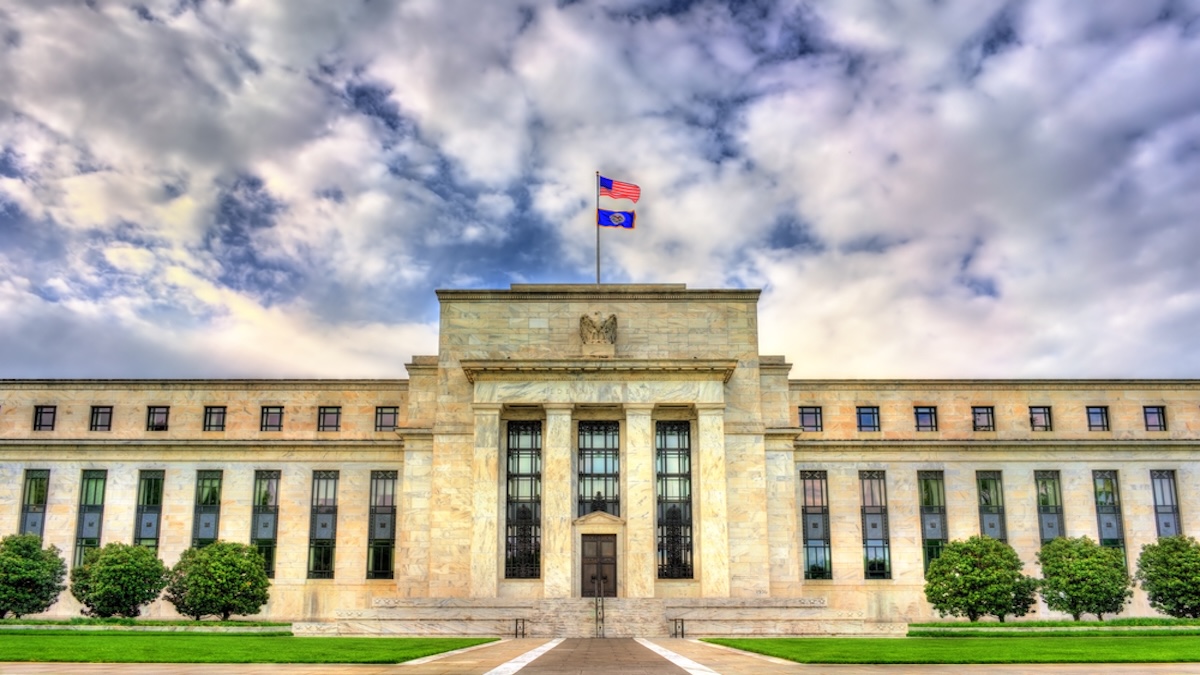
Market participants have been conditioned to expect clear Forward Guidance from Fed Chairs and Ben Bernanke, Janet Yellen, and Jay Powell provided it continuously, especially after the Financial Crisis. Chairman Warsh has made it clear that Forward Guidance will be less under his leadership, but he has offered a very important qualifier that many have yet to grasp.
The discipline of running a succession-ready firm makes every aspect of a business stronger, not just the eventual transaction. Advisors who operate this way attract better talent, serve clients more consistently, and create businesses that hold their value regardless of market conditions.
In a world defined by rampant energy demand and electrification, battery tech is one of the more intriguing places to invest. While attention has turned to the big AI narratives and debates in the market, tech categories like battery innovation have plenty of opportunities.
Inflation progress remains uneven: The latest Personal Consumption Expenditures Price Index showed some improvement after revisions, but several measures suggest price pressures remain sticky and above the Federal Reserve’s target
Only one month ago the big story about the US economy was how strong it was. The August jobs report, which arrived in early September, showed that payrolls were up 162,000 for the month. Meanwhile, at one point the Atlanta Fed’s “GDP Now” model was estimating real GDP would grow more than 5% at an annual rate in the third quarter.
Bond yields still look attractive, but investors are earning little extra for taking on corporate credit risk, according to Thornburg Investment Management.
Seven months into the U.S.–Iran conflict, few historical analogues have held. The trajectory of oil prices has been consistent with previous geopolitical shocks, but the market response elsewhere has looked strikingly different. U.S. Treasury yields have moved notably higher, for example, while credit spreads have remained remarkably resilient.
This year has marked another remarkable chapter for the global economy and financial markets. Investors have navigated no shortage of challenges, from geopolitical conflicts and trade tensions to elevated energy prices and shifting interest rate expectations. Yet despite these headwinds, the economy continues to expand, corporate earnings remain resilient and markets have steadily climbed the proverbial wall of worry.
Long before modern scanners and monitors became common, doctors often checked a patient's health with something as simple as a finger on the wrist. A pulse could reveal a surprising amount about a person's condition. Economists have their own version of this practice. Rather than relying solely on complex statistical models, they often look for signals that offer a quick health check.
The latest employment report was softer on the headline numbers, but I thought the underlying details were quite constructive. Payroll growth came in below expectations and the prior two months were revised downward, yet labor-force participation increased and the workweek stabilized rather than declining as expected.
In this month’s issue, AI, energy and robotics are creating new opportunities in emerging markets, but selectivity remains key as policy, cost and execution risks evolve.
Industrials are supported by increased capital spending in electricity capacity, construction around the artificial intelligence-related (AI) infrastructure buildout, defense, and energy, although higher costs and possible delays in data center construction could temper growth.
We understand that you can’t forecast the sequence of returns, but we CAN build a plan that survives a bad one. As Howard Marks puts it, you can’t predict, but you can prepare. These are the rules of engagement once you’ve crossed from saving into spending.
If you only looked at the price of gold in September, you’d be forgiven for believing the bull market had run out of steam. The yellow metal fell 6.3% during the month, and some in the financial press were quick to say it had failed as a safe haven.
Today’s employment report reinforced a trend that has been evident across several labor market indicators: conditions in the goods-producing sector continue to improve after several difficult years, while hiring across the much larger service sector continues to soften.
Societal angst about AI continues to grow. Whether it’s concern about misalignment or potentially misdirected investment, the AI-may-be-bad narrative is gaining traction. In stark contrast, the AI trade in financial markets was alive and well in September of 2026.
Vigilante movies have always been popular with audiences. From Clint Eastwood (Dirty Harry) to Halle Berry (Catwoman) to Denzel Washington (The Equalizer), characters that take justice into their own hands when systems fail are seen as heroes.
Our real gross domestic product (GDP) forecast for 2026 is 2.5% (based on our Global Investment Management Survey) versus the Federal Reserve’s (Fed's) forecast of 2.2% and the Wall Street consensus of around 2%.
Long viewed as an emergency brake for macroeconomic panic, gold is starting to prove itself as much more than a crisis asset.
Executives enter the earnings season with a bit of a swagger. They won't say it out loud, of course, but consider all the headwinds CEOs of companies big and small have faced in the last few years. First, it was imminent recession fears; then it was looming tariffs (followed by the shock of April 2025).
Global equities advanced in the third quarter as market returns broadened away from technology. But AI’s disruptive impact is spreading across sectors and industries—transforming the very nature of investment diversification.
September’s fixed income sell-off marked a watershed moment for muni bond markets, delivering the steepest drawdown since the 2008 Great Financial Crisis. As benchmark yields spiked, prices across muni ETFs fell in tandem, and the volatility has not let up. This week, both 10-year and 30-year Treasury yields climbed to their highest levels since 2002.
VettaFi has experienced strong growth as a differentiated index provider in 2026. This momentum continues with today’s acquisition of The SPADE® Defense Index. The deal adds a popular, high-conviction thematic sector strategy to a global platform. More than $260 billion in index-based assets is tied to VettaFi.
The bond market took center stage through September with inflation, oil supply chains and the Federal Reserve performing as an ensemble.
Neither a borrower nor a lender be,” wrote William Shakespeare, who was one of history’s greatest authors but obviously ill-versed in economics. Without lending or borrowing, our modern economic society wouldn’t grow very much, AI or not.
For a quarter of a century, the hyperscalers have been some of the most profitable and technologically innovative businesses ever created. The reason was clear: their marginal cost per additional customer was almost zero. Costs were fixed and scale was effectively unlimited, which meant margins widened as volume grew.
T. Rowe Price has announced the launch of the T. Rowe Price Dynamic Emerging Markets Bond ETF (TDEM) on the Nasdaq today, the company said.
Recent bond market repricing has pushed municipal yields to levels not seen in decades and improved the potential risk-reward profile for fixed income. Here, we examine why municipals stand out, how supportive credit fundamentals shape the opportunity and why investors may benefit from extending maturities to lock in attractive tax-exempt income.
The Fed’s latest 25 basis point hike might represent a recalibration rather than tightening. Instead of focusing on the next hike, investors should watch broader financial conditions and the long-term trajectory for interest rates.
Few investors would naturally put artificial intelligence data centers and US shale oil in the same frame. One is built on advanced semiconductors and software; the other on rock, steel and drilling rigs. But the economic pattern is familiar. A breakthrough changes what is possible, demand outruns supply, attractive profit pools emerge and capital floods in.
Investors who have owned securities for many years can accumulate significant unrealized gains. Selling those investments to reposition a portfolio can trigger capital gains taxes.
Market participants have been conditioned to expect clear Forward Guidance from Fed Chairs. Chairman Warsh has made it clear that Forward Guidance will be less under his leadership, but he has offered a very important qualifier that many have yet to grasp.
Today, we’re going to look at a lot of various data points and analysis, that when taken together give us a much clearer picture of the total world.
This week gave us another glimpse of our AI-powered future. AI personal agents are becoming a thing you need to understand, if not use.
Emerging markets have significantly evolved in recent years and offer a more compelling risk/reward setup than in the past. From deeper local markets to world-leading companies, Emerging markets presents a stronger opportunity than geopolitical volatility suggests.
Softer U.S. inflation and labor data as well as more cautious comments from Federal Reserve officials shifted the rates outlook this week.
In September, Vanguard ETFs overall recorded a mix of steady market performance, some volatility, and significant dividend distributions, with investors pouring substantial capital into its funds.
An important decision in special needs planning isn’t necessarily one that can be found in textbooks, determined by a formula in a spreadsheet, or governed by laws or regulations. It’s the choice of the people who will surround your loved one when you can no longer.
Chuck Carnevale explains the Rule of 72 and shows how earnings growth can compound over time. Using FAST Graphs and real stock examples, he explores how growth and valuation affect long-term returns.
Fixed-income investors are being paid more to take risk than they have been in years, but not all opportunities are created equal. Higher yield levels, heightened volatility and growing differences across countries, sectors, industries and issuers are expanding the opportunity set. Dispersion is the raw material from which active returns are generated. Below are four ways investors can capitalize on it.
Midterm elections are increasingly taking over the headlines, and that includes coverage of markets. While inflation, rates, and geopolitics probably have more outright impact on portfolios, investors and market watchers still look to midterm elections as a major event.
Franklin Equity’s Grant Bowers discusses why a higher cost of capital does not change the capital expenditure outlook.
The sell-off in U.S. Treasury (UST) yields has continued pretty much in an unabated fashion In fact, multi-year high watermarks are being achieved throughout the fixed coupon maturity curve. The most widely followed development was the UST 10-year yield rising to its highest level since 2007.