Despite GDP figures indicating continued expansion, weakening consumer confidence and persistent inflation concerns speak to uncertainty.
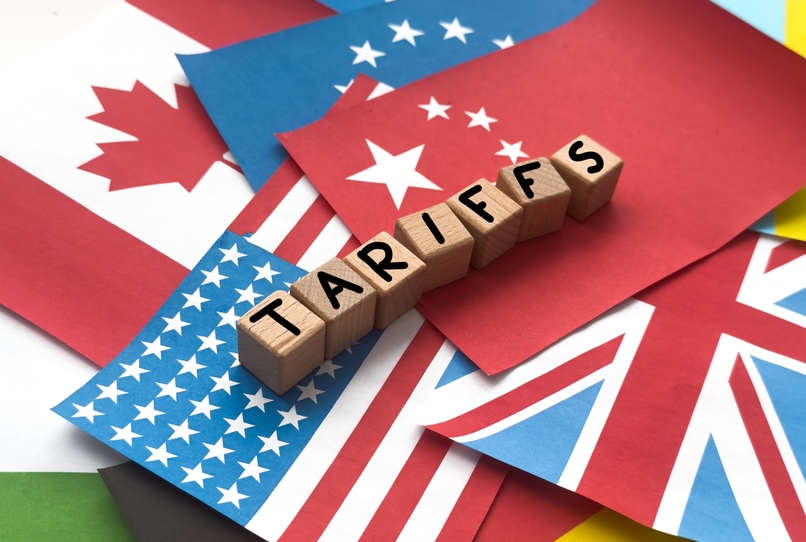
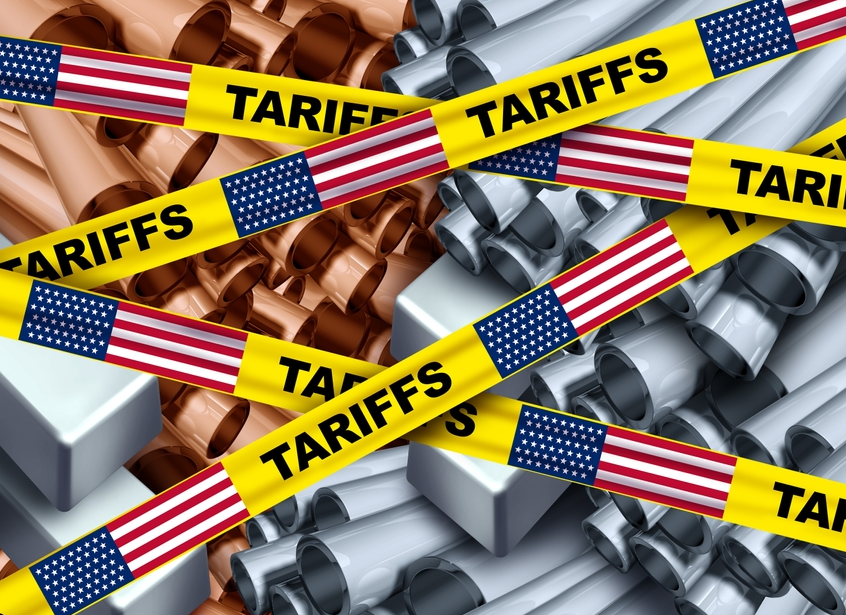
More than a century ago, then-Representative William McKinley pursued an aggressive tariff strategy that sought to protect American industry and reduce reliance on foreign imports. The McKinley Tariff Act of 1890 raised import duties to an average of 50%, one of the highest levels in U.S. history.
Starting in 2025, many non-spouse beneficiaries of inherited retirement accounts must begin taking annual minimum distributions. Our Bill Cass details several strategies and explains why it’s important to seek advice.
With major US policy change unfolding, flexibility across and within asset classes will be critical.
Many independent firms and Registered Investment Advisors aspire to move upmarket, targeting wealthier clients who demand more sophisticated financial solutions.
Portfolio Manager Andrew Mattock, CFA, explains the importance of assessing U.S. tariffs as a component among external variables that can influence, rather than drive, investment returns.
U.S. equity investors face an interesting allocation question in 2025: Why buy anything other than the S&P 500?
Looming U.S. and global policy shifts may potentially rattle markets, but a tactical and flexible approach could help investors navigate risks and opportunities regardless of how events play out.
The decision to drill for oil is not primarily driven by government mandates or regulatory pressure, but rather by market forces.
Trade war fears and disappointing data have sparked a flood of defensive buying activity in consumer staples, utilities, and healthcare stocks.
The perfect pairing for your U.S. large-cap portfolio?
We delve into the unprecedented level of equity risk investors are taking, the record-high uncertainty measures facing further impacts from deglobalization, and the benefits of maintaining a diversified portfolio through it all.
Should you avoid lower-rated, riskier investments like high-yield corporate bonds or bank loans? Not necessarily, but you should understand the risks.
An aggressive U.S. tariff regime will come down hard on major economies.
The long-anticipated “infrastructure week” has finally arrived. This is a cornerstone of the administration’s agenda.
The fourth quarter 2024 earnings season more-or-less wraps up this week with the final trickle of retailers coming in, as well as the highly anticipated report from Nvidia which was out yesterday afternoon.
Measuring the effectiveness of ESG-labeled bonds can be a challenge, particularly with “outcome bonds,” which have specific environmental or social goals but lack standardized assessment criteria.
In the report, John Kerschner, Head of US Securitized Products & Portfolio Manager, and John Lloyd, Lead for the Multi-Sector Credit Strategies & Portfolio Manager, review the best-performing U.S. fixed income sectors of 2024 – what worked, what didn’t, and what it means for investors going forward.
If Trump tariffs Chinese, European, or Canadian products, those countries tend to enact counter-balancing tariffs on U.S. products. Such slows demand for goods and services between all parties, again a deflationary process.
The economy can grow through policy changes.
We recently sat down with Justin Owens, our senior director and co-head of strategic asset allocation, to discuss the next phase of liability-driven investing (LDI) and the key trends driving this evolution. Below is a recap of our conversation.
The overall size of the municipal bond market is over $4 trillion. While this a very large market, an investor’s personal situation combined with the nuances of the municipal bond market can sometimes make it feel much smaller.
Senator Cynthia Lummis (R-WY) takes a pivotal role in shaping how America approaches cryptocurrency and blockchain technology.
Nvidia, the biggest AI chip firm, reports Wednesday with investors watching sales of Nvidia's newest chips and worried about cheaper competition from systems like DeepSeek.
A healthy jobs report should keep real estate traders appeased, but cautious optimism is warranted moving forward.
On this week’s episode of ETF Prime, VettaFi’s Todd Rosenbluth shares advisor polling data on fixed income.
The U.S. economy remains structurally productive. American Economic Exceptionalism is powered by innovation and labor flexibility.
Healthcare stocks were hurt by volatility from factors that include policy-related uncertainty, which hasn’t faded since the US election.
Dean LeBaron’s name may not be familiar to many readers, especially those who only began their careers in the 21st century. But all of us should know who he is. Before there was even a term for it, Dean was the first truly successful quant.
We explore drivers that may contribute to continued outperformance of European stocks since the bull market began in October 2022.
In today’s competitive landscape, a training program may be crucial to help advisors master retirement plans and excel in client engagement. Training builds a knowledgeable, adaptable and trustworthy team.
When it comes to stocks and the stock market, do you speculate in stocks or do you invest in stocks? In this video, Chuck Carnevale, Co-Founder of FAST Graphs, a.k.a. Mr. Valuation is going to look at the distinctions between investing or speculating, and going to make sure that you understand the differences between speculating and investing, and how that should alter your behavior.
The greatest benefits of TCJA were deep in its details.
Tax season can be stressful, but with the right approach, advisors can turn it into an opportunity.
Are European equities poised for a sustained recovery relative to U.S. equities? We outline five reasons why, as long-term investors, we continue to favor U.S. equities over European equities.
In this post we attempt to demystify the mechanics and implications behind why the Fed is considering pausing its QT program.
Investors should not be overly distracted by the recent spate of political headlines and social media updates.
A crowded trade is defined as a position characterized by a high concentration of institutional investors relative to the underlying liquidity.
Equities were continuing to grind higher until Friday’s selloff, as the market got caught up in weaker economic data and potential tariff changes, which could shake up earnings expectations and global trade flows.
When constructing a target-date fund (TDF) glide path, providers have many decisions to make, such as what asset classes to include, when to include them, and how much to allocate to each.
Retail investors are expected to become more bullish about increasing equity exposure when markets rise.
At this time of year, those of us who live in the Northern hemisphere are looking forward to a change of season. Statistically, every February week in Chicago should see the daily high temperature rise by 2-3 degrees Fahrenheit, but conditions can vary significantly from expectations.
In the second half of 2024 the risk premia associated with inflation releases declined relative to labor market data as the Fed shifted focus toward labor market and away from inflation risk. With elevated S&P 500 Index concentration and the market leadership of the artificial intelligence (AI) theme, some single company earnings (NVIDIA) have been rising risk events for the entire index.
Earnings season is winding down, and the spotlight will soon shift toward 2025 trends after an impressive end to last year.
The managed account industry has seen tremendous growth and client adoption, with assets increasing by 28% over the last year and 50% over the past two years.
We have called inflation “political kryptonite” because it is so damaging to politicians. Clearly, inflation played a role in the 2024 election. So now that President Trump sits in the Oval Office, his opponents have been trying hard to link anything and everything in his agenda to inflation.
Back in May of 2024, we wrote a weekly commentary called: “We Can’t Import Cheap Homes; But We Could Import Cheap EV Cars.” In that weekly we argued that since the U.S. auto industry, does not want to build small cars because it is not competitive, then we should open the lower-end EV automobile industry to imports from China.
With our most reliable valuation measures more extreme than both the 1929 and 2000 market peaks, we continue to believe that the stock market is tracing out the extended peak of the third great speculative bubble in U.S. history.
None of us outside Trump’s inner circle know what the real goals are. What looks like needless chaos might lead to benefits that outweigh the costs. One potential benefit is revenue. Could the tariffs produce significant tax revenue that would help reduce the federal debt? The president seems to think so.
Economic indicators provide insight into the health of the economy. They are closely watched to help them make informed decisions about business strategies.