Shares of Meta Platforms Inc. have been under pressure all year due to questions about its spending on artificial intelligence. But a trial accusing its social media platforms of targeting children goes beyond that, raising existential questions about the future of its core business.
Alibaba Group Holding Ltd.’s profit plunged more than 75% after the Chinese company ratcheted up quarterly capital spending to almost $10 billion, aiming to safeguard its position in a fiercely competitive global AI arena.
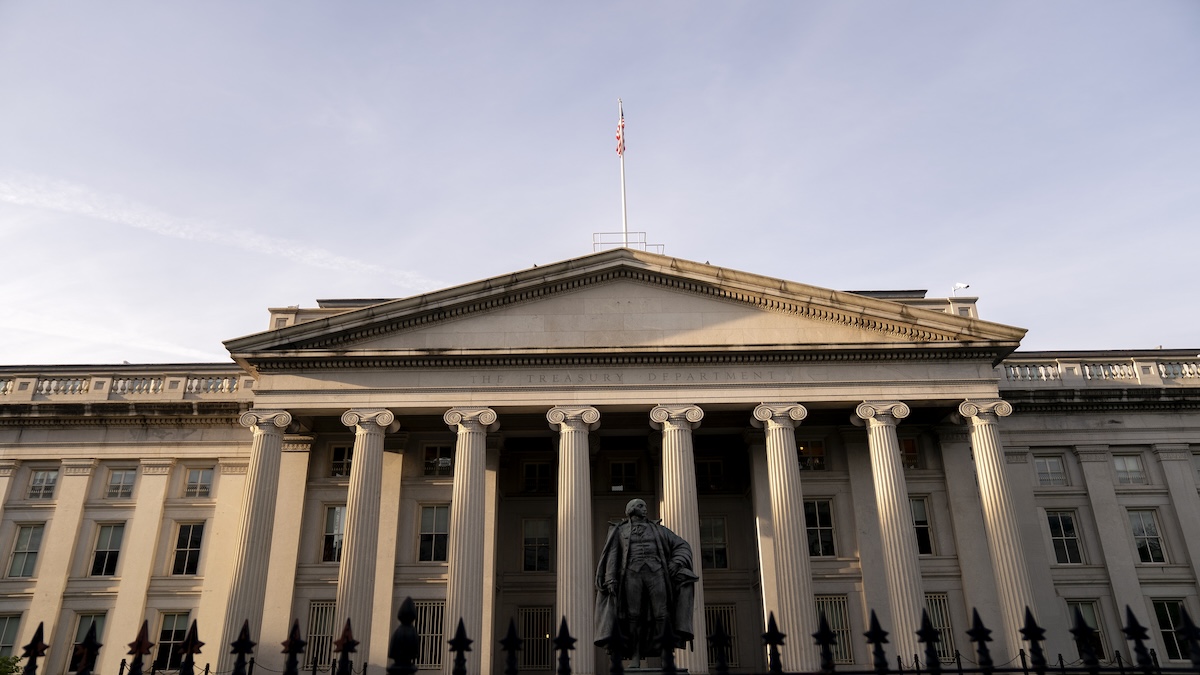
With a slew of unexpected maneuvers this year, Scott Bessent has emerged as the most interventionist Treasury secretary in financial markets in decades — putting his credibility on the line in an effort to quell a potentially damaging rise in US borrowing costs.
The 2026 midterms could reshape control of Congress, raising the odds of divided government and near-term market volatility, but investors should stay focused on long-term goals.
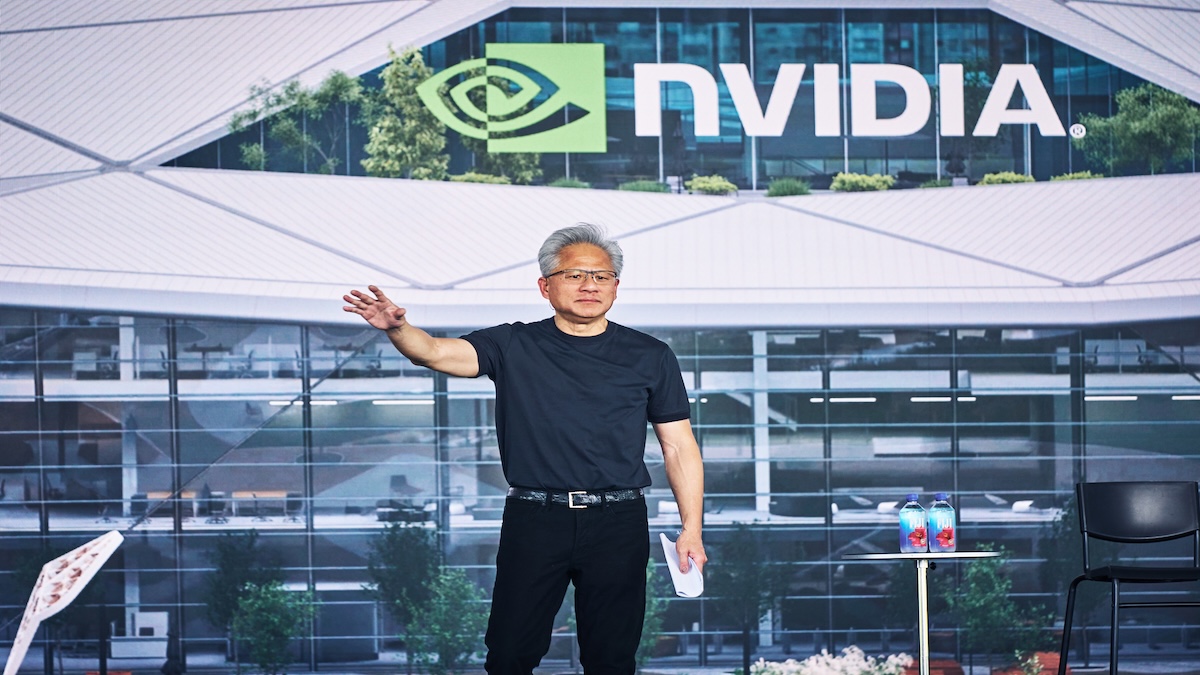
It has been a stellar Q2 earnings season, but we aren’t done yet. After the big retailers this week, Jensen Huang and NVIDIA grab the spotlight on Wednesday, August 26. Then Kevin Warsh takes the podium on the 28th. Through it all, daily market swings hinge on the latest AI developments, along with consumer trends and what’s happening geopolitically.
Market leadership has broadened beyond mega-cap tech, but the next phase is likely to reward disciplined, diversified investors, write Chris Galipeau and Lukasz Kalwak of Franklin Templeton Institute.
Hedged equity as a liquid alternative uses an options-based equity strategy — specifically Swan Global Investments’ Defined Risk Strategy (DRS), in continuous operation since 1997 — as a permanent alternatives allocation that stays invested in the equity market while actively managing downside risk through LEAPS put options
U.S. equities were mostly higher last week, though gains were modest and trading was quiet. The S&P 500, an index of the largest U.S. companies, rose 0.4 per cent and closed on Thursday at a new record high.
Investor appetite for fixed income continues to expand, as evidenced by the latest weekly ETF inflows report from TD Securities. For the week ending August 14, 2026, U.S.-listed ETFs gathered $41.0 billion in total weekly net inflows, which included $13.2 billion into fixed income funds.
The nation’s affordable-housing shortage is fueling a fast-growing corner of the municipal bond market, as lenders securitize portfolios of multifamily mortgages to free up capital for new loans.
Global business activity is showing signs of stabilization, but beneath the surface, the world economy remains divided. Growth momentum has improved in several major developed economies, led by a stronger U.S. expansion and a tentative recovery in parts of Europe.
Margin of safety has nearly vanished from today’s market, as heavy AI debt, off-balance-sheet financing, and a stressed bond market leave stocks little room for error.
Anthropic’s preliminary second-quarter results reignited enthusiasm across the artificial intelligence sector, lifting semiconductor stocks 1% on Monday despite broader tech sector declines. Q2 revenue topped $11.5 billion — a 14x surge year-over-year and more than 2x last quarter’s figures.
FactSet finds core clients still favor cheap funds, while active ETF buyers pay a premium for performance, a trade-off advisors should watch.
Would you consider investing in a bond that earns more than 3% after accounting for inflation? What if that security has zero chance of default? Such an opportunity exists today in U.S. Treasury Inflation-Protected Securities (TIPS).
Agentic AI won't scale until it owns the meeting cycle—not by replacing advisors or acting without oversight, but by maintaining operational continuity: assembling context, preserving memory, and driving approved actions through to completion.
Learn how RAFI fundamental indexing offers an alternative to market-cap weighting in this interview with Rob Arnott and TMX VettaFi.
I’m always asked for scripts. You don’t want a script. You want to be natural and approach clients in a manner that fits you. Practice, practice, practice until it seems natural and comfortable. Authentic is always best.
Treat launch costs as initial investments, not expenses to minimize. Strategic firms often discover that the most valuable investments are the ones that protect their clients, preserve flexibility, and create enduring enterprise value.
The deal follows similar moves elsewhere in the Gulf, including oil and gas pipeline transactions by Abu Dhabi National Oil Co. and Saudi Aramco, as governments seek to bring in external capital without losing control of key assets. In these cases, investors obtained bridge financing from banks that were later refinanced by bonds.
The US Treasury unexpectedly announced it’s ramping up buybacks of long-dated government debt, taking the action in the wake of yields on such securities hitting the highest levels in years.
Marvell Technology Inc. and Alphabet Inc.’s Google announced an expanded chip-development partnership, including a warrant from Marvell allowing the search giant to buy as much as $12.2 billion in shares.
GMO has posted a new 7-Year asset class forecast for July 31, 2026.
With the US fiscal year 2027 (FY27) state budget season now largely complete, several important trends have emerged. Most states and local governments adopted their budgets without major delays or political impasses, an encouraging sign for two important credit considerations: governance and financial management.
BDC bonds have recovered most of their underperformance while equities continue to lag, suggesting investors are demanding a higher risk premium to compensate for uncertainty around portfolio valuations.
Gold’s outlook has brightened considerably following its first-half correction. Spot prices have rebounded to flirt with $4,400 per ounce, supported by renewed central-bank buying, softer economic data, and diminished expectations for further Fed tightening.
Equity markets continued to push higher this week, with nearly all major indices in the U.S. and abroad closing near or at record highs. While longer-term interest rates continued to drift higher, shorter-term interest rates moved lower as investors pushed out both the timing and magnitude of potential Federal Reserve rate hikes.
The biggest political news of recent months is the rise of the Democratic Socialists of America. We suppose this started in New York City, with the election of Mayor Zohran Mamdani, but it has spread to Michigan and other states.
More than a decade ago, hundreds of US garage entrepreneurs were working on shoestring budgets to develop drones with dreams of scaling the new technology. Then China’s DJI introduced a small, inexpensive drone with a stable built-in camera.
The market continues to impress, with the S&P 500 reaching another record high despite a surprisingly weak retail sales report. I had to look twice at the numbers because the weakness was broad, including the important control group, with the previous month also revised slightly lower.
America remains the best country in the world to get rich. Some see this as cause for celebration, while others view it as evidence of a broken capitalist system. As an economist, I am less interested in debating whether billionaires (or trillionaires) should exist than in asking what the alternative is.
Governments can print money, but they cannot print credibility. Once investors begin to question a country's fiscal trajectory, borrowing costs rise, confidence erodes, and policy choices become increasingly constrained. The age of cheap debt allowed many governments to overlook these limits. Today, they are becoming harder to escape.
Discounted municipal bonds could expose you to unexpected taxes. Here's what to know before you buy.
Join the experts at State Street Investment Management for an educational webcast exploring sector performance, key macro drivers, and income-focused opportunities that may help support client outcomes.
As private credit further cements its role as a primary source of corporate financing, it will be essential to balance opportunity with prudent risk management for long-term stability and sustainability.
VettaFi today officially completed its acquisition of RAFI Indices, LLC from Research Affiliates Global Holdings, LLC. The deal was originally announced in June 2026. The transaction unites RAFI’s decades of deep, academically grounded intellectual property with VettaFi’s agile, modern indexing infrastructure.
As growth accelerates, the first question a leadership team has to answer is not how big the firm can get. It is where the frontier sits, the exact point at which scale stops generating lift and starts generating drag.
A divorce. A house fire. A serious accident or illness. The death of a family member. Caring for elderly parents. Life events like these are hard and emotionally draining. To make things worse, they also require us to deal with finances and make significant, complex money decisions.
Small-cap equities are winning out against their large-cap counterparts in a classic David versus Goliath ETF battle. After years of mega-cap technology dominance, small-cap equities have delivered investors a historic first half of 2026.
Goldman Sachs Group Inc., Blackstone Inc. and Apollo Global Management Inc. had been working tirelessly for months to draw up debt deals that would help developers of artificial intelligence systems pay for chips from Nvidia Corp.
The yield on 30-year US Treasuries hit the highest in almost two decades, reflecting investor angst over surging government spending, a flood of long-dated bond sales and inflation that’s been stuck over the Federal Reserve’s target for the past five years.
Wealth managers are beating a retreat from private credit and ramping up a search for alternatives, as they continue to reel from sudden exit restrictions at several major direct lending funds earlier this year.
If the bad news is that members of Generation Z can’t afford to buy a house until they are middle-aged — which isn’t really bad news, honestly, but anyway — then the good news is that at least they are investing their money in high-performing assets.
“Think Like An Investor” is chapter 1 of a 5-part series examining the narratives around “investing for the long run. Learning to think like an investor rather than a speculator is not a personality quirk or a matter of taste. It is the entire game, and the good news is that it is a skill you can actually build, starting today.
I’ve said it before, and I’ll say it again: it’s not the political party that matters, but the policies. Investors, I believe, are better served when they focus not on the partisan noise and headlines but the policies that bring about change.
There is no one-size-fits-all approach to choosing between individual bonds and bond funds. The choice depends on an investor’s goals, time horizon, risk tolerance, need for predictable income, and available assets.
Global equity markets continued their strong summer run this week, supported by what has been an exceptionally strong second-quarter earnings season.
For over two decades, US equities have been the global market leader, outperforming the Stoxx Europe 600 by an astonishing approximately 530%. While Europe’s recent comeback has narrowed the gap, the forces underpinning US leadership remain firmly intact. Below, we revisit the case for US versus European equities and reiterate why we maintain our preference for US equities.
The first step in recovery is recognizing a problem. For decades, some U.S. states have had problems with indebtedness. But as we take stock of state finances today, we see many examples of recovery.