College planning begins long before college. Learn why welcoming a new child is the ideal time to build a strong financial foundation, explore education savings options and prepare for your family’s future.
Equities opened the week higher after Treasury Secretary Scott Bessent signaled on Monday morning that a deal to reopen the Strait of Hormuz could be reached within a day or two.
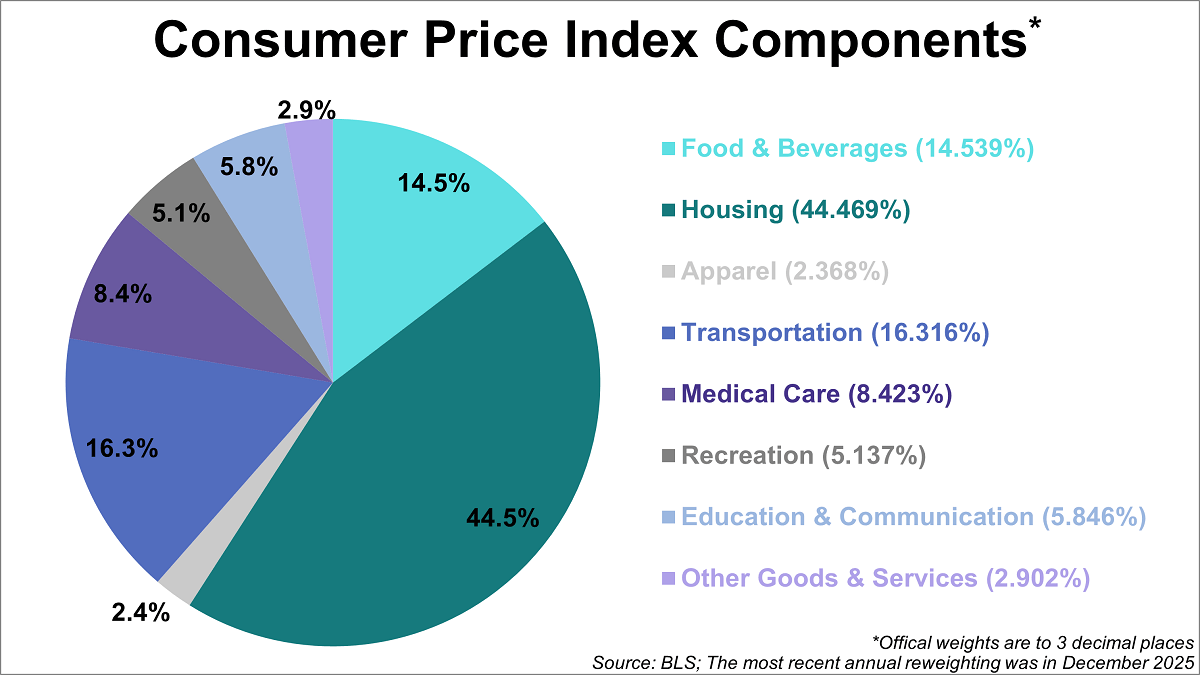
Inflation affects everything from grocery bills to rent, making the Consumer Price Index (CPI) one of the most closely watched economic indicators. The Bureau of Labor Statistics (BLS) tracks this by categorizing spending into eight categories, each weighted by its relative importance.
Join the experts at Calamos for a product due diligence session exploring this unique dynamic hedging product and where it could fit in your portfolio.
Discover the top ETF launches of summer 2026, including new funds from iShares, Amplify, and Defiance targeting crypto, AI, and core equity.
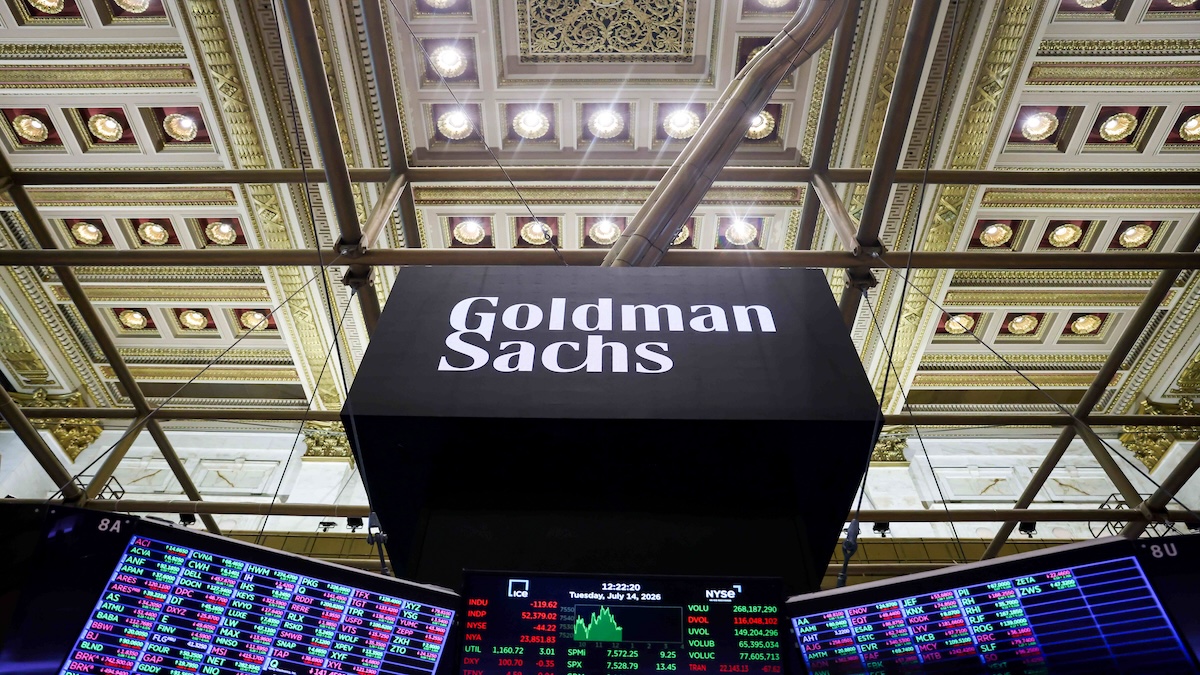
Goldman Sachs Asset Management is continuing its aggressive expansion into active, high-yielding options strategies with a definitive agreement to acquire NEOS Investments. Similar to Innovator Capital Management, another recent acquisition, NEOS has established a firm leadership position in the ETF space.
An in-line inflation reading spurred gains in both stocks and bonds, easing concern about imminent Federal Reserve rate increases despite elevated oil prices.
After 10 years, we understand that not every conflict has a clean answer. Advisors value feeling heard and supported through difficult situations. Over time, we’ve learned that genuine engagement and thoughtful communication build more trust than rushing toward incomplete answers.
Clients' financial lives don't operate in separate silos, and their advisory team shouldn't either. Well-designed partnerships should clearly define responsibilities, compensation, compliance obligations, and client communication. Transparent agreements create better experiences for both clients and professionals.
Goldman Sachs Group Inc. will pay as much as $2.25 billion to buy Neos Investments, expanding its asset manager’s reach in the actively managed exchange-traded fund market.
I recently spent a week working with advisors and team members on a variety of things, all human-element related. The financial business is one of numbers and quantifiable results, but we all know it is much more than this. This week’s column will encapsulate my aha moments from this week.
We’ve all seen how AI tools can boost our productivity and efficiency but, like most things in life, the benefits must be weighed against potential risks. Here are five best practices to help guide fiduciaries and ensure they benefit from these tools without running afoul of regulations.
The outlook for Boeing Co. to earn copious cash flow is bright. It just turned free-cash-flow positive in the second quarter after years of losses, and the company already has its sights on cash earnings of $10 billion a year. This is driven almost entirely by a rebound of commercial aircraft production.
South Korea expects to deploy more than 1 trillion won ($707 million) of fresh capital into a new sovereign wealth fund targeting AI and other strategic industries next year, joining a global push by governments to mobilize investment and gain an edge in high-tech sectors.
Bank of America Corp. unveiled a $250 billion initiative to invest in critical infrastructure across the US over the next year, joining its peers pushing for innovation across the country.
The market was jolted by a much weaker-than-expected employment report, sending Treasury yields sharply lower as investors quickly reduced the odds of another Federal Reserve rate hike. At first glance, the payroll number looked alarming, particularly when combined with sizable downward revisions to prior months and unexpectedly soft wage growth.
Municipals posted their weakest July return in more than two decades. The Bloomberg Municipal Bond Index returned -1.85%, underperforming most investment-grade fixed-income sectors and marking just the fifth negative July return over the past 30 years.
Stocks moved higher as stronger economic data, solid corporate earnings and easing geopolitical concerns helped support investor optimism.
Demand continues to outpace record supply. Municipal bonds remain an attractive income opportunity in a market where the Federal Reserve (Fed) is likely to remain on hold and carry is driving returns. Despite record issuance of roughly $50 billion per month, demand has remained strong.
Tech and AI are driving a greater share of global equity market returns and earnings growth, raising concentration risks and the need for broader diversification.
The S&P 500 has closed at a new record high some 25 times this year, the most recent taking place just last week. The benchmark, which is now up about 13% — as measured by the performance of the State Street SPDR S&P 500 ETF (SPYM) in 2026 — has been boosted by momentum, solid earnings and ongoing economic growth.
Investors, strategists, and market professionals cannot know exactly when interest rates will change, in which direction, or by how much. That does not mean we should ignore economic data, geopolitical developments, policy decisions, or consumer behavior. Those factors matter. But the number of variables and the ways in which they interact make consistently predicting interest rate turning points extremely difficult.
The mantra carrying the markets higher for years has been to leave it to mega-cap tech titans and AI leaders to drive the bulk of market gains, leaving cap-weighted indexes historically top-heavy. But a new narrative has begun to take over.
Join Morten Paulsen, Head of Industrials Research at CLSA and member of the ROBO Global Strategic Advisory Board, for an in-depth look at his latest research report on the accelerating automation of American manufacturing.
For many high-net-worth individuals and families, access is part of everyday life. They can secure reservations at impossible-to-book restaurants, obtain tickets to sold-out events, or open doors that remain closed to most others. Healthcare often feels like it should work the same way. It doesn't.
Unlike the previous 17 years, during which U.S. stocks were the best-performing asset class, they are in the middle of the results with a 10.5% return. Consequently, diversification beyond U.S. stocks and bonds has added value this year, as evidenced in portfolio performance.
A common pattern for couples who are trying to manage their spending goes like this: The partners sit down together, look at the numbers, lay out a spending plan, and agree on what has to change. This works for a few weeks. Then either or both slip back into old behaviors, and there’s a fight about money.
Earnings drive market corrections. That’s the finding, and the next serious decline won’t arrive with a headline about capital spending or the deficit but will begin exactly where all eight of the others began, in the profit cycle, surfacing in credit spreads and revision breadth well before it reaches any earnings report you can actually read.
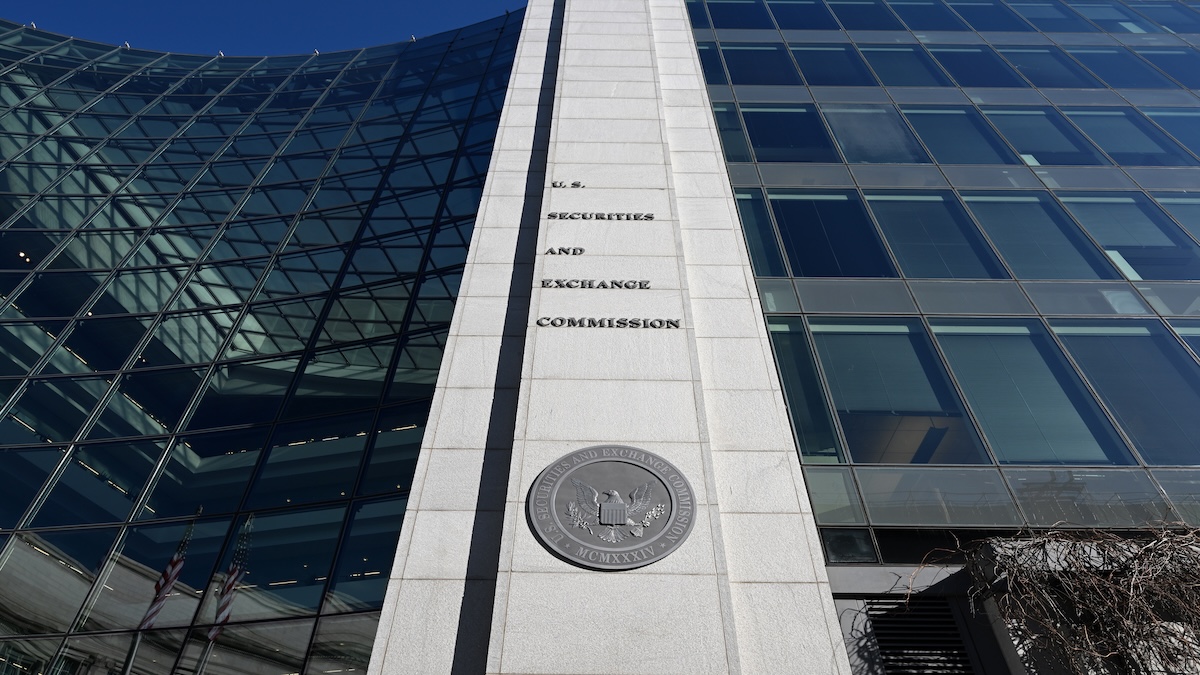
The Securities and Exchange Commission has made it easier for data center owners to sell asset-backed securities, potentially opening the door for more debt sales as tech firms scour Wall Street for ways to pay for artificial intelligence.
A few months into the second Trump administration, I found myself in a packed room alongside senior officials of the Bureau of Labor Statistics. The topic, “Ensuring the Quality of US Statistics,” would have drawn little more than a collective yawn a decade ago.
Intel Corp. raised $20 billion in an upsized share sale, a third more than it was targeting when it announced the deal Monday morning.
Nasdaq Inc. agreed to buy off-exchange stock-trading venue LeveL Markets to expand its role in the equity market, according to people familiar with the matter.
GDP — for gross domestic product, the total market value of all final goods and services produced within a county’s borders — is in many ways the ideal economic statistic, both for what it measures and what it represents. It is a single number that captures so much information, with a scope and history unmatched by almost any other measure.
Good or bad, right or wrong, estimates suggest that in the past eighteen months the net flow of immigrants (including the number of illegal immigrants who were deported) may have been negative. By contrast, in the prior four years the US took in more than eight million immigrants, on net. All these numbers could be revised or argued with over time.
Despite spending much of the past three months moving sideways, the S&P 500 broke out to the upside this week, notching its 25th record high of the year. While leadership has shifted beneath the surface, one constant has been the strength of corporate earnings.
Fifty-eight billion dollars. That’s what the Department of War just awarded Lockheed Martin for PAC-3 interceptors, the missiles that have been knocking Iranian ballistic missiles out of the sky for the past five months. It’s one of the largest munitions awards in U.S. history.
Today’s equity markets are arguably the most concentrated, interconnected and exposed to correlated risks in the modern era. In this fragile environment, we believe investors need more than just exposure to stocks that have driven recent market returns. Disciplined stock selection and clear risk objectives are essential—as well as conviction in what not to own.
US equity market leadership underwent a rotation in July, with previous leaders turning into laggards and vice versa.
We provide research and advice on asset allocation, the selection and weighting of various investment categories. Subject to internal review and governance, our recommendations guide the investment decisions in our family of mutual funds and institutional client portfolios.
With earnings season entering its final peak week, investors will be focused on results from restaurant names such as CAVA Group (CAVA), Jack in the Box (JACK), Red Robin Group (RRGB) and Brinker International (EAT).
For three years, clients have asked the same question: “How do I get into SpaceX or OpenAI before the IPO?” That question just changed tense.
Given how uncertain advisors and investors are over the Federal Reserve’s plans for handling interest rates, the July jobs report was perhaps watched even more closely than normal. That being said, the latest report may not have inspired much confidence.
Here are three tips for young investors setting out to build wealth but not sure where to start.
Join Fidelity Investments for a product due diligence session to learn all about their core active equity suite of Fundamental ETFs.
What stock fund could be safer than a total U.S. stock market index fund with thousands of securities? That was my thinking for the last three decades, but things are changing.
Our thesis remains largely unchanged. Today's “exploding” CDS spreads and bond yields are pricing an Oracle problem. The question investors should be asking isn't whether Oracle is an outlier. It clearly is. The question is whether Oracle is a preview of what happens to credit markets more broadly if AI capital spending keeps outrunning AI revenue.
When data can’t give us the answer, we have to think from first principles. If your objective is to maximize the risk-adjusted return of your savings, finance theory and common sense both suggest that higher risk, all else equal, calls for cutting exposure, not adding to it.
San Juan, the economic hub of Puerto Rico, triggered a rush for its $121 million muni-bond sale this week, as investors seized a rare opportunity to get exposure to island.
The leveraged ETF boom is creating new ways to profit from sudden bursts of volatility in tech stocks.
US natural gas futures rose by the most in more than two months as an unusually large swing in weather forecasts triggered a wave of short-covering among money managers who were the most bearish on gas since 2020.