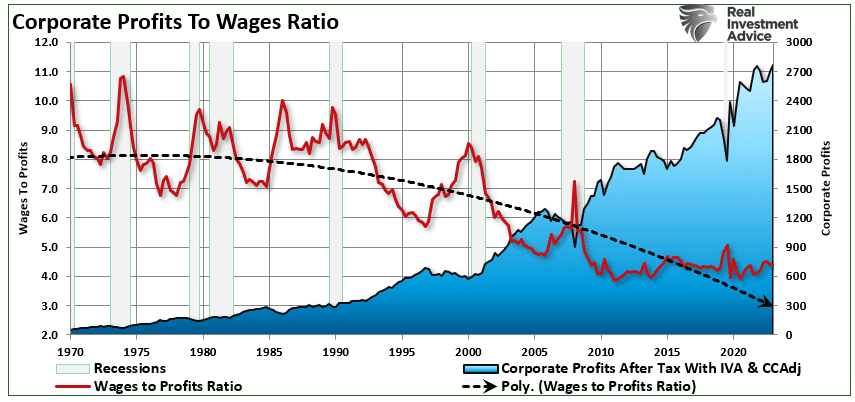
The economy continued to grow in the first quarter at what we estimate is a 2.6% annual rate. That’s a slowdown from the 3.1% rate in 2023, but still good compared to the past couple of decades when the average growth rate has been 2.0%.
On this episode of the “ETF of the Week” podcast, VettaFi’s Head of Research Todd Rosenbluth discussed the SPDR S&P Insurance ETF (KIE) with Chuck Jaffe of “Money Life.” The pair talked about several topics regarding the fund to give investors a deeper understanding of the ETF overall.
Merger and acquisition (M&A) activity in the investment advisory space has been very active in recent years, and this, along with the increasing age of many firm founders, has prompted more than a few owners to explore the potential sale or merger of their firms.
Alphabet Inc. is bringing in so much cash that hopes are rising it will take a page out of the Meta Platforms Inc. playbook and start paying a dividend.
The world’s financial markets are encountering a force they didn’t bet on for 2024: A strong dollar is back and looks set to stay.
Amid geopolitical tensions in the Middle East, bullish momentum could remain for a pair of Vanguard oil ETFs.
When the Federal Reserve flooded the economy with cash during the Covid-19 pandemic it exacerbated a problem for America’s largest banks: What to do with all the extra deposits.
The melding of yield and rate risk mitigation is available in the Vanguard Intermediate-Term Bond ETF (BIV).
What should financial advisors do to attract and retain high-net-worth and affluent investors? I have a one-word answer.
Copper traded near $10,000 a ton, hitting a new two-year high on its way, as investors continue to pile in on a bet that miners will struggle to service a surge in demand for the bellwether industrial metal.
I have indicted the securities industry for spreading “a web of deceptions that have become conventional wisdom.” But a small part of the industry does provide products and services that are beneficial and necessary. That is the subject of this article.
Senior discounts aren't just about age; they're about a lifetime of work and contributions and a way of giving back to you. They also allow you to stretch your income and enjoy more experiences. You’ve earned the right to enjoy them.
With the right tech in place, advisors can access reliable, high-quality models that can be used repeatedly across their book of business.
In my recent piece, “Japan's Lost Decades,” I examined why Japan's GDP is smaller than it was in 1995 and why it took 35 years for its stock market to set its recent record high.
Today, we look at the world of “alternative investing.” I put it in quotes because this was originally a somewhat pejorative term. Back in the 1960s (and maybe before?), brokers sold you stocks and bonds, saying that was how smart people invested
Our outlook on the 11 S&P 500 equity sectors.
Copper is trading at a 52-week high, oil is above $90 a barrel and the S&P 500 Energy Index just hit a fresh all-time high.
Some experts think that efforts to expand blockchain technology are being forced upon end users and investors.
Inflation concerns are top of mind again, with consumer prices and producer prices rising higher last week.
So far this year, the US equity market has shown remarkable resilience and US inflation has remained sticky. Against this backdrop, a recent survey of our chief investment officers offers analyses and perspectives on key areas, such as Federal Reserve rate cut expectations, geopolitical risks, uncertain corporate earnings and opportunities in different asset classes.
Traders can continue riding the strength of the AI wave with the Direxion Daily Semiconductor Bull and Bear 3X Shares (SOXL).
Investing in private markets has obvious upsides, including potential higher returns, access to a broader opportunity set, and greater diversification.
Three months of discouraging inflation data coupled with some hot economic data points are considered headwinds for U.S. Treasurys.
A string of disappointing inflation data has forced the Federal Reserve to reset the clock on its first interest-rate cut and re-evaluate the trajectory of price growth.
Ben Graham, the value investor and Warren Buffett mentor, famously said the market is like a voting machine in the short run, but “in the long run it becomes a weighing machine.”
US markets are doing much better than markets everywhere else, but no one seems to know why. Yes, there are theories: Perhaps it’s the promise of AI, although it remains to be seen how AI will play out and who will profit.
Just as a GPS navigator analyzes real-time data to recalibrate routes efficiently, active management interprets market conditions to steer portfolios towards investment goals.
The Northern Trust Economics team shares its outlook for key APAC markets.
Nouriel Roubini, Stephen S. Roach, Nancy Qian, and more assess what it will take to improve the country’s economic prospects.
In this edition of Bull vs. Bear, staff writers Nick Wodeshick and Nick Peters-Golden ask whether rate cuts will still happen in 2024.
Q2 weakness is causing traders to up their bearish bets on bond prices, but it presents an opportunity for value-seeking investors.
JPMorgan Chase & Co. Chief Executive Officer Jamie Dimon makes no secret that his firm is all-in on artificial intelligence. Now, the head of the world’s biggest bank is laying out his vision for the future of money in an AI world.
With energy stocks trading near all-time highs and oil climbing as well, hedge funds think they’ve found a trade to capitalize: Sell the shares and pour the profits into buying more crude.
The highest US yields since November are beginning to attract some opportunistic buyers, even as negative sentiment remains firmly entrenched throughout the Treasury bond market.
The Northern Trust Economics team shares its outlook for U.S. growth, employment, interest rates and inflation.
Ali Dibadj, CEO, shares the industry topics he’s hearing most in conversations with asset allocators, family offices, end-clients, colleagues, investors, and others he meets around the world.
The S&P 500 index reached a record close this week, rising 0.4% and marking its strongest Q1 in five years with a 10% increase since the end of 2023.
Japan has had two big moments in the last month, with the Nikkei 225 equity index breaking above the highs set in 1989, and the Bank of Japan (BoJ) raising interest rates for the first time in 17 years.
It appears investors are heading for the exits on U.S. Treasuries and towards the entranceway of European bonds.
Advisors are using sector and industry ETFs to combat concentration risk and position for macro variables.
Join the experts at State Street Global Advisors for a free webcast that unpacks how sector and industry investing can help diversify today’s portfolios.
Federal Reserve Chair Jerome Powell is making life tougher for his peers around the world as the prospect of higher-for-longer US interest rates reduces room for easier policy elsewhere.
Last July, the House Financial Services Committee approved two major pieces of legislation aimed at creating a regulatory framework for the cryptocurrency industry, the Financial Innovation and Technology for the 21st Century Act and the Clarity for Payment Stablecoins Act.
With the end of great inflation scare in sight, it's time the central bank hive mind contemplated what it might learn from the failure of its economic models.
While immigration has positively impacted economic growth and disinflation, this story has a dark side.
Fed Funds Rate: According to Bloomberg calculations based on where Fed Funds futures are currently trading, there is a 20% chance that the FOMC cuts the overnight rate in June and a ~50% chance that they cut in July.
Our investment leadership team convened twice on Sunday to discuss the conflict between Iran and Israel, its key watchpoints in the days ahead, and the pertinent risks onto markets, our investment portfolios, and our clients. The team broadly agreed that maintaining a slightly defensive posture across portfolio strategies remained appropriate.
Today’s technology boom is being driven by real efficiency gains, which is why we think comparisons with the dot-com bubble are misguided.
Gold prices have shot up to historic highs – outshining broader markets and driving up demand for gold ETFs.
Last week, the S&P 500 notched its worst weekly performance since last October. Small-cap indexes weren’t immune from the weakness.
Our profession is being transformed by powerful, AI-based technologies that will replace human-based financial advice. They will drive down costs, reduce valuations, and deflate the multiples paid in M&A transactions.