Now that we’re about to enter the Christmas shopping season, expect even more focus than usual on the consumer over the next several weeks.
There are clear intersections between artificial intelligence (AI) and cloud computing. But for some reason, the latter has been an afterthought as the former has flourished in 2023.
CIO designate Sean Taylor gives his take on what Asia has to offer global and emerging markets investors, from growth, to diversification, to innovation.
Fixed income ETF demand has been strong in 2023 led by Treasury ETFs. However, advisors have been rewarded by turning to alternatives in the fixed income space, such as those focused on the collateralized loan obligations (CLOs) market.
Former Bridgewater Associates LP executive Bob Elliott’s plan for exchange-traded funds that employ hedge fund strategies has sharpened the debate about whether retail investors should have access to such approaches.
Sam Altman will return to lead OpenAI less than five days after he was pushed out of one of the world’s most valuable startups, setting off a shock back-and-forth drama that transfixed Silicon Valley and the global AI industry.
News that a Washington DC Court of Appeals ruled in favor of Grayscale Investments LLC over the Securities and Exchange Commission has ignited hope that a Bitcoin exchange-traded fund will soon be available. Bitcoin prices jumped.
Should the US Securities and Exchange Commission approve an exchange-traded fund focused on the spot market for Bitcoin? The question has yet again gained relevance, thanks to the District of Columbia Court of Appeals, which last week reversed the SEC’s decision to reject a Bitcoin ETF proposed by Grayscale Investments.
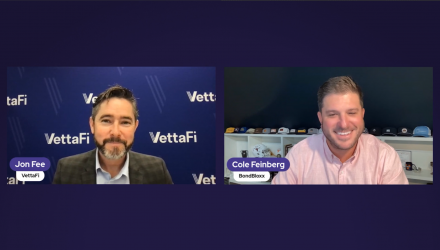
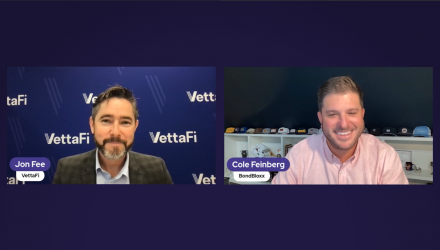
VettaFi CMO Jon Fee hosted Cole Feinberg, a BondBloxx partner, in an episode of “Road to Exchange.”
Taxes can have a significant and ongoing impact on an investment portfolio. Advisors can help their clients minimize that impact with a tax-smart approach. Advisors can prepare for capital gains season now, and potentially maximize their clients’ after-tax returns.
Year to date, the Russell 2000’s scant 1% gain is dwarfed by the S&P 500’s 18% gain. But that could be changing. After dominating much of 2023, large-caps could potentially step aside for small-caps to take the majority of gains.
Reasons prompting concern around investing in China may be improving, but volatility is likely to remain characteristic of Chinese stocks in 2024.
VettaFi’s Stacey Morris recaps the year in energy ETFs and offers an outlook for 2024. Honeytree’s Liz Simmie spotlights their recently launched U.S. Equity ETF (BEEZ) which focuses on “responsible growth”. Brown Brothers Harriman’s John Hooson discusses the potential pros and cons of ETFs moving to T+1 settlement next year.
Cathie Wood’s ARK Investment Management and digital-asset firm 21Shares just became the first major applicant in the US spot Bitcoin ETF race to list a fee on their planned offering.
For investors stashing record sums in cash, US bond managers overseeing a combined $2.5 trillion have a bit of advice: It’s time to put that money to work.
As we know all too well, human beings are neither perfect nor consistently rational, especially when our hard-earned money is involved.
The Age of AI (And Our Human Future), by Henry Kissinger, Eric Schmidt, and Daniel Huttenlocher, is keenly relevant.
The S&P 500 has rallied in recent days and was up close to 20% for the year. However, heading into 2024, many advisors are exploring a range of investment ideas that offer exposure beyond the stock market.
It might feel as though enthusiasm surrounding artificial intelligence (AI) and the related investment theme has waned in recent months. Actually, the opposite is true.
Dina Ting, Franklin Templeton’s Head of Global Index Portfolio Management, sheds light on the benefits of single-country ETF allocations against what has been a rocky macro backdrop and discusses ways to re-evaluate potential opportunities in terms of tax-loss decision-making.
After three days of high drama at the world’s most closely watched startup, which many compared to a coup, Microsoft Corp. capped the weekend with one of its own: The software giant hired ousted OpenAI chief Sam Altman.
On this episode of the “ETF of the Week” podcast, Tom Lydon discussed the Global X SuperDividend ETF (SDIV) with Chuck Jaffe of “Money Life.” The pair talked about several topics regarding the fund to give investors a deeper understanding of the ETF overall.
Picking the “right” stock is akin to betting on a game; not only must one pick the right team (beta), but also by how much (alpha).
When it comes to artificial intelligence, one of the most commonly debated issues in the technology community is safety — so much so that it has helped lead to the ouster of OpenAI's co-founder Sam Altman, according to Bloomberg News.
There was a time, not so long ago when the Federal Reserve said very little about its policies; its leaders did their utmost to obfuscate rather than clarify. Those days are long gone.
The Treasury market’s nascent rally is facing its next big test: a bond auction that will help gauge whether investors are confident 2023’s selloff is over once and for all.
The powerful rally in small-cap stocks looks like yet another false start rather than a lasting recovery.
It’s touted as crypto’s big breakthrough on Wall Street: The imminent arrival of Bitcoin exchange-traded funds that will kick open digital-currency investing to the institutional and retail masses.
Following the surge in inflation, the most aggressive Fed tightening cycle since the 1980s and multi-decade lows in business and consumer confidence, calls for a U.S. recession have been prevalent all year.
Is the Federal Reserve nearing the end of its rate-hiking cycle? The U.S. central bank is giving investors mixed messages. The Fed has recently paused its rate hikes and said it would keep interest rates between 5.25% and 5.5%.
Using LOGICLY data, we look at two of Direxion’s leveraged gold miners ETFs and their key features.
Individuals are increasingly looking for more tailored investment solutions, so it makes sense for plan fiduciaries to consider a more personalized approach, according to John Kutz, National Retirement Plan Strategist. He says personalization may be the ticket to better retirement outcomes.
Investing in the stock market typically brings to mind the strategy of buying low and selling high. However, there’s another, somewhat counterintuitive method some investors employ: short selling.
A burst of activity in Bitcoin derivatives has evoked memories of the period in late 2021 when the token surged to an all-time high.
I find for many the same is true with ETFs and capital gains. However, the ETF pie continues to expand with newer investors each year. The persistent lack of a capital tax gain burden simply for holding onto an investment is worthy of celebration.
Fossil fuels, particularly oil, are difficult to replace due to their availability, affordability and energy density. Low-carbon alternatives, like solar energy, need large amounts of space to produce comparable amounts of energy to oil.
Though inflation continues to cool, there remains a potentially longer road ahead to get to the Fed’s desired 2%. In an environment of uncertainty and elevated inflation, the inclusion of managed futures in a portfolio made a significant difference in the last few years as modeled by DBi recently.
Generative artificial intelligence (AI) is firmly on the scene and set to change the way we live and work. NVIDIA CEO Jensen Huang, an AI pioneer and visionary, is optimistic and energized.
Exchange is thrilled to announce another incredible keynote speaker. DoubleLine Capital founder Jeffrey Gundlach will join an already impressive lineup of Exchange speakers.
The Treasury Department’s top domestic finance official said the US government debt market has functioned well during a year of outsized interest-rate volatility, a regional banking crisis and the recent hack of the world’s largest bank.
The federal government starts a new fiscal year every October 1. In a rational world, Congress would fulfill its responsibilities by passing bills before that date to authorize spending in the various agencies and programs.
The run-off election looks tight in Argentina, where I’m attending a Young Presidents’ Organization (YPO) event in Buenos Aires.
A charismatic entrepreneur pulls in wealthy investors to amass a portfolio of some of the finest prime real estate. Banks and bondholders are persuaded to provide the leverage. What could possibly go wrong?
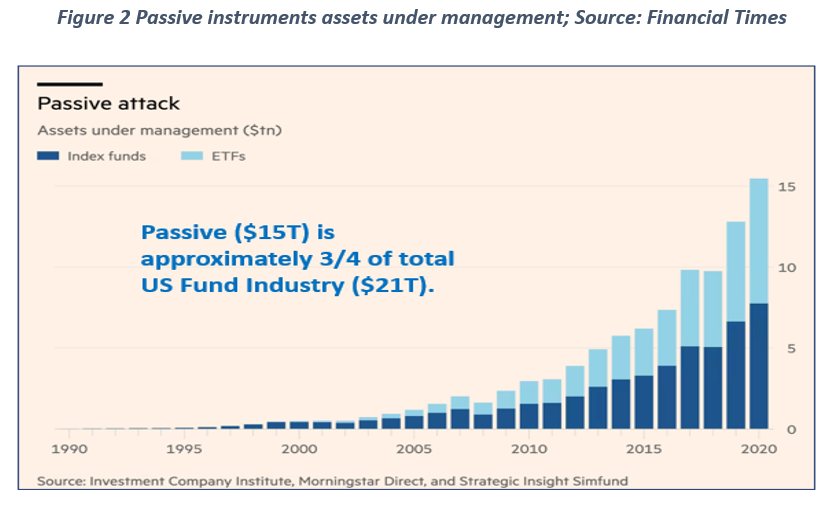
At first blush, a record $100 billion flood into actively managed exchange-traded funds this year raises a tantalizing prospect: A revival of stock picking even as only Big Tech names outperform the market. Yet, a look under the hood of popular ETFs shows the boom is almost entirely taking place in passive-looking trades.
Investors were given plenty of opportunities to fret about the outlook for technology giants this earnings season. Instead, they doubled down on a strategy that has worked all year: piling into the biggest stocks
As we approach the final months of 2023, consumer strength has been somewhat mixed but has overall been running out of steam due to stubbornly high grocery prices and higher housing costs. Interestingly, consumers continue to spend on experiences like concerts, movies, and restaurants.
Confounding market and economic signals persist as the year’s end draws near. In a year punctuated by heightened uncertainty as investors attempted to navigate a confluence of risk factors, stock and bond correlations proved a significant challenge to traditional portfolios.
Year-to-date, technology has outperformed the broader market largely given the prevalence of low leverage, high profitability and consistent earnings across many names in the mega-cap tech space.
Gold has a longstanding reputation as an asset that holds its value during inflationary times. It also offers diversification benefits that can be useful in such conditions.