Treasury inflation-protected securities can help buffer a portfolio against inflation. However, it's important to understand their unique characteristics and complex nature.
Rick Raczkowski, PM, Relative Return Team, Loomis, Sayles & Company, discussed how the team views fixed income investing looking ahead.
Actively managed ETFs are among the fastest-growing products in the broader ETF space.
Sticky underlying price pressures could prevent a faster return to neutral monetary policy.
Donald Trump’s presidency is set to bring a fresh bout of volatility to markets, supercharging an options boom driven by retail traders.
Amid a red-hot run in the shares of MicroStrategy Inc. last month, Matt Tuttle got some bad news from the prime brokers for his booming leveraged ETF linked to the shares of the crypto-centric company.
The world’s biggest private credit managers are turning to an obscure investment product to help raise billions from deep-pocketed insurance companies, testing the limits of industry safeguards meant to curb risk.
Uncertainty ahead of the election may have resulted in lower corporate capex and M&A trends, but hope abounds that 2025 could bring about renewed animal spirits.
The second coming of Donald Trump is unquestionably bad news for Germany.
Charles Schwab Corp.’s incoming chief executive officer, Rick Wurster, said the firm is looking to offer spot cryptocurrency trading once US regulations make doing so easier — something that’s more likely once President-elect Donald Trump takes office.
Snowflake Inc. shares surged by the most in more than four years after the company issued a sales outlook that surpassed investors’ expectations, suggesting new products are attracting strong demand.
US President-elect Donald Trump's administration will face a wary, inflation-sensitive public and a Chinese regime that is well prepared to pursue large-scale retaliation. If it is serious about introducing new tariffs, it will need to clarify its priorities and then choose among conflicting policy goals.
Most important advances in technology occur when someone combines a variety of innovations in different fields in a commercially successful way.
“Overheated” is how short-sellers Citron Research described MicroStrategy Inc. on Thursday.
Blackstone Inc.’s main private credit fund stormed the investment-grade bond market to raise a combined $1.5 billion in a single day, adding to the rush of direct lenders trying to lock in cheaper financing costs.
The post-election stock market is already giving investors a wild ride. Big individual stock selloffs, massive rallies, and a dizzying array of market narratives built on Wall Street’s best attempts to read President-elect Donald Trump’s mind.
Fidelity Investments is expanding its reach in the competitive world of systematic strategies for the masses, with the launch of five new active ETFs.
Sirion Skulpone of Goldman Sachs Asset Management talks through the risks of being concentrated in individual stocks.
Many of the myths and controversies surrounding the equity risk premium (ERP) are rooted in semantics: The same term is used for multiple purposes.
How does the euphoria for stocks in the days after the 1980 election contrast with today’s Trump election euphoria?
In 2025, Social Security will see a 2.5% cost-of-living adjustment. At the same time, Medicare Part B premiums and the annual deductible will increase.
U.S. policies are set for a major reshaping as full Republican control takes hold in 2025.
I’ve been looking for the best dividends in the market for over 13 years. Time after time, I keep coming back to this question.
Why the equity market rally following the U.S. presidential election could continue into year-end.
In January 2022, we ventured three hundred years back in time to an episode that has long been considered the classic example of mania in the early annals of market history.
To judge by the action in some foreign markets, Donald Trump’s election is pricing in economic winter.
Vanguard has a pair of bond options if fixed income investors are looking to get active with their portfolio.
In Europe, the ECB stimulates a sluggish economy while in the UK, the problem is inflation. In contrast, the US responds to stronger growth.
Three key tailwinds have emerged to support Emerging Market (EM) equities & debt. However, looking at the past 10+ years, EM has underwhelmed US allocators, giving investors pause as they rebuild their international exposure.
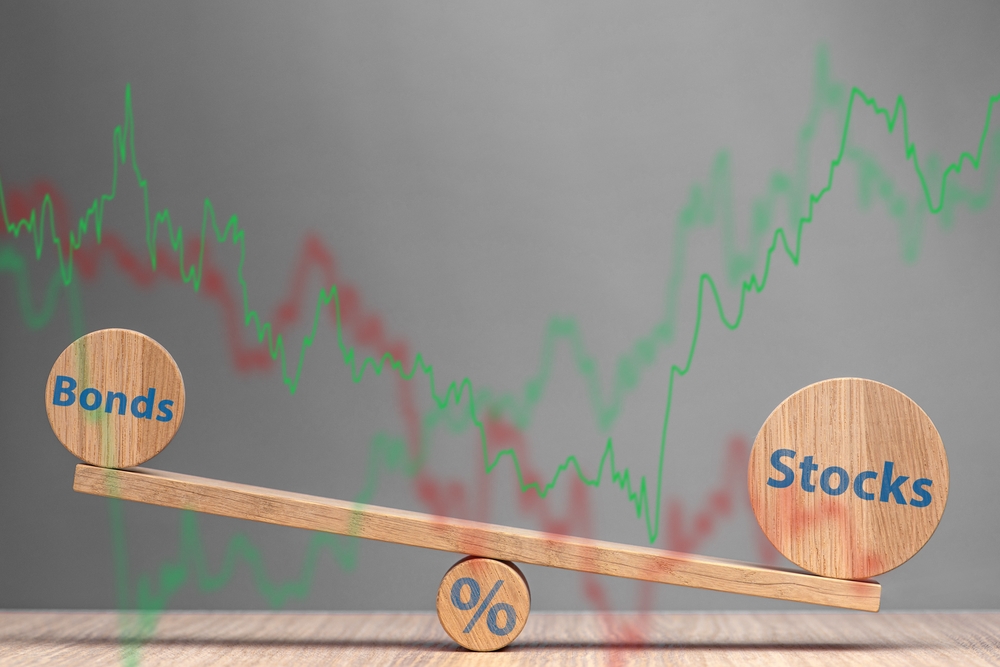
The inverse correlation between bonds and stocks has returned, broadening potential for risk-adjusted returns in multi-asset portfolios.
US banks enjoyed a sharp stock price jump on Donald Trump’s election victory; two weeks later, they’ve held onto those gains. There’s one good reason for this — and several poor ones, all to do with regulation.
Berkshire Hathaway Inc. reported its stock holdings last week — a widely anticipated quarterly update of Warren Buffett’s latest trades. There were some notable ones, including the addition of Domino’s Pizza Inc. to Berkshire’s portfolio and more trimming of its stake in Apple Inc.
Bitcoin approached the historic $100,000 level, fueled by optimism that President-elect Donald Trump’s support for crypto heralds a boom as the US pivots to friendly regulations in place of a crackdown.
Canada’s University Health Network said its Toronto Western Hospital would be the first non-US site of a trial for a device created by Neuralink Corp., Elon Musk’s brain-implant company.
Nvidia Corp. assured investors that its new product lineup can maintain the company’s artificial intelligence-fueled growth run, though the rush to get the chips out the door is proving more costly than expected.
Is inflation tamed? It's a key question that got lost in election coverage. It looms more than a new administration does over portfolios.
The 2024 Global Survey of Financial Advisors from Natixis revealed the ongoing hesitance of investors to move out of cash and into bonds.
For most of the last fifty years, fixed income investing has been characterized by owning some combination of Municipals, Corporates, Treasuries and Agency Mortgage-Backed Securities which has worked well with periods of secular disinflation.
We seek to capitalize on today’s attractive yields while staying mindful of economic and market uncertainties.
Chief Investment Officer Sean Taylor considers the implications of a second Trump administration for emerging markets.
The Treasury yield curve has shifted appreciably all year long. In particular, the last few months have realized substantial rate changes. The shift in the Treasury curve is not isolated. The corporate curve is also changing.
We take an early look at how a new policy platform could factor into the US deficit and debt.
Paul Tudor Jones recently voiced concerns that rising U.S. deficits and debt and increasing interest rates could lead to a fiscal crisis. His perspective reflects the long-standing fear that sustained borrowing will trigger inflation, raise interest rates, and eventually overwhelm the government’s ability to manage its debt obligations.
Lost in the excitement of election week was a meeting of the Federal Reserve. At its conclusion, interest rates were lowered by another quarter-point. But where they are heading from here is a matter of increasing uncertainty.
With his remarkable electoral comeback, Donald Trump has defined an era in American political history. But his legacy will depend on whether his policies advance long-term American prosperity by cutting taxes and boosting investment, or undermine it with trade wars and mass deportations.
There is significantly more to the story of emerging tech than ChatGPT. Investors curious about e-commerce, A.I., and cloud technology have an opportunity for growth.
Bitcoin climbed to a record high for a second consecutive day, with MicroStrategy Inc. accelerating the pace of its massive purchases of the cryptocurrency.
Nouriel Roubini is seizing on Donald Trump’s inflation-threatening policy agenda to make a case for an alternative haven trade to Treasuries in a world of elevated volatility.
In the months before Donald Trump entered the White House the first time around, speculation mounted that he would release mortgage giants Fannie Mae and Freddie Mac from the federal conservatorship they’d operated under since being bailed out during the global financial crisis.
The multi-trillion-dollar artificial intelligence boom was built on certainty that generative models would keep getting exponentially better. Spoiler alert: they aren’t.