With the outcome of the election now known, we will continue to assess how policy changes impact our broader view.
From beginning to end, the 2024 election cycle will be looked back on as historic
For DC plan sponsors, developing a short list of income solutions is a good first step.
As the year winds down, many investors focus on year-end charitable giving and tax planning. Finding a charity and donating money is the easy part. Taking slightly different approaches to gifting can yield dramatically different results from a tax perspective.
October’s market activity can be neatly summarized in a single chart: the dollar (BBDXY) was strong and U.S. stocks (the VOO ETF tracks the S&P 500 index) meaningfully outperformed international stocks (VXUS).
Republicans won the White House and Senate in the 2024 U.S. election, while vote counting continues for the House of Representatives. Here's a look at the policies that could affect markets.
Here’s our outlook on what to expect and how investors might navigate this new phase.
Microsoft, Meta, Apple, Alphabet, and Amazon all experienced fluctuations in their shares, leading to a two-week losing streak in October after five months of gains. Despite this, Financials, Communications Services, and Energy sectors remained positive. Looking ahead, we're analyzing President-elect Trump's platform and its potential implications for corporate taxes, regulations, tariffs, inflation, and economic growth.
Even with Republicans poised to control the White House, the Senate, and the House of Representatives, slim congressional majorities could hinder the president’s efforts to enact his agenda.
For investors who have been considering active investing, the post-election market swing could be the trigger to dive in.
With a "Red Sweep" in Washington likely, markets are now pricing in a more aggressive policy agenda.
VettaFi’s Todd Rosenbluth explains how the election could impact specific ETF categories and the industry overall. Baird’s Rich Lee also discusses the election’s implications for ETFs and talks market concentration risk, active ETFs, buffer products, crypto, and what to watch for in 2025.
Investors are piling into US leveraged loan ETFs, betting that President-elect Donald Trump’s policies will potentially boost inflation and push the Federal Reserve to keep interest rates higher for longer.
The US Federal Reserve and its chair, Jerome Powell, are rightly choosing not to act on any assumptions about what Donald Trump might do as president. That said, if he follows through on his more extreme campaign promises, they’ll struggle to contain the economic consequences — a problem that equity investors ignore at their peril.
I think I finally understand value of cryptocurrencies: They add some volatility to your portfolio. Maybe that’s why they have found such a champion in Donald Trump, who if nothing else adds some volatility to our politics.
BlackRock Inc. is throwing its weight behind an early push to bring exchange-traded funds to money-market investors.
Williams (WMB) handles around one-third of the natural gas consumed in the US each day. Management from this midstream leader and S&P 500 component is uniquely positioned to discuss the constructive outlook for US natural gas, including opportunities related to artificial intelligence data centers.
All year, a slew of Wall Street pros have questioned the durability of an indiscriminate risk rally that has fattened stock prices by trillions of dollars, sent Bitcoin soaring, fueled a credit bonanza, and more.
Being an expert often comes with what I call “the curse of mastery.”
Protective® Aspirations variable annuity can provide financial professionals’ clients with both guaranteed lifetime income and the ability to pivot when needs change during retirement.
Let's keep our client meetings focused and manageable. By doing so, we not only respect their time and attention but also increase the likelihood of them taking the necessary steps to achieve their financial goals.
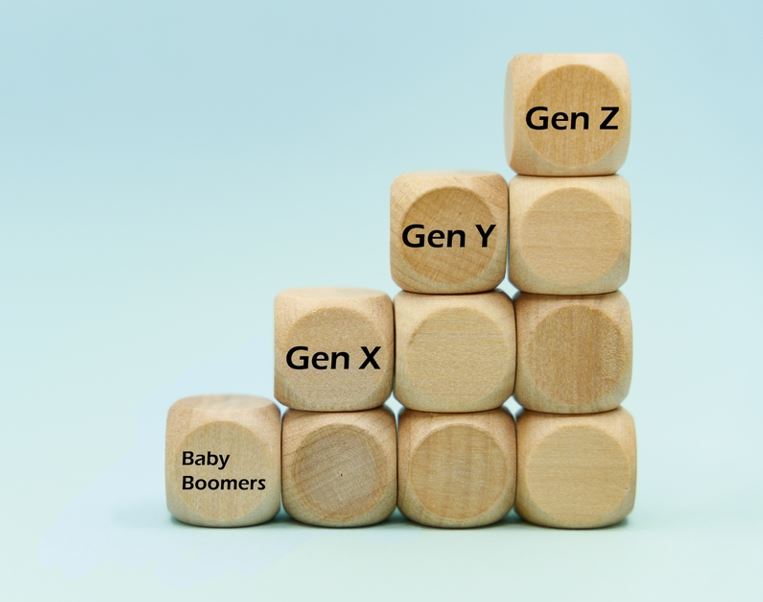
While baby boomers can be slower to embrace technology, younger investors tend to seek out and prefer tech-focused services and providers. This preference for technology is something advisors should lean into to connect with younger generations of investors.
Despite being the generations with the most knowledge, experience and potential resources, many are still unsure about their financial future.
In this video, Chuck Carnevale, Co-Founder of FAST Graphs, a.k.a. Mr. Valuation will cover the Communication Services Sector.
The yield on the 10-year Treasury surged to about 4.4% just after the election, even though it has come back down close to pre-election levels recently.
With the Russell 2000 Index rallying in response to the U.S. election results—the benchmark index of small cap stocks soared by nearly 6% on Nov. 6 alone—small cap managers are re-evaluating their positioning ahead of President-elect Trump taking office in January.
Instead of dreading volatile markets, the savvy advisor understands that during these times, her professional skill is most valuable and she can fulfill the vital role that she was hired to accomplish.
Retirement plan savers looking to mitigate the risk of higher taxes in the future may benefit from making after-tax contributions to employer plans, which may be transferred to Roth accounts. Our Bill Cass details a “mega backdoor” Roth strategy.
The Fed cut rates by 0.25%, with limited changes to the statement, while Powell's blunt "no" response about any coming political pressure to resign was headline grabbing.
In a week with a U.S. presidential election and market volatility, the Federal Reserve cut its policy rate 25 basis points (bps) as expected. Amid this noise and the generally positive messages from recent macro data, Fed Chair Jerome Powell emphasized that downside economic risks had decreased, but the policy rate remains above neutral, suggesting that gradual cuts are still likely to come over time.
The Federal Reserve cut short-term rates by a quarter percentage point last week, like pretty much everyone expected. In addition, the Fed didn’t push back hard against market expectations of another quarter-point cut in mid-December, so unless the economic or financial news changes dramatically by then, expect a repeat at the next meeting.
The prospect of a Trump presidency has led to much debate and speculation about how markets might react. Depending on what policies are eventually passed, there are potential risks and opportunities in both the stock and bond markets.
Many tech companies and executives are at political odds with President-elect Trump, but the sector performed well during his first term.
The housing market inderwent huge transformations in recent decades with the aftermath of the Global Financial Crisis & the COVID-19 pandemic.
In this article, we outline the key benefits of profits interests for RIAs and provide a roadmap for how RIAs can grant profits interests to their employees.
Bitcoin options traders buoyed by Donald Trump’s election victory are already eyeing a landmark price of $100,000 for the original cryptocurrency, after it surged to a fresh record on hopes for a more crypto-friendly administration.
Mike Wirth became the king of Big Oil on Oct. 7, 2020. That was the day the chief executive officer of Chevron Corp. elbowed out archival Exxon Mobil Corp. to become America’s largest oil corporation by market value. It was the zenith of a honeymoon between Wall Street and Wirth.
Donald Trump will inherit, to all appearances, a solid economy when he assumes the presidency in January. After all, the stock market is at record highs, unemployment is low by historical standards and gross domestic product has been expanding at a healthy pace of around 2.5% so far this year.
The bond-market selloff unleashed by Donald Trump’s presidential victory last week ended almost as quickly as it began.
Since Donald Trump’s election win, the hedge funds clinging on to bets against Tesla Inc. have lost billions of dollars, as they feel the fallout of the special relationship between the president-elect and Elon Musk.
VettaFi’s Head of Research Todd Rosenbluth discussed the Calamos S&P 500® Structured Alt Protection ETF – November (CPSN) on this week’s “ETF of the Week” podcast with Chuck Jaffe of “Money Life.”
In the midst of grieving your loved one’s loss and making funeral arrangements, you may also be responsible for finalizing their estate, which could include inheriting real estate.
Most of the time the yield on long-term bonds exceeds that on short-term bonds, in order to compensate for the greater risk attached to long-term debt. But until recently the yield curve was inverted, with short-term rates exceeding long-term rates. This happens when investors expect interest rates to decline in the future.
In addition to better appreciating why gold is surging, our analysis will help you recognize that market narratives explaining asset price movements can be wrong, no matter how reasonable they may seem at first blush.
Today is Veterans Day. My father served in the army during the Vietnam War. He lives in Long Island, New York, and I am proud of his service.
Accumulating inconsistencies in the prevailing paradigm then trigger a crisis, leading to the emergence of new theories and ideas, resulting in a paradigm shift where the old framework is rapidly replaced by a new one.
I went to bed “early” on election night, around 10:30 pm. We are in the five months of the year where Puerto Rico is one hour ahead of Eastern time, and nothing I was seeing made me think it would be an early night. And by that I meant 3 or 4 am.
On the latest edition of Market Week in Review, Chief Investment Strategist for North America, Paul Eitelman, discussed key watchpoints for investors in the wake of the U.S. elections. He also explained how the election results are impacting markets, and finished with an update on the latest monetary policy decisions from the U.S. Federal Reserve (Fed) and the Bank of England (BoE).
We are in a world where multiple, starkly different outcomes are possible. The decisive U.S. election outcome has stoked uncertainty about future U.S. policy.
Maslow’s hierarchy of needs was a groundbreaking concept when it appeared in 1943. American psychologist Abraham Maslow argued that certain basic needs—food, water, shelter, etc.—must be met before a person can move on to higher levels of self-worth and fulfillment.