Tech adoption by advisors can improve client relationships, but they need to find the right tools.
Franklin Templeton Fixed Income believes investing in companies promoting gender equality and diversity can lead to inclusivity and strong financial returns. Despite the persistent gender gap, there's an increase in women in leadership roles, positively impacting financial performance, corporate governance and crisis resilience.
Enthusiasm for structural reforms is only going to wane.
U.S. equity-market leadership reversed course during the third quarter of 2024, with small cap stocks outperforming their large cap counterparts and the value factor beating the growth factor.
At GMO we have spent the last four decades taking a long-horizon approach to equity investing. Over time, a unique and reliable group of standout companies emerged from our research.
As you know, economists are normally criticized and accused of being ‘two-handed.’ This is because when we talk, we typically say, “on the one hand, and on the other hand.” Many argue that we are hedging our bets and lack the spine to take a position. While we disagree with that simplistic view of our job, we can understand why we are accused of being ‘two-handed.’
Last week's jobs report hit a "sweet spot" for the markets, confirming enough economic cooling to signal potential Fed rate cuts without yet sparking fears of a recession. I expect a 25-basis-point cut from the Fed this week and Powell may set us up for a data-dependent pause in December.
Cambria’s Meb Faber goes in-depth on ETF taxation, 351 tax-free conversions, and the firm’s innovative Tax Aware ETF (TAX). VettaFi’s Kirsten Chang offers a tour around the world of ETF flows.
VettaFi Voices dive into actively managed and fixed income trends in the ETF market in what is likely to be a record year for industry flows.
Palantir Technologies Inc.’s premium valuation will be put to the test when the data analysis and software company reports results after the market close on Monday.
Apple Inc. is exploring a push into smart glasses with an internal study of products currently on the market, setting the stage for the company to follow Meta Platforms Inc. into an increasingly popular category.
Treasuries fell as a strong report on services ahead of Thursday’s Federal Reserve interest-rate decision added to volatility around the US election.
US exchange-traded funds investing in Bitcoin recorded their highest daily net outflow to date as markets brace for Election Day.
The 2024 presidential campaign was marked by two assassination attempts, a candidate switch, divisive rhetoric and warnings about the fate of democracy. And that may have only been the beginning.
Next-generation investors are looking for more than just traditional portfolio managements, and advisors should look to meet those expectations.
A visit to the annual Bogleheads conference got Elm Wealth's Victor Haghani thinking about static vs. dynamic asset allocation.
Brandywine Global: With the US election imminent, looking past heightened emotions and uncertainty to the potential economic and market impacts can be difficult. But election rhetoric eventually meets reality.
Consistent communication through market events is vital for advisors concerned about client retention.
Donald Trump is offering a vision of crony rentier capitalism that has enticed many captains of industry and finance. In catering to their wishes for more tax cuts and less regulation, he would make most Americans’ lives poorer, harder, and shorter.
Key market indicators for November 2024 present a complex but opportunity-filled environment for traders and investors. Following the first phase of Federal Reserve rate cuts and growing global uncertainties, the technical landscape suggests several notable shifts. Let’s explore the key market indicators to watch.
Stocks and yields made slight early gains but attention is mainly on today's U.S. election. ISM Services data and a 10-year note auction lie ahead, and bond volatility is high.
In this article, we’ll remind you what listed real assets are, explain how they fit into an asset allocation, and help you understand why we believe now is an attractive time to invest in the asset class.
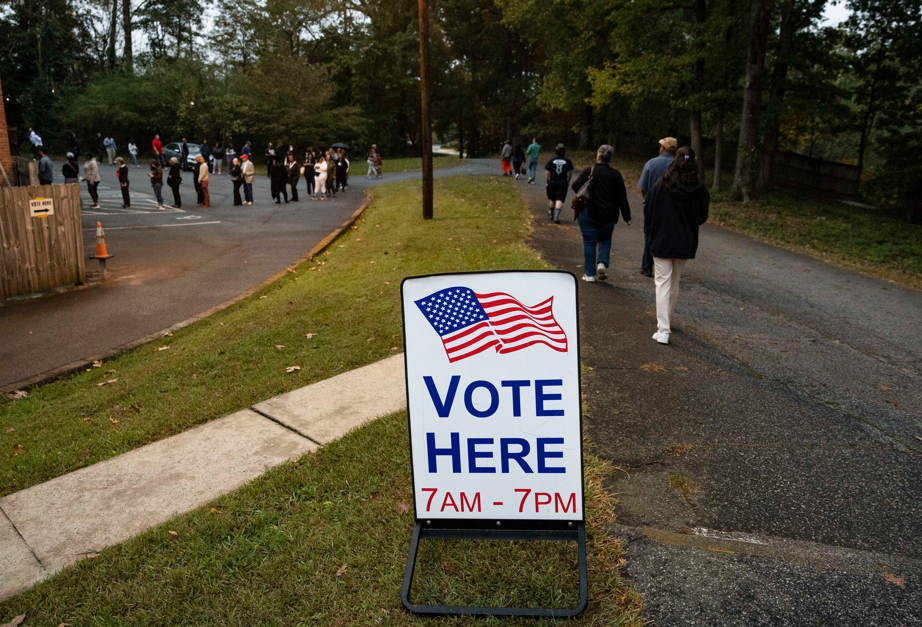
It’s almost over! Unfortunately, those texts might not stop right away. Unless this election is an unexpected blowout, some key states won’t have full counts of all their ballots for several days.
The earnest start of Q3 earnings season for the technology and communication services sectors has begun.
Even for dedicated investors, Social Security retirement benefits can be an important part of their financial security.
As we think about investing around a historic election, establishing what we know, what we need to know, and what we can count on is a useful foundation for navigating the uncertainty.
On this episode of the “ETF of the Week” podcast, VettaFi’s Head of Research Todd Rosenbluth discussed the VanEck Morningstar SMID Moat ETF (SMOT) with Chuck Jaffe of Money Life. The pair discussed several topics related to the fund to give investors a deeper understanding of the ETF overall.
Politicians often promise to cap prices, but success is unlikely and would result in worse outcomes.
Join the experts at Origin Investments for an exciting webcast that will answer that question and uncover what makes these assets particularly compelling today.
After driving Treasury yields higher for weeks, traders are taking chips off the table before the US election, reluctant to take bold bond bets with the presidential race too close to call.
The age of a typical homebuyer jumped to an all-time high of 56 in the US, with many young people locked out of the housing market while older owners tap their accumulated home equity for cash purchases or to make large down payments, according to a report.
Treasury yields fell sharply and the dollar weakened as investors pared bets on Republican Donald Trump prevailing in Tuesday’s US election.
RIAs should consider becoming more like VC firms by adopting the principles that govern them.
Stocks struggled for direction, bonds rose and the dollar fell, with polls continuing to depict a tight race in the US presidential election ahead of the Federal Reserve decision.
Ryanair Holdings Plc cut its passenger growth target for next year because of delivery delays from aircraft supplier Boeing Co.
Protect yourself with Treasury Inflation Protected Securities (TIPS), precious metals, certain real estate like farmland, and other real assets.
Legendary investors Paul Tudor Jones and Stan Druckenmiller are short bonds. You might want to carefully consider the data before you follow their lead.
Bill Bernstein digs into a book that follows the complicated history of Elon Musk's chaotic acquisition of Twitter and its subsequent transformation into X.
Anyone else ready for the election to be over? This uncertainty is exhausting, no matter how you want it to end. But sadly, it won’t really end. We will just transition to a different uncertainty over what will happen next. I will offer my thoughts on the election at the end of this letter, after setting the stage.
In his 2022 Berkshire Hathaway shareholder letter, Warren Buffett wrote that in his 80 years of investing, he had “yet to see a time when it made sense to make a long-term bet against America.”
Here we are, another calendar quarter down with one more to go in 2024, and investors have yet to see a “hard landing” emerge.
The Treasury yield curve is an important economic indicator that, depending on its shape, can signal changes in market expectations and provide economic insight.
The Northern Trust Economics team shares its outlook for growth, inflation and interest rates in major markets.
Thematic portfolios that tap into big global trends offer exciting opportunities for equity investors. But the devil is in the detail.
Get ready to ‘roll back’ the clocks! That’s right, Daylight Savings Time (DST) ends this weekend. This twice-a-year ritual is followed by every US state (except Arizona and Hawaii) and nearly 70 countries across the globe, but not everyone supports it.
The Fed lowered rates last month, so why are interest rates higher? More context helps clarify the disconnect between the Fed and the market.
This month, Goldman Sachs made headlines with a fresh forecast projecting the S&P 500 will see 3% in annualized returns in the next decade.
Looking ahead to the post-November 5th world, three Analyst Days caught our team’s attention. NXP Semiconductor (NXPI), CSX (CSX), and ASML Holding (ASML) each hold events that may shed light on key cyclical areas of the global economy.
Intel Corp. and Samsung Electronics Co. have shed a total of $227 billion in market value this year on their lack of leadership in artificial intelligence.
Amazon.com Inc. reported strong results that showed a company humming on all cylinders, a testament to its efforts to cut and reallocate costs and put the cloud computing and e-commerce giant on sounder footing.