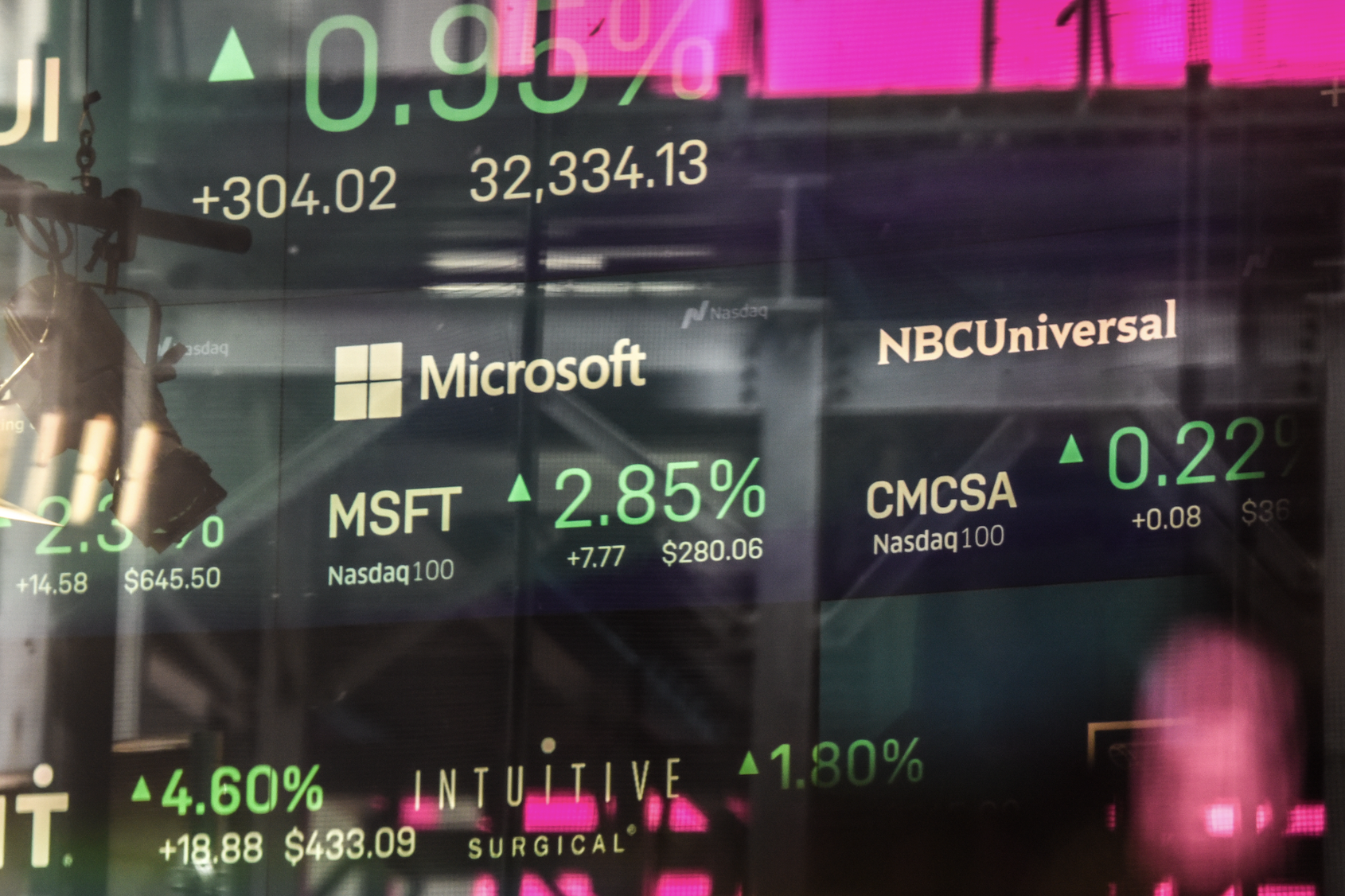
Who could forget those heady days when Microsoft Corp. Chief Executive Officer Satya Nadella looked like the smartest man in tech? When ChatGPT emerged in late 2022, his decision to back OpenAI put Nadella’s company at the forefront of the AI boom.
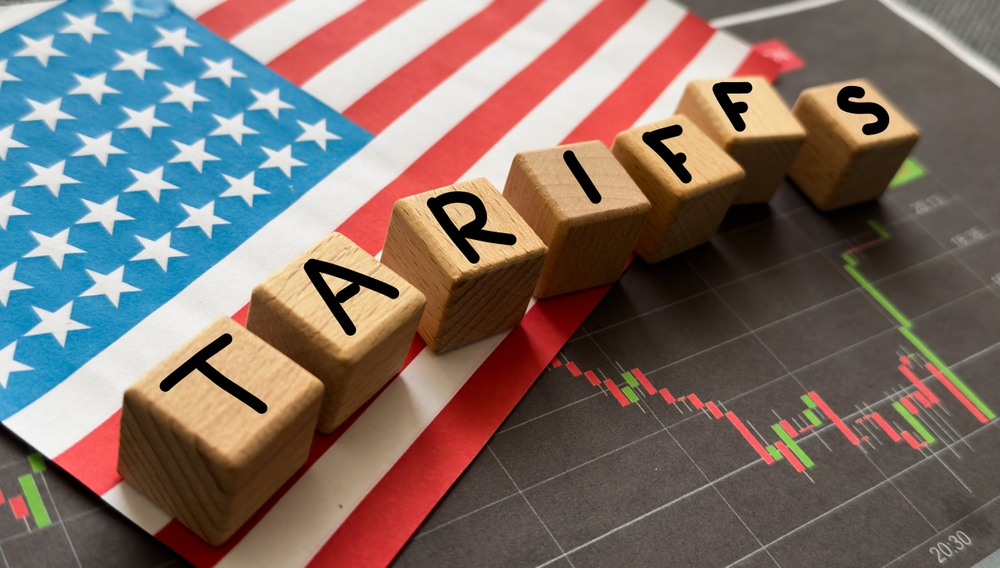
On Saturday, President Trump threatened 100% tariffs on “all Canadian goods and products coming into the U.S.A.,” linking the warning to Canada’s China engagement and the risk of Canada becoming a “drop-off port” for Chinese goods into the U.S.
Coming into 2026, investors face a landscape shaped by persistent inflation, evolving US monetary policy and global uncertainty. At Parametric, our systematic and customized approach is designed to help clients navigate these complexities while preserving after-tax returns.
As a wave of inclement weather sweeps across much of the U.S., investors are also navigating a seasonally important period for markets. Much like winter storms can influence travel patterns and economic activity early in the year, January’s market performance has long been viewed as a potential signal for what lies ahead.
In our 2026 Outlook, we examine three themes that we believe will shape the economy in the coming year and impact the U.S. and global markets. Theme 1: Everyday Impacts of an Uneven Recovery. Theme 2: AI From Hype to Real-World Results. Theme 3: Adding Private Income and Diversification
The near-perfect timing of gold breaking through $5,000 while silver sliced through $100 has grabbed the market’s attention.
What appeared just months ago to be a stable and predictable transatlantic trade environment now looks conditional. The ground underneath transatlantic trade relations is once again shifting…even though critical portions of it are covered by permafrost.
Federal Reserve officials left interest rates unchanged and pointed to improvements in the US economy as they signaled a more cautious approach to potential future adjustments.
Concentration risk is the #1 controllable risk in your portfolio. If one stock goes to zero and it’s your whole bag, you're in trouble. But selling usually means a giant tax bill—until now.
Dealing with difficult clients is a topic I discuss often with advisors. When a client is being “difficult”, there are a few key psychological factors to understand. I’ve outlined a process below that may help you navigate these high-stress interactions.
It’s possible to make your communication with clients both more impactful and more efficient if you’re smart and strategic about using the tools you have available. Let’s take a look at how to leverage some of the most common communication tools effectively for your firm.
If you feel like your website is a little outdated or isn’t serving as the lead machine you want it to, it might just be time for a refresh. Before diving in, take some time to get feedback from trusted friends, consider your goals, and always keep your prospects’ pain points top of mind.
Amazon.com Inc. is cutting 16,000 corporate jobs in an effort to remove layers of bureaucracy and “increase ownership,” becoming the latest company to target managers for layoffs in recent years.
Investors wondering about payoffs from the pile of cash being spent on artificial intelligence should get some clues when Microsoft Corp. and Meta Platforms Inc. post earnings after the close Wednesday.
Over the past year, Tether has quietly become one of the biggest players in the global gold market — the embodiment of a meeting of the crypto and gold worlds whose shared distrust of government debt is a major factor behind the surge in prices to never-before-seen highs above $5,200 an ounce.
Mayor Zohran Mamdani is amping up pressure on Governor Kathy Hochul to hike taxes for the richest residents and corporations, asking the state to send billions more in aid to New York City as he faces mounting budget holes.
Classical economics suggests that information is readily available, and is assimilated quickly and accurately. Reality is not that neat: the discipline of behavioral economics has consistently demonstrated that human beings are prone to a series of biases and miscalculations.
The US is coming off a period of remarkable equity-market dominance. Over 11 of the past 15 years, US equities outpaced their non-US peers—sometimes by sizeable margins. But last year, the pattern reversed dramatically.
One frustrating characteristic of the AI boom seems to be that everyone must pay for it, regardless of any interest in using it. For some, it will be through rising utility bills as data centers strain the grid.
Theoretically, the two foundational drivers of long‑run economic growth are population growth, which expands the labor force, and productivity, which determines how efficiently that labor can transform inputs into outputs.
Investors are returning to health care stocks, but $1 trillion in government funding cuts and a looming pharma "patent cliff" are among the risks as Q4 earnings reports come due.
Raymond James Chief Economist Eugenio J. Alemán discusses current economic conditions.
Another blockbuster year for bond ETFs is in the books. After two straight years of record net inflows, taxable fixed income ETF assets have nearly doubled since 2020 – crossing the $2 trillion mark. But the big story in 2026 will be rising pressure to move out of money market funds.
In our latest "Alternative Allocations" podcast episode, we sit down with Paul Jodice, Co-Head of Morgan Stanley's GIMA team, to explore crucial shifts they’ve adopted to meet the needs of advisors and the strategies advisors are seeking today.
The AI boom has pushed technology stocks to new highs, but it has also masked headwinds in other sectors of the economy.
LPL Research examines how rising productivity, AI adoption, and structural shifts toward services are supporting U.S. economic growth in 2026.
By assessing the macro and market drivers that shape each outlook, we can lay out clear, practical tactics to prepare your portfolio for either path. Whether the bullish or bearish case prevails in 2026, your edge will come from disciplined risk management, not from guessing the future.
According to Baiocchi, advisors are reevaluating portfolios and recognizing gaps in exposure to companies driving major market themes.
As geopolitical tensions reshape global trade, capital flows and investor risk appetite, gold is once again surfacing as an important component of asset allocation. Some investors and central banks are arguably viewing gold as a risk hedge, supplanting US Treasuries as a safe-haven asset.
The Federal Reserve is widely expected to halt its interest-rate-cutting cycle this week, as a steadier jobs market restores a degree of consensus at the central bank after months of growing division.
Investing in line with our beliefs, whether about social issues, environmental concerns, or politics, can feel principled and emotionally satisfying. But markets don’t care about our convictions.
There is always uncertainty about the most likely path forward for the economy and markets — and now is no different. We will continue to watch the headlines and data to see the ultimate impact on the consensus view.
Advisors training their future leadership team should be taking the long view — preparing to steadily nurture talent over the years so clients and other employees feel comfortable with your succession plans.
Put me down as an AI optimist. Artificial intelligence has the potential to transform the economy and make Americans richer, healthier and more productive. I’d bet money on it — in fact I have, through the shares I own in an index fund, which means I am long the US economy.
The next chapter of the aggregation success story won't be written by deal pace alone. Success will increasingly depend on the ability to attract, develop, and retain exceptional talent across diverse markets and service areas.
Venezuela’s bonds lingered for years in financial purgatory. Investors held them as a lottery-ticket-like bet on the improvement of a dysfunctional country. Most steered clear.
Anthropic PBC is finally having its own ChatGPT moment. A powerful new version of its Claude chatbot can now take actions on a computer, and the broad repercussions of that advance are impossible to predict.
Standard Nuclear Inc., a uranium startup, raised $140 million to boost production of fuel for advanced reactors in an effort to expand the US energy supply chain amid surging interest in fission power.
Blackstone Inc. is planning to hire more people across Asia to tap growing opportunities in private markets, said Ed Huang, the firm’s head of Asia Pacific private wealth.
Former Federal Open Market Committee Chairman Alan Greenspan famously observed that forecasting foreign exchange was like flipping a coin. Last year proved him right. What happened, and what lessons can it teach us about the dollar in 2026?
Last week in our latest Cyclical Outlook, “Compounding Opportunity,” we argued that beneath the economy’s broad resilience lies a stark divergence. U.S. policy pivots combined with the surge in adoption of AI technology have created winners and losers.
Concerns over accelerating inflation persisted throughout 2025. However, these anxieties were unwarranted as wage and price increases slowed in response to eight influential factors that also suggest that last year’s disinflation will persist in 2026.
The Fed meets on Wednesday to discuss the direction of monetary policy. With the futures market pricing the odds of “no change in rates” at 97.2%, no one should expect a rate cut at this meeting…or, we think, anytime soon.
Each year on January 28, Data Privacy Day underscores the global imperative to protect personal information in an increasingly digital environment. For high-net-worth (HNW) and ultra-high-net-worth (UHNW) families, this responsibility carries exponential weight.
This process is not about predicting the future or timing the market. Instead, it is about placing today’s prices into proper perspective using sound valuation principles. That discipline forms the foundation of learning how to analyze a stock before buying and is essential for long-term investment success.
Recently, stock market numbness closes the trading day. No wholesale crash, just a little wobbling for now with positive numbers for half of January. But I have a sense it’s in need of a cane to steady its momentum.
Markets, interestingly enough, felt their own version of a “deep freeze” this week. Geopolitical flare-ups, fresh tariff threats and a mini-meltdown in Japan’s bond market briefly rattled investors and pushed volatility sharply higher.
The key point is that nothing in the incoming data since December has undermined the Fed’s prior message. The economy remains strong, jobless claims are hovering near 200,000, and recession fears continue to recede.
Emerging market fixed income is often overlooked by investors. But, especially when tethered to an active approach, emerging market debt can offer investors enormous opportunities. Join the experts at Pictet Asset Management as they unpack all things emerging market fixed income.
Mathematics in the investment field is almost 100% phony. Virtually all that is really needed are the four arithmetic operations students learn by the third grade: addition, subtraction, multiplication, and division. The rest of the mathematics used in the investment field serves no purpose other than to impress people.