AI productivity gains will demand active solutions, not government gifts. Skill development, apprenticeships, employer-based training, wage insurance, and mobility support. These tools address displacement directly, while UBI does not.
Today, we continue my 2026 economic and market forecast. Last week, I described our current environment as The Bipolar Economy, and noted that the real goal here isn’t to tell you what will happen. It’s to help you know what could happen so you can be prepared.
Despite the influx of tariff revenue, the federal government continues to run a massive budget deficit. The December budget shortfall came in at $144.75 billion, a record for the month. That was 68 percent higher than December 2024.
The U.S. and global economy remain on solid footing. We don’t believe recent geopolitical developments pose a systemic risk to markets at this time
We expect another generally good year for bond returns this year, but even the best-laid plans can go awry when circumstances change. Here are four risks to our outlook.
For investors navigating an uncertain macro landscape, avoiding the wrong narratives may matter more than predicting the right numbers.
The biggest concern for the Federal Reserve (Fed) today is the weakness in employment over the last year, and especially during the second half of the year. This weakness was behind its decision to resume interest rate cuts in September of 2025.
Precious metals surged out of the gate to begin 2026, not dissimilar to how they closed out 2025. Gold has already made two record highs this year alone, is currently trading above $4,600 per ounce, and is up over 6% in 2026.
As the second half of January begins, the U.S. economy presents a picture of cooling inflation and resilient consumer activity.
One of Liz Ann’s key messages for investors is to have a good plan for your portfolio. A good plan isn’t driven by FOMO. It’s not driven by getting too concentrated in what’s working, because what worked last year might not work moving forward. I’ll let you read the transcript or watch our conversation to hear, firsthand, what makes a good investment strategy.
Join the experts at REX Shares for an educational webcast covering a thematic approach to investing in drones.
There’s a lot of buzz about the opportunity in US small cap stocks this year. There’s a confluence of factors that seem aligned just right for the segment, chief amongst them earnings growth expectations.
Silver has been on a tear, rising fourfold in the last few years. To help investors assess whether silver is in a bubble, we take a new approach by examining a recent phenomenon: the recurring pattern of micro-bubbles.
The 10-year Treasury note’s yield is headed for a fifth straight week of minimal change, rivaling its longest stretch of inertia in the past two decades.
President Donald Trump and the governors of several US Northeastern states agreed to push for an emergency wholesale electricity auction that would compel technology companies to effectively fund new power plants.
JPMorgan Asset Management has a new superlative: The firm now hails as the world’s largest issuer of actively managed exchange-traded funds.
Global credit markets are running at their hottest in two decades, prompting some of the world’s biggest money managers including Aberdeen Investments and Pimco to warn against complacency.
Big banks’ share traders are raking it in right now. Sure, stock market indexes have been flying high, but it’s been far from certain in recent years that traditional Wall Street firms would reap the benefits with electronic market makers storming the zone.
While the breaking news regarding the Fed receiving subpoenas from the Department of Justice will no doubt garner the lion’s share of Fed-related headlines in the days and weeks ahead, we wanted to roll the clock back and delve into what the markets should be looking at in terms of upcoming traditional monetary policy decisions.
Taking time away due to illness is never ideal. Upon return to school or work, we are greeted with all the tasks we did not complete while incapacitated. The recovery may feel worse than the disease.
Major tax legislation passed in 2025 represents the most sweeping changes to the tax code since the Tax Cuts and Jobs Act (TCJA) in 2017. In addition to extending current tax brackets and rates and introducing new tax deductions, the law creates new savings accounts for minors known as Trump Accounts.
Nominal thinking in investing, a form of the "money illusion" bias, is the failure to account for inflation's erosion of purchasing power. The primary problems with this approach are overestimating real returns, misjudging true wealth, and making poor long-term investment decisions based on misleading nominal figures.
Another strong year for US equities in 2025 reminds us that tax loss harvesting has the potential to contribute substantial value to direct indexing portfolios—even during bull markets.
EMs are entering 2026 from a position of renewed strength. A weakening U.S. dollar, improving fundamentals, and broadening country and sector leadership have created a favorable backdrop for investors—and we believe
It’s a brave new world for educational savers — and none too soon. In 2025, lawmakers outdid themselves by expanding ways families can help their children or grandchildren obtain a degree or certificate.
Following strong 2025 returns, high quality fixed income continues to offer attractive yields and global diversification at a time of stretched equity valuations and tight credit spreads.
Last year, gold rose by over 64 percent, setting 53 new record highs along the way. Silver gained just under 148 percent. Platinum’s price increased by 125.9 percent. Palladium was up just over 80 percent.
Portfolio Managers Benjamin Wang and Zoey Zhu explain how a historic valuation discount in small caps versus large caps combined with quality’s worst performance in 30 years creates a noteworthy setup in 2026.
Investors have flocked to the evolving income ETFs space in recent years. The arrival of the ETF rule in 2019 helped launch countless new and intriguing ETF offerings aimed at adding income to investor portfolios.
Municipal bonds enter 2026 as a compelling option for investors: attractive yields, strong fundamentals, and structural changes that continue to reshape the market. After a volatile 2025, marked by Treasury market dislocations and record muni issuance, the outlook for this year suggests more stability — and opportunity.
This video looks at the long term trends of household net worth using the Q3 2025 Z.1 release from the Federal Reserve.
With large cap growth companies showing signs of frothy valuations, investors could be looking elsewhere to add that extra shot of growth. Thematic ETFs can do just, focusing on niche sectors that may not get the fanfare on financial news sites.
Vanguard Group Inc. is bringing its decades-long relationship with Wellington Management into the ETF structure. It is launching three active equity ETFs. This marks the indexing giant’s first venture into actively managed equity products in the wrapper.
Under France’s presidency of the G7, the club of rich countries will focus on major economies’ external deficits and surpluses. While the agenda makes sense politically, the economic case remains to be made.
Morgan Stanley’s debt bankers increased revenue 93% in the fourth quarter, by far the biggest jump on Wall Street and capping a record year for that business.
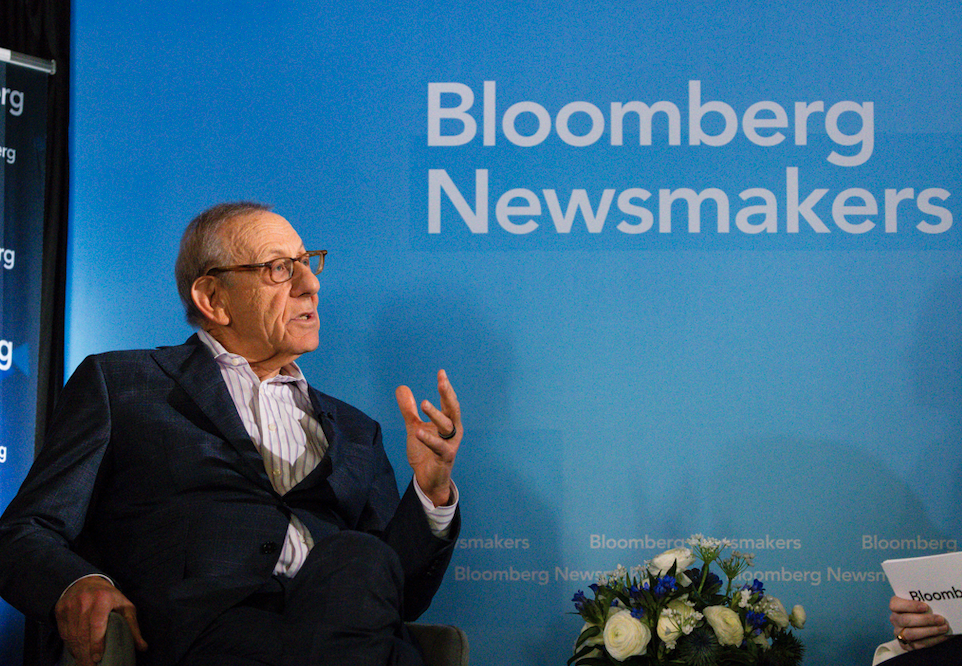
Billionaire Stephen Ross aims to position Florida’s Palm Beach County as the next Silicon Valley, calling the region a more business-friendly environment for tech investors and executives than California.
The billionaire Ellison family said this week that it will try to overhaul the board of Warner Bros Discovery Inc. unless the Hollywood studio engages with their $108 billion takeover bid. But winning support in a corporate fight won’t be easy as long as their offer contains holes.
Silver pulled back from a record high as investors took profits after a blistering rally and as the US refrained from imposing import tariffs on critical minerals.
Goldman Sachs Group Inc. blew through expectations for equities-trading revenue, posting an all-time Wall Street record of $4.31 billion in the final three months of last year.
Despite strong U.S. equity returns and continued enthusiasm around AI, 2025 marked a turning point in market leadership. Paul Vella examines the fading dominance of mega-cap tech, the resurgence of international equities, and the role diversification played in delivering more durable outcomes for investors.
Fixed income performed well in 2025, but we are proceeding cautiously, as we believe headwinds in the new year could cause the rally to stall.
U.S. equities moved higher in the first full week of 2026. The Dow Jones Industrial Average, S&P 500, and Russell 2000 all finished the week at record levels, reflecting a continuation of the positive momentum that closed out last year.
Most DC plan participants share the same goal of a comfortable retirement. It’s the journey that differs and much depends on personal investment knowledge, risk comfort level and other qualities, according to the latest research by AllianceBernstein (AB).
Defaults among auto loans are noteworthy because these had been seen as a safe form of lending. Living without a car is impossible in much of the United States; in the GFC, borrowers were more likely to surrender their home than their car.
EM stocks have increasingly become tied to the fortunes and risks of the growth in AI. Should the AI capex race continue, and earnings estimates are realized, EM stocks have the potential to continue to rise, because valuations are not yet extended.
At the heart of value investing is the concept of buying an undervalued stock that appears to be mispriced by the market and holding that stock until its intrinsic value is reached. Investors determine intrinsic value in several ways, including analyzing a company’s financial statements, evaluating management, and identifying competitive advantages.
Raymond James Chief Economist Eugenio J. Alemán evaluates economic conditions heading into 2026.
Market experts from the WisdomTree recently discussed how the market is responding to the latest headlines, and where opportunities lie.
DoubleLine CEO/CIO Jeffrey Gundlach looked back at 2025 and ahead in 2026 for opportunities, with charts to support his assertions.
Join the experts at SS&C ALPS Advisors and VettaFi for an educational webcast as they discuss the outlook for MLPs/midstream in 2026.