Catherine LeGraw and B.J. Brannan of GMO's Asset Allocation team discussed the role of liquid alternative strategies in today's investment landscape.
According to the latest SPIVA U.S. Scorecard report, broader isn’t always better for active managers. Following a volatile start to the year, the S&P 500 rebounded sharply in the second quarter to gain 10% through June 30 thanks to robust corporate earnings.
Silver has already demonstrated that it can make large moves in both directions, and volatility is likely to remain part of the picture. But after the recent correction, the technical setup is becoming considerably more constructive.
Pacing isn't pausing. Calls to "pace the frontier" mean slowing the release of powerful artificial intelligence (AI) models to test and control them better, not halting development or spending.
Advisors outsourcing at least 20% of assets reported saving 9.1 hours per week, or approximately 473 hours annually. WisdomTree research found 90% of investors welcomed third-party model portfolios, suggesting clients may be more comfortable with outside expertise than advisors expect.
We are never going to get rid of the FOMC for political and practical reasons. For those of us who would like to see the market set rates without an FOMC intervening, this is as good as it’s going to get.
Janus Henderson Investors today announced two senior investment appointments that will further deepen the firm’s leadership across its global equities franchise.
The Federal Reserve raised interest rates this week, in part to reset consumer expectations on inflation. Their work is likely not done, as there is a negative surprise coming for many consumers, especially in rural America. Winter is coming, and that means the return of home heating bills. Depending on how you heat your home, your bills could be much higher this winter.
The Federal Reserve (Fed) made something clear this week that markets had been reluctant to accept. Apparently, the easing cycle isn't paused, it's over for now.
Open any market commentary today and the conversation is dominated by giants. Mega-cap technology companies command outsized shares of major indexes, and the private markets tell a similar story, as we watch companies increasingly staying private well past the point where they once would have gone public.
Artificial intelligence is advancing at a stunning, and perhaps uncontrolled speed. Last week, Evan Hubinger, the Alignment Science Lead at the AI company Anthropic estimated a greater than 10% chance that AI could eliminate humanity within a decade. Jakub Pachocki, Chief Scientist at OpenAI, recently observed 'The core problem in AI research is that of alignment - getting the AI to ‘try to do the right thing’ by human standards…
In an environment marked by the Fed’s first rate hike in three years and ongoing market uncertainty, income-focused investors face a unique dilemma. While cash alternatives offer attractive yields in the short-term horizon, they leave portfolios vulnerable to reinvestment risk should the
As ETF strategies continue to expand into new asset classes and structures, the SEC has been taking a closer look at how some of these products fit within existing regulations.
For decades, equity investors have relied on a foundational promise from Corporate America: the continuous return of surplus cash. Dividends and share repurchases represent the two primary ways by which companies deliver tangible value back to shareholders. Yet as we navigate the final stretch of the third quarter of 2026, both channels are signaling a distinct shift toward restraint.
The new investment case for global power, security and affordability. The phrase “energy transition” has served as a useful political and cultural shorthand, but it has become a misleading framework for capital allocation. Franklin Templeton Institute explodes new opportunities for investors—and where shifts in thinking may be needed.
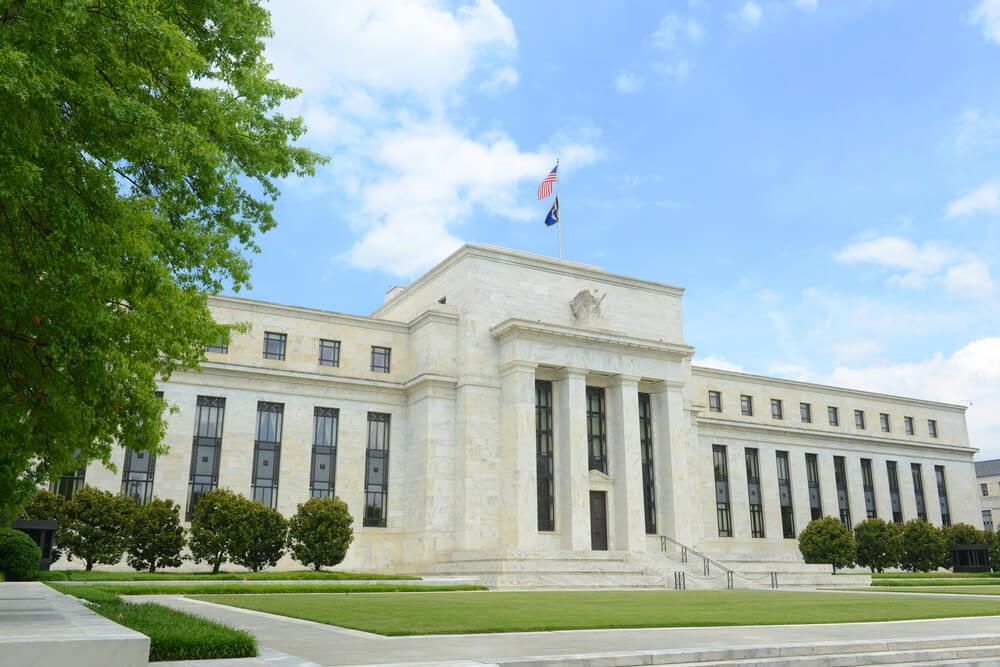
The U.S. Federal Reserve delivered on consensus expectations by raising its policy rate by 25 basis points (bps) at its September meeting.
One of my favorite movies was the Coen Brothers movie, No Country for Old Men. It is the story of a guy who makes off with $2 million stolen by someone else. The ‘someone else’ is a super mean guy with a powerful blow gun. They are both being chased by a policeman. It was the best picture of 2007 and won four Oscars.
A rising S&P 500® might suggest few opportunities for tax-loss harvesting. But unusually wide dispersion among individual stocks is telling a different story—and potentially creating new opportunities for direct indexing.
Municipal bonds might still offer attractive tax-advantaged income and relatively stable credit quality for investors who understand the risks.
Stocks have recently hit new highs, supported by strong earnings growth, but the bond market is sending a more cautious signal.
The recent global bond sell-off may be more than a temporary repricing. Rising government debt, persistent inflation risks and shifting economic expectations could keep longer-term yields elevated relative to the post-financial-crisis era.
In this video The Most Powerful Growth Stock, Chuck Carnevale, co-founder of FAST Graphs and known as “Mr. Valuation,” examines NVIDIA through the lens of growth, valuation, financial strength, and long-term return potential. He explains why growth investing is still value investing when a company’s future earnings justify the price being paid.
The 2026 U.S. midterms are rapidly approaching, with major implications. Muni bonds, in particular, may be impacted.
Vanguard research challenges four myths about women investors, revealing what female clients value from financial advisors, from expertise to collaboration.
ETFs are increasingly breaking down the wall between public and private markets. Asset managers are finding ways to “ETF-ize” private equity and pre-IPO holdings — giving retail investors liquid, fractional access to growth opportunities historically restricted to institutional and accredited buyers. As companies stay private longer, the most explosive growth phases of high-profile startups often occur off public exchanges.
The shortened Labor Day trading week brought little cheer for stock and bond investors. Coming off a long weekend that saw increased hostilities between the US and Iran, oil prices pushed higher, topping $100/barrel. Gas and diesel prices also spiked: diesel hit an all-time high of $6/gallon, while regular gas jumped to a Labor Day record of $4.15/gallon.
Advancements in technology, combined with significant stock market gains in recent years, have created a new set of opportunities—and challenges—for investors. For example, investors holding a concentrated position in a highly appreciated stock may face a difficult trade-off between the risk of a market downturn and the potentially significant tax cost of diversifying the position.
The Federal Reserve today unanimously decided to raise its short-term interest rate target by a quarter percentage point to a range of 3.75 – 4.00%, the first hike since mid-2023. The Fed made two key changes to the statement announcing its decision, declaring that “domestic spending has been resilient” and the rate hike “will support a timelier return” to the Fed’s 2% inflation target.
When it comes to personal finance, conventional wisdom says the best way to live is debt-free. There are many important reasons why this is tried and true, but for high-net-worth individuals, lending can be an optimal way to access cash in the near term without sacrificing long-term gains on your assets.
Fed policymakers unanimously voted to raise rates 25 basis points, the first hike since 2023, and vowed to fight inflation. Another hike is seen this year, but 2027 is in question.
Most people have had that moment when they’re walking along outside, enjoying a sunny day, and suddenly something long and twisty on the ground catches their eye. Before they even know what’s happening, their whole body jumps and their brain shouts, “Snake!”
The Federal Open Market Committee (FOMC) decided to raise rates by a quarter-point, bringing the new fed funds trading range to 3.75%–4.00%. The money and bond markets had been pricing in a potential rate hike at this gathering, and Warsh & Co. ultimately determined that such a move was warranted. That said, the ‘rate hike’ story does not end here.
Janus Henderson launched a new international equity ETF on Wednesday, according to a Janus Henderson press release. The Janus Henderson International Core Alpha ETF (JINT) seeks long-term growth of capital across developed markets outside the U.S.
Last December we published Riding the Wave: The Anatomy of Booms & Bubbles. In it, we argued that the AI spending boom would continue through 2026 without tipping into ‘bubble’ mania, and that the right posture was to stay overweight stocks while favoring US assets. Nine months on, we think that call has aged well.
Single-stock leveraged ETFs were unusual when they first arrived in the U.S. market just four years ago. Today, it might be hard to find a stock without one. Issuers are aggressively pushing beyond megacap tech into niche equities, pre-IPO registrations, and even experimenting with leverage levels and frequency.
With so much attention focused on what the Fed might do at its policy meeting this week, it’s a good time to look back at history to get a sense of how stocks might respond should policymakers hike rates as the market now expects. LPL Research had been characterizing the rate decision as a coin flip until Fed Chair Kevin Warsh’s hawkish comments at the Jackson Hole meeting and the strong August jobs report.
From the 2020 pandemic to today’s oil shocks, we’re often reminded in recent years that inflation can flare up unexpectedly. We’ve also likely entered an era in which higher inflation may linger for some time. As a result, bond-heavy and income-oriented investors may need to shore up their inflation defense, which we think should combine strategic positioning with tactical maneuvering.
The Consumer Price Index (CPI) data for August was generally in line with expectations. However, a slightly hotter-than-expected core CPI reading buoyed expectations of a rate hike at the Federal Reserve meeting in September.
The August employment report was much stronger than expected and reinforces my view that the U.S. economy remains remarkably resilient. Payrolls increased by 162,000, above every estimate, while revisions added another 55,000 jobs to the previous two months.
A rate hike on Wednesday is now very likely but would also be unusual, and perhaps dangerous, at least as far as the past generation of monetary policy goes.
AI-driven healthcare innovation is creating strong investment opportunities by improving efficiency, expanding access, and delivering better patient outcomes.
A week of rising oil prices and higher interest rates sent stocks lower across the board as investors increasingly priced in the likelihood that the Federal Reserve (Fed) will begin a rate-hiking cycle at its September 16 meeting. Following the August Consumer Price Index (CPI) report, futures markets implied an 88 percent probability that the Fed will, or at least should, raise rates at next week's meeting.
Bond prices and interest rates generally move in opposite directions. When interest rates rise, the market prices of existing bonds typically fall. When interest rates fall, existing bond prices typically rise.
Discover how autocallables provide steady income and downside risk protection in volatile markets, and how autocallable ETFs can help.
On September 2, TMX VettaFi Head of Research Todd Rosenbluth appeared on the Schwab Network to discuss ETF inflows nearing record highs in 2026 and the 50th anniversary of the first-ever index fund, the Vanguard 500 Index Fund. The fund’s ETF share class, which trades under the ticker VOO, is a bit newer, having launched in 2010.
Chris Galipeau discusses high-conviction insights that go beyond media headlines.
Most coverage of Trump Accounts treats them as a parenting question, or a discussion comparing them to 529s. For founders and business owners the analysis of them is slightly more nuanced.
Demand for fixed income ETFs hit a historic high-water mark in September. Investors and advisors turned to fixed income ETFs at a record-breaking pace, driving 2026 net inflows of $446 billion past all-time levels with months to spare. The massive tide of capital arrives at a critical juncture.
In our final chapter for this series, we will dig into that exact question. Unfortunately, there is good and bad news, and it can be summed up in a single sentence.
Is the AI infrastructure buildout one big trade in credit? So far, the market seems to think so. Spread dispersion – differences in borrowing costs among issuers – across the financing chain remains limited despite sharp differences in underlying risk. This contrasts with equities, where performance has become increasingly differentiated.