Muni & corporate bonds trading activity has been reaching record levels through the first half of 2025 at the Intercontinental Exchange.
Radical policy changes can launch new economic eras.
When the value of the U.S. dollar declines, international developed-market bonds tend to become attractive. Here's why the bond outlook is more positive than it has been for the past decade.
NVIDIA (NVDA) earnings are the focus tonight, but investors’ attention will quickly shift back to the macro later this week. According to our Economic Calendar, with data licensed from Econoday Inc., a second read on Q2 GDP hits the tape Thursday morning.
Is the U.S. economy “all twisted up in the game” with the S&P 500 Index dominated by technology/AI stocks? How much is investor confidence affecting consumer confidence? How much has the increase in financial advice and advisors been fed by the success of this stock market?
The global exchange-traded funds (ETFs) market has rarely been more dynamic. Active strategies may be commanding the headlines, but index-based ETFs remain the bedrock of portfolios worldwide.
Europe's defense landscape has undergone a paradigm shift—a rearmament cycle unfolding at a velocity unseen since the Cold War.
The financial markets often shift gears in September, moving away from the quiet summer months marked by low trading volumes and limited volatility, and entering a period historically associated with seasonal weakness and increased market instability.
The year to date has been complicated by a cloud of uncertainty as a new U.S. administration took the world economy by storm.
A full-scale implementation partner does the behind-the-scenes—but critically necessary—work of managing portfolios according to the investment objectives, risk tolerance and preferences set by an investment team. In doing so, they free up time and energy for the investment staff to focus on decision-making.
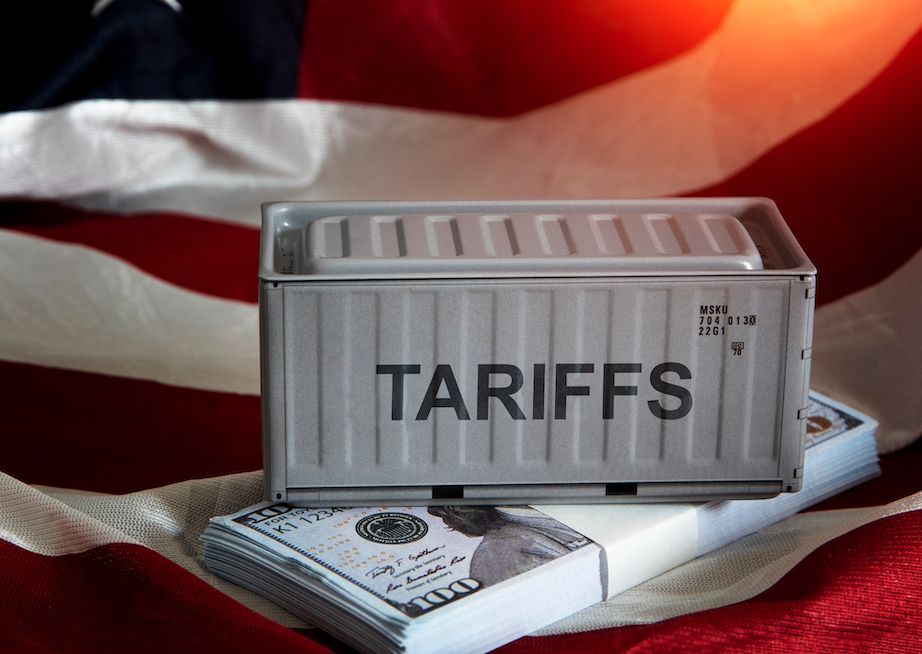
According to recent analysis from the Congressional Budget Office (CBO), tariff revenue could meaningfully impact both sides of the bond market pendulum, which on net, could be beneficial to the Treasury market.
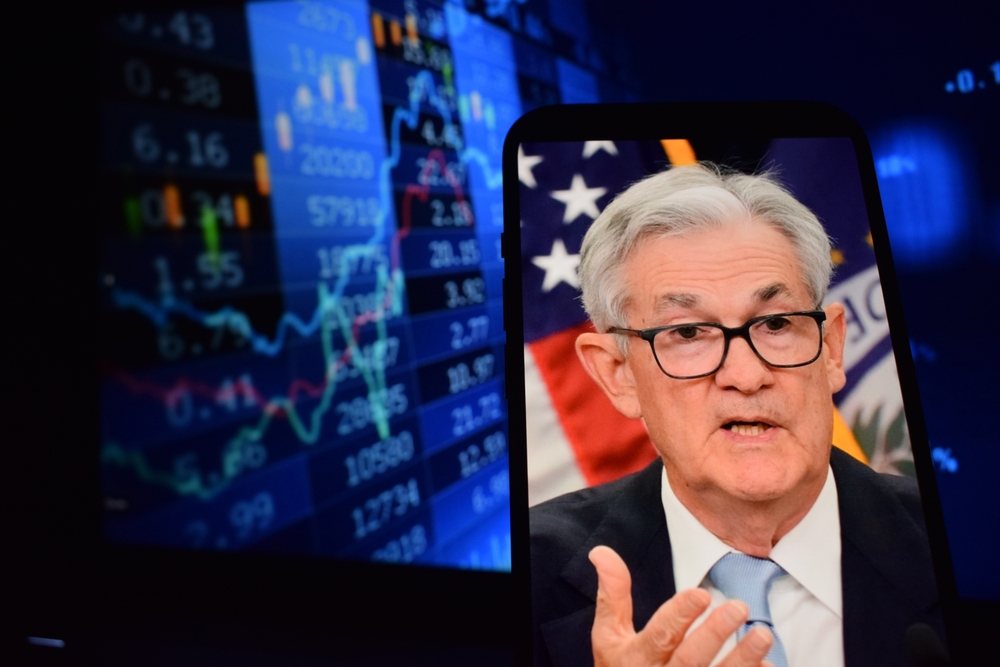
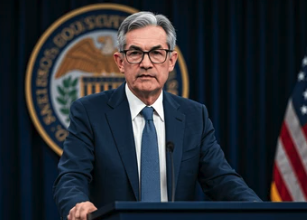
It’s hard to ignore the effect Fed Chair Jerome Powell’s comments made last Friday had on equities, particularly small-caps.
The recent passage of U.S. crypto regulatory policies follows on the heels of a convoluted path to bringing frameworks to digital assets.
Fed Chair Jerome Powell’s comments at Jackson Hole shifts the outlook for interest rates.
While investors often look to the Federal Reserve for macroeconomic signals, Walmart’s earnings may offer even more insight. As a barometer of consumer behavior, pricing trends and tariff impacts, Walmart is a must-watch for anyone trying to understand the real-time U.S. economy.
Investors enjoying the pairing of domestic stocks and the momentum factor are likely familiar with some related ETFs. This includes the Invesco S&P 500 Momentum ETF (SPMO).
Director elections can be a powerful tool for investors to weigh in on ineffective boards.
Benefit Street Partners believes private credit managers need to focus on the financial conditions during a fund’s investment period. Skilled managers know when to dynamically deploy more capital or pull back, as the weather changes.
The prospect of lower rates could translate to falling yields, forcing investors to diversify their fixed income portfolios. One area that's been seeing renewed interest is mortgage-backed securities (MBS).
Contrary to some popular stereotypes about young investors, the kids are all right. They typically save more and invest in age-appropriate, low-cost funds at higher rates than previous generations did at the same age, all while avoiding frequent trading or excessive risk in their portfolios.
The U.S. dollar has experienced a notable decline in value this year relative to a broad basket of foreign currencies. This depreciation has meaningfully affected the investment returns of U.S. based investors holdings in international stocks and bonds.
The largest company in the world, with a market capitalization of about $4.4 trillion, reports Q2 results today, after the market close.
Today is the day that analysts and investors have been waiting for the entire earnings season—earnings and updated Q3 guidance from NVIDIA Corp. (NVDA).
Finding attractively valued stocks that can overcome evolving conditions requires a new mindset.
International stocks have outperformed the broad U.S. stock market so far this year. If the U.S. dollar continues to weaken, it could boost international returns even more.
Nick Goetze discusses fixed income market conditions and offers insight for bond investors.
China’s economy has propagated itself through branches like trade, finance and infrastructure. But supply chains are where its roots have thickened into trunks, particularly across Southeast Asia.
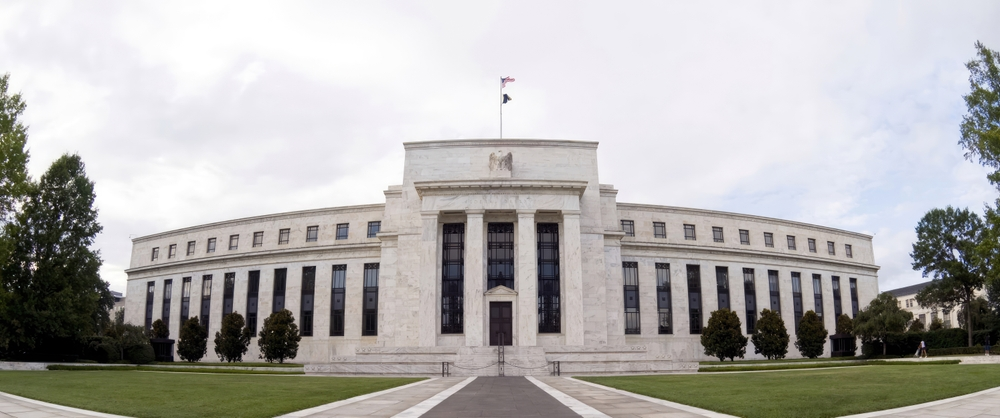
As central bankers, economists, and policymakers gathered last weekend in Wyoming’s Grand Teton National Park for the 2025 Jackson Hole Economic Symposium, the Federal Reserve (Fed) found itself at a critical juncture marked by political pressures, personnel changes, and internal divisions over monetary policy direction.
Market volatility can feel like an emotional yo-yo: sudden drops, sharp rebounds, and the unsettling feeling of not knowing what’s next. Feeling anxious, unsettled, or even tempted to take swift action to protect your investments is natural. But often, the best move is the one you don’t make.
“Buy Every Dip” has lately been the “Siren’s Song” for this market. Such is seen in the flows into ETFs over the course of this year. Retail investors treat pullbacks as temporary noise, and their behavior borders on mechanical. Every sell-off is seen as an opportunity, not a warning.
Amid the push to reshore, the United States faces a clear challenge when it comes to labor. Even though manufacturing has been contracting (PMI below 50 for more than two years), the U.S. still has 380,000 unfilled manufacturing jobs.
While the majority of the capital markets are anticipating rate cuts, certain economic data continues to run counter to the forecast. That’s why in times of persistent inflation, getting commodities exposure can be beneficial.
Last Friday, Jerome Powell gave the Fed Chief’s annual speech at the Kansas City Fed’s 2025 meeting in Jackson Hole, WY.
Nvidia, the biggest AI-chip firm, reports Wednesday. Watchlist items include the pathway toward resuming H20 chip sales in China, revenue guidance, and Blackwell growth.
Don’t Worry, Be Happy! Heading into summer, markets faced a wave of uncertainty—from shifting tariffs and debt ceiling debates to questions around the fate of the ‘Big, Beautiful Bill.’
Chair Powell’s speech at Jackson Hole was a proper and long overdue pivot—and the markets immediately rejoiced. This was the dovish signal investors had been hoping for, and even stronger than I expected Powell to deliver.
For nearly two decades, U.S. electricity demand was flat. Between 2005 and 2020, consumption barely budged, thanks to efficiency gains in appliances and slower economic growth. Utilities planned for more of the same.
The Federal Reserve notes the balance of risks to the U.S. economy may warrant a shift in policy stance – in other words, a rate cut.
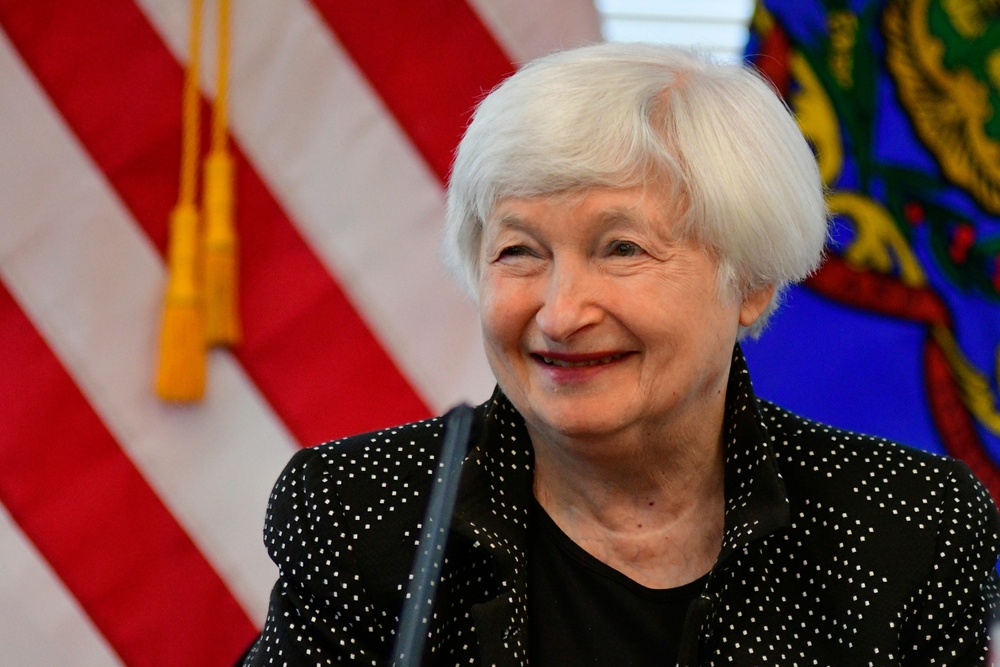
Few have accomplished as much as Janet Yellen during the course of their careers. She broke two significant glass ceilings, becoming the first woman to serve as the Chairman of the Federal Reserve and as U.S. Treasury secretary.
Last week, a tech rout that began on Tuesday led to notable declines in the Nasdaq Composite (-2.5%) and S&P 500 (-1.2%) by market close on Thursday, with the Dow Jones Industrial Average roughly flat. Investors engaged in profit-taking, amidst concerns about the high valuations of many technology companies.
The tariff recession is cancelled, but with the Fed strangling rates, we are nowhere near the boom Trump wants.
Are there enough options among foreign equities ETFs? Plenty of funds exist, but some regions and markets may lack options.
The latest economic data suggests the US economy is decelerating. That means growth is slowing, jobs are shrinking, and households are spending less.
Our economic-number friends are behaving badly, leaving us unsure where to turn. Maybe in time we will see who was right and wrong. This week we’ll look at some of the data and then at the wide array of diverse opinions from my favorite sources.
US investors are more concentrated than they think. Franklin Mutual Series believes diversifying into local, non-US currencies yields benefits, particularly in an environment of downward US-dollar pressure.
Chief Economist Eugenio J. Alemán discusses current economic conditions.
AI’s long-term potential remains strong, but supply chain risks and uneven adoption may impact near-term gains.
Corporate bankruptcies hit a 14-year high in 2024, and the pace continued through the first seven months of 2025.
VettaFi Voices provided a trailer on the current state of the ETF landscape and what's to come for the rest of 2025.
To some, $1 billion of ETF net inflows is not what it used to be. The US ETF industry has gathered more than $700 billion of net inflows this year.