The Iran-Israel conflict and equity markets are now in sharp focus. As direct strikes escalated in June 2025, global financial markets responded immediately. Israel’s airstrikes on Iranian nuclear and energy infrastructure triggered retaliatory missile and drone attacks from Iran.
Smart beta strategies have endured a prolonged stretch of disappointing results, falling short of investor expectations. This article explores the underlying causes of that performance and outlines why the conditions ahead could be more favorable.
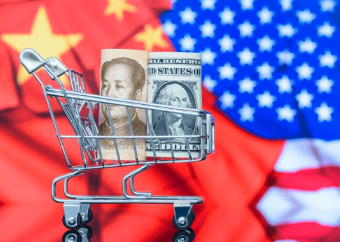
The United States consumes a large share of its GDP; China, not so much. The result is Yin and Yang. On net, China produces and the US consumes.
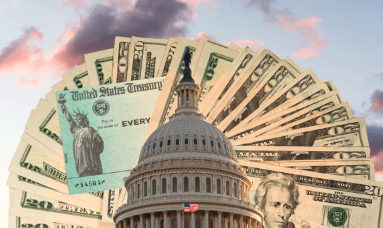
The draft of the One Big Beautiful Bill Act (OBBBA) runs more than 1,000 pages. Analysis of the legislation has focused primarily on its impact on the U.S. federal deficit: the Congressional Budget Office estimates that passage would add almost $3 trillion to the national debt over the coming decade.
Describes how what is happening to the economy is bigger than tariffs, it is the business cycle. It includes a comment on the FOMC meeting tomorrow, uses economic data up through this morning (retail sales), and includes a nice cartoon which can be used as a thumbnail (below).
The fund shines through as a prime option worthy of consideration among the vast alternatives present in the muni market. With their rare combination of credit quality and yield, munis are offering fixed income investors prime benefits in a still-uncertain bond environment.
Bonds hit a headwind in May as rates rose, but year to date, they have helped offset some of the volatility seen in stocks. See Table 2 for bond index returns for May 2025, Q1 2025, and YTD.
A growing body of evidence suggests the differences between private and public equity may be more a matter of perception than reality.
The calm before the storm is here – and the Fed knows it won’t last. This week’s Fed meeting is expected to be relatively straightforward.
In this video, 5 Stocks That Subscribers Asked To See, Chuck Carnevale, co-founder of FAST Graphs, aka Mr. Valuation addresses subscriber requests by providing a high-level review of five companies, AES Corp (AES), Amgen (AMGN), Air Products (APD), ASML Holding (ASML) and Broadcom (AVGO).
Michael Browne, Chief Investment Officer at Martin Currie discusses inflation, energy and the art of the possible.
President Donald Trump’s announcement on Wednesday of a new trade agreement with China is the kind of headline that gives markets a sense of relief. As I overheard this week at Wealth Management’s EDGE conference, which I attended in Boca Raton, Florida, we may have dodged a recession.
This week’s market resilience in the face of rising geopolitical tensions underscores an important structural shift. The Israeli strikes and broader Middle East dynamics, while concerning, sparked only a modest reaction—a far cry from the volatility such events triggered in past decades.
Last week’s economic signals showed cautious optimism and renewed concern. Inflation saw a slight uptick in May.
The Gold Reserve Transparency Act of 2025 (House Bill 3795), calls for a full, modern audit of America's gold holdings—something that hasn't occurred in over 65 years.
Lately, the “deficit narrative” has dominated much of the financial media, particularly those channels that are continual “purveyors of doom.” In this post, we will discuss the “deficit narrative,” the likely outcomes, and why the cure for the deficit may be found in Artificial Intelligence.
Rampant uncertainty and ongoing market volatility in 2025 have done little to dampen the ETF industry, with innovative launches ongoing.
Separating the signal from the noise may be the hardest challenge investors face. We’re all surrounded by constantly changing but mostly unimportant information. Of the small part that really is important, we must decide if it affects our investments.
Market indexes can be a useful barometer of long-term performance. But the investment opportunity set need not start and end there.
Tariff policy has clouded expectations for the second half of the year, but there are ways to navigate through the fog.
Fears of an impending recession may be fading, but economists are still expecting tepid GDP growth for the year.
Just one day after Prime Minister Shigeru Ishiba likened Japan’s debt situation to that of Greece, the country faced its weakest demand for 20-year bonds since 2012.
Industrial robotics is no longer a niche topic reserved for factory optimization—it is becoming a key lever in national strategies for productivity, labor substitution and supply chain resilience.
In part one of our new series, AI Alpha, we explored the sweeping potential of artificial intelligence (AI) as a transformative force.
Alex Veroude, Global Head of Fixed Income, believes fixed income investors can prepare for an uncertain journey by recognising trends and diversifying across different assets.
Global markets may be more rattled than ever, but advisors can count on closed-end funds to offer yield, portfolio diversity, and more.
The Senate is continuing to work behind the scenes to develop its version of the "One Big Beautiful" tax and spending bill that passed the House by a singe vote in May.
In this video, Chuck Carnevale, co-founder of FAST Graphs, aka Mr. Valuation presents a detailed analysis of Enterprise Products Partners (EPD), a midstream master limited partnership (MLP) known for its high income potential, offering investors a stable and growing dividend yield.
Summer re-runs are popular on TV, but a repeat of last August's "yen-carry" market upheaval isn't likely on the schedule. A shift in positioning by investors is one reason.
Gold plays a distinct role in the global monetary system. Simply put, it’s perceived as money, and its function as a store of value makes it arguably the world’s most popular hedge against inflation.
In the history of technological progress, there's often a critical misreading. We think the leap is in the product—the engine, the chip, the app.
The US 2025 tax bill enhances certain deductions and includes provisions for business growth and development. Our Bill Cass shares the highlights of what is being debated on Capitol Hill and the impact on business owners.
Head of EMEA and Asia Pacific Equities Lucas Klein and Head of Americas Equities Marc Pinto argue that progress on the trade impasse, further monetary easing, pro-growth reforms, and an innovation revolution should all prove supportive to equities over the mid term once the market moves past near-term volatility.
With tariff news providing constant equity market fluctuations, the case for bonds becomes more compelling. The added uncertainty also punctuates the need for an active management strategy, which one particular Vanguard ETF offers.
Financial markets have been experiencing some of their wildest trading days in history this year. Stock and bond prices have been moving in unison—an alarming scenario for investors and their advisors. With increased volatility, long-term investors might benefit from additional exposure to alternative strategies within their portfolio allocations.
Despite inflation worries, fiscal deficit concerns, and continued geopolitical conflict, equity markets posted strong returns in May on the back of easing tariff tensions, lower probability of recession, and better than expected US Q1 earnings.
The first half of 2025 has been driven by headlines that have caused volatility in both the stock and bond markets. While tariff negotiations have commanded the most attention, we are now pivoting to the federal budget deficit, which feels like a perpetual headline over the last 15 years.
Today, Vanguard released its newest bond fund, the Vanguard Multi-Sector Income Bond ETF (VGMS).
Integrating volatile and illiquid assets into the ETF structure is something to be avoided, Doubleline CEO and CIO Gundlach said.
A new culture of reform at Japanese companies offers exciting potential for equity investors.
In the current land of uncertainty the markets and investors find themselves in, the monthly Employment Situation report is ‘must-see TV’ and will remain that way for the foreseeable future.
Supporters of tax cuts argue that they eventually "pay for themselves" and lower deficits through economic growth and increased revenue, even without significant spending cuts.
What's the debt ceiling? Learn how the debt ceiling works and how a default on federal debt could impact the U.S. stock market and economy.
To anyone going through a breakup, just remember this lyric from Bernadette Peters: “If I’m patient the break will mend and one fine morning the hurt will end.”
With the world order in flux, investors can look to fortify portfolios by diversifying across global markets and capitalizing on attractive, high quality yields.
While the immediate path for tariffs may drift lower, the U.S. legislative branch is hammering out a tax and spending bill that seems to favor tax cuts over lower spending, reviving worries over the U.S. budget deficit and a growing debt burden that cannot be ignored.
Advisors looking to add or enhance existing gold exposures in their portfolio have a range of strategies to consider within the ETF vehicle.
The global economy is continually evolving due to inflation, interest rates, and geopolitics. How could these and other factors influence the major asset classes over the coming decade?
If we lived in a world where mobile signals were visible, the sky would shimmer like a storm—layers of frequencies rolling over rooftops, crossing oceans and saturating valleys.
Long-time Kestra ecosystem firm SilverStar Wealth Management combines with existing Bluespring partner LifeBridge Financial Group, strengthening Texas-based presence