Rate cut expectations pushed more investors into investment-grade corporate bonds, giving them their best quarter in nearly a year.
In suburban Texas, a neighborhood complete with an amphitheater, dance hall and goat farm is scheduled to be erected 40 miles from Houston’s downtown — providing municipal-bond investors a window to bet on one of the fastest-growing areas of the US.
Traders slashed their bets on the pace of future Federal Reserve interest-rate cuts after September US employment data blew past estimates and signaled a robust hiring trend.
OpenAI has tapped global banks for a $4 billion revolving line of credit on top of its recent $6.6 billion fundraising, building a massive war chest to stay ahead in the costly race to develop more sophisticated artificial intelligence.
Mohamed El-Erian says the Federal Reserve needs to renew its focus on its fight against rising prices after September’s surprisingly hot jobs report served as a reminder that “inflation is not dead.”
If the risk of stepping too far out into the yield curve is too much to bear, consider using intermediate bond options.
Flashing green light – crowd will determine path forward.
As we look at today’s economy and financial markets, we are at a crossroads: Will it be a long straight highway to a soft landing, or will it be a bumpy road to recession?
When looking at the increasingly complex structure of corporate lending in the present day, it can be easy to lose sight of the purpose of private credit and its lasting value to investors.
The dollar is about to notch its best week in two years. Geopolitical unrest, the odds of lower borrowing costs overseas and a resilient US economy are all spurring the world’s reserve currency higher.
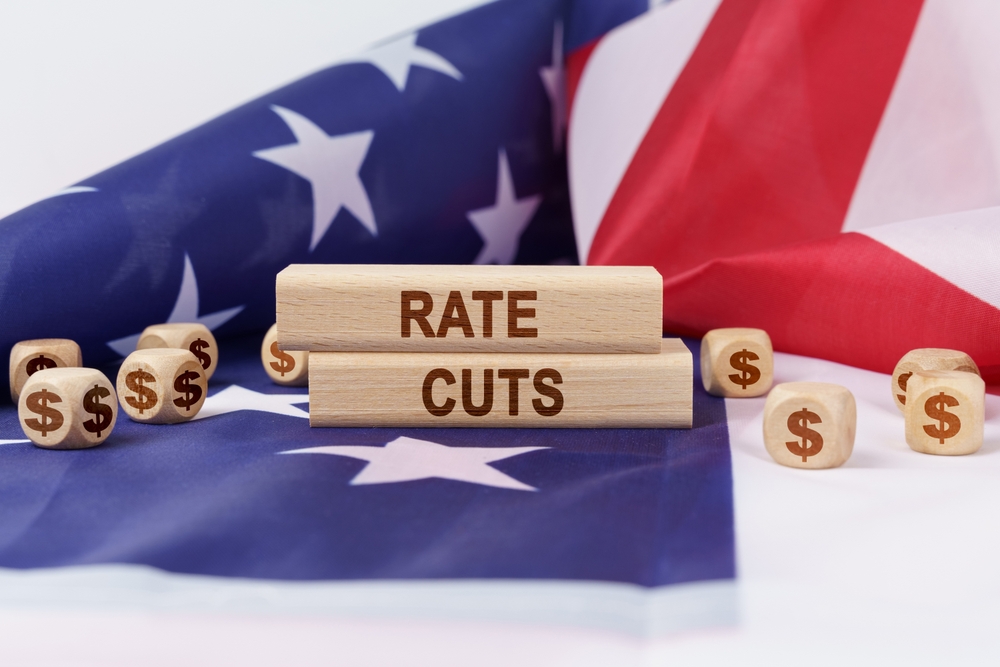
Surprisingly strong hiring in September has taken pressure off the Federal Reserve by reducing worries over the US labor market, giving policymakers room to continue cutting interest rates at a more gradual pace in coming months.
Facebook parent Meta Platforms Inc. debuted a new artificial intelligence tool that can generate or edit videos based on a simple text prompt, elevating competition with rivals like OpenAI and Google in the race to develop the world’s most advanced AI technology.
Investors can use this Natixis ETF to lock in robust income and capital appreciation, while generating security against equity volatility.
Investors have been embracing actively managed fixed income ETFs in 2024. The latest suite of active ETFs to catch my eye are from State Street Global Advisors.
Billionaire investor Stanley Druckenmiller is concerned that the Federal Reserve has boxed itself into a corner when it comes to future interest-rate cuts.
Ever since Prime Minister Narendra Modi announced his “Make in India” policies shortly after being elected prime minister in 2014, New Delhi has chased the dream of a prosperous manufacturing sector. There have been some successes — when it comes to making mobile phones, for example.
September is typically the weakest month of the year for stocks, but thanks to the much-anticipated federal funds rate cut, the S&P 500 turned in its first positive performance in a September since 2019
The major market event in September was the Fed's 50 basis point rate cut following the September 18th Federal Open Market Committee meeting. There was broad consensus the Fed would cut rates, though the 50 basis points (as opposed to 25) and perhaps the tone of Jay Powell's press conference surprised to the upside...
Semiconductor stocks continue to rally and will continue to do so as long as the AI and data center themes stay hot.
When building a portfolio, advisors need to optimize asset allocations and manage risk. But they also need to understand the trends happening in the market and the tools that can be leveraged to meet the moment.
Direxion Funds has launched two exchange-traded products that focus on a single emerging-market stock — Taiwan Semiconductor Manufacturing Co. — allowing investors to make outsized bullish bets on it or take positions against the direction of the market.
CLOs have delivered the most attractive risk-adjusted returns in fixed income over the past decade, but are often deemed 'too complex.'
In the report, Head of Greater China & Portfolio Manager Victoria Mio, explains why China’s decisive pivot from debt control to growth support could be the catalyst needed to restore confidence and unlock value in China’s markets.
Because of recent significant investments, economic growth is occurring in long-neglected areas and changing the geography of development.
Join the experts at VettaFi and KraneShares for an in-depth exploration of the generative AI space and learn how you can set your portfolio up to capture the potential of this exciting new technology.
By aligning your event format with the brain’s natural tendencies, you can create more engaging, effective, and enjoyable experiences for your audience.
Nvidia Corp. has expanded a partnership with technology consultant Accenture as part of an effort to drive adoption of artificial intelligence within businesses and boost orders for the chipmaker’s products.
Fidelity Investments has raised $250 million for its first fund dedicated to venture capital investments, pushing the firm further into private assets.
A lot of people are worried about the shrinking number of public companies in the US, but quality is an even bigger problem than quantity.
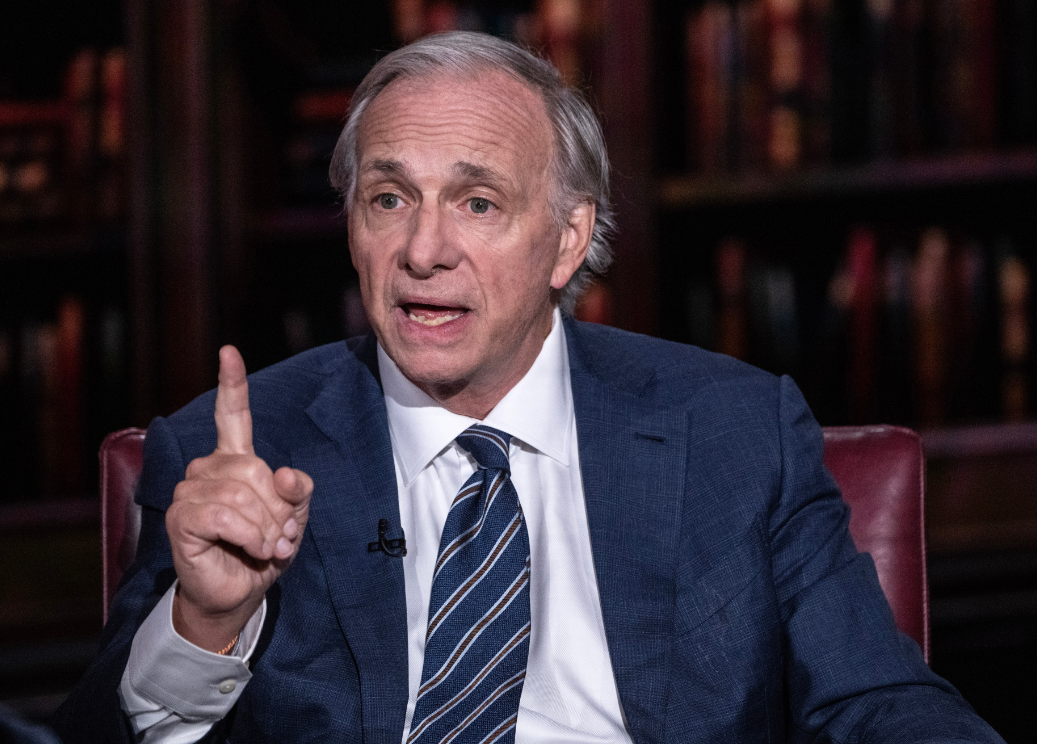
Ray Dalio’s family office and Sheikh Tahnoon bin Zayed Al Nahyan’s artificial intelligence firm G42 have abandoned plans to set up an asset management venture together in Abu Dhabi, according to people familiar with the matter.
Explore the significant opportunities for wealth advisors in managing 401(k) plans. Our Mike Dullaghan explains how these plans can help both advisors and clients with financial growth and retirement planning.
Emerging-market stocks are showing signs of life amid hints of earnings improvements. Where should investors look?
An analysis of Presidential Candidate Trump’s policy proposals recently suggests that tax cuts will increase the deficit. While the raw analysis is correct, as it subtracts the potential for reduced tax collections from the tariff revenue, it ignores the impact on economic growth.
Financial conditions are a collection of asset prices and interest rates that have the potential to affect the real economy.
The bond market is overextrapolating recession risk.
With all eyes on the Federal Reserve and White House, many investors are reassessing their portfolios.
Historically, staying invested has been, in our view, an effective strategy and one to consider when it comes to election years and beyond.
The Northern Trust Economics team shares its outlook for growth, inflation and interest rates in major markets.
BlackRock Inc. Chief Executive Officer Larry Fink said infrastructure is a major component to help stimulate growth in every economy and there’s enough capital in the private sector to fund investment.
Asian assets swung violently over the past three months, rocked by a succession of epochal events that culminated in a giant stimulus boost for China and propelled the region’s equities to world beaters.
The much-anticipated labor strike at ports along the East and Gulf coasts has begun, and the impact is a bit anticlimactic — for now.
Victor Haghani, James White and Jerry Bell of Elm Partners Management conducted a fascinating experiment to investigate the value of getting tomorrow’s headlines today, and the trading acumen of finance students. The results may suggest to some that finance courses need an upgrade...
Ocean Park CIO James St. Aubin discusses the $5+ billion firm’s decision to enter the ETF space and highlights their trend following-based ETF lineup. VettaFi’s Kirsten Chang offers perspective on several recent ETF milestones including the industry eclipsing $10 trillion in assets.
Business divorces are often painful, expensive, and damaging – not just to the individuals involved, but to the advisory firm’s reputation and, most importantly, to its clients. However, with some foresight and planning, many of the common triggers for a business split can be avoided.
Like it does once every year, last week the Commerce Department went back and revised its GDP figures for the past several years. And while the top line revisions to Real GDP were pretty small, there was a larger revision to corporate profits.
As markets grapple with the implications of artificial intelligence, the AI frenzy has meant that the six largest companies accounted for more than half of the U.S. market’s return in 2023 and year-to-date (August 2024) they have accounted for nearly half again.
While agency mortgage-backed securities offer compelling valuations, not every mortgage is created equally.
This week’s episode features Barry Peters from Winslow Capital along with TMX VettaFi's Kirsten Chang discussing IWFG
Despite double-digit dividend yields in many cases and the cushion such high dividends provide, buying agency REITs is not a guaranteed home run in a bull steepener.
The current approach to investment management has no sound basis and doesn’t work. There is a better way.