While some stocks may seem expensive, there are areas of opportunity that feature attractive valuations and growth catalysts, according to the Franklin Templeton Investment Solutions team.
Treasury 10-year yields rose above 4.5% for the first time since 2007 as a more hawkish Federal Reserve adds to concern the bonds face a toxic mix of large US fiscal deficits and persistent inflation.
Many view growth stocks, including tech stocks, as sensitive to rising interest rates. Last year confirmed this thesis. That script has been flipped for the better this year as technology ranks as one of the best-performing groups in the S&P 500 despite multiple rate hikes by the Federal Reserve.
Yesterday’s Equity Symposium brought together industry thought leaders. Attendees were treated to actionable information. Additionally, the panels presented cutting-edge thinking around equities.
Given concentration risk, understanding what a strategy and portfolio owns is more important than ever in current markets.
Investment bankers were finally starting to believe in the green shoots of capital-markets activity this month, but the Federal Reserve might now have crushed them under hawkish boots.
Low interest rates can lead people to rationalize all sorts of bad ideas: investing in companies that will never make a profit, financing share buybacks with debt, spending billions on terrible streaming content, to name a few.
A bad week on Wall Street turned dismal Thursday after the relentless surge in Treasury yields sapped demand for risk assets. In the end, US stocks suffered the biggest drop in six months as investors recalibrate for a world where rates sit at levels not seen in a generation.
ETF Trends interviewed three sources about active ETFs, why financial advisors are opting for these investment solutions for clients, and how these factors have changed in recent years. Each source responded to the same questions in their respective interviews.
During a five-day tour of India earlier this month, Nvidia Corp. Chief Executive Officer Jensen Huang visited four cities, dined with tech executives and researchers, took numerous selfies, and sat for a one-on-one conversation with Prime Minister Narendra Modi about the AI sector.
Cathie Wood’s Ark Investment Management has acquired a fellow exchange-traded fund issuer in its biggest push yet into Europe’s nascent market for trend-driven investing.
In our view, the specific market dynamics that influence a company's sales growth prospects have a greater impact on equity returns than the overall direction of the economy.
GMO has published a new 7-Year Asset Class Forecast.
In State Street Global Advisors’ recent Gold ETF Impact Study, the firm reported that “36% of surveyed investors don’t invest in gold because they don’t know enough about the ways that they can invest in gold.”
The biggest growth companies continue to increase their concentration in major equity indexes this year. It’s not surprising that investors are starting to rethink their exposure to large-caps, given concentration risk and ongoing market uncertainty.
Thematic ETFs have come a long way since they made their full debut in the ETF ecosystem.
Just about 10 “mega-cap” firms have driven more than 80% of the S&P 500’s growth in 2023. For some, that’s proven to be a source of robust returns, but that statistic also means heightened concentration risk for everyone.
Broad-based dividend strategies haven’t performed very well in 2023. But panelists at VettaFi’s Equity Symposium argued that there is value in dividend ETFs — investors just need to know where to look.
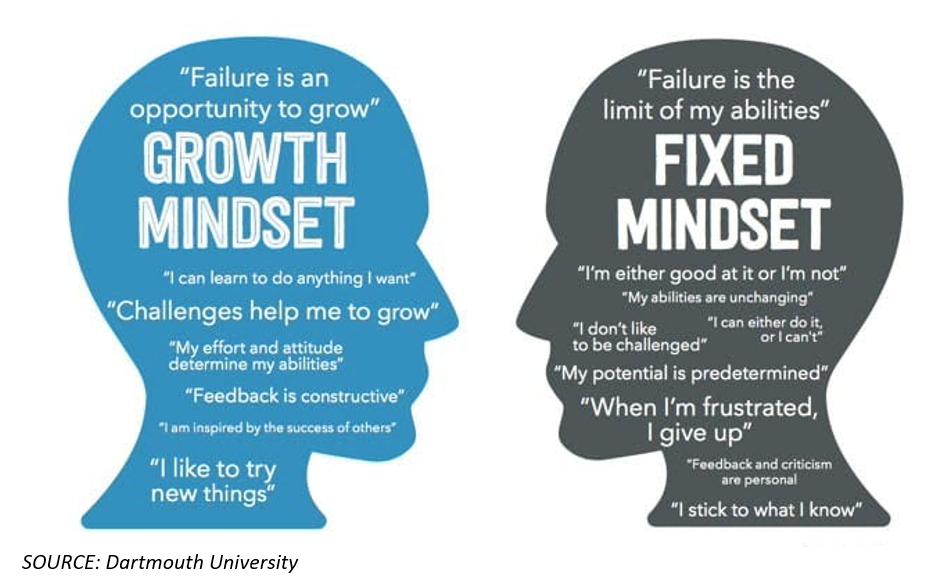
To better understand the growth mindset as it applies to your practice, look at some common misunderstandings, contrasting them with the outlook predicated by the proper mindset.
BlackRock Inc. and other money managers spent years rolling out sustainable funds, seeking to capitalize on surging interest in ESG investing. Now they’re abandoning an increasing number of those products in the US amid political backlash and investor scrutiny.
When Exchange first launched in 2022, it redefined what an advisor-focused conference could look like. Now, Exchange 2024 is just around the corner. The financial services industry prepares to unite at Miami Beach on February 11th-14th.
The European Central Bank is likely at or very near its peak policy rate, but we don’t expect rate cuts in the near term.
What’s inside an ETF really matters. This is an argument I’ve been making for more than a decade. However, with the growth of alternatively weighted index ETFs and actively managed products, this has become even more notable.
Inverted curves (when the gold line goes below the red line meaning that short maturity yields are higher compared to longer maturity yields) have preceded recessions.
Improve your own and your firm’s productivity by sidestepping these top five hybrid work mistakes.
Industrial securities are unloved by financial advisors. However, it is the backbone of a relatively popular sector ETF and two relatively new thematic ETFs positioned to benefit from transformational changes. Perhaps they want to dive deeper into the fundamentals with us during the VettaFi Equity Symposium on September 21.
For financial advisors, an appreciation of these changes fosters more profound empathy with older clients and fine-tunes their strategies.
Investors have had a lot thrown at them this year: more Federal Reserve tightening, a regional banking crisis, and geopolitical turmoil. And yet US stock indexes are on track for a stellar year.
For active managers, the math is stark. Out of thousands of mutual funds, literally only one beat the Nasdaq 100 over the last five, 10 and 15 years. It did so by boiling down stock picks to about two dozen companies and riding almost all of them to gains.
For new investors, the world of finance can appear daunting. But among the sea of investment options, Treasury bonds (often just called “Treasuries”) are a pillar of stability and reliability.
A return to the Great Moderation Era looks unlikely, which might lead to an increasingly volatile—and somewhat unfamiliar—inflationary, economic, and geopolitical landscape.
In arguably quiet fashion, active managers are performing admirably in 2023. An impressive percentage of active equity and fixed income funds beat their benchmarks in the first half of the year.
The term “Bond Vigilantes” is a nostalgic twist on an old-west theme. In the nineteenth century, the American West formed self-appointed groups, or committees, to seize the duties of law enforcement and judicial authority in situations when citizens found law enforcement lacking or inadequate.
The U.S. Census Bureau and the Department of Housing and Urban Development published their August findings for new residential housing starts and building permits. Over the long haul, the two series offer a compelling study of trends in residential real estate. Here is an overlay of the two series since the 1959 inception of the starts and permits data, which was tracked beginning a year later.
Rather than reacting to financial challenges and opportunities as they arise, local entrepreneurs are embracing new perspectives on change management by preparing for change beforehand.
Have you ever wondered why your closing ratio on seminar attendees rarely exceeds 40%?
What if we stop thinking of prospects who don’t commit as “tire-kickers,” and instead view them as potential clients we lost?
There’s an invisible force driving the most popular options trade of the year — one that gives Wall Street pros and day traders alike the power to turn a $1 investment into a $1,000 stock bet.
Now seems like a good time to talk about wrappers and which ones are best for different situations. How do you decide whether to use an ETF, a mutual fund, or something else?
When markets are in a rising tide, all boats (aka stocks) can benefit. When the waters are choppier, active equity selection aims to identify the sounder vessels. Tony DeSpirito reviews five reasons why he believes the new environment is setting up to favor an active approach.
Confidence is returning to the bond markets and one sign is corporations’ willingness to start taking on debt again with new issuance.
Markets are convinced that the Federal Reserve (Fed) is going to pause its interest rate campaign after it finalizes its Federal Open Market Committee (FOMC) meeting on Wednesday, September 20.
Despite substantial growth and huge advancements in public policy support, clean energy has had an abysmal stretch in the stock market the last two and a half years.
VettaFi’s Dave Nadig covers the launch of the first ETF holding 0DTE options, along with IPOs in ETFs, flows, and stories to watch moving forward. Astoria’s John Davi spotlights their recently launched U.S. Quality Kings ETF (ROE) and discusses current model portfolio positioning. Fort Washington Investment Advisors’ Laura Mayfield explains the management process behind two Touchstone ETFs, including their Securitized Income ETF (TSEC).
Here’s how I apply behavioral finance to help clients to think differently about their investing.
Credit Research Analysts Greg Schantz and Julian Wellesley dive into why they favor European banks vs US banks and why they see a potential opportunity in Yankee bank bonds.
Playing Shakespeare’s King Lear is the crowning ambition for some actors, but in 2023 we’re seeing superstar hedge fund managers Daniel Och and Ray Dalio trying out for the role in real life.
Amid signs the bond market has bought into the Federal Reserve keeping interest rates higher for longer, a cohort of investors is placing bets on the economy hitting a wall — and a sharp policy reversal in short order.
Stock-market strategists who were largely wrong about this year’s rally are finally starting to come to face their mistake, raising year-end targets for the S&P 500 Index.
Federal Reserve policymakers’ updated forecasts for their benchmark interest rate, due Wednesday, are looming as a key potential decider for a US Treasuries market at risk of a third straight year of losses.