PE will remain a factor in the RIA space for years to come, but it’s not for everyone.
The race for the first leveraged Bitcoin exchange-traded fund is heating up as applications land amid a surge in cryptocurrency prices.
The US power grid includes everything from 100-year-old hydro dams to brand-new batteries. It’s evolving as coal power diminishes, wind and solar rise and energy storage smooths out operations. But those changes are a shadow of what might come next.
While direct indexing has been a hot topic for the past couple of years, many advisors and investors are still trying to assess what it is, if it's right for them, and where it might fit into their portfolios. Head of Vanguard Personalized Indexing Emily LeStrange works with advisors to understand where direct indexing fits into an advisor's practice – and whether the benefits of direct indexing outweigh the challenges.
One thinks Tesla’s stock is a buy and headed back to $300; the other believes it’s a sell and will fall to $150.
Born of the Global Financial Crisis, additional tier-1 securities were designed to absorb bank losses in times of turbulence and maintain financial safety at no cost to taxpayers. Despite good intentions, we’ve found AT1s to be flawed instruments that are contingently junior to common equity in practice.
I “interviewed” Chat GPT 4.0 and asked it questions you might find of interest. Then I asked it to suggest additional questions I should have asked.
Instead of constantly developing a new marketing plan each year (or quarter, as I recommend), it's best to work the plan. In those periods, establish a marketing routine rather than creating an entirely new plan.
Why finding ways to break the tie to these variables is so important, and outline a few ideas for how to do it.
Hedge funds are reloading on bearish wagers on US equities, betting the latest market retreat will persist amid worsening economic data and corporate earnings.
We think dividend-income strategies can be effective across multiple environments, provided that they’re designed to tap into a wider opportunity set beyond traditional dividend payers alone.
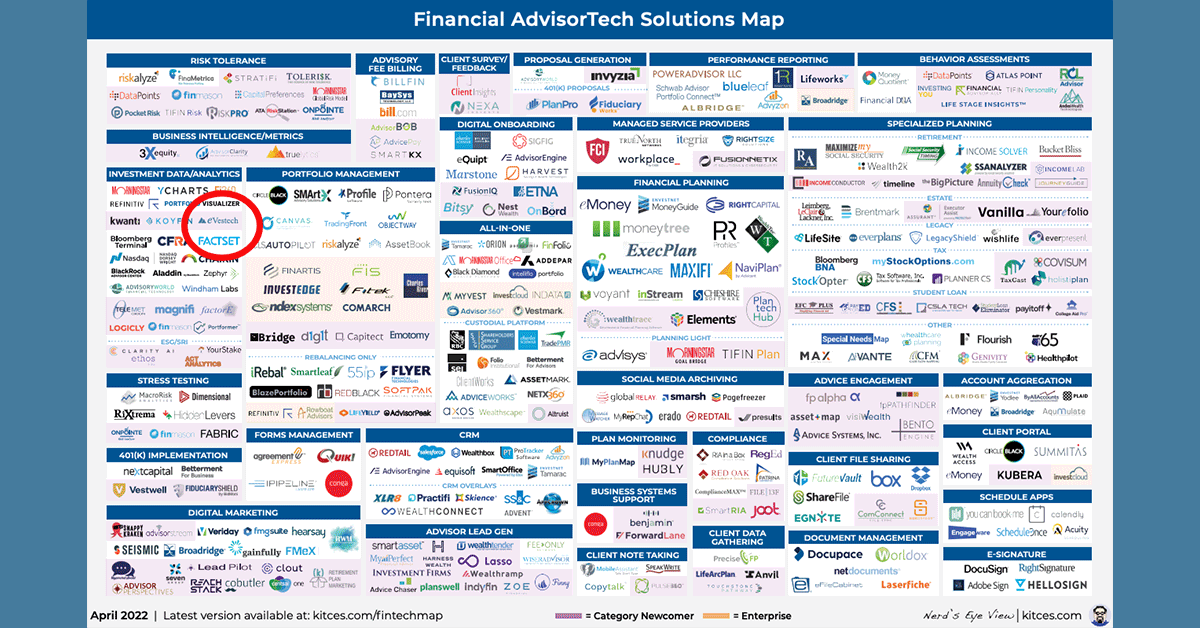
With so many offerings to choose from, how should an advisory practice build or refine its tech stack? Let’s examine options to maximize your chances of success.
Model portfolios have become an essential component of virtually every advisor’s investment processes. Models can be constructed to meet investor profiles, including their level of risk tolerance, need for income, or tax considerations. Countless third parties, including many asset managers, offer models. That has led other firms to create model marketplaces, where advisors can research and choose from commercially available model portfolios.
My guest today is Lee Andreatta of Advyzon Investment Management, and his firm just announced that it has added a model marketplace that enhances its TAMP offering and moves Advyzon closer to offering a fully comprehensive solution for financial advisors and investment managers to run their firms.
VettaFi’s Tom Hendrickson discusses the firm’s recent acquisition of the ROBO Global Index suite and highlights the latest thematic ETF engagement data on their platform. etf.com’s Sean Allocca discusses finalists for their annual industry awards. Eddy Elfenbein explains the AdvisorShares Focused Equity ETF (CWS), which is based on Crossing Wall Street’s “Buy List”.
Western countries have become increasingly wary of sharing technology with China, with the US and Netherlands recently imposing new restrictions on exports of semiconductors and the equipment used to make them.
Central banks accumulated gold at the fastest pace on record in the first two months of 2023. In January and February, central banks collectively bought a net 125 tonnes of the metal, the highest amount for the year-to-date period since banks became net buyers in 2010.
Bailouts of the banking system create social tension. Eventually, bailouts introduce so much risk into the system that failures and bailouts become too costly for society to bear. The government creates draconian rules to prevent them, which kills innovation and new business, and the result is a stagnating economy.
It is not every day that I read a prediction of doom as arresting as Eliezer Yudkowsky’s in Time magazine last week. “The most likely result of building a superhumanly smart AI, under anything remotely like the current circumstances,” he wrote, “is that literally everyone on Earth will die.
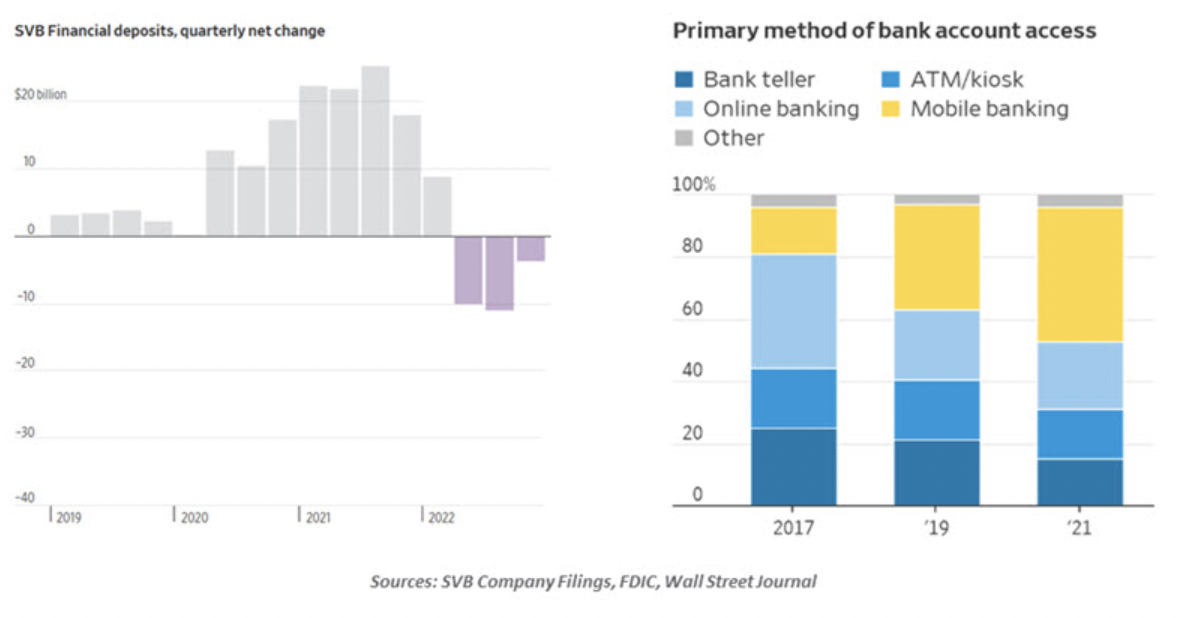
When banks started going belly-up, the reaction in bonds was emphatic. Two-year Treasury yields slid a percentage point over three days in March, the most since 1982.
“Thinking the Unthinkable.” What does that phrase bring to mind? To me it suggests a situation that has become so stressed you are forced to consider undesirable solutions.
Shares of China’s state-owned enterprises have been a hot trade in a mostly lackluster equities market this year, but disappointing earnings are causing investors to reassess their bullish bets.
Professional stock pickers who feasted on last year’s volatility were positioned for more of the same heading into 2023. They got something else entirely, and are paying for it in their returns.
First, Goldman Sachs Group Inc. highlighted Bitcoin as the best-performing asset in terms of absolute and risk-adjusted returns earlier this year. Then the banking crisis happened and the largest digital coin rose to its highest price in ten months. It's enough to make even some naysayers reconsider.
In the face of banking stress and a hawkish Federal Reserve, stocks have advanced impressively so far this year, but narrow breadth doesn't bode well for continued strength.
Inflation regimes often coincide with changing political regimes and agendas, much of which stems from the rise of populism and fiscal dominance. As a result of decades of globalisation and rising wealth inequality, we may well be entering a new regime - one of higher inflation and higher inflation volatility.
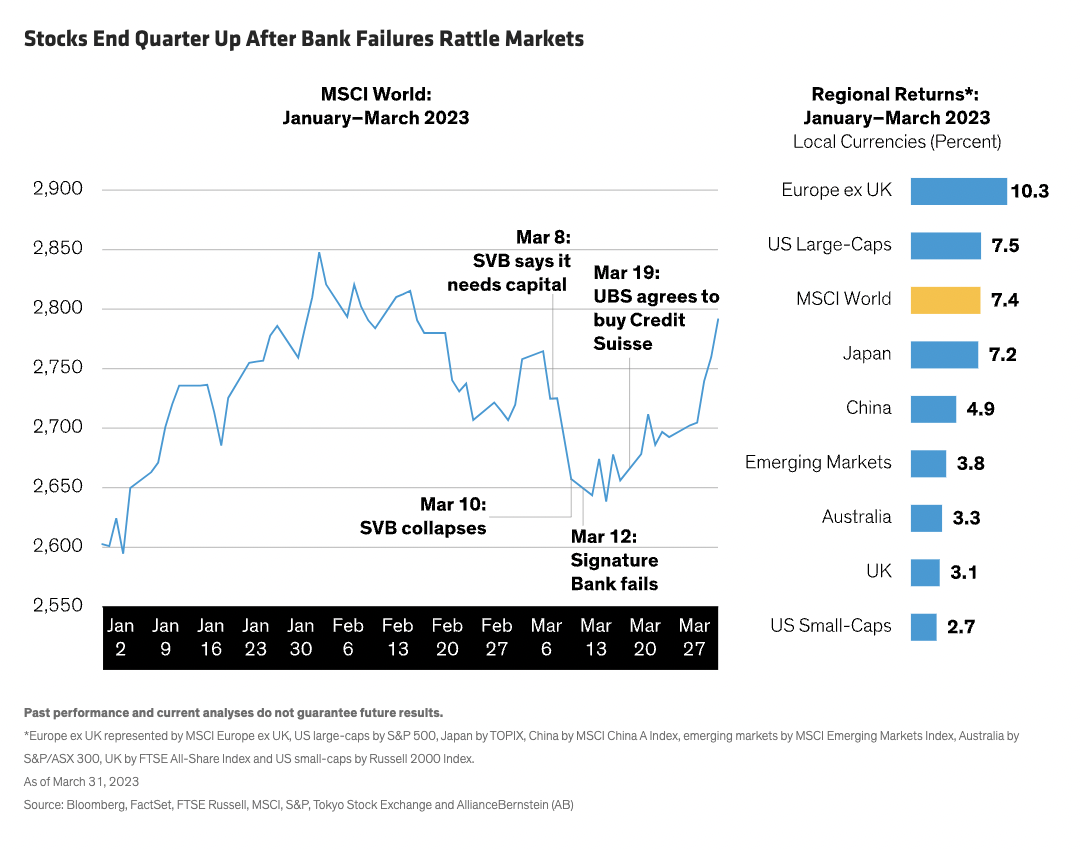
After a weak February, markets rallied in March. U.S. markets were up by low single digits, while bond markets were in the same range. International markets also showed modest gains, with developed markets about the same as the U.S. and emerging markets doing slightly better.
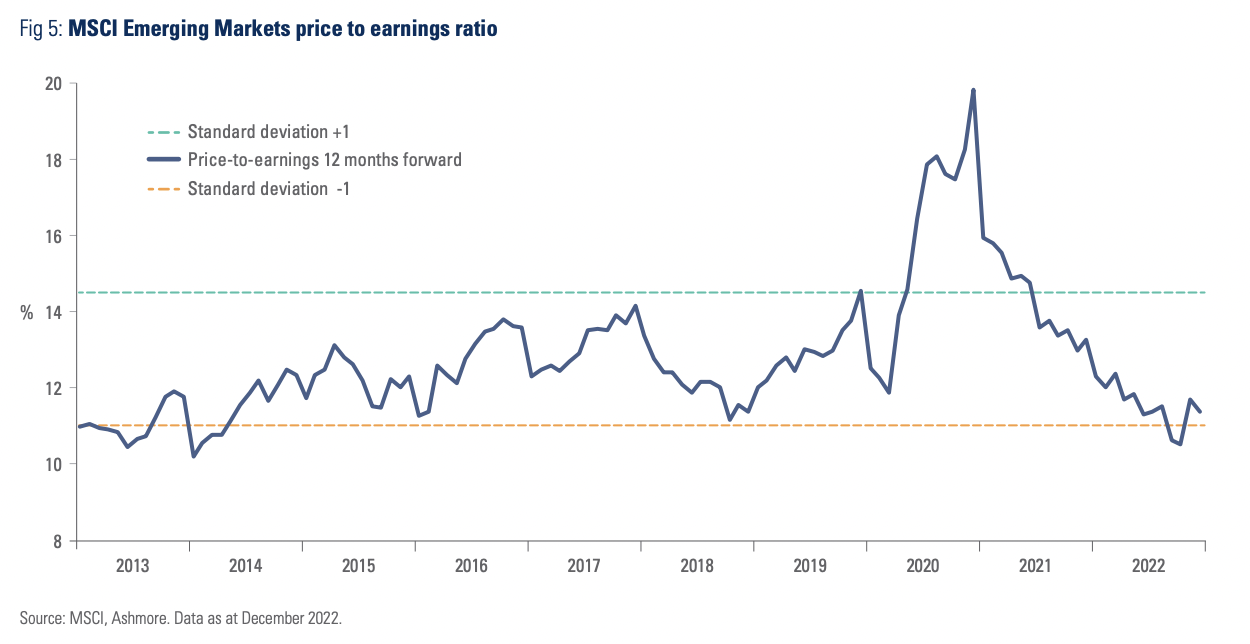
Emerging Markets (EM) have faced a challenging environment over the past five years, due to a series of global shocks that have triggered elevated market volatility and led the MSCI EM equity benchmark to experience its most protracted drawdown in history.
Many advisors today are helping clients with a broad range of their financial planning needs.
CIO Larry Adam shares why his team's market and economic views are tracking more optimistic in light of current volatility.
Global equities were volatile in the first quarter, as turmoil in the banking sector jolted markets.
Walmart Inc. is betting on greater supply-chain automation and hinting that a recent investment binge might lift profit beyond the retailer’s stated long-term goals.
DoubleLine Capital LP’s next pair of exchange-traded funds are setting sail into a rocky real estate market.
Transitioning to the independent RIA business model is the most consequential decision advisors will make in their career. A successful outcome requires choosing the right partner. That means identifying a good cultural fit, the right technology, and an open-architecture platform that affords access to the investment products that best meet a client’s needs.
The Franklin Templeton Investment Solutions team examines the earnings outlook for 2023, and why it might make sense to be defensively positioned.
The news of the shocking OPEC+ announcement of a supply cut is saturating the minds of investors and market prognosticators.
Asian equities are likely to extend their gains as the year progresses, boosted by the region’s relatively better growth prospects and a broadening economic recovery in China.
Add this to the long list of market surprises in the first quarter of 2023: The worst-performing exchange-traded funds still managed to attract massive amounts of cash.
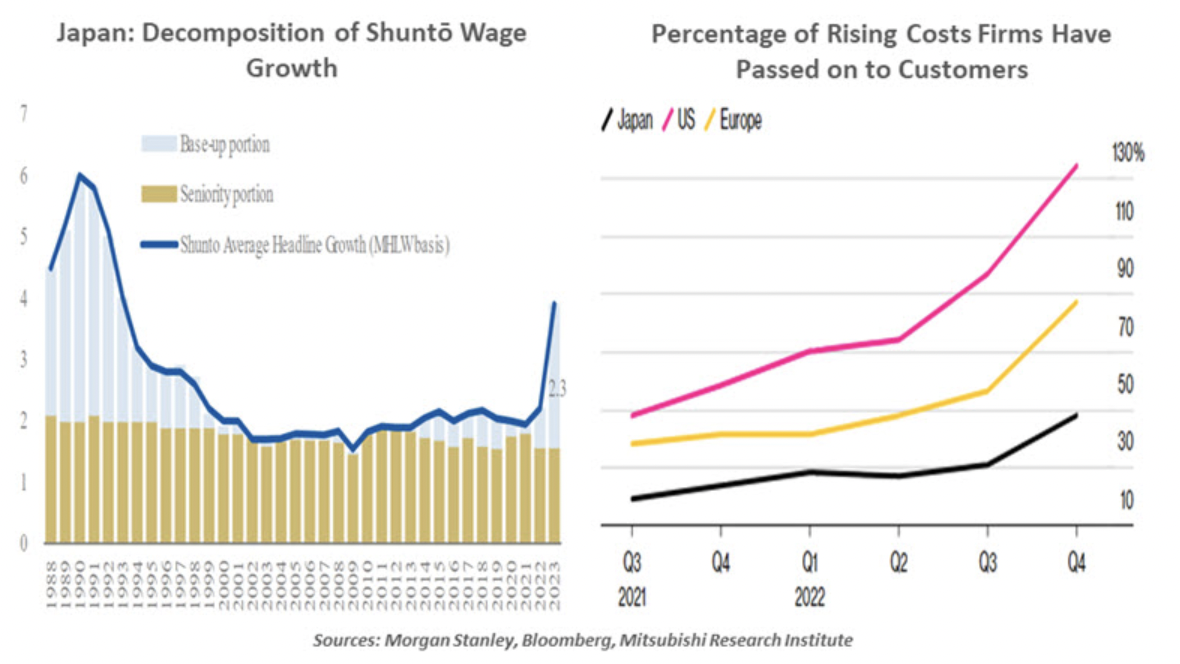
The risk of Japanese inflation getting out of control is not high.
As banks back away from credit creation, we think certain assets could reassert their leadership. In our Quarterly Strategy Report, we analyze the Credit Crunch.
VettaFi’s Lara Crigger highlights new ETF launches during the first quarter of 2023. Unlimited’s Bob Elliott talks hedge fund industry disruption and the Unlimited HFND Multi-Strategy Return Tracker ETF (HFND). KraneShares’ Luke Oliver explains the investment opportunity in carbon compliance and carbon offset markets.
Tax issues are an area most of us focus on once a year. However, if you are heading into retirement and you do not have a solid tax plan in place, you could be paying thousands of dollars in taxes needlessly.
For many of those – now a clear majority – who believe climate change is a serious long-term threat, the recently announced breakthrough that nuclear fusion has at last produced net energy is an extremely hopeful sign. First, however, they need to read this article.
This essay focuses discusses a February visit by Secretary of State Blinken to Astana, and the EU-Central Asian Economic Forum in May.
If I did not have bad luck, I would have no luck at all.
Just as we were getting used to the idea of ChatGPT writing emails and conducting research, OpenAI has upgraded it with capabilities that make it even more of a threat to big tech companies such as Google.
It is challenging to deal with clients who are so clearly stuck in their financial pasts. Strong emotions don’t lead to calculated financial decisions, after all, which makes doing your job much harder.
Gold appears to be well-positioned for a strong pump that could carry it to new all-time high prices in 2023—and beyond. As you know, I’ve been following and writing about the precious metal market for a very long time, and I see a number of unique catalysts at the moment that could contribute to higher gold prices.
Bitcoin’s surprising fast exit from its “crypto winter” has once again put the notoriously volatile digital currency atop the leader-board in the first quarter for being the best-performing asset class by a wide margin.
Wall Street’s model-portfolio boom appears to have flashed its invisible power for the second time in this week after a once-sleepy Charles Schwab Corp. bond exchange-traded fund received another monster inflow.