Despite its commitment to curbing China’s geopolitical ambitions, the Biden administration has done little to counter the country’s expanding economic footprint in South America. Given the region’s crucial role in the fight against climate change, the US can no longer afford to take its southern neighbors for granted.
Lending standards are a lot like carbon monoxide since they operate in the back ground. When the Senior Loan Officer Opinion Survey (SLOOOS) showed that banks significantly increased lending standards in the third quarter, no one on Wall Street noticed.
VettaFi’s Lara Crigger offers perspective as the smart beta ETF category celebrates its 20-year anniversary. BNY Mellon’s Ben Slavin discusses the future of ETF innovation, including the upcoming expiration of Vanguard’s ETF share class patent. Avantis’ Phil McInnis explains the drivers behind the remarkable growth of their ETF business.
Big business has been a fixture of American life since the late 19th century, and today more Americans work for big companies than for small ones. That could be about to change — in part because of the rise of artificial intelligence.
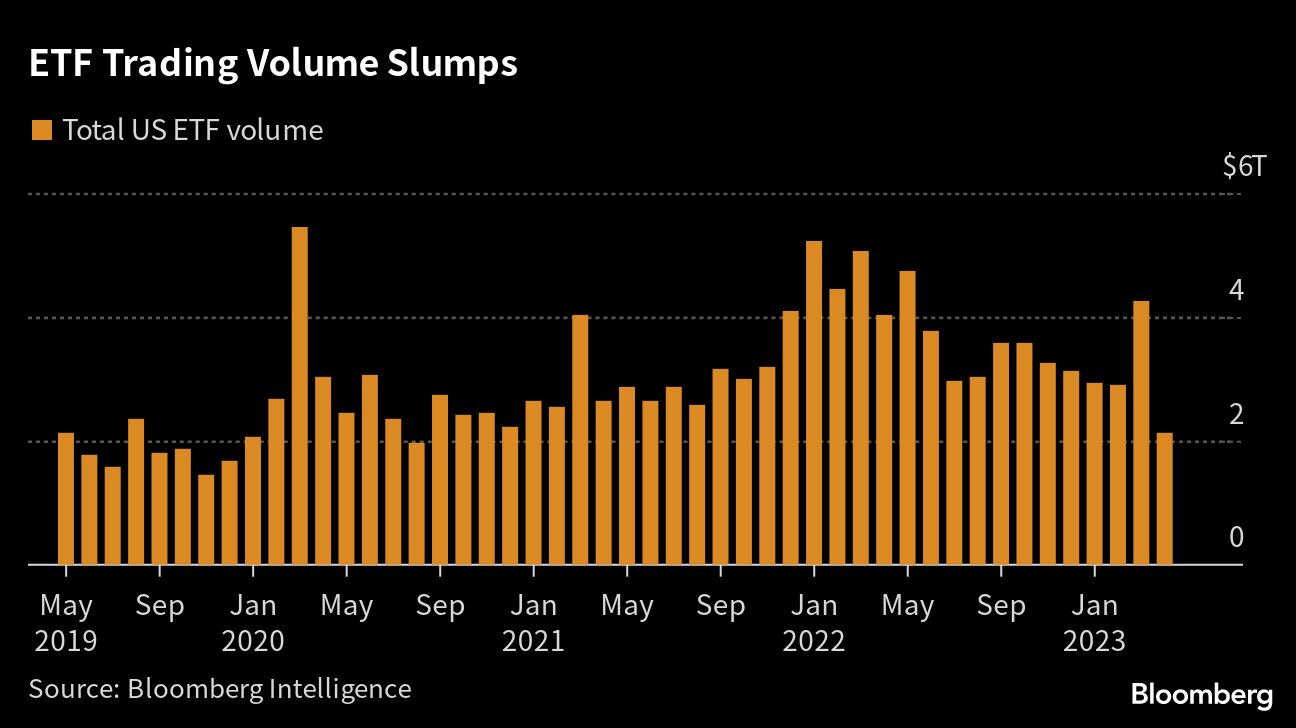
As stocks and bonds gyrate in well-defined ranges, the exchange traded-fund industry is sending a clear message: traders are tired.
For nine of the last fifteen years, few people thought about the Fed. Sure, we discussed QT and QE, but the Federal Reserve held interest rates at zero year after year.
Extreme volatility is making it more challenging than usual to predict market movements and where best to allocate portfolios. In fact, even BlackRock executives admitted that they're facing difficulties with allocations.
In the past three years, special purpose acquisition companies (SPACs) experienced stratospheric growth, became a manic bubble as sponsors raised new IPOs with a relentless fervor along with a market happy to oblige.
The pandemic hurt small retailers by hastening the transition to digital commerce and emptied office buildings by turning living rooms into workspace. But it also fueled a warehouse building boom and unleashed a torrent of pent-up travel-and-leisure spending when economies reopened, underscoring the diversity of commercial real estate.
Next week also brings what could be a pivotal Federal Reserve policy meeting. We use this word “pivotal” to say an event is important. Taken literally, it means to turn in a different direction than you were previously going.
Cryptocurrency adoption in the U.S. increased amid fears of a full-blown banking crisis, a new poll finds. According to Morning Consult, 22% of Americans, over one in five, said they owned at least one form of crypto in April, representing a four-percentage-point increase from January.
In 1983, Warren Buffett sat down to pen his annual letter to Berkshire Hathaway shareholders. Tucked away at the back was a “business wanted” advertisement.
Yesterday JP Morgan introduced a new model to quantify the last 20 years of Federal Reserve statements and speeches. While we aren’t privy to the details of the AI model, we will just assume that the model properly captures dovish and hawkish language.
The volume of SPAC IPOs and mergers has reverted to pre-hype levels. Funding from public and private investors has plunged, while redemptions by existing investors have increased sharply.
Fear of missing out, or “FOMO,” seems to be a common trend with investors. Whether it was GameStop, AMC, Bitcoin, or the FAANGs, the last few years has seen some investors exhibit FOMO as they chase the hottest trends in the market.
Over the last week, the market saw volatility pick up after approaching the upper end of what we believe is the near-term trading range.
Although investing in in-state municipal bonds may have tax advantages, there can be good reasons to buy out-of-state munis.
Every news item these days seem to swing between extremes. When in reality, these bank failures are not atypical. Read our latest insight to learn what similarities these recent bank failures have with previous failures and what the warning signals are.
We have the royal coronation in England to remind us that once upon a time, one person would issue all the laws – which is an unfair but very effective way to make things happen. Here are the edicts that I would issue if the financial services world made me its king.
A few months ago, the internet was filling up with predictions that we’d have a 2008-style crash in home prices. The thinking was that the increase in interest rates would cause mortgage payments to skyrocket and price out an entire generation of homebuyers.
You can’t add more hours to a day or decrease the amount of work on your plate. Your only option is to save time by increasing your efficiency. The question is how.
India’s ability to attract foreign investment has long been hampered by subpar infrastructure and excessive bureaucracy. But reputations can obscure real change.
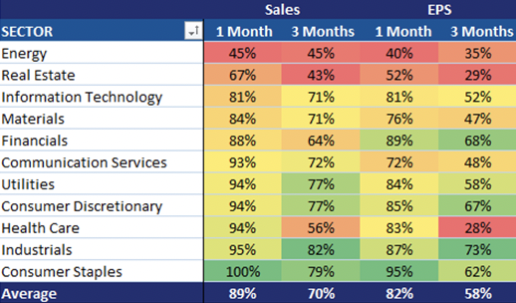
With the European Market’s earning season fully upon us, let’s look at expectations for the month ahead. According to our proprietary analytics, the European energy and real estate sectors have experienced the highest level of downward revision to sales of all sectors on both a one- and three-month basis.
Over the past year, the municipal bond market has seen increased volatility stemming from rising interest rates across the yield curve.
A new report from Bain highlighted a key statistic: Individual investors hold roughly 50% of the estimated near-$300 trillion of global assets under management. Yet those same investors hold just 16% of AUM in alternative investment funds. Some HNW investors are seeking to diversify away from public equities to safeguard their portfolios and are allocating to private market investments through alternatives. Opto Investments and Riskalyze recently announced a strategic partnership that combines Riskalyze’s growth platform with Opto's technology-enabled private markets solution to build investment strategies that offer exposure to private credit, private equity, real estate, venture capital, and infrastructure.
Direct indexing is an innovative investment strategy that can solve a variety of investor challenges. We discuss the five main benefits of incorporating direct indexing in a client’s portfolio.
In the spirit of being a good corporate citizen working to build a better world, Franklin Templeton is launching a Diversity, Equity and Inclusion (DEI) webpage that will highlight the company’s DEI efforts.
China’s domestically driven economic growth has not yet translated to Emerging Market stock performance, which has tended to have been weighed down by international political tensions.
We hope you enjoy the latest NewsLetter from Harold Evensky.
The latest IMF reports shows the mounting risks facing emerging markets.
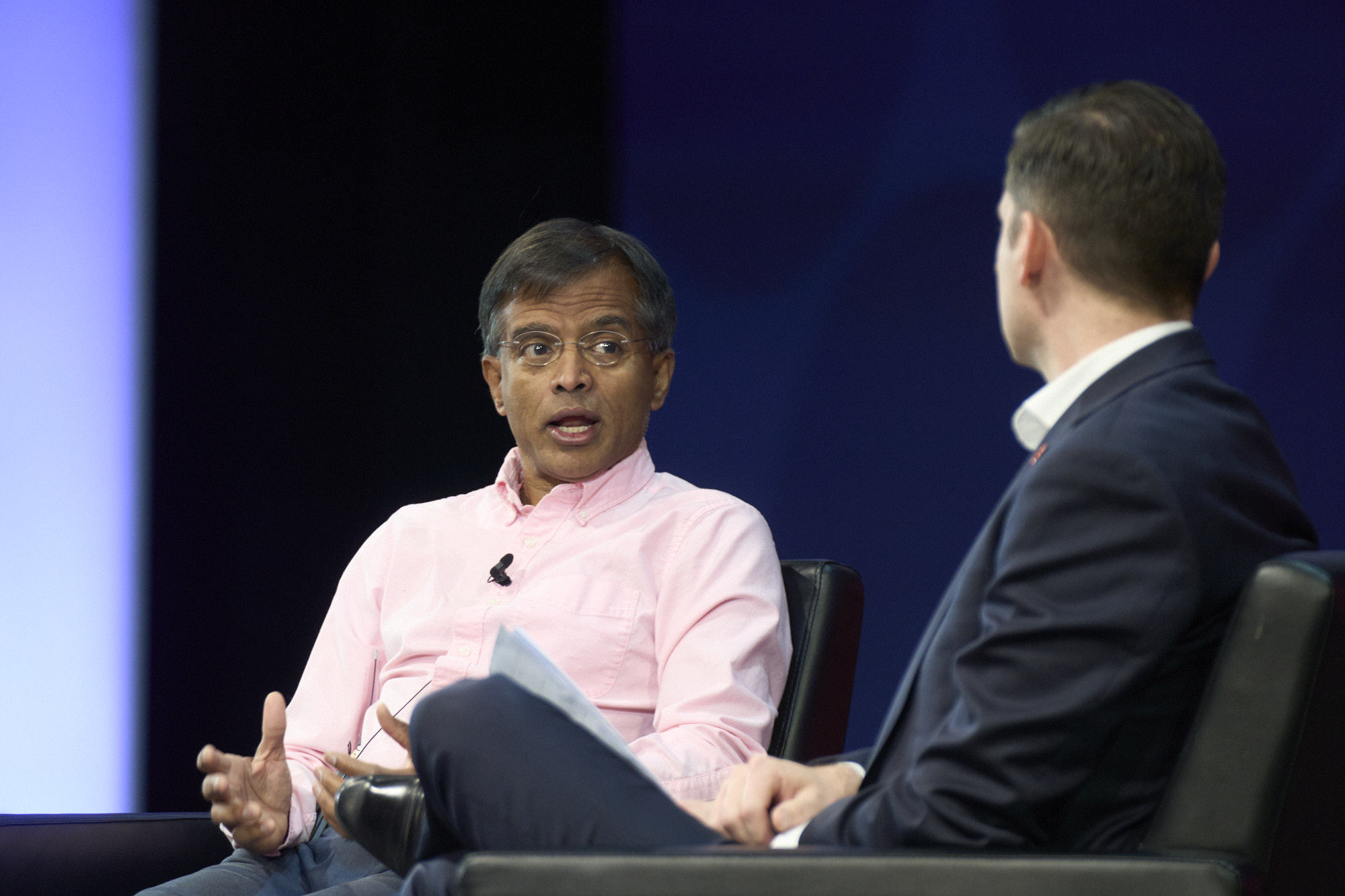
The fiercest adversary of investing based on environmental, social and governance (ESG) is Aswath Damodaran. ESG is a failure, its advocates are to blame, and the concept should be retired, according to Damodaran.
How do you go from the theoretical to the practical? What AI tools can you use that will streamline and improve your processes?
JPMorgan has unseated itself for the title of largest actively managed exchange-traded fund in the $7 trillion arena.
The startup world has had a tough year — plagued by mass layoffs, plummeting venture capital investment and the chaotic collapse of Silicon Valley Bank. But many in tech believe that the worst is yet to come.
Alphabet Inc.’s Google has consolidated its artificial intelligence research groups into one unit, the company’s latest move to keep from falling behind in the AI race.
The disruption in office real estate is outlasting the term on its loans.
VettaFi’s Tom Lydon discusses recent advisor polling data on everything from 60/40 portfolio returns to active ETFs. Sprott’s John Ciampaglia spotlights their lineup of energy transition ETFs, including the first-ever nickel miners ETF. Horizon’s Scott Ladner explains the process behind their ETF-centric, goals-based model portfolios.
How can advisors ensure that clients will keep their assets with you?
I reviewed some advisor websites and I was confused by their value propositions.
Hedge funds are betting on higher Treasury yields in a market that’s divided over whether the US economy can avoid recession and Federal Reserve interest-rate cuts.
As Microsoft Corp., Alphabet Inc., and — now — Amazon.com Inc. blaze ahead in the race to deploy advanced chatbots like ChatGPT, one rival remains nowhere to be seen. Apple Inc. may be biding its time for the technology to mature...
If the US ceases to be the world’s economic leader, it can only blame itself.
In spite of weakness in some economic data, problems in the banking sector, and much higher interest rates, real GDP in the first quarter will almost certainly show moderate growth.
Pricing power and profit margins showed signs of stabilizing in the first quarter. But a survey of Loomis Sayles’ credit analysts leads us to believe the bottom in corporate fundamentals is yet to come.
Investors are losing their ability to resist a stock rally that much of Wall Street is convinced is doomed.
Sometimes when volatility jolts financial markets, the safest trades can quickly morph into dangerous bets.
Back before clocks went digital, you could say “a stopped clock is right twice a day” and even youngsters would know what you meant. A mechanism could be nonfunctional but occasionally correct.
Chinese economic data blew expectations out of the water this week, reflecting a strong comeback for the Asian giant as it finally emerges from the world’s most restrictive pandemic-era lockdown.
Former Treasury Secretary Lawrence Summers rejected speculation that the dollar is rapidly losing its dominance in the global economy, and highlighted China’s detractions in providing an alternative reserve currency.
China’s economy has turned the corner, and is on a path towards a gradual, domestic demand-driven recovery. Andy Rothman outlines the reasons why China’s recovery is likely to be sustainable.