Duration management is a key function of fixed income portfolio management. However, as yields have moved approximately 100 bps in 2026 and the monetary regime has sharply changed from rate cuts to rate hikes, duration management has come into greater focus.
Municipal bonds posted their best month since 2023. See how high-yield muni ETFs help advisors capitalize on the municipal market recovery.
Join Amy Y. Zhang, CFA, Portfolio Manager of the Alger Mid Cap 40 ETF (FRTY), for an in-depth discussion on today's mid-cap opportunity set and where she is uncovering high-conviction ideas across transformative themes such as artificial intelligence and healthcare innovation.
On the surface, financial conditions appear to be easing: the FOMC held rates steady last week, and Treasury yields have retreated from their recent highs. But that rally reflects a flight to safety, driven by growing questions about the durability and financing of the AI investment cycle.
US equities plunged Thursday as a rotation out of chipmakers deepened and investors looked past the initial relief rally following the US midterm elections.
The world’s advanced economies could be facing a slow-moving train wreck that they appear powerless to stop. We are no longer producing enough babies.
October reminded investors that markets rarely move in response to a single factor. The US economy continued to expand at a moderate pace, supported by healthy consumer spending and solid business activity, even as markets contended with higher energy prices, renewed inflation concerns and heightened geopolitical tensions.
Following U.S. midterm results, Paul Eitelman, Chief Investment Strategist, Russell Investments, shares the potential implications for markets and the data center rollout. Views are as of 10:00 am Eastern Time on November 4, 2026.
Notwithstanding that the major U.S. equity indexes are sitting on healthy double-digit gains heading into the final two months of 2026, the calm at the index level belies a lot of churn and rotation underneath.
As investor interest in Anthropic’s upcoming IPO grows, ETFs are finding new ways to offer exposure to private companies through derivatives tied to perpetual futures. Recent regulatory developments could accelerate the use of these instruments across the ETF industry, but they also introduce new risks and complexities.
As AI tools remove friction from administrative tasks, more clients flow into the pipeline, stretching advisor capacity without fortifying the infrastructure required to support it. Every efficiency created for an advisor can generate additional work elsewhere, with much of it landing on client service and operations teams.
Focus on raising the brand of your firm. We call it “standing out in a crowded market”. Take a look at what you are saying and find ways to differentiate yourself so people become curious and want to learn more about what you can do for them. Websites don’t sell anything but they do tell a story. Make sure your story is a solid one.
Fixed income ETFs shattered all-time records in October, amassing an unprecedented $74 billion in monthly net inflows. The milestone marked a record sixth consecutive month with more than $50 billion in allocations. This streak never occurred in the industry prior to this year.
Google parent Alphabet Inc. is back in the municipal bond market for the second time this year with a $1.5 billion prepaid energy deal.
While US midterm election results historically bode well for stocks regardless of which party wins, some Wall Street strategists are warning clients to temper their bullishness this time around.
Almost three years have passed since the SEC approved spot Bitcoin ETFs, bringing crypto and digital assets investing to a whole new audience. The asset class has evolved in that time, becoming a bigger and bigger part of investor and advisor plans.
Most of us consider the end of the year as the season of giving. While you may have put some thought into how much you’d like to give this year, have you considered the best way to do it? The biggest benefit of charitable giving is supporting an organization that holds special meaning to you. But that doesn’t mean you can’t incorporate some potential tax advantages as well.
From earlier detection and more precise treatments to smarter medical technology, the healthcare sector continues to reinvent products that improve and save lives. Yet healthcare stocks have struggled to reflect that progress, overshadowed in recent years by investor enthusiasm for AI beneficiaries.
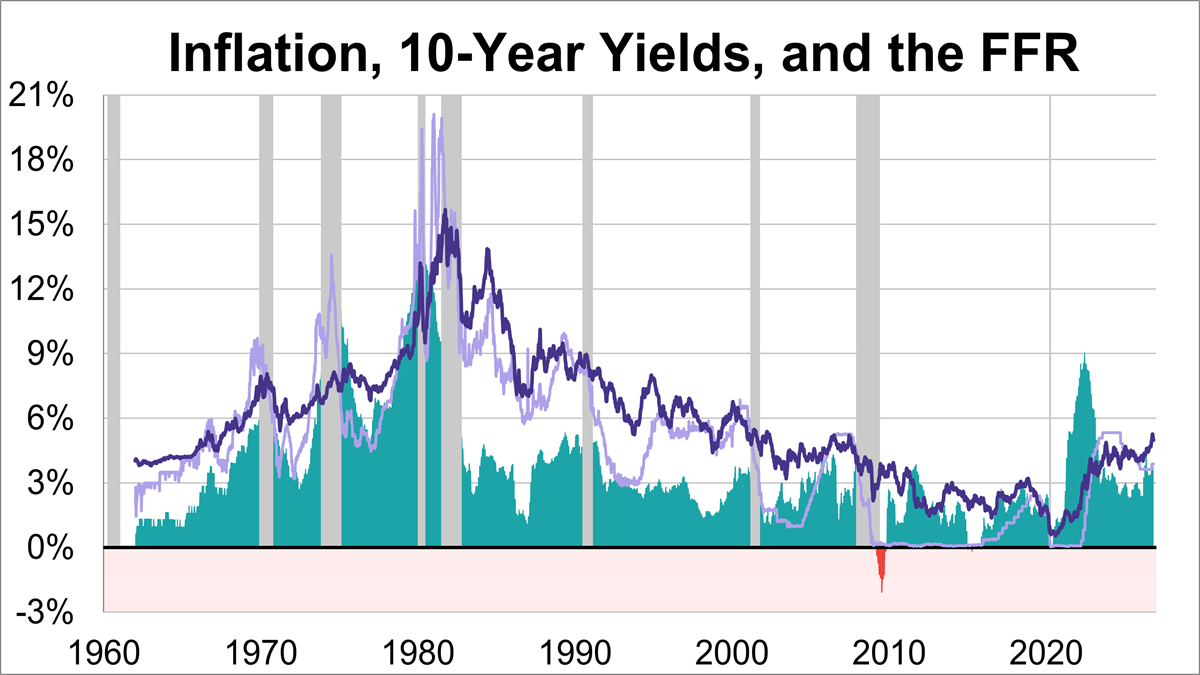
The 10-year Treasury yield has experienced dramatic fluctuations, ranging from a peak of 15.68% in October 1981, during the height of the Volcker era, to a historic low of 0.55% in August 2020, amidst the economic uncertainty of the pandemic. At the end of October 2026, the weekly average stood at 4.99%.
Fear of losing disability benefits can sometimes be as much of a barrier to opportunity as the rules themselves. Even sophisticated families can find the system difficult to navigate.
When I introduce the emotional side of money to my financial planning students at Golden Gate University, the most common reaction is shock that it was never part of their formal education.
With the Fed resuming rate hikes, inflation remaining above target, and market volatility returning as a persistent feature of the investment landscape, advisors are increasingly turning to income not tied to duration or credit risk.
While market valuations remain on the loftier side, investors face a familiar dilemma. Chasing pure growth leaves portfolios vulnerable to sharp drawdowns, while hiding in traditional “deep value” risks inheriting mature businesses in structural decline — classic value traps.
The broad markets experienced volatility in the 3rd quarter with concerns over the impact of energy prices on inflation as well as CapEx spending by hyperscaler companies in the AI space driving technology stocks. The price of WTI Crude oil rallied sharply during the quarter by nearly 30%.
Once prone to external shocks, Latin America has weathered this year’s geopolitical upheavals largely unscathed.
The Bank of Japan’s decision to accelerate sales of exchange-traded funds could boost its payments to the government, potentially helping Prime Minister Sanae Takaichi finance her costly policy agenda.
Technology took us out of our homes. It gave us a boss, office politics and an alarm clock — and it was awful. We got used to it; we made it work. Now technology might take those jobs away. But perhaps it will also restore the autonomy and flexibility that once defined work.
A few years back, I compared two island-nations whose leaders came to power in 1959. At the time, Cuba was by far the wealthier of the two—rich in sugar, tobacco and tourism—while Singapore was a sleepy former colonial outpost with almost no natural resources.
Last week, the AI trade began to crack further with Alphabet’s release, missing on both the top and bottom lines. Mirroring Meta’s print from the prior week, massive AI capex turned free cash flow negative, alarming investors.
Innovation takes time—very often years—and can be expensive. For example, it wasn’t so long ago that Nvidia was considered to be just a gaming company. Today, it is one of the largest companies in the world with a dominant position in hardware and software tools powering the artificial intelligence (AI) revolution.
I spent the majority of my time in the retail bond business during the zero-rate period. The problem during that time was fairly simple. A bond would yield about 1.5%, while a retiree would need about 5%. There had to be a solution, and Wall Street was quick to provide it.
Medicare's annual enrollment period gives advisors an opportunity to revisit healthcare coverage with clients. While advisors needn't become Medicare experts, they can help identify issues that warrant a closer look or consultation with a qualified Medicare professional.
The prolonged impact of raising the Fed Funds rate, coupled with the recent surge in long-term bond yields, is exactly the kind of over-restrictive policy mistake the bond market may be worried about, helping explain the recent decline in long-term yields.
Investors who own bonds are seeing losses in their accounts. Many are not happy, and many just want out. The losses over the past five years are significant. After the biggest decline in the history of the bond market in 2022, bonds stabilized until this year, when the decline resumed. Here’s why I tell clients that they should be thrilled.
The runup in Apple Inc. shares in recent months has left the iPhone maker little room for disappointment when it reports earnings after the bell on Monday.
Marvell Technology Inc. has reached a deal to buy data center optics maker Lumentum Holdings Inc. at an enterprise value of $115 billion, one of the biggest tech tie-ups ever, in a race to capitalize on the artificial intelligence boom.
The stock market doesn’t wait for GDP. The ratio of consumer discretionary stocks to consumer staples has fallen about 19% from its late-2025 peak, suggesting the so-called “smart money” has been quietly moving out of what people want and into what people need for most of this year.5
Credit problems in the AI space are not going to be contained to just the AI space. It is going to have impacts all throughout the economy and global markets. I guarantee you central banks are paying attention as it is affecting what they have to charge for sovereign debt.
Despite the fact that digital tools such as AI advisors are becoming increasingly available, investors are still seeking out human financial advisors.
Rising U.S. Treasury yields have added fresh strain to the U.S. housing market. The average 30-year mortgage rate, which generally tracks the 10-year U.S. Treasury yield plus a mortgage spread, rose to 7.5% in October 2026, according to Mortgage Bankers Association data, worsening an affordability crunch that remains a top concern among U.S. households.
In today’s modern financial landscape, market-capitalization-weighted indices dominate the investment ecosystem with trillions of dollars tracking broad market indices such as the S&P 500 and the Russell 1000. However, a research article by RAFI Indices™, adapted from the CFA Institute Research Foundation series The Active Side of Indexing, exposes flaws within cap-weighted benchmarks.
Large-cap stocks may be better built for 5% Treasury yields than their smaller rivals, according to State Street Investment Management’s quarterly outlook. The 10-year yield climbed 0.81 percentage points last quarter to 5.28%, a near 20-year high.
Chuck Carnevale analyzes seven stocks using FAST Graphs, showing how earnings, cash flow, and valuation charts reveal the business behind the stock price—and why a popular stock is not always an attractive investment.
Today I want to tell you about the city of Shenzhen. Unless you are in global manufacturing, you may not have heard of this Chinese city of 18 million people. As recently as 1979, the area had only 30,000 residents, living in small fishing villages. Today, it is one of the most modern cities in the world. It is also quite wealthy.
The Fed held rates steady at its October meeting but kept the door open to further tightening, with two dissenting votes and hawkish rhetoric signaling that the pause is a skip, not a stop.
Consumer staples are behaving (in a good way) like their technology counterparts. It may be the latter that’s helping the former. There are currently renewed fears about AI bubbles and hefty spending by hyperscalers. So some investors are trimming tech exposure and heading to more docile pastures, including staples.
The economy appears to be settling into a new equilibrium. Economic growth has moderated to a sustainable pace. While inflation has picked up over the last few months, there does not seem to be a fundamental shift in the underlying trend.
The new SPYM ETF mutual fund share class, SPYMX, may yet pick up some strong new flows with its appeal to institutional investors.
Valid until the market close on November 31, 2026
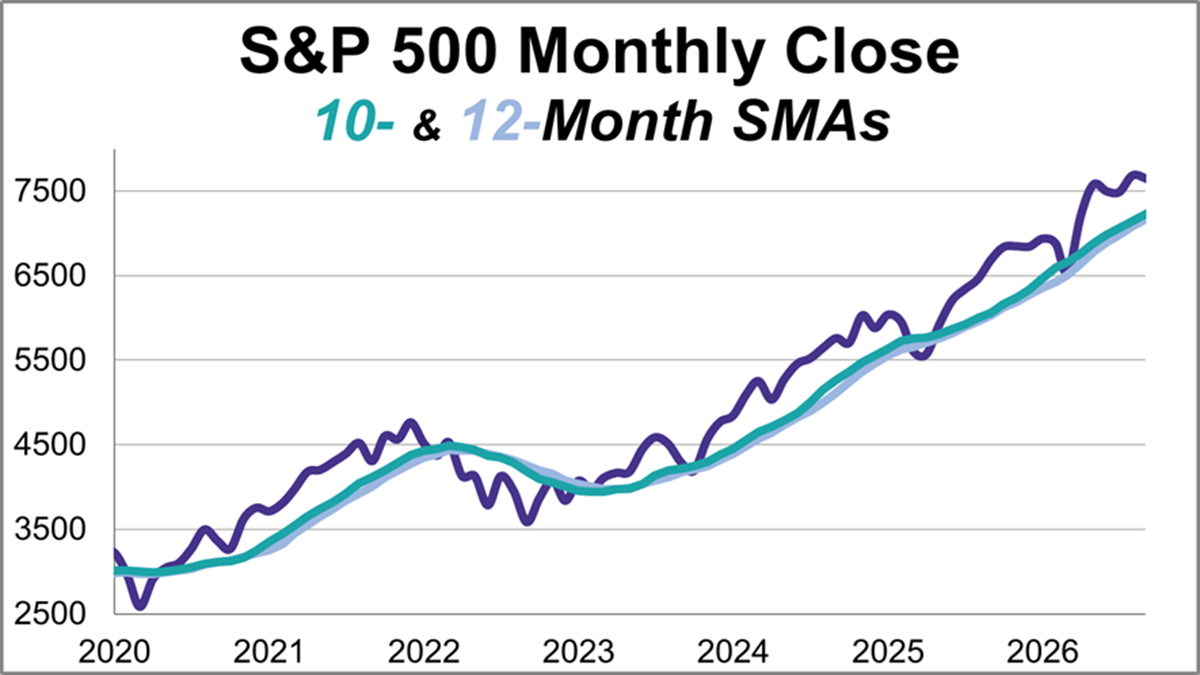
This article provides an update on the monthly moving averages we track for the S&P 500 and the Ivy Portfolio after the close of the last business day of the month.
Investors often treat growth and dividends as opposing camps, but in practice, this means the two can complement each other.