Advisors who feel too much of the week slips away on administrative tasks should start by tackling these foundational areas. Saving time isn’t about doing less for clients; it’s about investing your energy where it has the greatest impact.
Smaller firms can achieve meaningful, defensible data lineage using tools they already own — if they understand what lineage actually means in practice.
As artificial intelligence (AI) matures, the real breakthrough will not be smarter algorithms outthinking financial planners. Rather, it will be quieter systems that remove friction and noise so advisors can think more deeply, listen more closely, and show up more human than ever.
In a year where moderation, not momentum, may define returns, options-enhanced ETFs offer an attractive way to stay invested while monetizing the more limited upside many expect.
US previously owned home sales climbed in December to the fastest pace since 2023, a welcome sign for a housing market that has lacked momentum for several years.
Wall Street loves few things more than a good acronym to describe a trading thesis. Think FANG, FOMO/YOLO and TACO.
Bank of America Corp.’s equity traders posted their best fourth quarter ever as the company reaped the benefits of volatile markets and net interest income topped analysts’ estimates.
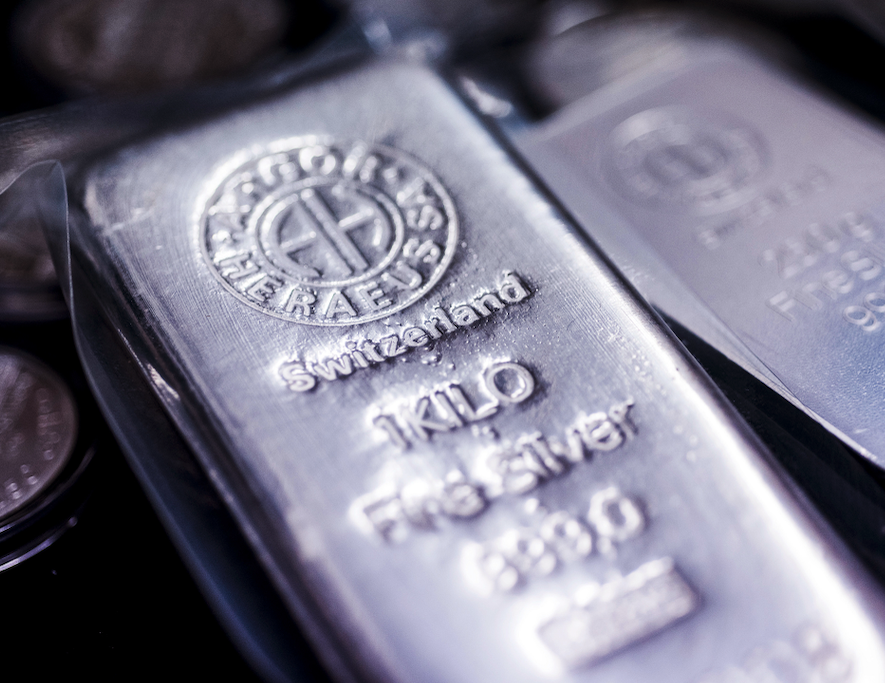
Metals extended their dramatic start to the year — with gold, silver, copper and tin all hitting record highs — as investors piled into the commodities as a red-hot alternative to more traditional assets.
Skild AI Inc., a fast-rising startup that makes software to help robots learn to complete tasks, has secured about $1.4 billion in a new funding round that values the company at more than $14 billion, more than triple what it was worth just seven months ago.
Human behavior is far and away the most challenging aspect of any team — large or small. Add in family dynamics, and there is often plenty of “crazy” to go around.
The bullish AI narrative that dominated in 2025 is unlikely to continue overshadowing other lingering uncertainties, many of which reflect deeper structural shifts. Traditional factors underlying economic activity will be increasingly sidelined by national-security concerns, geopolitics, and domestic political machinations.
The US economy remains resilient. The gross domestic product (GDP) growth estimate from the Atlanta Federal Reserve (Fed) GDPNow model as of January 8 shows 5.4% real growth for the fourth quarter (Q4) of 2025.
If you’ve been around anyone under the age of 25 lately, you have likely been exposed to the “Six-Seven” phenomenon, whereby kids react excitedly upon hearing or seeing the numbers 6 and 7 in sequence. It can come from anywhere at any time…
The Wall Street consensus forecast for 2026 earnings growth is strong by historical standards. Analysts are giddy and projecting another year of double-digit growth in S&P 500 earnings per share (EPS).
Mao Zedong once warned that power grows out of the barrel of a gun. In recent decades, global institutions and markets that make kinetic interventions less common. But when those mechanisms fail, power will fill the void.
Drew O’Neil discusses fixed income market conditions and offers insight for bond investors.
LPL Research takes a look at fourth quarter earnings season as it unofficially kicks off this week with a dozen banks and asset managers in the S&P 500 slated to report.
Nuclear energy has seen a hot start to 2026, benefitting from positive sentiment around artificial intelligence, ongoing support from the US government, and notable nuclear news from Meta (META).
JPMorgan Chase and Delta Air Lines have both posted fascinating Q4 earnings, creating compelling opportunities for crafty advisors.
On this episode of the “ETF of the Week” podcast, VettaFi’s Head of Research, Todd Rosenbluth, discussed the iShares Systematic Alternative Active ETF (IALT) with Chuck Jaffe of Money Life. The pair discussed several topics related to the fund to give investors a deeper understanding of the ETF.
John Davi, Founder & Chief Investment Officer at Astoria Portfolio Advisors, highlights the firm’s 10 ETFs for 2026. Ryan Barksdale, Head of Active Equity Product at Vanguard, and Kim Gailun, Head of Equity Boutiques at Wellington Management, discuss their collaboration in bringing Vanguard’s first active equity ETFs to market.
As the S&P 500 continues its record-breaking ascent into early 2026, financial advisors are prioritizing diversification.
Join the experts at Pictet Asset Management for a live session exploring the investment opportunities offered by megatrends.
Growth in this new era isn't about hoping for the next referral; it’s about building a client experience so proactive and so clear that your clients feel like you are seeing around corners for them.
AI won’t make advisors obsolete. It will make average advice obsolete. The professionals who resist technology will lose clients to the illusion of confidence. The ones who embrace it — and layer human insight on top — will build stronger, faster-growing practices.
Clients, they remember (your messaging because) they are living it and being it. That’s one way to make yourself memorable — have something that is easy to remember and connect with.
Big banks begin reporting tomorrow with JPMorgan Chase. Fundamentals may need to be robust to match the sector's recent Wall Street gains, and loan demand could get a close look.
Midstream is unique from the rest of energy in being able to provide EBITDA guidance for the year ahead or multi-year periods without depending on specific commodity prices. Companies provide services for fees under long-term contracts, which results in stable and predictable cash flows.
Oil briefly rose above $65 a barrel for the first time since November after the US escalated pressure on Iran, while tankers were attacked near a vital terminal for Kazakh crude on Russia’s Black Sea coast.
The outlook for the global energy transition is likely to be more volatile than investors may have expected, according to JPMorgan Chase & Co.
Artificial intelligence infrastructure has been a solid stock market bet over the past year, with many of 2025’s best performers in the S&P 500 Index falling into the category. But the trade is getting volatile as some of the perceived winners start taking hits.
US Treasuries slipped Tuesday as traders looked to December’s inflation data for clues on how quickly the Federal Reserve may resume lowering borrowing costs this year.
Investors’ newfound affinity for companies that benefit most from an accelerating economy is in for a tough test as the latest earnings season kicks off.
We just closed another banner year for asset prices. The S&P 500 was up 16% in 2025, and many overseas exchanges saw gains of more than 25%. Bond prices rose, and most housing markets held onto high values. There were even some signs of recovery in commercial real estate.
What happened in Venezuela last weekend may turn out to be the most consequential energy and geopolitical event of the decade. In a swift, coordinated operation that stunned the world, U.S. forces captured Venezuela’s longtime socialist dictator, Nicolás Maduro.
The data are mixed and trying to draw definitive conclusions from it is virtually impossible. This fog should lead everyone to maintain a cautious investment stance. What does that mean? Be careful concentrating too much in high priced sectors of the market. Broaden out. When driving in fog, drive more defensively.
The materiality of ESG factors differs across sectors and markets. Investors need to understand how.
As we step into the new year, many of us are setting personal and professional goals for what we hope to accomplish in the months ahead. The same holds true for financial markets, where Wall Street strategists have been busy refining their outlooks for where the S&P 500 might finish the year.
“Party like it’s 1999” is a phrase made famous by the musician Prince’s 1982 song, which experienced a renaissance amid Y2K fears and has since entered the lexicon meaning to celebrate intensely because the future is uncertain.
As index investing continues to evolve, it does not have to be towards ever-expanding complexity. Sometimes progress comes from asking simpler questions and answering them consistently.
Last week delivered some of the more surprising macro data I’ve seen in years: very slow job growth, but stable unemployment, and a sudden surge in output that materially lifts the outlook for earnings heading into 2026.
Rising operational costs & complex market conditions are forcing some advisors to reconsider how they deliver investment insights to clients.
Join ProShares Global Investment Strategist Simeon Hyman and his team for a look at what 2026 may hold for stock and bond investors.
The ETF universe continued to expand in 2025, with a growing number of high-income products incorporating options strategies to enhance payouts. However, for many investors and advisors, traditional ETFs that own dividend-paying stocks remain a core component of a well-rounded portfolio.
Instead of offering a forecast, let us consider the potential events and factors that could influence investor sentiment and move markets this year. Inevitably, no matter how many events we and others are considering today, there will be market-moving ones that are not on anyone's radar currently.
IRMAA (Income Related Monthly Adjustment Amounts) acts as a penalty on prosperity, lightly touching the truly wealthy and passing over the poor and those doing okay. It is a dagger aimed at the heart of affluent professionals who diligently saved for retirement and are now drawing down their ample 401(k) funds.
Quantum computing could alter productivity, industrial structure, capital allocation, and even the balance of global power. The transformation won’t happen overnight, but investors who wait for proof may find they have waited too long.
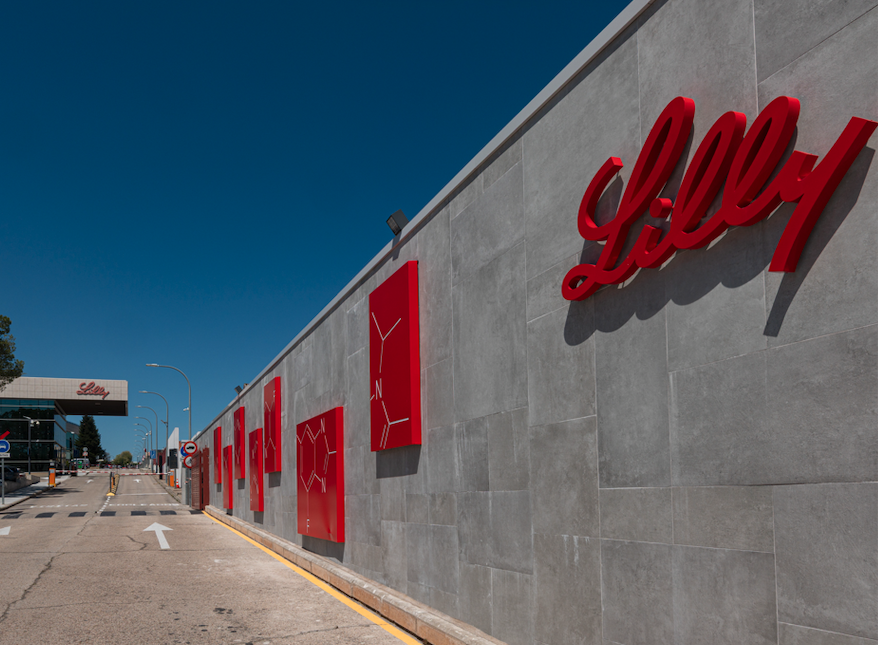
Nvidia Corp. plans to invest $1 billion over five years in a new laboratory with Eli Lilly & Co., aiming to speed up the use of artificial intelligence in the pharmaceutical industry.
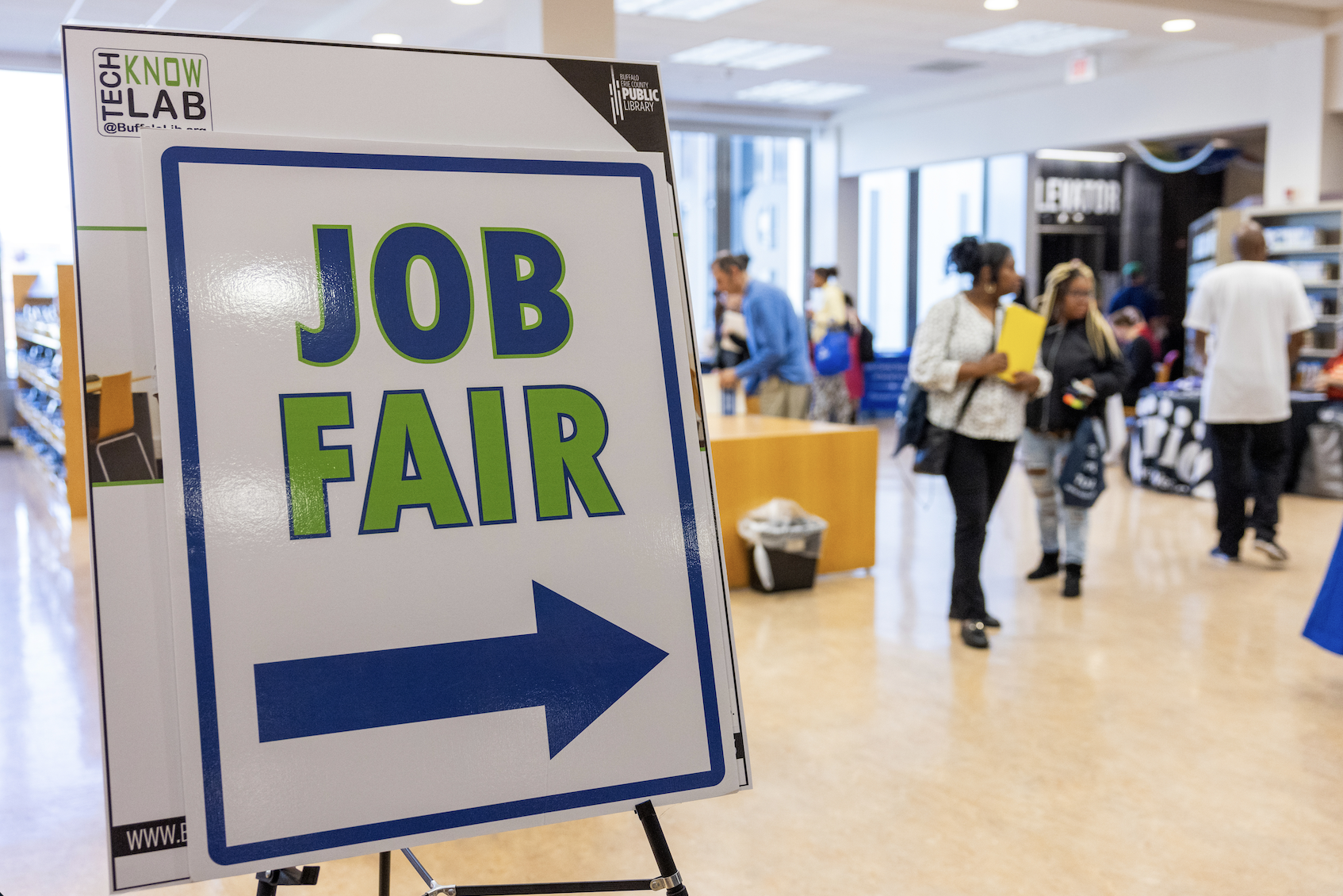
According to just about every significant economic indicator, including the December jobs numbers released Friday, the US economy is doing fine. Not great, mind you: Job growth stalled in 2025. But unemployment is low, gross domestic product growth is solid, and inflation is seemingly trending downward.
The goal isn’t to be perfect; it’s to make fewer mistakes than last year because investing success doesn’t come from reading motivational quotes or watching market TikToks at midnight.