As widely expected, the U.S. Federal Reserve cut the federal funds rate by 25 basis points for a second time this year. This gives fixed income investors an opportunity to reposition their portfolios with intermediate bonds or reconsider active exposure if they don’t have it already.
Doug Drabik discusses fixed income market conditions and offers insight for bond investors.
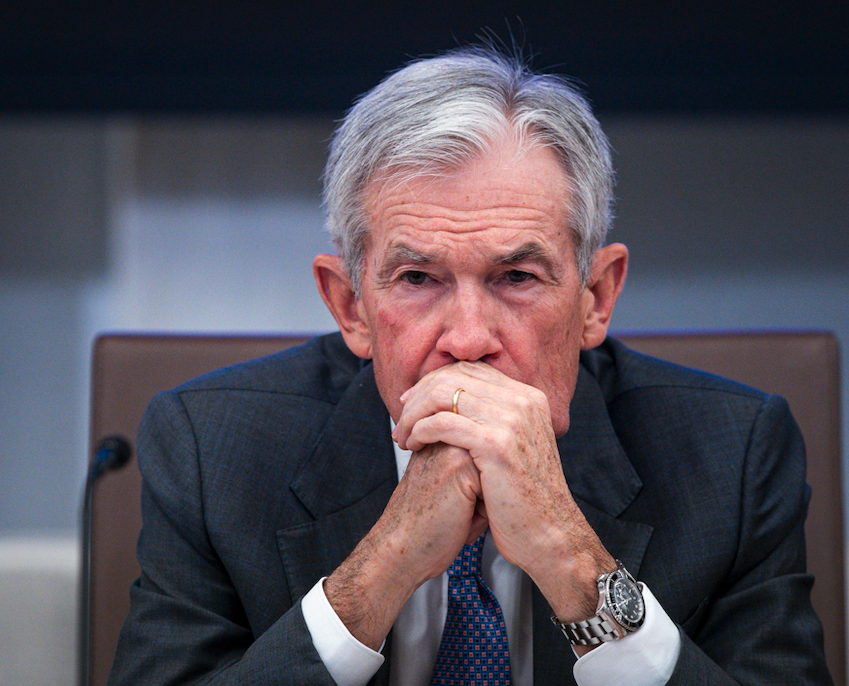
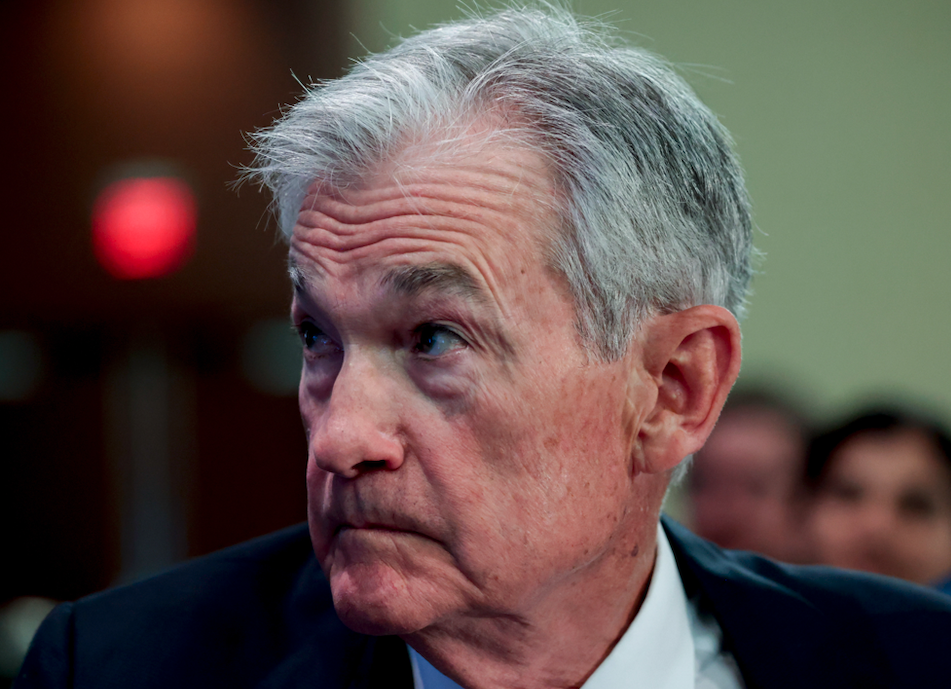
The Powell put is on. The Federal Reserve chairman tried to sound like a hawk, but the central bank’s actions were those of a dove.
The Federal Funds Rate (FFR) is the interest rate banks charge each other to borrow money overnight. It's set by the FOMC and is one of the Federal Reserve's primary tools to implement monetary policy and is a key driver of economic activity. This video examines the Federal Funds Rate and reviews the Fed's interest rate meeting on October 29, 2025.
Join the experts at WisdomTree for an educational webcast that explores the current realities of the market, looks at where equity opportunities could emerge, and unpacks how to position fixed income portfolios as rates change.
Markets move fast, and in the ETF corner of the world, sometimes it feels like it’s practically impossible to keep up. Product development and proliferation have been so intense in recent months. New tickers are coming at us faster than ever.
US President Donald Trump emerged from his meeting with Chinese leader Xi Jinping beaming, labeling the conversation “truly great.”
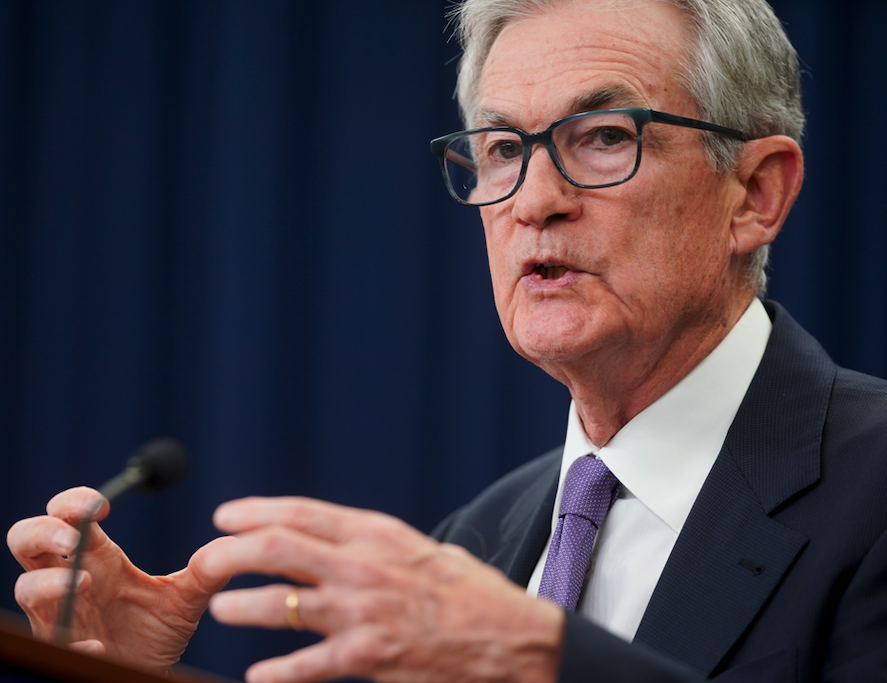
Treasuries fell the most in nearly five months after Federal Reserve Chair Jerome Powell cast doubt on a December interest-rate cut, even as a sagging labor market prompted policymakers to bring down borrowing costs Wednesday.
Nvidia CEO Jensen Huang’s insistence this week that he did not “believe we’re in an AI bubble” is all well and good when you’re the man selling the finest shovels for the artificial-intelligence boom. But what of the companies that are expected to turn all that AI building into gold?
It’s important to remember that QT, at least in the current context, was never really a proactive policy. Rather, it’s the undoing of a policy — quantitative easing — that the Fed used to support markets and the economy during the Covid-19 pandemic.
Evan Harp sat down Axon’s Brady Lochte to talk about his practice, the Exchange conference, and the challenges facing advisors and their clients today.
The headline annual CPI came in at 3 percent, according to BLS data. That was up from 2.9 percent in August and 2.7 percent in July. It was the highest print since January, and up from a low of 2.4 percent in March.
Still-healthy demand and disciplined cost control are central themes for earnings, which continue to suggest a mostly resilient economy in light of government data darkness.
Two weeks ago, the International Monetary Fund (IMF) issued an updated World Economic Outlook. In it, the IMF edged up its global growth forecast for 2025, suggesting that U.S. tariffs haven’t turned out to be as damaging as the Fund anticipated in April.
Over the last 56 years, I’ve spent a lot of time making suggestions to clients regarding their investment processes and portfolios, and I’ve been on the client side as a member of various investment committees. But seldom have I been able to bridge the two, serving as an active participant in clients’ investment processes.
Lazard Asset Management is betting the newfound appetite for emerging-market assets is only just starting, launching its first-ever exchange-traded fund focused on the region as investors look for ways to ride a rebound in international markets.
Part of the reason behind Japanese stocks’ discount to the U.S. is the profitability gap; the U.S. has a Return on Equity (ROE) of 18.3%, while Japan’s broad market has yet to break above 10% on that measure (though some forecasters believe Japan will get its act together).
This convergence creates a thrilling, unpredictable day for sports enthusiasts packed with drama. Interestingly, the financial markets are gearing up for their own version of a 'Sports Equinox' week. Just as fans juggle overlapping games on October 27, investors will face a crowded calendar of potentially market-moving events that have our attention.
Many owners treat succession planning like a one-time document when it can work better as an ongoing strategic process. A practical plan may include simple triggers (age, profit targets, debt ratios) that cue next steps, a regular review rhythm (quarterly check-ins, annual cap-table cleanups), and a basic “deal-ready” folder (clean financials, key contracts, customer mix).
The more things change, the more they stay the same. As widely expected, the Federal Reserve (Fed) cut interest rates by 0.25% at its October Federal Open Market Committee (FOMC) meeting yesterday.
Pave Finance, Inc. (“Pave”), the next-generation wealth management platform, has today announced its integration with Charles Schwab, the world’s largest registered investment advisory custodian and one of the largest retail brokerage firms.
Register now and join AllianceBernstein’s fixed-income experts as they discuss how to navigate today’s shifting market landscape.
Join Kurv Investment Management for an educational webcast exploring how to generate income while remaining invested in growth.
At the very least, whether to cut the policy rate today is a close call for a Fed committed to a 2% goal — a fact that’s sharply at odds with investors’ near-certainty that it will happen.
Nvidia Corp. achieved a historic $5 trillion market capitalization on Wednesday as Chief Executive Officer Jensen Huang’s spree of deals catapults the artificial intelligence frenzy to new heights.
By far the most finicky part of OpenAI’s necessary conversion into a for-profit company was reconciling its convoluted partnership with Microsoft Corp. With the year-end deadline fast approaching, they have made a deal both sides can live with for now, though it sets out the timeline for an eventual split.
Research shows that the U.S. wealth management industry will be facing an advisor shortage in the coming years as more advisors retire. One key to retaining talent is making sure the right pay structures and work arrangements are offered to advisors.
By tackling personalization with automation technology, advisors are no longer forced to trade between offering top-quality portfolio tailoring and putting the effort into scaling their businesses.
The truth is that most clients who had a positive experience with their advisor are happy to write a review, particularly if the process doesn’t take too long and isn’t terribly difficult.
If you are not striving in the same direction and the outcome doesn’t matter as much to one as it does to another, the three of you won’t bring about the alignment you seek.
We live in what Brett Arends claimed as“The Dumbest Stock Market In History,” but I believe it is potentially the most dangerous era. That phrase is not hyperbole as it reflects structural distortion, extreme valuations, and an investor base intoxicated by momentum and narrative.
As major tech firms report this week and next, investors will focus on how much they're spending on AI. Cloud competition is also top of mind, along with early iPhone 17 sales.
With the stock market in record-high territory and up about 35% off the April lows, market participants clearly haven’t been too scared lately. But that doesn’t mean there aren’t plenty of things to worry about.
Stocks have surged since their April lows, with demand especially high for higher-risk equities and technology stocks—including those issued by firms with unproven profitability. But economic growth is slowing, and trade-related uncertainty has yet to be resolved.
The US Federal Reserve will soon face a crucial decision: What to do with the vast portfolio of securities it has amassed in its efforts to manage the economy?
The robotics space is entering earnings season with positive momentum, as solid performance in Q3 has continued into October. This note recaps the key themes and performance drivers from the quarter for investors, while previewing Q3 results.
Think all commodity indexes are created equal? Index design choices made behind the scenes can lead to wildly different—and sometimes disappointing—investment outcomes. Here’s why we think a diversified approach may be a better bet.
Investors plowed cash into exchange-traded funds that buy China stocks last week amid optimism that it was nearing a trade deal with the US ahead of an upcoming meeting between the two countries’ respective leaders.
Growth investors may be feeling the ground shifting beneath them. Traditional factor analysis shows quality and growth still lagging value—an apparent paradox when global growth itself is strengthening. Yet a closer look at what drives the so-called “value” factor reveals how today’s economic revival is rewarding a different kind of growth.
The tradeoffs, drivers, and management of the Federal Reserve’s balance sheet have come back into market focus this month with Chairman Powell shifting market expectations for the end of quantitative tightening.
Strong credit ratings remain a key feature for midstream companies, providing significant cost savings on debt. The subsector is largely dominated by investment-grade players, which also offer attractive dividend yields. Learn more below about the importance of an investment-grade rating and why midstream indexes are skewed towards these creditworthy names.
Chief Economist Eugenio J. Alemán discusses current economic conditions.
These shifts are not signs of stress; shortfalls have been minor, and relief systems are working as intended. However, we can be certain the era of excess liquidity has ended. Fed speakers have characterized the pandemic-stimulated economy as one of “abundant reserves,” with bank reserves elevated beyond their natural level.
Review investments, estimate income, maximize retirement savings and consider charitable donations are among many year-end planning ideas. Our Bill Cass shares a helpful checklist to use as a guide when planning.
On this episode of the “ETF of the Week” podcast, VettaFi’s Head of Research, Todd Rosenbluth, discussed the Direxion Daily Semiconductor Bull 3x Shares (SOXL) with Chuck Jaffe of Money Life. The pair discussed several topics related to the fund to give investors a deeper understanding of the ETF.
Aniket Ullal, Head of ETF Research & Analytics at CFRA, highlights the ETF trades that have and haven’t worked in 2025. Cinthia Murphy, Investment Strategist at VettaFi, explores recent ETF launches, including the Roundhill Meme Stock ETF (MEME), Defiance Trillion Dollar Club Index ETF (TRIL), and ARK DIET Q4 Buffer ETF (ARKT).
The future of wealth management — especially in the HNW segments — depends on advisors' ability to provide tailored, cross-disciplinary solutions. Case design is central to delivering that value.
Artificial intelligence (AI) continues to be a prime catalyst for large-cap ETFs tilted toward growth. Companies integral to meeting the hardware demands of AI infrastructure buildout may be Broadcom, Palantir, and Nvidia. All three are core holdings currently in the VictoryShares Free Cash Flow Growth ETF (GFLW).
Equity bulls are lining up to wager the S&P 500 will surge past 7,000 now that it looks as if a seasonal bout of volatility has passed.
Investors expect the Federal Reserve to cut its policy rate on Oct. 29, and once more by the end of the year. Right now, amid enormous uncertainty about where the economy is headed, the case for cutting is weak. The Fed would be wiser to pause.