In their latest article, Why Hold Expensive Slow-Growing Stocks? An Alternative Framework for Value and Growth Indices, Chris Brightman, Campbell Harvey, Que Nguyen, and Omid Shakernia, argue that traditional style-box construction forces investors to hold stocks that are neither true “value” nor true “growth”—notably, expensive, slow-growing companies that have historically underperformed.
Innovation and influence are very distinct phenomena. Bob Dylan, for instance, didn’t invent folk music: He borrowed extensively from Woody Guthrie, Pete Seeger and others in the folk revival movement of the fifties and sixties, yet he became far more influential than any of them.
The rebirth of private equity dealmaking has been supposedly just around the corner for well over a year. But even as investment bankers cheer a rush of mergers & acquisitions and the reopening of the market for initial public offerings, many financial sponsors are still struggling to catch the same wave.
Before we started some recent home renovations, neighbors offered advice: stay patient. Construction projects feature weeks that feel like no progress has been made, and days that feel like everything has changed at once.
China’s “anti-involution” policy to tackle deflation, announced in 2024, is still in its early stages. Some effects are already visible, but compared with China’s last deflation fight in 2014–2015, the policy may take longer to work, in our view.
Federal Reserve Chairman Jerome Powell caught everyone's attention when he cast doubt on a December rate cut. It’s easy to see why. Standard Fed logic is simple: 2, 3, 4.
Federal Reserve Chair Jerome Powell agrees that there’s probably something to the claims of a K-shaped economy. But at last week’s press conference, he failed to note how the Fed has helped to create it — and the implications it has for monetary policy.
German officials announced a massive stimulus program in early 2025. The results have been underwhelming so far, but we believe the economic boost to Germany and Europe is still coming.
Amidst ongoing US policy unpredictability and signs of a softening labor market, the US economy and markets have continued to demonstrate notable resilience. A long-awaited Federal Reserve interest rate cut, and strong corporate earnings supported equity and credit markets - yet policy shifts, elevated stock valuations, and ongoing geopolitical tensions continue to pose potential headwinds.
Q3 Earnings growth continues to improve, with 64% of constituents reporting thus far, S&P 500® EPS growth for Q3 2025 accelerated to 10.7%
LPL Research reports on Fed rate cut, U.S.–China trade truce, strong earnings, and AI spending scrutiny amid narrowing market breadth and volatility risks.
Advisors may sometimes feel like they’re venturing out to solve the world’s personal financial problems alone. They don’t have to feel that way when they’re recommending active funds with the requisite expertise and experience behind them. Vanguard active ETFs can offer that.
Every month, TMX VettaFi publishes hundreds of articles across our ETF-focused websites. Reviewing the pieces that capture our readers’ attention provides a clear picture of prevailing advisor and investor sentiment. In October, five articles stood out. They primarily focus on the surging themes of AI, international equities, and alternatives.
Advisors are using exchange traded funds to expand beyond public markets to private markets to modernize 60/40 portfolios.
This video examines the stock market's long-term behavior by looking at the inflation-adjusted S&P Composite Index's history using regression analysis with data through October 2025
Join the experts at T. Rowe Price for an educational webcast exploring the unique challenges of today’s market environment and how to make better asset allocation decisions for your clients.
M&A is more like a math equation. Your firm plus the desired one should equal what you would like to see occur. There are many other desired outcomes of these deals. For that reason, evaluating each deal with the exact same metrics is preposterous and unhelpful.
AUM-based compensation was a necessary evolution. But it isn’t the endpoint. If our profession is serious about being a profession, not an asset-gathering enterprise, we must continue to evolve. That means taking a hard look at how we get paid.
Remember that people have different communication and learning styles. What works for one person who “gets it” doesn’t work for another. If a message is important, make sure to use several modes of communication — written, verbal and interactive — wherever possible.
Investors who watched the robotics space peak back in 2021 may see the current rally with apprehension. Back then, the narrative of a China-driven logistics and e-commerce boom sent robotics stocks to dizzying heights. What followed was China’s economy first slowing down, and then a pandemic-fueled demand shock. The sector fell hard.
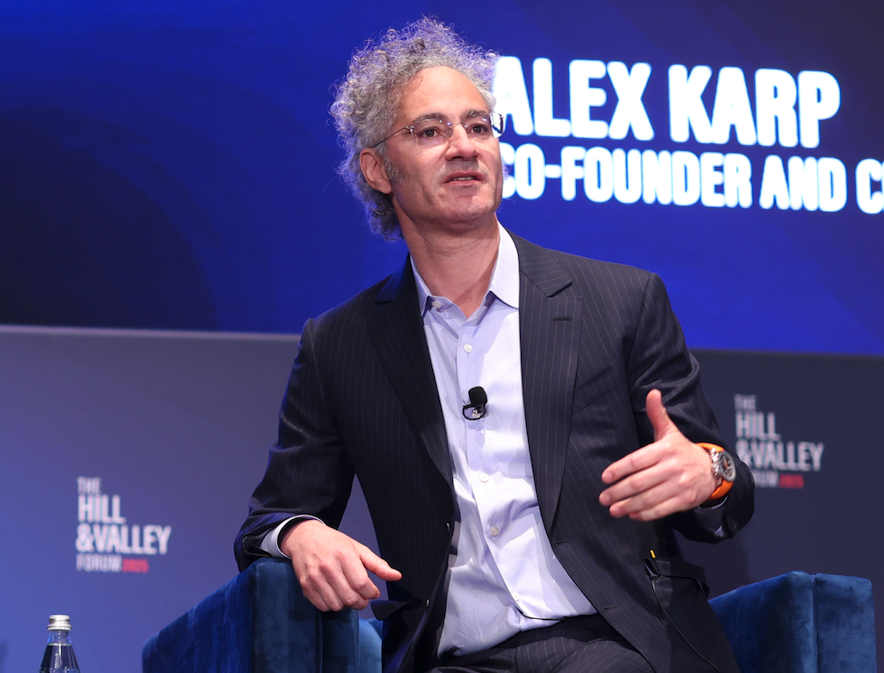
There can be only one Highlander, but Palantir’s Alex Karp shows there can be multiple highly paid, outspoken chief executive officers of richly valued tech companies with cult followings and unsettling stores of political power. That still doesn’t guarantee it’s a durable model for success.
The huge checks Meta Platforms Inc. is writing to support its artificial intelligence ambitions are reminding some investors of the massive metaverse outlays that crippled the stock just a few years ago.
The US Treasury indicated it’s not looking to boost sales of notes and bonds until well into next year, in a decision that will see the government increasingly rely on bills to fund the budget deficit.
The trade was simple — and worked until it didn’t. Wrap crypto in a stock ticker. Call it innovation. Ride the wave.
Following this year’s impressive rally in gold (the best year for the metal since 1972) investor attention has once again turned toward its role as a long-term portfolio component.
Actively managed ETFs, particularly those of the fixed income variety, are among the fastest-growing ETF segments today. That growth has been facilitated in part by advisors moving away from higher-fee mutual funds and issuers converting popular mutual funds to the ETF wrapper, among other factors.
An advisor or allocator needs to do three things: understand the goals of their client, find different ways to earn returns for taking risks, and then take the right amount of risk to meet those goals.
While many commentators have criticized Argentine President Javier Milei's draconian approach to economic reform, the results of the October legislative election show that the Argentine people would prefer short-term economic pain over a return to Peronist policies. Milei now has a clear path to finish what he started.
Amazon.com Inc.’s latest global layoffs should come as a singular warning to India. For policymakers dealing with the world’s largest youth population, AI suddenly poses a very real risk to jobs, wages, and a white-collar future.
October was a good month for financial markets, with a broad-based rally across geographies and sectors. Tech stocks and gold led the way, and the dollar finally had an up month. QuantStreet's strategies, across different risk levels, moved in line with or slightly exceeded benchmarks.
Classical conditioning teaches us a valuable lesson regarding the current investor dilemma. Pavlov’s research discovered a basic psychological rule: when a neutral stimulus is repeatedly paired with a reward‑stimulus, eventually it will trigger the same response even when the reward is absent.
As policy priorities evolve, Japan’s focus on “responsible fiscal expansion” could reshape bond dynamics.
Every innovation follows a lifecycle, from breakthrough to ubiquity to obsolescence. The Edison bulb once lit up the world, transforming how we lived and worked. But it was ultimately replaced by more efficient and sustainable alternatives.
Last week’s main story for markets was the meeting between U.S. President Donald Trump and Chinese President Xi Jinping. Following the talks, both sides announced a modest set of agreements aimed at improving trade relations.
Markets were taken by surprise by Federal Reserve (Fed) Chair Powell’s strong suggestion that a rate cut in December is not a certainty, as they were sure they were going to get one at December’s Federal Open Market Committee (FOMC) meeting.
On this episode of the “ETF of the Week” podcast, VettaFi’s Head of Research, Todd Rosenbluth, discussed the Capital Group Municipal Income ETF (CGMU) with Chuck Jaffe of Money Life. The pair discussed several topics related to the fund to give investors a deeper understanding of the ETF.
Eric Balchunas, Senior ETF Analyst at Bloomberg Intelligence, offers a tour through the ever-evolving world of ETFs – covering crypto funds, the rise of exotic products, industry flows, the coming multi-share class structure, and more.
October saw some strong data for bond ETFs, according to recent research, suggesting opportunities may abound in the category.
Recent dealmaking by OpenAI appears to raise an awkward question for mergers and acquisitions advisers: What value do you add?
Nothing says gold is hot quite like a story that big US banks are considering getting back into the business of holding other people’s bullion.
Adding AWS as a key cloud provider can ease some pressure for OpenAI, especially as it continues to farm out more contracts to neocloud providers like CoreWeave, which operates at a much smaller scale than AWS.
RIAs need to use AI effectively in their practices, but they also need to understand how their clients are using it.
Rick Kahler highlights a tool for helping investors achieve balance between two opposing financial concepts.
U.S. workers, particularly those in the Gen Z and millennial generations, are facing a “financial vortex” of financial pressures that are eating into their savings, including rising debt, housing, healthcare and caregiving costs.
Investors are bracing for Treasury Secretary Scott Bessent to lean more toward shorter maturities in the government’s funding mix to keep down long-term yields amid a mounting debt burden.
Rising electricity demand continues to be a key trend for investors to watch, with the latest news revolving around Google (GOOG). GOOG, a key AI hyperscaler, announced a collaboration with NextEra Energy (NEE) for the restart of the Duane Arnold nuclear plant earlier this week.
The Halloween week Fed meeting was more trick than treat for bonds with only a mild and temporary scare for stocks. As soon as Chair Powell signaled the next cut is “not a foregone conclusion – far from it!,” the Dow swooned before recovering about half the drop, while the 10-year drifted higher.
The good news for investors is that history may be on their side. According to the Halloween effect—also known as the Halloween strategy or indicator—stocks have tended to outperform in the six-month period from November to the end of April, compared to the six months from May to the end of October.
History is absolutely clear – Capitalism is the best system ever developed (actually evolved by human experiment) to boost living standards. At the same time, Socialism has a seriously lousy record.
Progress toward resolving the US government shutdown remains limited despite increased bipartisan dialogue. Senate Majority Leader John Thune noted that “a lot more conversations” are happening across the aisle, suggesting some softening in tone compared with previous weeks.