In the years after the internet stock boom-and-bust of the late 1990s and early 2000s, financial economists searched for more satisfying explanations of what had happened than “investors went crazy.”
Top executives from across Wall Street dismissed fears of a brewing credit crisis — even as some of the industry’s biggest names set aside hundreds of millions more to cover potential losses.
The US government agreed a $80 billion deal with Westinghouse Electric Co. to build large-scale nuclear reactors, the latest push to meet rising demand for electricity from artificial intelligence.
We've identified five critical pitfalls that repeatedly trip up new compliance leaders. More importantly, we've learned how the most successful CCOs navigate around them.
The private market landscape has evolved tremendously, and it is exciting that evergreen options are available to meet the growing demand in this space. However, before making an allocation using an evergreen fund, it is essential to recognize and anticipate issues that could arise.
As I detailed in August, our most reliable valuation measures – based on their relationship with actual subsequent S&P 500 total returns across a century of market history – suggest that the expectations of investors for long-term market returns are wildly misaligned with the returns implied by discounted cash flows.
Money can’t buy you love and right now no one knows that better than UBS Group AG. Since the Swiss bank helpfully rescued its cockroach-riddled rival Credit Suisse in a state-brokered emergency takeover, its reward has been government plans to whack it with punishing new capital rules and a lagging stock price.
Local currency rates and FX screen very cheap, while hard currency credit is rich.
Earlier this week, several of my friends texted me in frustration, letting me know that they couldn’t place trades on Coinbase or Robinhood. The culprit wasn’t market volatility or government regulation, but something far more mundane: a cloud outage.
If gold were the perfect hedge for inflation—it isn’t—then gold prices divided by the overall price level would be constant over time. However, real gold prices (adjusted for inflation by dividing by the CPI price level) are currently at multi-decade highs.
Investors face persistent behavioral challenges—such as inertia, present bias, and limited attention—that can quietly erode long-term financial outcomes. At Vanguard, we see these cognitive biases not as investor failings, but as opportunities to design digital experiences that are intuitive and easy to use, while nudging investors toward better decisions and stronger financial outcomes.
The recent high-profile bankruptcies and the timing of their collapse are consistent with this changing macro backdrop, although these cases were also allegedly exacerbated by inconsistencies in collateral accounting and pledges.
Energy and commodities are not flashing red. Oil ticked up from depressed levels amid new sanctions on certain Russian producers, but on a multi-month basis crude is still lower, and the broader Bloomberg-style commodity basket has been roughly flat over six to nine months.
Global equity markets have surged this year, in spite of moderate economic growth and an accumulating series of risks. This has led some to worry that valuations have been stretched a little too far. The same can be said of credit markets, which have seen spreads fall to levels last seen in 2007.
A small part of the federal government took a short break from being shut to make sure the Labor Department could deliver the September Consumer Price Index.
Recently, I attended the North American Blockchain Summit 2025, a digital asset conference in Dallas. Last year’s agenda leaned heavily on legislation and policy.
Kinder Morgan (KMI) announced its third-quarter results this week. It reported in-line results as well as a robust outlook for growth. Beyond earnings results, company commentary focused on its so-called shadow backlog and the recently announced binding open season with Phillips 66 (PSX) for the Western Gateway pipeline.
Join Matt Burdett, Head of Equities at Thornburg Investment Management, for an educational webcast as they explore the macro landscape and highlight global opportunities for investors seeking a path forward.
There have been no innovations to TDFs in their entire 19-year history, until now. It’s time. This article introduces trailblazing innovations that improve participant results.
This reviewer found Breakneck one of the most provocative and insightful national-level policy discussions he has come across: Despite its shortcomings, the general reader wishing to understand just why China seems to be overtaking the US, and what can be done about it, cannot do better.
Today, we introduce the Price of Certainty: How much do you need to invest to achieve a particular set of cashflows over time, with varying degrees of certainty?
This article does not discuss the rationale of owning gold as a long-term asset. Instead, it questions the recent jump in gold prices and whether the current levels are fundamentally justified.
Trian and General Catalyst are looking to drive the next phase of growth at the firm with the help of AI, people familiar with the matter said, asking not to be identified discussing confidential information.
The latest inflation data was softer than anticipated and has locked in expectations for a couple of Federal Reserve interest rate cuts to close out 2025. But inflation is far from dead, and the labor market is far from collapsing — policymakers would be wise to proceed cautiously.
The question of the moment in markets is whether we are in an AI bubble, as stocks seem awfully expensive amid hopes that artificial intelligence will transform the economy. But there is another curiosity that is far more concerning: low credit spreads. That suggests a low-risk environment — which describes precisely nothing about this market.
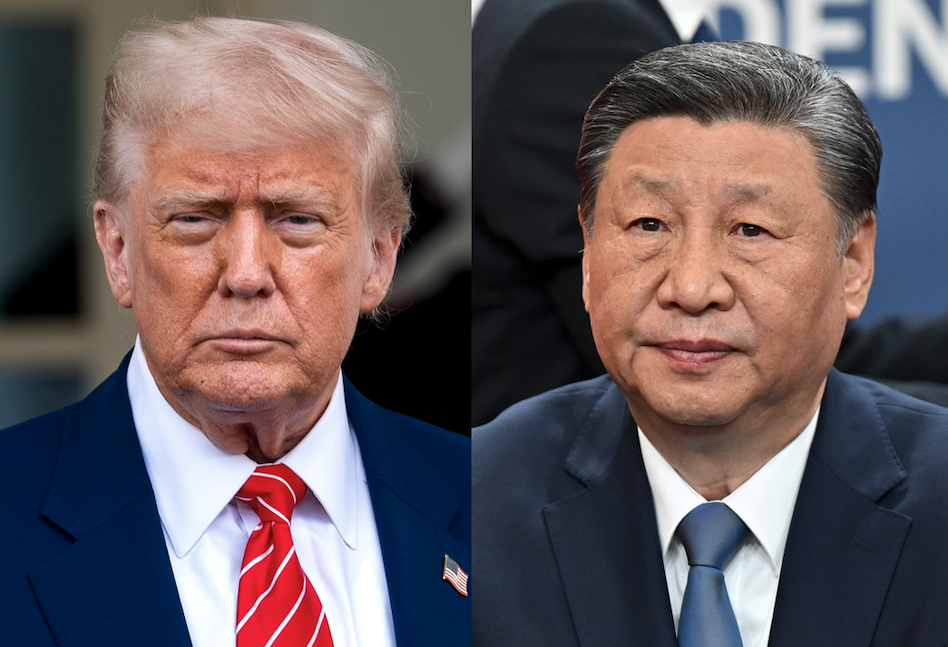
A meeting Thursday between Presidents Donald Trump and Xi Jinping is set to be one of the key diplomatic events of the year, with the US-China economic relationship at stake following multiple rounds of escalating tensions and temporary truces.
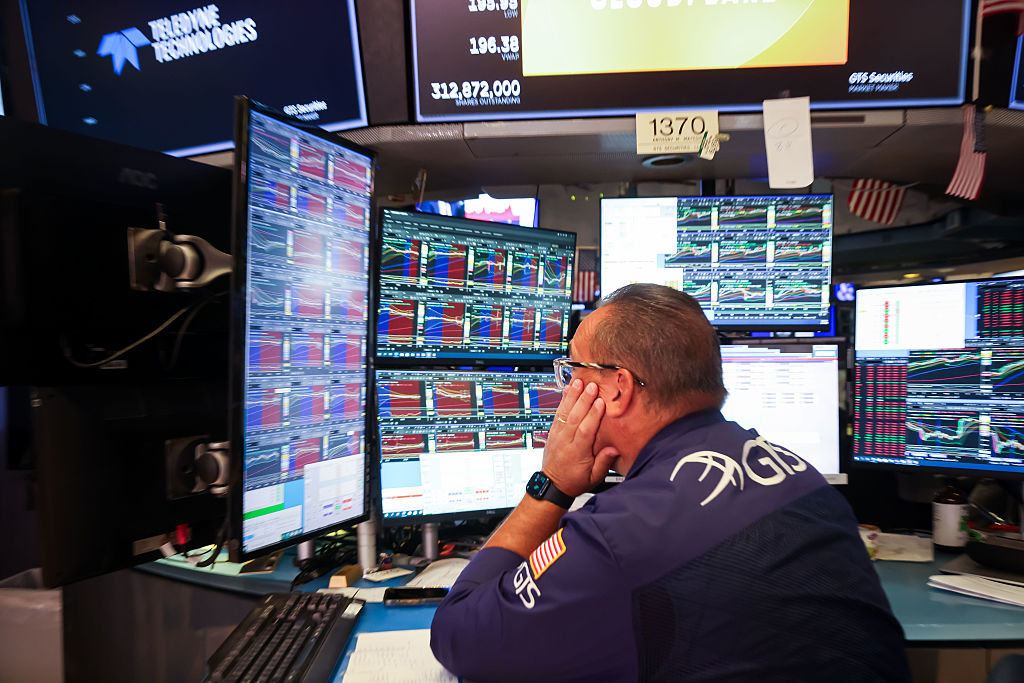
US stocks gained early Monday as the US and China homed in on a trade deal during a crucial week on Wall Street marked by Big Tech earnings and a Federal Reserve interest-rate decision.
Bold calls to “run to gold, silver, and bitcoin” make for strong headlines, but they oversimplify the reality of modern finance. As we’ve seen, money supply growth is not inherently a sign of debasement but reflects economic expansion. Far from being destructive, government deficits flow directly into private-sector savings and stabilize household balance sheets.
It’s not just the US, China, and Japan that have debt issues. It’s a large portion of the developing countries, and especially Europe. The developed world now has as much debt in terms of GDP as it did during the Napoleonic Wars. And as much or more debt (and growing!) than it did following World War II.
Nuclear-related stocks have seen significant positive momentum this year. In addition to policy tailwinds, investors are recognizing the critical need for reliable, carbon-free power generation for years to come. Nuclear represents a compelling opportunity in that vein.
Technology stocks have continued to benefit from enthusiasm over the transformative potential of artificial intelligence (AI). Yet many investors are concerned that share prices and valuations may reflect overly exuberant earnings expectations.
As we move into the final quarter of 2025, I’m cautiously optimistic. The extreme policy uncertainty that plagued the first half has diminished significantly. The Fed is cutting rates but not in panic mode. Corporate earnings remain healthy.
While policy and geopolitical risks persist, we believe many countries are better positioned to absorb trade shocks and attract funding. And with spreads near historical lows but yields still elevated, we believe the asset class continues to offer compelling opportunities—particularly in high-yield and select frontier markets.
U.S.-China frictions continue, highlighting that greater volatility is likely not a bug of the current trade stand-off but a feature of the emerging geopolitical landscape.
For many investors, the fear of missing out on market gains is usually second to the pain that comes from taking a loss in their portfolios. This is why many struggle to stay invested during rocky markets.
Many people see the stock market as a casino, but according to Chuck Carnevale, co-founder of FAST Graphs and “Mr. Valuation,” the truth is far more rational. How does the stock market work? The market isn’t about luck — it’s a mechanism for allocating capital and rewarding disciplined investors who understand value.
Friday, October 10 was a forgettable day all the way around for risk assets. Those included cryptocurrency and crypto-related equities. The CoinShares Valkyrie Bitcoin Miners ETF (WGMI) wasn’t immune to the broader market pullback.
JPMAM has converted a major muni bond fund to the ETF wrapper, as muni bond ETF JMUB arrives on the stage.
While the ongoing government shutdown continues to delay the release of many reports, a key piece of economic data managed to break through last week.
Not all low volatility strategies are created equal. The goal may be simple — smoother returns with less risk — but execution determines success. Portfolios built only on historical volatility can leave investors vulnerable.
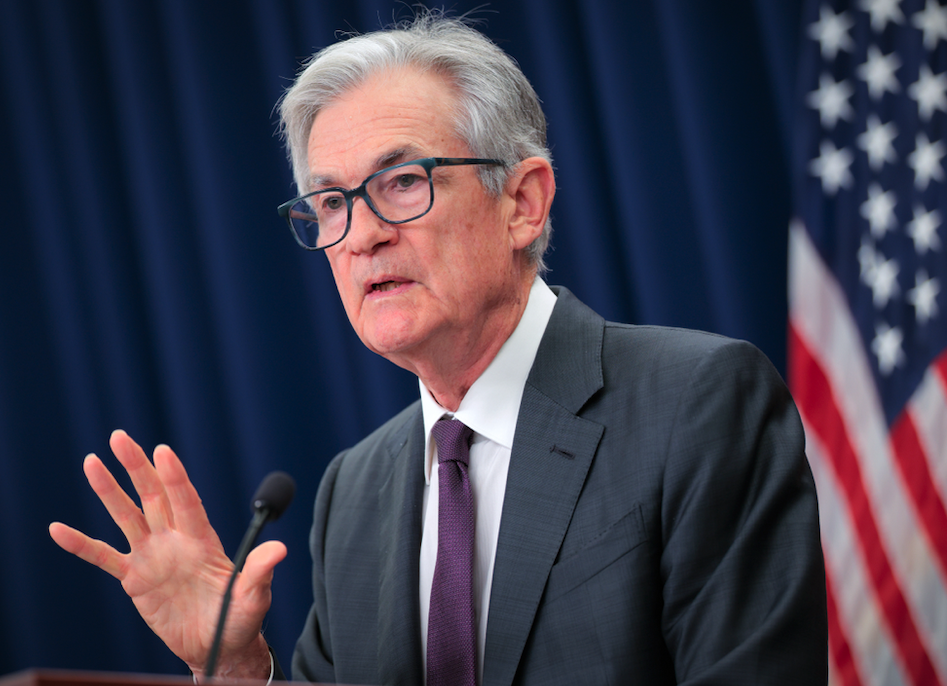
Up to now, the Federal Reserve and the bond market have been operating under the assumption that the employment setting has been cooling in a somewhat visible fashion. In fact, recent comments from Powell & Co. underscore how the employment aspect of their dual mandate is where the greater risk may lie.
Though deemed to be “Modern” portfolio theory (MPT), the primary framework used to construct diversified portfolios and deliver risk-adjusted investment returns is now well over 50 years old. Enhancements have helped keep MPT’s 60% equity and 40% bond allocation formula relevant for decades.
The Fed’s balance sheet has two sides: On the asset side are Treasury bonds and mortgage-backed securities—the financial instruments the Fed buys to inject money into the economy. On the liability side are the reserves that banks hold at the Fed, along with physical currency in circulation.
A rivalry at the heart of Russia's oil trade is threatening the crucial operations the Kremlin relies on to fund its war in Ukraine, just as the US cranks up the pressure on Moscow.
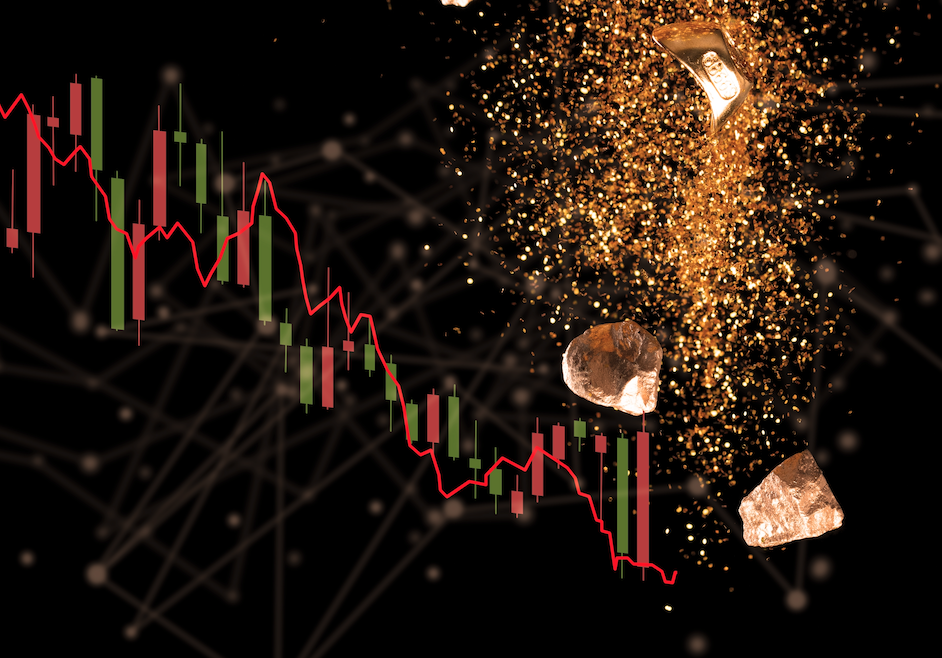
Gold has been top of mind for many investors this week, with prices falling significantly at the start of the week. Despite a strong run in 2025, traditional valuation models suggest gold prices may have become somewhat stretched, creating some fragility in the asset class.
Jane Fraser’s elevation to chair as well as chief executive officer of Citigroup Inc. is a reward for progress and a bulwark against potential pretenders to her throne. Her restructuring of the lumbering and longtime dysfunctional beast that is the US’s third-largest bank by assets is taking time and is far from done.
Monthly checks for nearly 71 million Americans receiving Social Security benefits will increase by 2.8% next year, a slightly larger adjustment than seen in 2025.
JPMorgan Chase & Co. has hired veteran technology dealmaker Kevin Brunner from Bank of America Corp. as a global chair of investment banking and mergers and acquisitions.
The equity market has shown remarkable resilience over the past two weeks despite rising U.S.-China trade tensions, a spike in equity market volatility, and growing credit concerns tied to business development company (BDC) and regional bank lending losses.
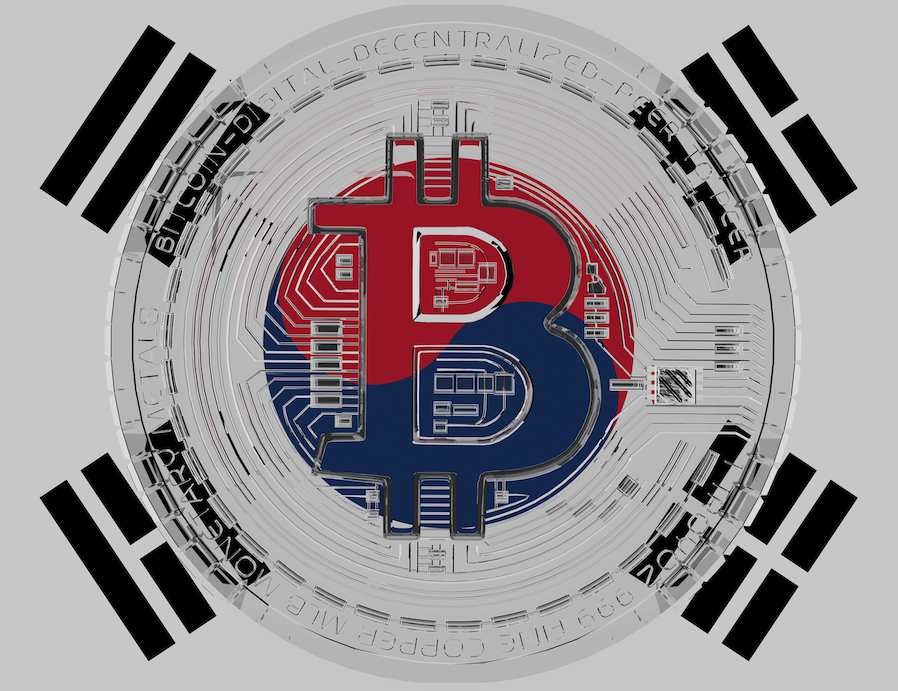
A weakening greenback is being compounded by global de-dollarization and lower interest rates, creating an environment for emerging markets (EM) ETFs to prosper. In turn, more investors are flocking into EM equities, but for more targeted exposure, South Korea could present an intriguing alternative.