A recent VettaFi webcast explored advice on navigating retirees' behavioral tendencies in decumulating assets in retirement.
Join Fidelity for a product due diligence session exploring how the Fidelity Yield Enhanced Equity ETF (FYEE) captures derivative opportunities in today’s unique market environment.
In the first quarter of this year, as the Strait of Hormuz closed and oil prices exploded, Berkshire Hathaway made a couple of moves that might have flown under people’s radars.It cut its stake in Chevron by roughly a third. Then it bought an airline.
Understanding why investor optimism wins over a full market cycle is one of the most underrated edges an investor can own, and it has almost nothing to do with waving pom-poms.
I’m talking about the cash I have sitting here that I desperately want to get into the market. Earlier this year, I got a chunk of money from selling a house. I have no desire to own another home (that’s a story for another time.) Instead, I used some of the money to pay off some debt. The rest is just sitting in my savings account earning absolutely nothing.
Before evaluating whether a long-short strategy belongs in a portfolio, we think it helps to understand what's actually happening under the hood. Let's start at the beginning.
The BlackRock Model Portfolio Solutions team made significant allocation shifts during the week ended September 24, 2026. The team recently managed over $300 billion and often causes shockwaves in the ETF industry.
"Funflation" is on the rise, and it could bode quite well for the retail sector if the trend remains persistent.
Northern Trust Asset Management will move six mutual funds with $33 billion in assets into ETFs in early 2027, its first such conversions.
The yield on the 30-year hit a multi-decade high this week, spiking amid continued fiscal and monetary concerns. The 30-year hitting 5.45%, its highest mark since 2004, comes amid an already busy year for bonds.
Asset owners want private-market exposure, but liquidity remains their biggest hurdle, an opening advisors can meet with public alternatives.
I do not know whether quantum computing is in that kind of window right now. Nobody does, and I am suspicious of anyone who claims certainty in either direction. What I can say is that the pattern-matching is uncomfortably familiar.
The exchange-traded fund (ETF) market is pacing toward a record-breaking year in 2026, driven by an unprecedented wave of new product launches and historic capital inflows.
Confluence Investment Management offers various asset allocation products, which are managed based on “top down,” or macro, analysis. We publish asset allocation thoughts on a bi-weekly basis, updating the report every other Monday, along with an accompanying podcast.
Doshi said gold holding $4,000 during the correction and later rallying to $4,700 before last week's Fed rate hike strengthened his conviction that the broader gold bull market remains intact despite continued headwinds from the Iran war oil shock.
Investment bubbles are inherently dangerous beasts. Like a natural Ponzi scheme, an investment bubble needs to draw in ever larger amounts of capital to keep it going. Nothing attracts capital like apparent success, so an inflating bubble that is creating fortunes for those who got in early will inevitably draw in capital. Unfortunately, this means the amount of money lost when the bubble bursts can outstrip the gains created on its way up.
Cathie Wood is putting one of her investment funds on the blockchain for the first time, deepening her ties to the growing world of tokenized assets as Wall Street experiments with a new financial infrastructure.
We know from recent history why this question feels so timely. Fixed income remains a foundational portfolio building block, offering low-correlated or uncorrelated diversification and downside risk mitigation. However, holding long-dated bonds in recent years has been notoriously painful.
LPL Research analyzes S&P 500 margin expansion, assessing how much is structural versus cyclical and what that means for future earnings forecasts.
Major US equity indices finished the week mixed. The NASDAQ gained 0.7 per cent while the Dow and S&P 500 slipped. The divergence reflected a tug-of-war between fears of slower AI development early in the week and a rebound in AI-linked shares by Friday.
For many advisory firms, portfolio management creates a practical tension. Standardized models can simplify implementation and support scale, yet they may not reflect a firm's investment philosophy, tax realities, legacy holdings or preferred managers. Building every portfolio internally preserves control, but it also demands time, systems and ongoing investment oversight.
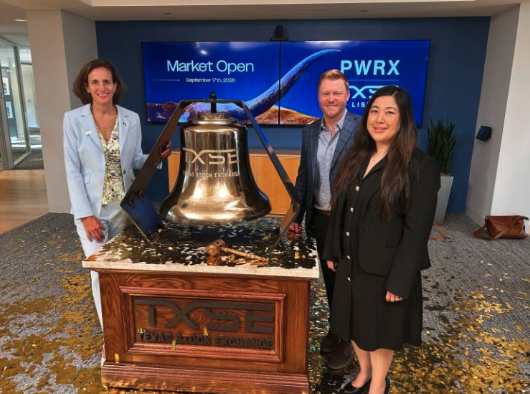
The Texas Stock Exchange (TXSE) is more than a regional milestone — it is a shift in competition among U.S. capital markets. After months of anticipation, the TXSE reached a major landmark last week as Texas Capital’s TXS and OILT ETFs became its first primary listings, followed a day later by PWRX as the first new ETF to launch on the exchange.
Markets have dealt with serious whiplash from the Federal Reserve’s dramatic policy pivot this year. In just six months, the Fed funds futures market went from pricing in two rate cuts totaling 50 basis points to now pricing in two rate hikes in 2026.
The two largest municipal bond exchange-traded funds just recorded their largest weekly inflows ever, shortly after a bond rout fueled outflows in other muni funds.
Every runner has a natural pace: the speed that we maintain under optimal conditions like flat terrain, cool temperatures and a good night of sleep. Runners can train to speed up to meet a target time, or slow down for endurance.
Some economists and market participants view inflation as one of the most important economic indicators. Market participants spend a lot of time worrying about a lot of things, but inflation is pretty close to the top of the list most of the time.
Dividend growth is back, and it’s fair to say that outperformance among dividend growth stocks may simply be overdue amid a shift in U.S. equity market leadership beyond a small group of mega-cap technology companies.
Share buybacks are when a company purchases its own shares, reducing the total number of shares on the market. Oftentimes, these buybacks occur on the open market, but companies may also look to buy shares from existing shareholders as well.
When billionaire Mat Ishbia’s mortgage company was facing significant losses on soured hedges earlier this year, he called old friends at Oaktree for help.
Goldman Sachs Asset Management launched two new ETFs Monday, expanding exposure to emerging and international equities. The ETF duo includes the Goldman Sachs Data Enhanced Emerging Markets Equity ETF (GEMQ) and the Goldman Sachs Data Enhanced International Equity ETF (GIEQ). That pair joins an ETF landscape in which those segments are seeing growing interest.
Early this week, I was in Los Angeles at the All-In Summit along with about 4,000 others, including tech investors, money managers and entrepreneurs. The ticket wasn’t cheap, but it was well worth it.
In August, a flurry of ETF-related deals were announced and expected to close by early 2027. Goldman Sachs is buying NEOS Investments. T. Rowe Price plans to add F/M Investments. Victory Capital is acquiring First Eagle.
I typically avoid business books when I am on vacation. But I made an exception during our sojourn last month for Andrew Ross Sorkin’s 1929. Nearly a century after the Great Crash, that era is still being studied for lessons that might be relevant in the current day. The potential for financial instability is ever-present.
Join the experts at Thornburg Investment Management for a product due diligence session covering the Thornburg Premium Income Builder ETF (THOR), an active ETF which combines a high-conviction global portfolio of dividend paying companies with an actively managed options overlay.
The Federal Reserve increased rates by 25 basis points this week, a remarkable turnaround with major implications for portfolios of all kinds; one underexamined impacted area may be annuities.
Throughout this Indexing Redefined series, we explored how traditional market-capitalization indexing ties portfolio weights directly to stock prices, creating hidden concentration risks. Furthermore, we discussed how fundamental indexing offers a disciplined alternative by weighting companies according to their real-world economic footprint. In this final installment, we address the dilemma investors face in highly concentrated equity markets.
Bitcoin surged near $85,000 to its highest since late-January, extending a sharp rebound as falling oil prices and a broader return of risk appetite helped cryptocurrencies move past setbacks on US crypto legislation and monetary policy.
Catherine LeGraw and B.J. Brannan of GMO's Asset Allocation team discussed the role of liquid alternative strategies in today's investment landscape.
According to the latest SPIVA U.S. Scorecard report, broader isn’t always better for active managers. Following a volatile start to the year, the S&P 500 rebounded sharply in the second quarter to gain 10% through June 30 thanks to robust corporate earnings.
Advisors outsourcing at least 20% of assets reported saving 9.1 hours per week, or approximately 473 hours annually. WisdomTree research found 90% of investors welcomed third-party model portfolios, suggesting clients may be more comfortable with outside expertise than advisors expect.
We are never going to get rid of the FOMC for political and practical reasons. For those of us who would like to see the market set rates without an FOMC intervening, this is as good as it’s going to get.
Janus Henderson Investors today announced two senior investment appointments that will further deepen the firm’s leadership across its global equities franchise.
Gold rallied alongside Treasuries as a slump in oil prices helped ease concerns about inflation, following the Federal Reserve’s first interest-rate hike since 2023.
Open any market commentary today and the conversation is dominated by giants. Mega-cap technology companies command outsized shares of major indexes, and the private markets tell a similar story, as we watch companies increasingly staying private well past the point where they once would have gone public.
Join Defiance ETFs’ Brendan Cavanaugh, CFA, and VettaFi’s Kirsten Chang as they discuss how advisors can gain exposure to companies advancing autism care.
A spinout from the family office for the billionaire owners of US construction giant Michels Corp. is expanding its public equities strategy with a fund focused on US infrastructure.
In an environment marked by the Fed’s first rate hike in three years and ongoing market uncertainty, income-focused investors face a unique dilemma. While cash alternatives offer attractive yields in the short-term horizon, they leave portfolios vulnerable to reinvestment risk should the
As ETF strategies continue to expand into new asset classes and structures, the SEC has been taking a closer look at how some of these products fit within existing regulations.
The new investment case for global power, security and affordability. The phrase “energy transition” has served as a useful political and cultural shorthand, but it has become a misleading framework for capital allocation. Franklin Templeton Institute explodes new opportunities for investors—and where shifts in thinking may be needed.
The U.S. Federal Reserve delivered on consensus expectations by raising its policy rate by 25 basis points (bps) at its September meeting.