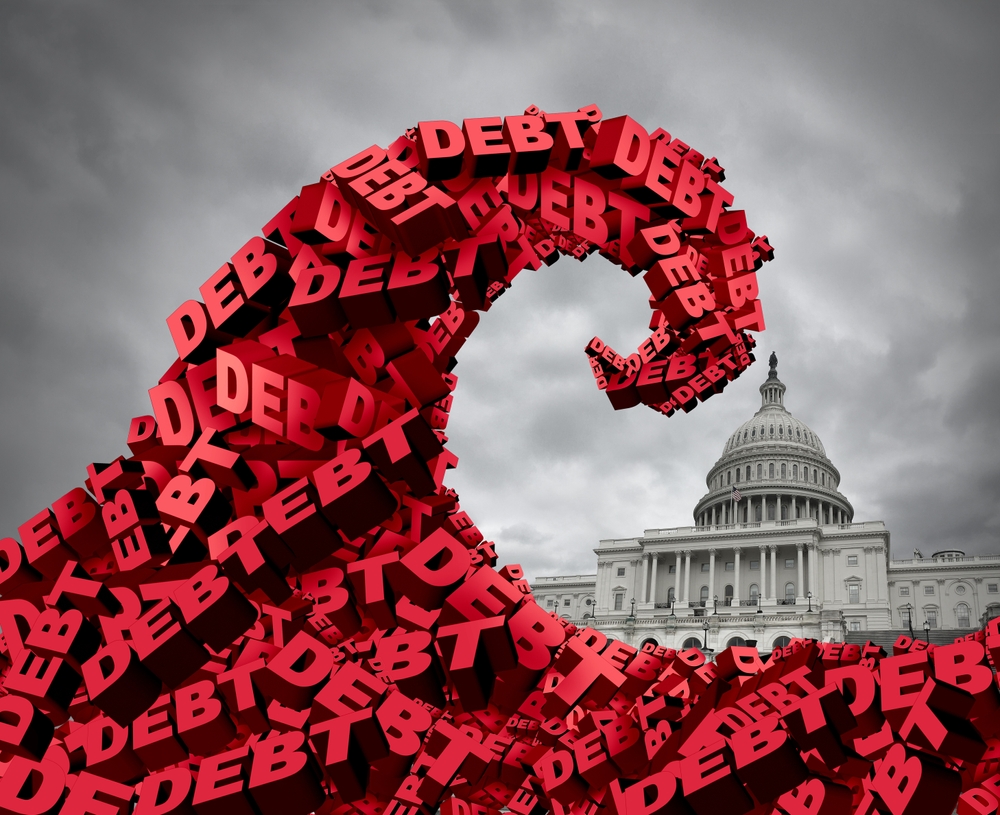
While official estimates remain fluid and subject to change, our preliminary analysis at the time of this writing suggests that the House Reconciliation Proposal could significantly increase the national debt over the next decade.
Gold remains firmly in correction mode — even I will readily agree with that.
Over many years of educating investors about direct indexing, we have noticed a common misunderstanding—conflating the economic value of harvested losses with the investment return on the performance statement.
Proposed tax-cut extensions and higher debt costs could amplify fiscal concern.
Few leading men of the 1960s and 1970s were more dashing than Clint Eastwood. He played a series of gritty heroes, trying to do right in a world gone wrong.
With US economic policies driving financial and economic volatility and rousing the bond vigilantes, it is an open question whether we are witnessing the fragmenting of the international order, or just a bumpy ride toward a beneficial overhaul. Five factors could clarify the answer.
Moody’s finally downgraded US government debt on May 16th to Aa1, its second highest rating. With the US $36 trillion (and rising) in debt, it’s not hard to see why. But Moody’s was late to the party with S&P and Fitch (the other two major ratings agencies) having done so long ago.
Friday’s market tremor was ignited not by economic data, which brought limited new releases, but by revived political uncertainty—specifically, President Trump’s abrupt reinvigorated tariff threats.
There’s a lot to like about the travel industry right now from an investment standpoint. You just have to know where to look.
My next few letters will share some initial thoughts from SIC organized around the major topics. Today we’ll start with inflation, and specifically the sharply different views of David Rosenberg and Jim Bianco, then balance them with some thoughts from other speakers.
Keep your market perspective in check, avoid anchoring, and focus on your investment goals rather than market volatility.
A KEY PLANK of the new administration’s economic policy has been to embrace tariffs, a sharp reversal of decades of free market trade.
In this video – Part 3 – Valuation Drives Future Returns – Chuck Carnevale, Co-Founder of FAST Graphs, aka Mr. Valuation discusses the volatility of the stock market, using the S&P 500 (SPY) as a proxy.
Looking to reduce volatility without sacrificing income potential? Consider short-maturity high yield.
A host of data influences the market, including jobs and GDP. Learn how savvy investors decipher their meaning and what they watch for beneath the surface.
Over the past four months, the price of gold in yuan terms has climbed by 24 percent, the strongest January to April performance on record. The Shanghai Benchmark Gold Price rose 6.9 percent in April alone. It was the fifth consecutive monthly gain.
From an energy perspective, while the trade dispute with China initially impacted oil prices and raised concerns about oil demand (mirrored across tariff discussions), the direct effect on midstream has been limited.
Selling your real estate portfolio, especially investment properties you and your family have held for years or decades, can be a complex process.
In 2025, AI crossed a subtle but monumental threshold: it stopped just answering questions and started executing goals.
Markets rallied after a surprise tariff rollback, but with valuations stretched and policy signals still mixed, investors appear to be leaning toward flexibility, fundamentals, and selective exposure.
Given the headwinds Target has faced this year, many advisors were not expecting to hear good news at the retailer’s latest earnings call.
Though silver has been quiet lately, it’s important to be aware of the many bullish factors that are setting the stage for a strong move higher.
The Endowment Tax was introduced during the first Trump administration as part of the 2017 Tax Cuts and Jobs Act (TCJA).
Tariffs have long been part of U.S. economic policy, but big changes can disrupt markets and trade. Here's a quick overview of some questions investors may have.
Your financial requirements are multifaceted, necessitating strategies tailored to your specific needs. Tailored lending can be a valuable addition to a high-net-worth individual’s financial plan, helping you optimize cash flow, maximize tax efficiency and realize important estate planning goals.
For many of us, ETFs have been synonymous with passive management.
Investors have breathed multiple sighs of relief in recent weeks as the Trump administration has dialed back its extreme tariff rates on China and other countries. In addition, first-quarter earnings were better, overall, than many expected given the quarter’s uncertainty.
America’s fiscal woes are nothing to sneeze at, but they’re also nothing new. Which is why we expect markets to largely shrug off the latest credit-rating cut.
Direct indexing has been in the news a lot more in recent years. Larger industry players have strategically acquired a number of providers—including Parametric. And many new entrants have entered the space, looking to build on its success.
Shopping for bonds? The bonds you choose should align with your risk tolerance and goals. Discover what to consider before buying any bond.
Investors active today can be forgiven if the events of the past few months have been a bewildering experience.
What investors thought was going to be a nice start to a weekend in May got turned around with a late Friday announcement that Moody’s had just downgraded the U.S. long-term credit rating.
The market narrative appears to change on a dime these days. Stocks may have staged a comeback to recoup almost all their post-“Liberation Day” losses. But the bottom line on the fixed income market hasn’t changed all that much.
In this article, Russ Koesterich discusses the potential impact of seasonal weakness, momentum and the effect these factors could have on earnings in 2H2025.
Trade pacts with America will not mean a return to the old normal.
Discounted municipal bonds could expose you to unexpected taxes. Here's what to know before you buy.
One of the biggest stories in the ETF market in 2025 has been the nonstop impressive asset-gathering pace of the Vanguard S&P 500 ETF (VOO).
Tariffs, inflation, geopolitical tensions, and other factors continue to feed into market uncertainty for even safe haven assets like Treasuries. As such, investors could be giving riskier emerging market (EM) bonds a second look.
Best-in-class OCIO providers understand the importance of a deep relationship and will invest considerable time cultivating one.
529 plans offer tax-free savings for a variety of education expenses, including K-12 tuition, vocational training and apprenticeships. Our Bill Cass discusses the trends in 529 savings plans.
In a year dominated by multimodal marvels and reasoning breakthroughs, perhaps the most economically significant shift in AI went largely underplayed: cost collapse.
The materiality of ESG factors differs across sectors and markets. Investors need to understand how.
In the aftermath of the 2018 trade skirmishes with China and the pandemic, nearshoring and friendshoring quickly became buzzwords. But like many other catch phrases, these two may soon fade from usage and memory.
Common sense and economic theory often collide. Take the stubborn belief that government stimulus spending and debt issuance reliably boost economic growth. It is a simple and seductive idea—when the economy falters, the government can step in, inject capital, and jumpstart growth.
The April Consumer Price Index (‘CPI’) report was released last Wednesday and gave the Federal Reserve another positive data point in its inflation fight, as did Thursday’s negative Producer Price Index (‘PPI’).
This year’s turbulent market environment underscores the value proposition of actively managed strategies. Active ETFs may offer diversification benefits, a responsiveness to changing market environments, and a depth of fundamental research above and beyond that of their passive peers.
During last month's tariff war, a big driver of stock-market declines was foreigners selling.
The shifting change in market leadership to international outperformance may call for a portfolio review to assess overexposure risks.
Innovative ETFs are making waves as investors look for fresh ways to navigate a market marked by rapid growth and ongoing volatility.
Debt collectors have been unpopular since ancient times, but they play a necessary role in the lending lifecycle. Their jobs are not easy: I recall one collector noting that there are few ways to communicate with defaulted borrowers.