Efforts to reduce the central bank’s autonomy would likely disrupt markets.
The fixed income market exhibits traits that can lead to inefficiencies and mispricings, giving active managers the chance to use their expertise to potentially generate higher returns.
The degree to which growth in Europe slows, along with inflation developments, will be key in determining the path ahead for the European Central Bank.
Stocks continued to rally in July, but complacency is creeping in. Below the surface, familiar concerns are returning: narrow leadership, policy uncertainty, and slowing inflation progress.
Tariff news continue to dominate the 24-hour news cycle, and the latest deal struck with the U.S. and Japan should ease any potential investor anxiety over the robotics industry. Though tariff clouds were present, it never really dimmed the sunny outlook for the industry as a whole.
If you’ve been following the luxury sector, you’ve probably seen your fair share of sobering news.
Gold doesn’t need a black swan to deliver. Explore how investors can use gold for portfolio balance, income generation, and long-term stability.
It certainly seems hyper-politicization has come to every piece of economic data. Last week’s data are poster children for this, and the overbroad interpretations of the data by investors, the general public, policymakers, and politicians sow confusion.
U.S. trade strategy is a top worry among economists.
In this video, Chuck Carnevale, co-founder of FAST Graphs, aka Mr. Valuation discusses Dividend Aristocrat Community Financial System Inc. (CBU) as a strong investment candidate for retired or income-focused investors. CBU is a Dividend Aristocrat that has increased its dividend for 32 consecutive years.
On this episode of the ETF of the Week podcast, VettaFi’s Head of Research Todd Rosenbluth discussed the T. Rowe Price Capital Appreciation Equity ETF (TCAF) with Chuck Jaffe of Money Life. The pair discussed several topics related to the fund to give investors a deeper understanding of the ETF overall.
Is this period different from the high-beta boom-and-bust cycle during the dot-com era? Only time will tell. While there are some similarities, key differences exist.
Distressed debt investors are piling into a new strategy to make money from troubled companies.
The dollar’s bounceback in July is convincing some emerging-market investors to bet it will keep rising in coming months.
Wall Street had a lot riding on whether this week’s big-tech earnings would meet increasingly high expectations. By and large, the companies delivered.
Swiss stocks dropped as the market reopened after a holiday, on worries about the impact from US President Donald Trump’s punitive 39% export tariff and a push for drugmakers to lower prices.
For years, equity research has struggled to develop a sustainable revenue model. The spectacular growth in private markets may provide the opening that Wall Street analysts have been groping for.
Many portfolios consist of highly appreciated, concentrated positions. Investors are hesitant to rebalance these portfolios due to concerns about paying capital gains taxes. Such hesitancy is often unwarranted.
I will point out that one particular oft-overlooked capability will most likely determine the dominant currency in the future — the ability of a currency to preserve and protect the value of intangible assets into the future.
As digital technologies become the rails upon which money moves, the resilience and credibility of currency networks increasingly hinge on the integrity of technological infrastructure. This fundamentally changes the logic of monetary competition, with far-reaching implications for financial and geopolitical stability.
Over the past year, financial headlines continue to flood investors with doomsday predictions about the U.S. dollar. Whether it’s social media influencers waving “dollar collapse” charts or YouTube personalities warning about debasement, the noise has become deafening.
Strategic versus tactical asset allocation is an age-old debate in the world of asset managers, fiduciaries, and everyday investors alike.
Cutting to the chase… prepare to muddle through. I should point out that I felt that 2025 would be a Muddle Through year at the beginning of the year. We will talk about that below plus look at a lot of charts and yesterday’s rather poor employment data…
History confirms one thing — drawdowns do occur, instilling a level of market uncertainty of varying degrees.
A strong GDP rebound was quickly overshadowed by a weaker-than-expected jobs report and hotter-than-anticipated inflation.
Invesco is no stranger to the active ETF arena, and they continue to make strides in fixed income with the introduction of the Invesco Core Fixed Income ETF (GTOC) and the Invesco Intermediate Municipal ETF (INTM).
Chief Economist Eugenio J. Alemán discusses current economic conditions.
The opportunity set for emerging market (EM) equities has changed dramatically over the past three and a half decades – geographically, at a sector level, and in terms of market capitalization.
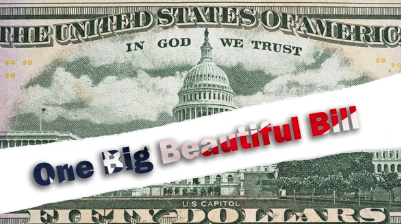
On July 4, President Trump signed into law the “One Big Beautiful Bill Act (OBBBA)”, a far-reaching piece of legislation that will impact the U.S. investment landscape for years to come.
Risk assets rebounded in Q2 as tariff worries eased and earnings growth continued. The quarter also highlighted the resilience of major secular trends, which could be key to returns going forward, says the Research Team.
For families with a loved one who has special needs, planning ahead can feel overwhelming.
Heading into August, with over $680 billion of net inflows YTD, the ETF industry is on track to surpass the $1 trillion mark again.
Signs of market fatigue and elevated expectations suggest that caution may be warranted.
Today’s LPL Financial Chart of the Day spotlights the seasonal setup for stocks in August.
It happened quickly. One minute, the focus was on the furious nature of stocks’ rebound off the April 8 lows. The next minute you start hearing strategists, including ourselves, making references to 2021.
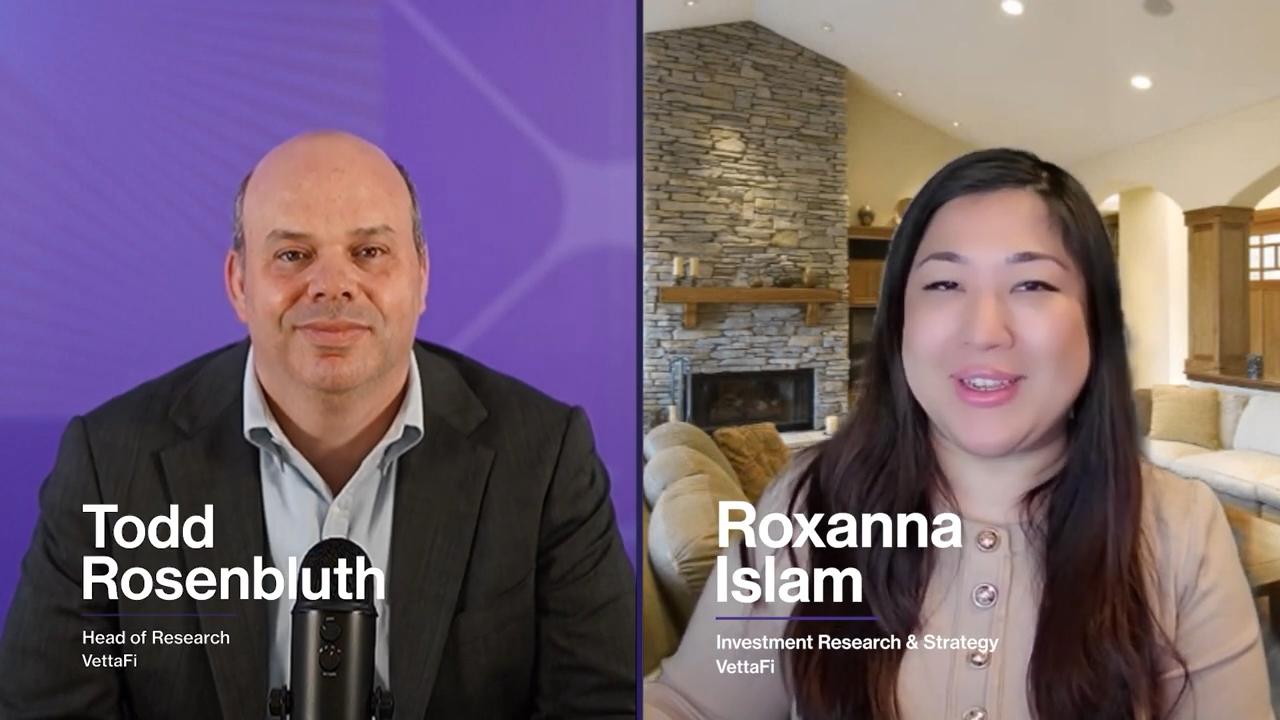
Bitcoin continues to draw investor attention and interest as prices climb higher and fundamentals strengthen. Matthew Kimmell, digital asset analyst at CoinShares, joined Roxanna Islam, CFA, CAIA, head of sector and industry research at VettaFi in the Alternatives Symposium hosted on the VettaFi platform.
Emerging markets (EM) could finally be in the throes of a comeback, and there are already signs it could be in its early stages.
VettaFi research colleagues spotlight some of the top trends in the first half of 2025 and preview what's to come in the ETF market."
Investors in US Treasuries will scour employment data Friday for clearer evidence of a hiring slowdown that could open the door to the Federal Reserve cutting interest rates in September.
Four months after Donald Trump shocked the world and roiled markets by unveiling a placard full of tariff rates at the White House Rose Garden, his revisions unveiled Thursday generated a more subdued response among investors.
The nimbleness of corporate America is on full display this earnings season, with a little assist from fiscal policy.
We are entering a Golden Age of big business. Or, depending on how you look at it, a Dark Age for small business.
Did tariffs help Apple Inc. to a blowout quarter?
A wise man once said that generally accepted accounting principles (GAAP) is where you start. It may not be the most economic way of looking at a business for various reasons.
Fixed income investors often think of changes in US Treasury rates as the tide that lifts or lowers all other domestic bond yields.
Federal Reserve officials leave short-term interest rates unchanged but appear to open the door for a potential rate cut later this year.
Emerging markets (EM) local currency debt posted strong returns in the second quarter, building on momentum from earlier in the year.
Thanks to AI, cloud computing, and renewable energy reshaping the global economy, one under-the-radar sector surging to the forefront is utilities. Long considered a sleepier, more defensive, “old economy” play, utilities stocks and ETFs are quickly becoming the backbone of the digital and green revolution.
An ambitious policy yielded great gains and high debts.
The US-Japan deal may mark a pivotal moment for global equity investors, according to Dina Ting, Head of Global Index Portfolio Management. Find out why.