Elon Musk’s social network X has raised close to $1 billion in new equity from investors, according to people with knowledge of the matter — a deal that gives the company a valuation in line with when Musk took it private in 2022.
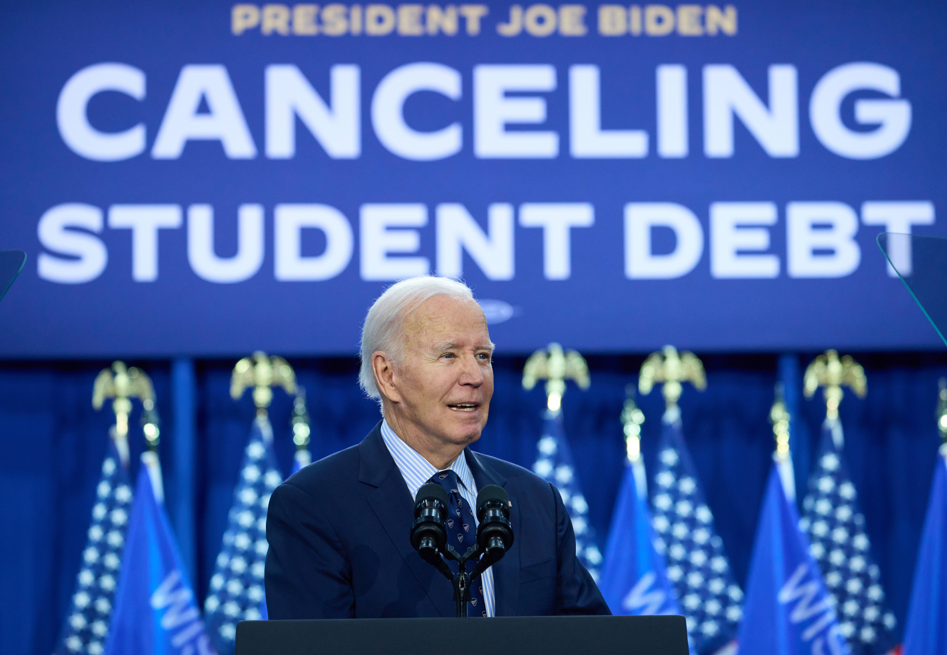
After years of poor decision-making, the federal government’s $1.64 trillion student loan program is in critical condition. Congress needs to stanch the bleeding — and give serious thought to overhauling this flawed system for the longer term.
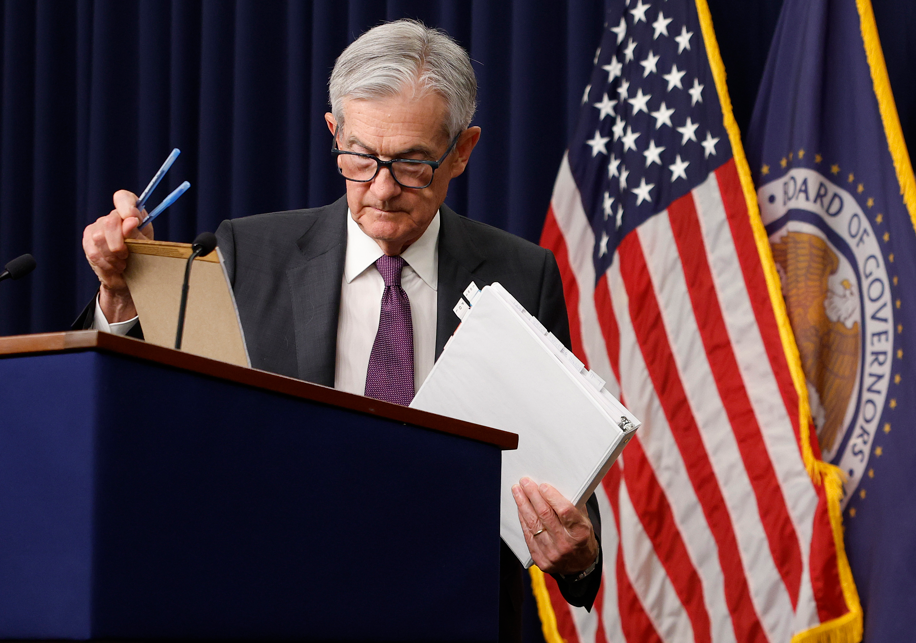
On the predictable side, the Fed kept policy rates in a range of 4.25%-4.5%, and the rate-setting committee pledged to slow the pace at which it’s allowing securities to roll off its balance sheet.
Human stupidity is the one thing you can rely on in financial markets. I recently read a great piece by Joe Wiggins at Behavioral Investment, which discusses why “Investing is hard.”
In the understatement of 2025 thus far, the headlines emanating from Washington, D.C., have been fast and furious. Whether they be tariff-related, involving federal government cuts or geopolitical in nature, there has been a headline for many facets that investors could think of.
Recession fears have risen sharply of late as economic soft data have rolled over, upping the risk that hard data start to catch down.
European equities have started 2025 on a positive note. Several factors could help support the market overcome challenging conditions.
GMO has posted a new 7-Year asset class forecast as of February 28, 2025.
Receiving an unexpected gift or inheritance is something that people may dream about. Our Bill Cass discusses some key considerations if that dream becomes reality and you do receive a financial windfall.
A creative look at the parallels between March Madness and the bond market.
On March 11, Russell Investments hosted a webinar examining the challenges and opportunities presented by alternative diversifiers, including strategies for incorporating these solutions into portfolios.
Since our last update of our ‘Three Tactical Rules’ on February 4, equity markets have been under pressure as the S&P 500 has retraced more than 23% of the rally that started October 2023.
In this week’s edition, we shift our focus to another critical segment of the ABS market: those tied to consumer loans, such as credit cards and auto loans.
Most growth-focused advisors crave the next big marketing tactic, content platform, event idea, or growth “hack.” But after a decade of consulting RIAs on organic growth, I’ve seen firsthand that the biggest barriers to success aren’t what most people expect.
I’ve spent much of my career coaching and providing learning opportunities for those professionals who want to improve. This week I had an experience that moved me to write a column about the difficulty in opening one’s self up to being willing to be coached, and of making behavioral change.
Microsoft Corp., the biggest backer of Sam Altman’s OpenAI, and BlackRock Inc., which has an executive on the artificial intelligence startup’s board, are joining forces with one of its chief rivals.
Private equity firms are called that because they own stakes in the companies they buy. Today, this assumption is looking ever more outdated.
Cathie Wood’s Ark Investment Management LLC is cutting its stake in Meta Platforms Inc. for the first time in around a year, the latest sign of a downturn in fortunes for big US tech stocks.
Bond investors will look for Federal Reserve Chair Jerome Powell to hit just the right notes in his Wednesday remarks to keep up the momentum behind a rally in the $29 trillion Treasury market.
It’s not often you see big tech firms getting pushed around. Upstart Wiz Inc. has just squeezed Google owner Alphabet Inc. to pony up $32 billion for a privately owned five-year-old cybersecurity firm.
The Trump administration isn’t satisfied with the mayhem it has already inflicted on global trade and investment.
Value investing and emerging markets are not often associated with one another. Conventional wisdom says that emerging markets, with their rapidly developing economies and rising consumer classes, are naturally the hunting ground of growth-oriented investors.
Times have changed. Emails used to be read because information was valued. Now emails are ignored and even seen as a nuisance. Free information is everywhere, and it’s no longer trusted.
Two Sessions, or Lianghui, is the popular name for the annual meeting of China’s top legislative and consultative bodies. These gatherings are closely watched by overseas observers as they provide key insight into China’s political landscape, economic priorities and overall policy direction.
Customization is an integral part of direct indexing. The technology behind it can make or break the experience for clients and advisors alike. We dive into the features and functions that make the best tools.
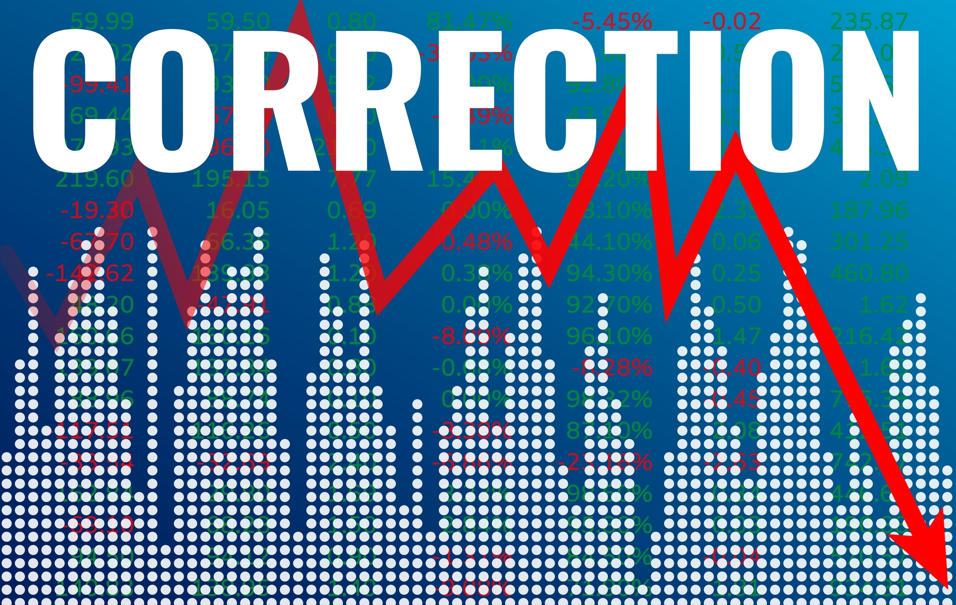
As of the end of trading on Thursday, March 13, the S&P 500 closed down 10 percent from its all-time high, marking an official correction. It was the first correction since October 2023—17 months ago.
The Defined Outcome investment landscape is rapidly evolving, offering new opportunities for managing risk and return with greater precision.
One of the textbook drivers of alpha is an information edge. Having more information, advanced ways to use that information, and the ability to react to it before anyone else has been a massive advantage throughout the history of markets.
I recently celebrated another trip around the sun, which meant I couldn’t let the occasion pass without enjoying some birthday cake.
Several indicators used by fixed income investors to measure value have recently taken a positive turn, potentially flashing an entry-point opportunity for investors with money to put to work.
What does a "correction" mean, what's likely to happen next, and what can investors do now?
A time-honored belief holds that inflation is bad for stocks, but recent developments may be challenging this view.
The U.S. housing market has been a critical factor in the broader economic landscape, and its trends have profound implications.
Head of research at VettaFi, Todd Rosenbluth interviews Neil Bage, the co-founder of Shaping Wealth about his upcoming workshop "Building a human-centric wealth culture" at the Exchange conference.
Join the experts at SS&C ALPS Advisors and VettaFi for a 30-minute LiveCast on March 18th at 12:30 pm ET as they explain NGLs and the related growth opportunities for midstream.
Although annuities can offer a guaranteed income stream in retirement, they come with significant risks and complexities. It's essential to thoroughly understand these products and consider whether they align with your financial goals and risk tolerance.
Banks needed the right version of Donald Trump to justify their high-flying stock prices. They got the wrong one. The US president’s chaotic and aggressive performance during his first few weeks in the White House has shocked companies, put investment plans and deals on hold and threatens to drag the economy into recession.
Google parent Alphabet Inc. agreed to acquire cybersecurity firm Wiz Inc. for $32 billion in cash, reaching a deal less than a year after initial negotiations fell apart because the cloud-computing startup wanted to stay independent.
For years, Federal Reserve meetings have been the main event on Wall Street as the central bank fought to contain runaway inflation.
US investment firms are rushing to grab a greater chunk of Europe’s market for active exchange-traded funds, an industry projected to grow to $1 trillion in assets over the coming years.
US housing starts rose in February by more than forecast after a weather-related plunge, led by a pickup in single-family home construction underpinned by builder incentives.
The share of US workers making a direct transition from one employer to another has slid near a four-year low, according to the latest data from the Federal Reserve Bank of Philadelphia, pointing to a weakening labor market.
I often encounter individuals struggling with financial stress – whether it's saving for retirement, building an emergency fund, or paying down debt. To better understand these concerns, Barnum conducted a comprehensive study on the financial wellness of working Americans.
There’s nothing like a good sale to get people excited—unless that sale happens in the stock market. Instead of celebrating a chance to buy at a discount, investors panic, dump stocks, and brace for economic doom.
The wealth industry could be headed into an era of accelerated innovation, as advisory firms shift from zero to full speed ahead with artificial intelligence.
Last week’s economic data was plagued by uncertainty. A brief respite in inflation pressures was overshadowed by sentiment concerns.
With market uncertainty abound in today's macro and geopolitical climate, Berkshire Hathaway hasn't been immune to the volatility.
Every so often we hear a theory that makes sense superficially but on closer examination doesn’t add up. The most recent one is that the Trump Administration wants a recession (or at least wouldn’t mind one) because interest rates would drop, making it easier to service the national debt.
Policies to support mainstream crypto adoption are underway.
The recent sell-off has certainly sparked concerns with investors but the NYSE advance-decline line is an important technical measure to watch. However, what is it, and why does it matter?