The threat of tariffs is ramping up ahead of the inauguration of President-elect Donald Trump. This is pushing up silver and copper prices.
Each year, we look back at the prior year’s Investment Playbook to assess what we got right, what we got wrong, and what we learned in the process.
Join the experts at SS&C ALPS Advisors and VettaFi for an educational webcast on January 9th at 1pm ET as they discuss the outlook for MLPs/midstream in 2025.
Advisors who refine their tech stacks and focus on actionable solutions will thrive. Likewise, wealthtech companies that prioritize delivering meaningful outcomes will rise to meet the industry’s new standards.
I wrote this from Las Vegas, where my son Jonah and I were at CES (the Consumer Electronics Show). In investing and life, it’s very easy to get tunnel vision – doing what works and staying in your comfort zone. I wanted to attend CES to shake myself out of this pattern.
Economic data and policies out of China are typically delayed until mid-March. Stock volatility may be prevalent until initiatives are clarified after the Lunar New Year.
Goldman Sachs Group Inc. cruised past estimates as its equity traders delivered their best year on record.
Nvidia Corp.’s $3 trillion run-up in market value in the two years since ChatGPT helped trigger an AI frenzy is bigger than any stock rally in history in such a short time span.
Jamie Dimon, who turns 69 in March, will one day retire as chief executive officer of JPMorgan Chase & Co. The candidates to succeed him have been well advertised.
One of the longest, most technical and, as it turns out, most inconsequential public-policy debates of the 21st century was about net neutrality.
On top of the human tragedy they’re still inflicting, the Los Angeles wildfires are exposing a gap between what people thought their homes were worth and what they’ll actually get from insurance companies when those houses have been reduced to ash. Potentially thousands of homeowners are learning it won’t be nearly enough.
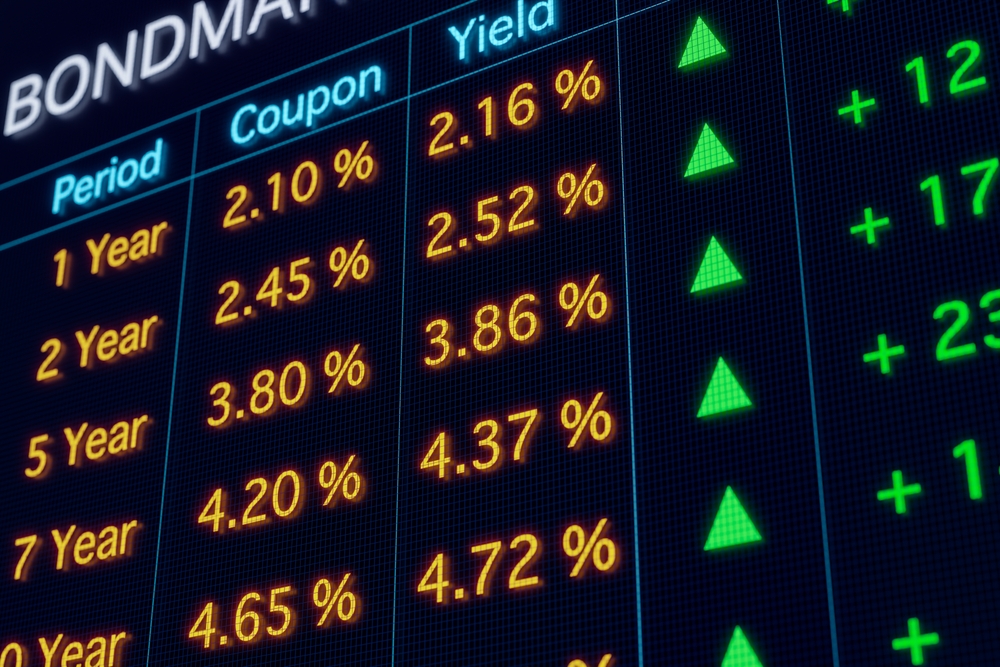
US government bonds surged as benign inflation data prompted traders to resume their bets on additional Federal Reserve interest rate cuts by July.
The strong performance of large-cap stocks over the past decade has left the market exceptionally top-heavy. By some measures, stock market capitalization has never been more concentrated among a handful of large stocks as today.
Engaging up front with four key workstreams may smooth the process of adding a solution.
The calendar page has turned, and that means we have the opportunity to get 2025 off to a good start.
I publish an updated version of my New Year “investor” resolutions yearly. The purpose of the process is to take an annual inventory of what I did and did not do over the last year to improve my portfolio management practices.
Direct indexing has been around for more than 30 years, yet many people still don’t know what it is or how it continues to grow and evolve.
US equities had a stellar 2024, with the S&P 500 up 25%, but the year ended on a softer note. The sharp rise in bond yields has caught the market's eye
The global economic landscape continues to evolve, and 2025 promises to be a year of adaptation and resilience.
Most of us like to ring in the new year with fresh energy. The Europeans appear to have made good on this resolution.
Nothing is more fundamental to the current health of the economy than jobs creation and income growth.
Uncertainty with regard to interest rate policy warrants an active management strategy inherent in the Vanguard Short Duration Bond ETF.
Explore your peers’ attitudes toward crypto, understand the emerging opportunities, and position yourself at the forefront of this financial transformation. Don’t miss this chance to unlock the potential of crypto assets for your clients and your practice.
Aptus’ Brian Jacobs spotlights the firm’s unique lineup of risk-managed ETFs designed to help clients stay invested through the ups and downs of market cycles. VettaFi’s Todd Rosenbluth discusses the latest Bitwise/VettaFi Benchmark Survey of Financial Advisor Attitudes Toward Crypto Assets.
Wall Street was set for a higher open on Tuesday, though a renewed rise in Treasury yields damped the sentiment boost offered earlier by the prospect of gradually imposed US trade tariffs.
Ten years ago, Research Affiliates launched the Asset Allocation Interactive online tool, making our CMEs freely available to the public. With one full cycle complete, we can see what has worked well and where we can improve.
Chinese officials are evaluating a potential option that involves Elon Musk acquiring the US operations of TikTok if the company fails to fend off a controversial ban on the short-video app, according to people familiar with the matter.
Active fixed income could stand out in 2025, with active offering a way to refresh bond portfolios and allocations.
What happens when you simply don’t like a colleague but you need to work side-by-side with them every single day?
“Risk,” according to London Business School’s Elroy Dimson, “means that more things can happen than will happen.” Serhii Plokhy’s Chernobyl Roulette provides the reader with a compelling demonstration of that dictum.
We need to face the reality that we’ve chosen a system that prioritizes lower taxes over centralized health care.
For firms chasing digital empowerment it’s especially important to pay attention to the first 60 days of onboarding with a new technology and tech provider.
In today’s economy, leading with qualification creates a huge blind spot and prevents your business from growing. While you think you’re qualifying them, in their mind, they’re being interrogated by you.
Traders are bracing for one of the most volatile earnings periods in stock market history.
Over the past few months, I’ve had occasion to speak at a number of conferences concerned with the impact of artificial intelligence on financial jobs.
As we kick off 2025, the economic landscape showcased a strong economy and resilient job market even as higher interest rates weigh on market sentiment. This week’s data underscore the delicate interplay between inflation expectations, real growth, and the Federal Reserve’s policy stance.
Private equity wants access to Americans’ retirement accounts, and is lobbying President-elect Donald Trump’s administration to get it.
Managing Director, Washington Policy Analyst Ed Mills looks at how several of the top market-relevant Washington DC issues could play out in 2025.
We identify four categories of risks to the growth outlook.
On the inaugural edition of Market Week in Review for 2025, Senior Director and Chief Investment Strategist for North America, Paul Eitelman, discussed Canadian Prime Minister Justin Trudeau’s resignation as well as the latest batch of U.S. and global economic data.
The journey from niche asset to core allocation looks set to continue.
The December PMI report, released on January 5, 2025, indicates that the U.S. services sector continued to grow, albeit at a measured pace, suggesting resilience in certain areas of the economy.
Do top-heavy markets eventually spread out? Diversification in investment strategies is essential as the market is inherently unpredictable.
Every new year brings with it a new opportunity to stop for a moment, revisit resolutions, and refresh outlooks.
The Roaring 2020s have been very good so far, but not exceptional when examined in isolation. That said, when viewed in the context of the past 16 years, this record-breaking bull market is spectacular.
The question asked of me most often recently: "Why are bond yields rising?" After verbally answering it plenty of times, it's time to put my answer in writing for everyone else to see.
On this episode of “ETF of the Week” podcast, VettaFi’s Head of Research Todd Rosenbluth joined Chuck Jaffe of Money Life to talk about the Fidelity Blue Chip Growth ETF (FBCG).
Markets are coming off back-to-back gains of more than 20% each on an annual basis. The chances of a hat trick in 2025 are slim to none.
Be wary of claims that indexing and passive investing have huge hidden costs. In my view, passive investing involves owning, as close as is economically feasible, every stock weighted to market capitalization. So this means total stock index funds.
When and how will new policies take shape?