When investors look at a stock’s valuation, the price-to-earnings ratio is almost always the first number they reach for. It’s intuitive, widely reported, and deeply embedded in the language of financial markets. But the P/E ratio alone can be genuinely misleading.
The Iran war is challenging Japan’s safe-haven assets, once again forcing domestic investors to seek better returns abroad.
During the pandemic, my wife lived in constant fear that we would run short of paper products, disinfectants and other essentials. I was frequently sent out on reconnaissance missions to replenish supplies.
Stocks started the week on an upbeat note as the administration delayed a deadline to strike Iranian energy plants by five days, also announcing that the U.S. and Iran were in negotiations to end the conflict.
Join the experts at Davis Advisors and discover the methodology and strategy behind this uniquely compelling ETF, and learn how it can help your clients find results and potentially reduce risk in today’s market environment.
Nate Geraci explored defense ETFs and a historic money market launch on this week’s ETF Prime, featuring VettaFi’s Roxana Islam and ProShares’ Simeon Hyman.
I suggest looking both inward and outward to answer two central questions: “Can we afford to help without harming our own financial future?” and “Will this increase or decrease the child’s movement toward financial independence?”
Clients do not want to be convinced. They want to decide. When a conversation supports that sense of ownership, commitment follows with far less effort, because the decision feels like an expression of who they are, not a response to someone else’s reasoning.
Retirement savers have plenty of questions about a recent executive order that opens a path for alternative investments, such as private equity, real estate and digital assets, in 401(k) plans. One advisor shares why individuals have good reason to take pause.
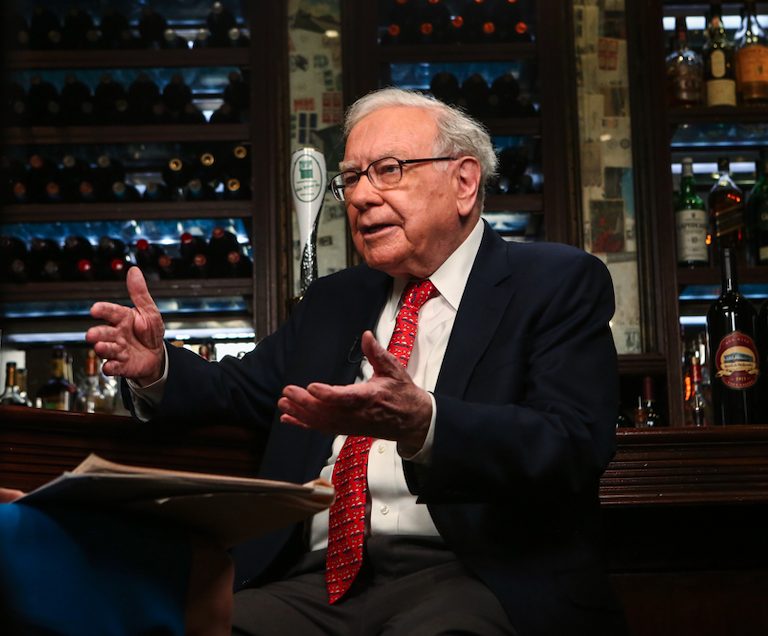
Warren Buffett cautioned that he’s seeing signs of fragility emerging in the banking system as it has become more connected to non-bank players.
On paper, Super Micro Computer Inc. is the type of company that Wall Street can’t get enough of, with soaring sales, an enviable list of partners like Nvidia Corp. and its placement at the center of the artificial intelligence boom.
Tech megacaps entered a correction, oil prices broke out, big-money funds retreated and small-lot investors showed waning conviction in buying the dip. While the war in Iran that triggered all that didn’t end a three-year bull run in US equities, it is shaking it to its core.
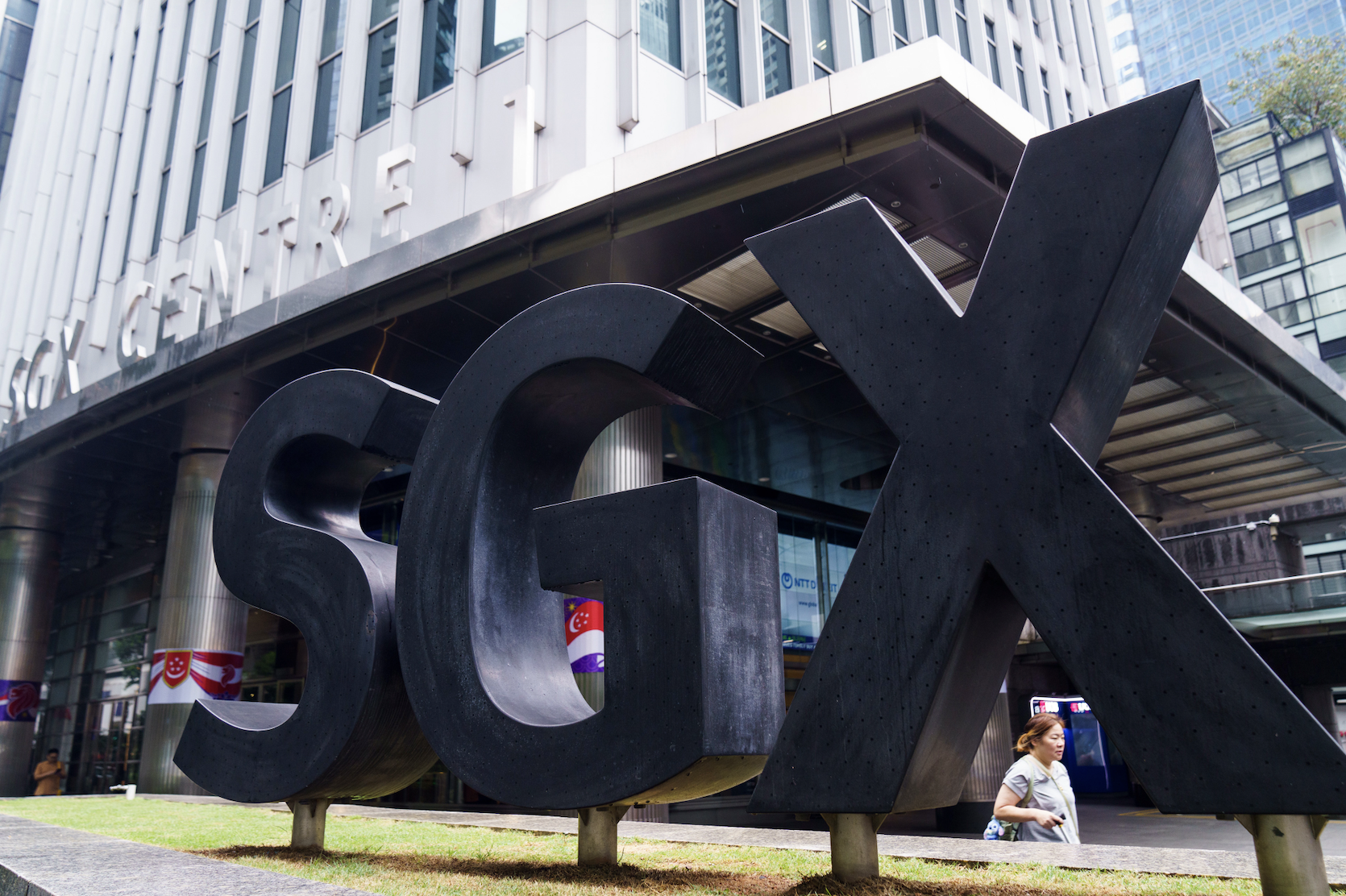
BlackRock Inc. plans to launch a fund next month focused on large Southeast Asian stocks, according to people familiar with the matter, a move supporting Singapore’s drive to boost liquidity in the local market.
A Japanese oil tanker slips through the Strait of Hormuz in the dead of night, radio silenced to conceal its position. Iran secures a market for its crude in defiance of Western sanctions. The balance of the world’s energy trade switches from incumbent hegemons toward emerging powers.
Does artificial intelligence herald soaring prosperity or mass unemployment, political breakdown and Orwellian subjection? Nobody, not even AI, can honestly say. Forced to guess, I’d predict some of both.
The US economy grew a pedestrian 2.0% last year and the Atlanta Fed’s GDP Now is currently projecting real GDP growth at a 2.0% annual rate in the first quarter. If anything, we think there is more downside risk than up to the first quarter projection.
Given the rise in the 10-year Treasury yield and oil prices, the case for near-term Fed cuts has weakened materially. That is the key message from this market.
Even if the US economy continues outperforming its peers, it will not necessarily remain insulated from the Iran war’s adverse spillovers. Already, higher energy and borrowing costs are exacerbating the affordability pressures many Americans face, creating downside risks for jobs, consumption, and growth.
I just returned from the Investment U conference in Las Vegas, where I presented on gold and the great digital transformation. Sentiment among investors was upbeat, despite great uncertainty in the world right now.
Gold has fallen roughly 21 percent from its all-time high of nearly $5,595 reached in late January to approximately $4,430 as of this writing, and the prevailing narrative in markets is that this correction reflects a genuine shift in the metal’s outlook
Emerging-market (EM) equities have been hit hard since the Iran war began, as investors worry about fallout from the conflict. Yet, history suggests that periods of heightened market stress—when volatility is elevated and uncertainty is still being priced—have created favorable entry points for EM investors in the past.
Leveraging 529 plans and community support can significantly boost college savings. These plans offer potential tax benefits and flexibility. Our Bill Cass explains that involvement from family and friends can provide additional resources and motivation.
Get ready each week with high-conviction insights that go beyond media headlines.
When someone says a retiree is “living off Social Security,” it’s not usually $100,000 a year.
Amid geopolitical uncertainty, dispersion across credit markets – rather than a broad risk-off move – has become the dominant investment signal.
Discover why Strait of Hormuz disruptions extend beyond oil, how supply shocks are transmitting into agriculture markets, and what third-order commodity effects may mean for portfolios.
Investors have no shortage of metrics to evaluate equities, but not all measures capture the same economic reality. In an environment defined by elevated capital spending and market concentration, earnings-based measures may not fully reflect how efficiently companies convert investment into cash.
Join the experts at Measured Risk Portfolios for a product due diligence session covering the MRP SynthEquity® ETF (Ticker: SNTH).
The egregious irony here is, according to Luke Kemp’s Goliath’s Curse, that powerful billionaires like Thiel, Altman, and Hoffman may well have a hand in, or at least be tangentially associated with, ushering in said apocalypse. The primary driver of societal collapse, Kemp believes, is tech-powered inequality, for which Thiel, Altman, and Hoffman are the poster children.
To better understand how AI might affect the labor market and, ultimately, the economy, we’ve summarized Citrini’s bleak outlook alongside rebuttals from Citadel Securities and Bianco Research. These summaries provide a useful primer on how labor markets may adjust to the upcoming major technological changes.
For investors, understanding the full anatomy of fixed income is critical, not only to capture attractive risk-adjusted returns in today’s environment but also to appreciate its indispensable role in powering economic growth and financial stability.
Financial markets have been relatively unaffected by the costly and senseless war the US and Israel are waging against Iran. But what’s really surprising is the ongoing boom in investment banking.
A progressive rallying cry to tax the rich is being welcomed by traditionally Republican states, including Florida and Georgia, looking for a new pitch to draw migrants — especially wealthy migrants — from the coasts.
The wreckage in large technology stocks that sent the Nasdaq 100 Index into a correction is flashing signs that have marked turning points for the group in the past.
Some of Wall Street’s biggest bond-fund managers say financial markets are underestimating the risk that the US war in Iran will cause a sharp slowdown in an already sputtering economy.
Sovereign bonds rose around the world as concern the Middle East conflict will derail global economic growth revived demand for beaten-down government debt.
Meta Platforms Inc. was looking like the best Big Tech stock in the market when the year began. But investors’ fears of legal risks and heavy spending on artificial intelligence are bubbling to the surface, culminating in last week’s 11% rout.
I have just spent the last two days with members of our Inner Circle. We visited four technology companies and listened to six other CEOs make presentations here in El Segundo, California. What I want to write about today is a summary of what I’ve seen, which made every single one of our participants extraordinarily optimistic about our future.
Thanks to strong gains in markets over recent years, with many indices at or near record highs, the 60/40 default portfolio has quietly morphed into a bundle of expensive U.S. growth equities and credit exposures offering narrow spreads over Treasuries. In our view, such a portfolio is likely to disappoint investors by delivering low single-digit real returns.
What’s unusual today is the degree of divergence between individual stocks and the cap-weighted index. When a handful of stocks carry enough weight to paper over widespread internal damage, investors holding diversified portfolios feel the pain long before the headlines acknowledge it.
Government statistics are invaluable in deciphering the state of the U.S. economy. But they don’t always tell the whole story.
Recent weeks have been a whirlwind of headlines centered on the Middle East conflict and rising oil and gas prices, particularly as the conflict enters its fourth full week.
The conflict in the Middle East has raised concerns about oil prices, global growth and market volatility. Chief Investment Officer Sean Taylor assesses the potential economic impacts of the crisis and its implications for growth and diversification in emerging markets and Asia.
While the tax conversation may seem to end on April 15, we think tax season could be the time to start a better approach to tax planning—a natural moment to reflect on how investments are managed, looking for ways to help reduce tax drag and increase the potential for after-tax performance going forward.
Rationally, no one should feel happy about an income tax refund. The refund is a correction of a tax overpayment; the recipient effectively gave the government an interest-free loan over the course of the prior year.
Investors have taken notice of the eye-popping federal commitments to new nuclear capacity in the U.S. in recent months. Headlines have focused on massive reactor-deployment partnerships and loan authority in the hundreds of billions.
Today, Vanguard decided to join the target-maturity party, launching a suite of corporate bond ETFs designed to assist investors with bond laddering. Vanguard’s entry is significant due to its massive distribution scale in tandem with its low-cost reputation.
Heavily influenced by escalating geopolitical conflicts, last week's economic snapshot reveals a sharp erosion of confidence among consumers and investors alike.
Sharp moves in energy prices rarely arrive at a convenient moment for policymakers. When shocks occur, governments are left juggling two competing imperatives: cushioning households from rising costs while preserving fiscal credibility. T
Weight loss pills and treatments have exploded in popularity since GLP-1 drugs hit the market. From Ozempic to Wegovy, those pills have changed the lives of countless people around the world. They’ve also paid dividends to the companies that produce them.