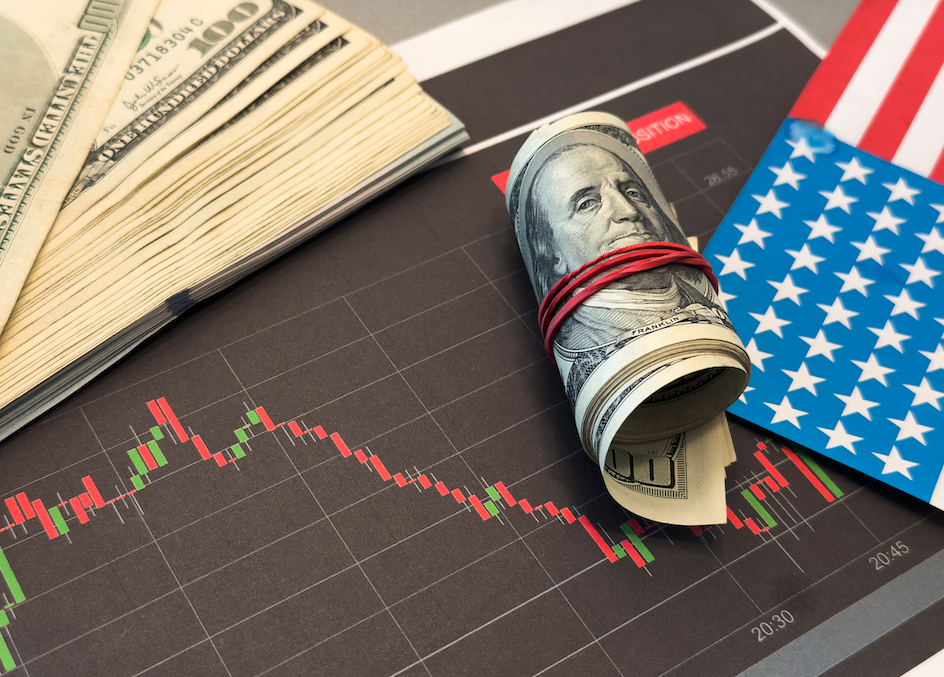
Last week’s Supreme Court ruling has prompted a re-set of U.S. tariff policy. As an updated strategy is being formulated, it is worth assessing whether the effort is worth sustaining. A high level review suggests that American trade policy over the last year has detracted from economic performance, and should be re-thought.
Strong performance and dividend yields amid volatility — typically, an investor may need to sacrifice one in order to maximize the other.
U.S.-led strikes in Iran have pushed oil prices higher and reignited geopolitical risk. Our view: markets are pricing a limited conflict, with broader investment implications still manageable unless escalation proves prolonged. As always, diversification and a long‑term perspective matter most when uncertainty peaks.
Join the experts at CoinShares for an educational webcast exploring what may define the next phase of crypto’s evolution and how crypto and traditional finance are beginning to converge.
It’s no secret for financial advisors today that cracking the millennial client base is a key part of their work. Every day, U.S. millennials inherit major sums of money and are unsure of how to steward their new assets.
The bulk of “Everybody Loses” sends the reader on a lurid journey through the sportsbook ecosystem. Funt is a talented investigative reporter with a velvet prose hand, but “Everybody Loses” features some key omissions. These oversights, however, are minor, and perhaps even necessary in such a tightly focused, powerful work.
For each market downturn, we explored how investor sentiment reacted around the event. To gauge investor sentiment, we considered a variety of measures. With each of these measures, we explored how long it took for investors to come back to a previous high.
In this episode of ETF of the Week, Chuck Jaffe and Todd Rosenbluth (Head of Research at VettaFi) break down the Capital Group Dividend Value ETF (CGDV). While many dividend funds focus solely on high yield, CGDV takes a different approach by focusing on high-quality companies with the potential to pay and grow dividends. With a perfect five-star rating from both Morningstar and Lipper, this fund has rapidly grown to $30 billion in assets by consistently landing in the top 10% of its peer group.
I know what it sounds like when the bond market breaks. I was there for the 4 a.m. call in the summer of 2007. I also know what it looks like when the bond market offers something genuinely good. It rarely happens. And when it does, you need to grab it with both hands and not let go until it’s gone. Yield levels of this magnitude don’t come along often.
The recent rotation from growth to value is well documented. While the return divergences between technology stocks and materials or industrials stocks are significant, they do not tell the whole story. There are also extreme return differentials between broad industries and their sub-industries. In this article, we address the divergence of the broad technology sector and the software-as-a-service (SaaS) sub-industry.
Qatar shut down liquefied natural gas production at the world’s largest export facility after it was targeted in an Iranian drone attack, sending European gas prices surging more than 50% and rattling global energy markets.
When JPMorgan Chase & Co. took the lead last year in financing the $55 billion takeover of Electronic Arts Inc., a record-setting leveraged buyout, Wall Street saw it as a sign that a lucrative period of bankrolling super-sized private equity deals might come roaring back.
Amazon.com Inc. may be a leader in the artificial intelligence race, but investors are increasingly unwilling to pay up for the cost of maintaining that position.
Emerging-market currencies and stocks slumped as US and Israeli strikes on Iran are triggering a jump in energy prices and bring a rally in riskier assets to a screeching halt.
BlackRock Inc.’s Global Infrastructure Partners LP and EQT AB agreed to buy AES Corp. for about $10.7 billion in cash as the market heats up for power plant developers that can provide electricity for energy-hungry AI data centers.
Economic growth metrics for the United States have recently shown surprising resilience; however, consumers’ economic sentiment has not. According to the Bureau of Economic Analysis’s advance estimate, real Gross Domestic Product expanded at an annualized rate of just 1.4%.
I am indeed working on my book about what I believe is a coming crisis by reviewing five different cycle theories. They all suggest a crisis occurring sometime around the end of this decade or perhaps shortly thereafter. And all for different reasons. One background element ties them together, which is the subject of today’s letter.
Our framing and outlook for the U.S. economy and markets in recent months can be summarized by what I like to call the “three Bs”: Bifurcation and Broadening, all within the context of a delicate economic Balance.
As speculation builds around a Warsh-led Federal Reserve, the prospect of eliminating the ‘dot plot’ could mark a major shift in forward guidance—potentially increasing rate volatility and reshaping how fixed income markets price policy risk.
Artificial intelligence-themed companies certainly propelled the stock market to greater heights in 2025. Near the tail of end of the year, however, market experts questioned whether certain companies benefiting from the AI theme had the underlying fundamentals to support their lofty valuations.
If trade policy were like a boxing match, the U.S. had hoped tariffs would be a decisive, knockout blow. While many of America’s trading partners reeled, they stayed on their feet and are wearing down their opponent.
Small-caps and the related equities have found their respective grooves. The fact that the Russell 2000 Index is higher by more than 7% year-to-date confirms this. On the surface, the small-cap resurgence is good news.
In investing and life, spending your time on critical variables and what is really important directionally pays dividends. AI can legitimately reduce “task time” in the investment business, but it does not replace experience and judgement. Not having double-digit bodies running around also helps one focus.
The U.S. is on the back end of fourth-quarter earnings season, and the overall tone from corporate management teams has been constructive. For the S&P 500 Index, earnings growth tracked close to 15% year-over-year, marking a fifth consecutive quarter of double-digit growth.
This week, Burger King announced the first changes to its signature Whopper in nearly a decade. New premium bun. Creamier mayonnaise. A clamshell box instead of paper wrap that left the burger smashed before you ever opened it.
The rise of prediction markets offers statisticians and social scientists the kind of help that astronomers get from a new space telescope or particle physicists from a bigger supercollider. We finally get to test theories and resolve questions that people, held back by poor data, have been wrangling over for decades.
With traditional private equity investment exits facing difficulty over the past few years — albeit improving somewhat recently — private equity sponsors have increasingly relied on the use of continuation funds. Once a niche tool, continuation funds have become mainstream and investors should learn to understand how they work, why they exist, and what risks they carry.
US stocks opened lower as risk-off sentiment swept through markets and fintech Block Inc.’s massive layoffs fanned angst that artificial-intelligence is poised to upend broad sections of the economy.
Last year’s market surge wasn’t built on hype. New research from Alger shows that AI spending and the accompanying infrastructure buildout drove corporate earnings higher, with fundamentals doing the heavy lifting rather than investor sentiment alone.
The Trump administration on Wednesday closed a $26.5 billion loan package for Southern Co. power projects in Georgia and Alabama amid rising concern about electricity price affordability and electricity-thirsty data centers.
As the Q4 earnings season draws to a close, the market finds itself at a crossroads of record-breaking AI growth and shifting fiscal policy.
OpenAI has raised $110 billion in a deal that values the startup at $730 billion, representing the ChatGPT maker’s largest funding round to date and bolstering its costly push to secure more computing power and talent for AI development.
It took a price of $111 billion, backed by $46 billion from tech billionaire Larry Ellison, plus the promise to pay $7 billion in compensation if the deal failed.
High-net-worth investors have unique opportunities for tax optimization. Learn how to leverage tax advantaged investments, charitable vehicles, and sophisticated structuring approaches seeking to maximize returns and minimize tax drag across a diversified portfolio.
After underperforming for much of the last decade, emerging-market (EM) equities rebounded nicely in 2025. Is it too late to invest? We don’t think so. With valuations still attractive and earnings growth forecasts looking up, this could be the right time to give the developing world a closer look.
Q4 wrapped a solid year of U.S. company earnings. But as the numbers rolled in strong, stock markets oscillated widely. Fundamental Equities Global CIO Carrie King is optimistic as she looks ahead to 2026 and offers three observations on the prevailing dissonance.
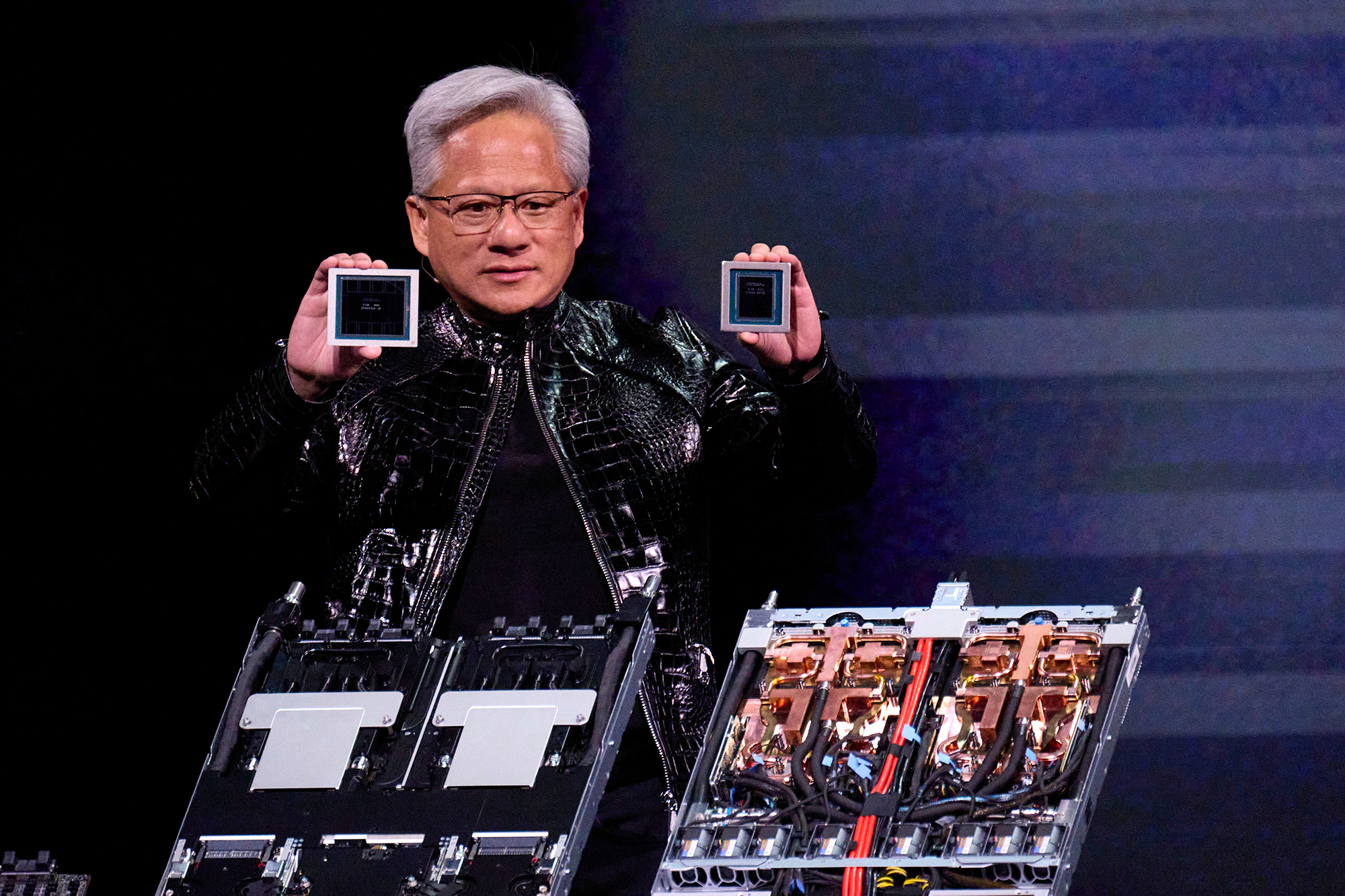
Nvidia Corp. has one of the strongest growth stories in the market after posting blowout earnings on Wednesday. So why is it trading at a level that looks like a value stock?
US bonds are wrapping up their best monthly performance in a year against a backdrop of rising global risks, with resurgent demand serving as proof that investors still see Treasuries as the premier haven in turbulent times.
BlackRock Inc.’s Global Infrastructure Partners LP and EQT AB are in advanced talks to acquire power company AES Corp., according to people familiar with the matter.
Nvidia Corp.’s latest sales forecast drew a lukewarm response from investors, signaling that concerns over a potential bubble continue to weigh on the dominant maker of artificial intelligence processors.
When I was preparing to write my December memo about artificial intelligence, Is It a Bubble?, I gained a great deal from speaking with some interesting techies in their thirties and forties. It’s stimulating to explore fresh territory and an absolute requirement for staying current as an investor.
The recent report by Citrini Research paints a frightening future of massive AI- induced unemployment, crashing stock markets, rising default rates, and a general descent into economic chaos.
Markets could face near-term volatility in the wake of the Supreme Court’s decision to strike down tariffs levied under the Emergency Economic Powers Act (IEEPA). The ruling creates a complex landscape as markets adapt to multiple unresolved issues, including raised global tariffs, investigations and potential refunds.
The frontier AI companies are building exactly the kind of cost structure Christensen warned about at a scale he could never have imagined. No companies in the history of capitalism have ever paid their employees like this.
2026 offers plenty of opportunity in tech investing once again following a breakout year for tech AI tech in 2025. Inventors want that tech upside, but this year could behoove investors to diversify outside of AI hyperscalers.
U.S. job creation has been weak despite resilient gross domestic product growth. Here's what may be going on.
Equity Dislocation celebrated its fifth birthday in October, and we are delighted that this was enjoyed in the positive context of returning 15.8% gross (13.4% net) for 2025.
Managers are strategically maintaining AI exposure toward memory and semiconductor supply chains, and rotating toward enterprise adopters while trimming crowded hyperscalers.
While the equity market has its well‑known “January Effect,” credit markets also show a seasonal pattern. Looking back over nearly three decades of data, January tends to be one of the better months for corporate bond spreads.
Let’s develop a scenario to explain the importance of foreign exchange (FX) markets and specifically, the dominance of the U.S. dollar. Say, for example, Thailand, one of the world’s major rice exporters, engages in trade with Brazil, the second‑largest cotton exporter.