Volatility was once again the theme in US markets last week as a profound alpha rotation reshapes Wall Street. Investors continued to flee mega-cap tech, software stocks, and anything considered an AI loser, in favor of more cyclical sectors such as energy, materials and industrials.
As of February 10, 2026, Victory Capital managed $20 billion in ETF assets, with an impressive $9 billion of new money flowing in during the past 12 months.
A weaker dollar, renewed commodity strength, and rising sensitivity around AI valuations are reshaping market leadership. Paul Vella breaks down what’s fueling gold and emerging markets, why SaaS cracks matter, and how disciplined diversification is helping investors navigate policy and earnings uncertainty.
The Dow Jones Industrial Average, better known as “the Dow,” closed above 50,000 points for the first time. It’s a historic milestone that comes less than two years after surpassing 40,000 in May 2024, but what does the milestone mean, and does it signal time for investors to reduce exposure?
Gold demand in the tech and industrial sectors was generally flat at 222.8 tonnes in 2025. This was down about 1.5 percent from 226.2 tonnes the previous year.
Diversification seeks to help manage risk, smooth portfolio outcomes, and improve the likelihood that clients stay invested and on track toward their long-term goals.
A financial innovation brings new insights and new risks.
The U.S. economy began 2026 with a display of unexpected resilience in the labor market and cooling inflation.
Small caps are back in the spotlight! In this episode of ETF of the Week, Chuck Jaffe sits down with Todd Rosenbluth, Head of Research at VettaFi, to revisit a "new-fangled" fund that has quickly gained traction: the NEOS Russell 2000 High Income ETF (IWMI).
Capital markets have faced quite an array of moving pieces over the last couple of weeks, ranging from equity market rotation dynamics, volatile metals and commodity price action, geopolitical flare-ups, global central bank decisions, and high-profile earnings.
The silver market is projected to run its sixth straight structural supply deficit in 2026 as investment demand remains high.
Gavekal CEO Louis Gave is one of my favorite people to speak with on anything related to portfolio construction and the non-US perspective, and I knew our latest conversation about emerging markets (EM) would be anything but conventional.
Private credit has been in the news lately. That’s nothing new. For years, investors have read about the potential opportunities the asset class offers and how it works. Let’s dig a little deeper into what private credit is, what it isn’t and how it can fit into a diversified investment portfolio.
There is perhaps no market force more fearsome than a true short squeeze. In our increasingly digitized financial world, a perilous gap often emerges between “paper” positions and physical reality.
Despite having little expertise when it comes to the subject of happiness, I’m fascinated by the subject of money and happiness. In this article, I discuss my own failed experience, review research on money and happiness, and offer my hypothesis on investing and happiness.
Before turning your investment perspective upside down, let’s define how most investors think about value and growth stocks. For some reason, investors often assume that growth and value are mutually exclusive. They are not, as we will explain.
To make alternative investments appear attractive, promoters often claim that their products are only weakly correlated — or even uncorrelated — with traditional investments, while still offering competitive returns.
Move over, Taylor and Travis. This Valentine’s Day, the real power couple financial advisors should be swooning over is the one between their wealth practice and the retirement market.
In this article, Russ Koesterich discusses the merits of continuing to hold tech companies while also exploring diversification outside of the sector.
Big Tech keeps raising its spending plans for artificial intelligence infrastructure, yet shares of Nvidia Corp., one of the biggest beneficiaries of that flood of cash, have been largely stagnant for months.
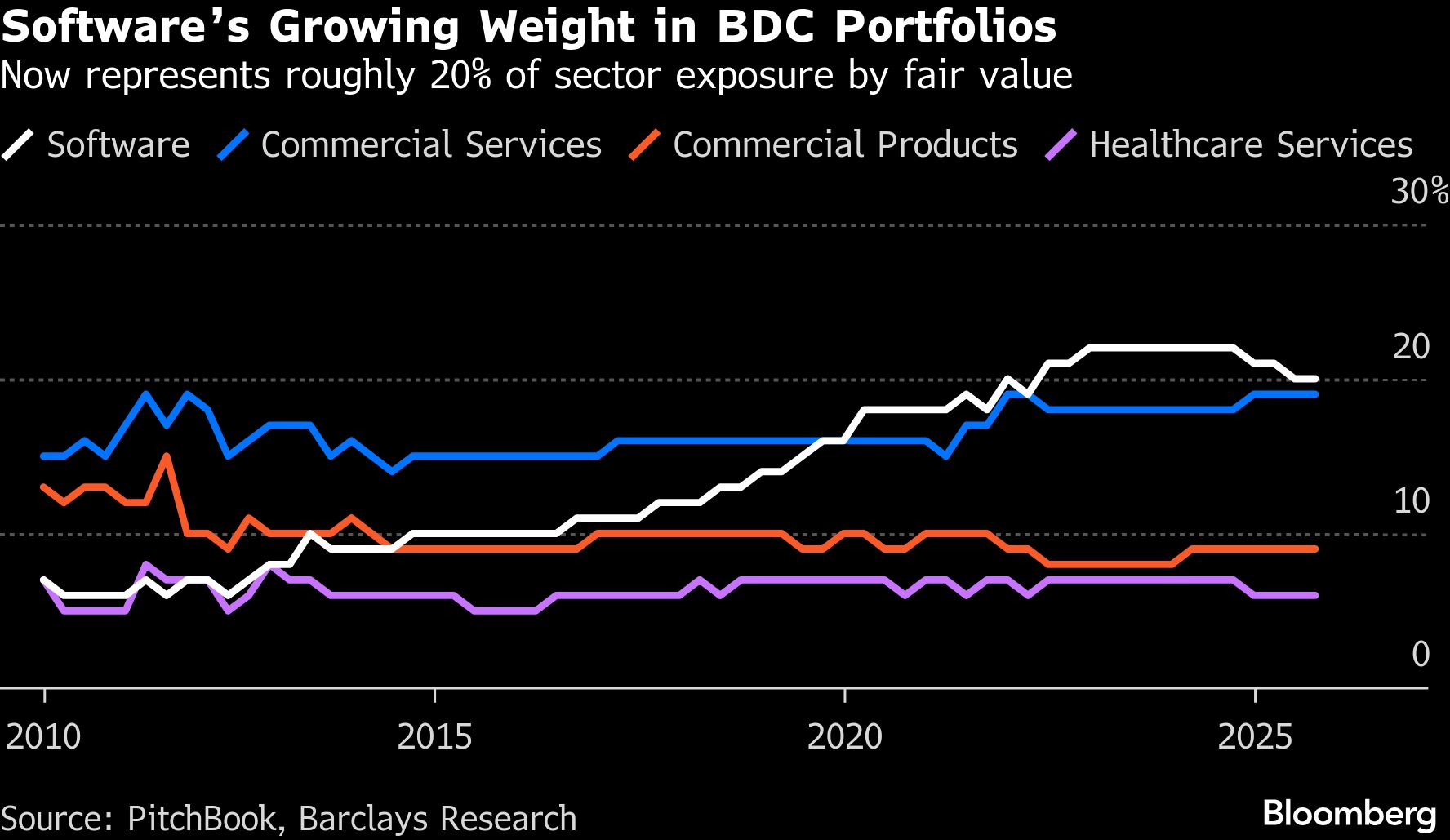
And so it goes in the world of private credit. Time and again, companies widely regarded as software firms are frequently labeled otherwise by lenders, a practice that raises fresh questions over the full extent of their exposure as the threat from artificial intelligence upends markets and rattles investors.
At their most recent meeting, the Federal Reserve and Chair Powell told us that the risks of weakening labor and higher inflation had declined. It painted a nice picture of a soft landing, but wasn’t a recipe for immediate rate cuts.
As Bitcoin struggles to climb out of its current funk, several indicators suggest any breach of the $60,000 level would unleash a fresh bout of extreme turbulence.
If you want to build a technology giant, a car company is a tough place from which to start. In terms of competing in AI and potentially even chips, Tesla is up against the massive budgets of several other Magnificent 7 members, who can, nonetheless, cover their spending with operating cash flow.
All but unnoticed last month, a bipartisan group of legislators introduced a resolution calling for Congress to keep budget deficits at no more than 3% of gross domestic product. Though not enough by itself to solve America’s fiscal problems, the proposal is a rare step in the right direction. It deserves strong support.
The historic election victory in Japan for the ruling Liberal Democratic Party has granted Prime Minister Sanae Takaichi the strongest mandate in the country’s postwar era and raised hopes of a shift toward growth-oriented policy.
While occasional bouts of volatility are likely, we expect the fixed income markets to provide ballast for portfolios and are likely to deliver solid returns in 2026.
U.S. equity markets delivered mixed performance this week, underscoring elevated dispersion in returns and ongoing shifts in market leadership. The S&P 500 (-0.1%) was roughly flat, while the NASDAQ (-1.8%) underperformed and the Dow Jones Industrial Average (2.5%) and Russell 2000 (2.2%) both posted solid gains.
Each year over 150 million tax returns are filed. For married couples, the overwhelming majority will choose to file joint tax returns. For most households, this makes sense considering the advantageous nature of tax brackets applying to joint returns
Artificial intelligence has made a lot of noise in the stock market lately, with bots from Alphabet Inc. and startups Anthropic and Altruist disrupting businesses from software to financial services.
Income investors face a promising landscape today. But we think income investing should be more than simply combining the highest yielders in each asset class, which could create unintended risks. In our view, an efficient multi-asset approach can help find the right balance between income, growth and diversification.
Artificial intelligence doesn’t only threaten to put herds of software businesses out to pasture. Anthropic PBC’s schooling of its Claude models in financial modelling has also sent a cold shiver down the spines of bankers and analysts.
Kevin Warsh’s nomination for Fed Chairman initially reassured bond markets by offering a known, crisis-tested Fed veteran with a reputation as an inflation hawk, reducing uncertainty at a critical juncture for monetary policy.
After more than two decades of talks, the EU has reached a free trade deal with Mercosur, the South American common market that includes Brazil, Argentina, Uruguay and Paraguay. More recently, Europe concluded an agreement with India, an accord nearly twenty years in the making.
JPMorgan Chase & Co. and Morgan Stanley are among leading investment banks hesitating to provide a critical source of financing for US renewables projects.
In recent months, the cost of living has consistently polled as the top issue for American voters, with housing affordability standing out as one of the biggest pressure points.
Push will come to shove in the weeks ahead as tech executives take questions at key investor conferences over the back half of the first quarter.
Global equity markets posted modest gains to start the year, driven by selective strength in technology and cyclical areas as leadership rotated. Beneath the surface, performance diverged across companies, sectors, and regions. While macro uncertainty continues to unsettle markets, outcomes are increasingly shaped by company fundamentals.
SEC White Paper: Do fund mergers lower fees? Explore how economies of scale impact expense ratios and performance for ETFs and mutual funds.
There are reasons people dig storm shelters in Tornado Alley, build their houses on higher ground on the coast of Florida, and at a basic level why most of us buy insurance.
Despite headwinds, ESG ETFs saw a 6.62% growth in AUM in 2025, according to State Street Investment Management.
The ex-Credit Suisse bankers behind Global Infrastructure Partners are best-known for building one of the world’s largest investment firms. Now they’re also forging something else: family offices.
It’s hard not to marvel at how America’s capital markets have rallied to finance the artificial intelligence boom. If all goes as expected, “hyperscalers” such as Meta Platforms Inc. will invest more than $3 trillion through 2030 in data and power infrastructure.
India will need favorable terms to enter into long-term liquefied natural gas purchase deals with the US as the market is highly price sensitive, according to the chief executive officer of the country’s top LNG importer.
Silver’s conductivity makes it essential to photovoltaic modules, where thin printed contacts boost electrical output. About 196 million ounces was used by solar manufacturers last year. That’s equivalent to every gram used in jewelry, and represents about 17% of the global market.
Sell first, ask questions later. That was the stock market’s response to last week’s new artificial-intelligence tools that challenge the software, legal data and media industries. But bargain hunters seeking victims of indiscriminate selling may need patience waiting for a recovery.
Gold’s stomach churning volatility – up some 30% in less than a month since the start of the year, only to subsequently lose 20% in a matter of days – has, unsurprisingly, left some investors doubting its role as a hedging asset.
Over the last three months, the housing conversation has warmed up again. Markets seem to be saying the next chapter could be “more activity”; i.e., more housing starts, more remodeling, more jobs coming off the sidelines as confidence improves.
Janus Henderson affiliates Privacore Capital and Victory Park Capital are launching their first interval fund focused on private asset-backed credit, the Privacore VPC Asset Backed Credit Fund (AltsABF).
As Trump and Powell argue over rates, the Taylor rule uses data to suggest where rates should be. But some argue this is an outdated way to set policy.