Why the current momentum trade, despite stretched valuations, could continue.
Jeff and Ron Muhlenkamp share that although it was a quiet first quarter in economic news, the markets were not so quiet. Jeff and Ron are still watching for signs of a recession due to the inverted yield curve but also think that there is a possibility of an inflationary boom. They feel they are prepared for either scenario and give their reasons why.
There are signs that some previous "rolling recessions" are starting to turn into rolling recoveries.
Before we start discussing the Consumer Price Index again, we want to remind readers that CPI inflation is not what Federal Reserve officials use to determine monetary policy. It is true that markets put a lot of emphasis on this measure, but we would like to caution giving too much importance to it.
April 15 is undoubtedly one day that is not enthusiastically celebrated by most people. It is safe to say that the discomfort around Tax Day likely ranks right up there with your annual physical or renewing your driver’s license.
While the European Central Bank refrained from declaring victory at its April meeting, a June rate cut seems increasingly likely.
Fixed income poses big challenges and opportunities in 2024, with ETF leaders from several firms sharing their thoughts at ETF Exchange.
In the first quarter of 2024, fixed income investors turned to investment-grade corporate bond ETFs.
A look at private credit, and why increased activity in the broadly syndicated loans space is not necessarily a bad thing for direct lending, and vice versa.
An update on Model Portfolio Number 3 to see how it’s performed against the S&P 500. The portfolio was to get maximum income out of the portfolio but still try to deal with risk at the maximum extent possible.
Artificial intelligence (AI) and Bitcoin were top of mind at Paris Blockchain Week, where I had the privilege of presenting to an enthusiastic crowd. The blockchain and digital assets event, held beneath the world-famous Louvre Museum, attracted close to 10,000 people, an impressive 25% increase over last year, as Bitcoin traded near its all-time high and AI dominated headlines.
This week continues our series on dividends and dividend growth stocks. This is one part of my strategy to try to get through what I see as a coming crisis by the end of the decade with as much of my buying power as intact as possible.
Germany’s ongoing economic weakness suggests that the European Union’s long-term economic slump is not likely to end anytime soon. But with traditional laggards like Italy and France showing signs of recovery, and Central and East European members performing well, the bloc’s economic outlook could still take a turn for the better.
The first quarter was strong for major U.S. investment banks as the economy grew and M&A and IPO activity accelerated.
Senior Investment Strategist Tracey Manzi notes that with a Federal Reserve easing cycle on the horizon, the fixed income markets are relatively attractive.
2024 got started in a similar fashion to which 2023 ended: eyes were tightly focused on the proverbial briefcase of Federal Reserve Chair Jay Powell as to interest rate policy…and the conclusion for now is that interest rate cuts in 2024 remain largely on the table.
Private markets continue to become an even more prevalent component of investor portfolios, providing access to an expanded opportunity set and strong diversification beyond traditional stocks and bonds.
Over half of Gen Z and Millennials have a side hustle or some kind of gig work to supplement their income. The numbers show that nearly two-thirds of workers are living paycheck to paycheck.
Fueled in part by expectations that the Federal Reserve will lower interest rates this year — or at the very least, won’t hike anymore — preferred stocks and related ETFs are delivering solid showings for income investors.
The S&P 500 has been touching new highs after a rocky start to the first quarter of 2024, and is doing the same thing again at the start of Q2. While market corrections will happen invariably, it’s a reminder that traders can always take advantage of any short-term weakness.
March U.S. consumer prices rose faster than expected. The reacceleration in supercore inflation suggests the strong inflation readings at the start of the year may not have been mere blips.
India's economic landscape offers a tapestry of growth opportunities.
The March U.S. inflation report and other macro data will likely prompt a change in the Federal Reserve’s trajectory in 2024.
This week’s discussion is a follow-up to last week’s overview of the elongation of the economic cycle.
Your mother likely imparted valuable investing lessons you may not have known. With Mother’s Day approaching and bullish market exuberance present, such is an excellent time to revisit the investing lessons she taught me.
Analysis of Q1 2024’s equity market reveals the stage is likely set for a favorable equities market for the remainder of 2024.
The Japanese economy and stock market are turning a corner after decades of disappointment. Mutual Series believes finding the companies that are truly embracing reform could prove crucial in uncovering and unlocking tremendous value over the next few years.
It can be a tall task to compare diverse lifetime income solutions. Applying a comprehensive framework may enable a level playing field.
On August 24, 2021, Chuck Carnevale, Co-Founder of FAST Graphs, a.k.a. Mr. Valuation, built three portfolios for dividend income with different objectives. In this video, Chuck will do an update on dividend Model Portfolio Number 2 to see how it’s performed.
Not even an uptick in inflation or lofty stock valuations could keep the bulls at bay. Here are some of the popular ETFs in the first quarter.
VettaFi discusses natural gas liquids exports and midstream companies facilitating NGL export growth.
Apple makes around 90% of iPhones in China. From a supply chain perspective, this is better than where Apple stood a few years ago when it made all its iPhones there.
Rising economic policy and geopolitical uncertainty may favor higher quality fixed income in this election year.
Earnings growth, a driver of long-term stock market performance, seems to be expanding beyond a handful of U.S. equities, supporting more broad-based market performance.
How might investors consider positioning their portfolios amid today's complex and uncertain economic landscape?
Market and industry trends are shining on US financial stocks, whose fortunes might be changing for the better across diverse sub-industries.
Water raises the risks of conflict, civil unrest and economic pain in many parts of the world.
Bond laddering, particularly within the confines of the ETF wrapper in funds such as USIN, can be useful to advisors and investors.
Economic indicators are released every week to provide insight into the health and performance of an economy. Last week featured employment updates.
In the latest edition of “Alternative Allocations,” Patrick McGowan of Sanctuary Wealth Management joins Franklin Templeton’s Tony Davidow to discuss advisor adoption, structural tradeoffs, due diligence and the increasing demand for alternatives.
Immigration is coming up everywhere, including economic data.
While artificial intelligence and new technologies have captured the market's attention, this quarter we reminisce about the good old days and a key piece of technology that has endlessly entertained us all – classic video games.
I have never come anywhere close to running a marathon of any sort. I am told the last mile could be the most difficult part of the endeavor.
More clarity on interest rates means more clarity on the investment outlook and the opportunities across private markets.
In the waning seconds of one of the most watched women’s college basketball games ever, a foul was called.
During running bull markets, much commentary is written on why this time is different and why investors should not worry about market corrections.
More broad spread adoption of options strategies mean a variety of options are now available to investors, but don't overlook FLEX options.
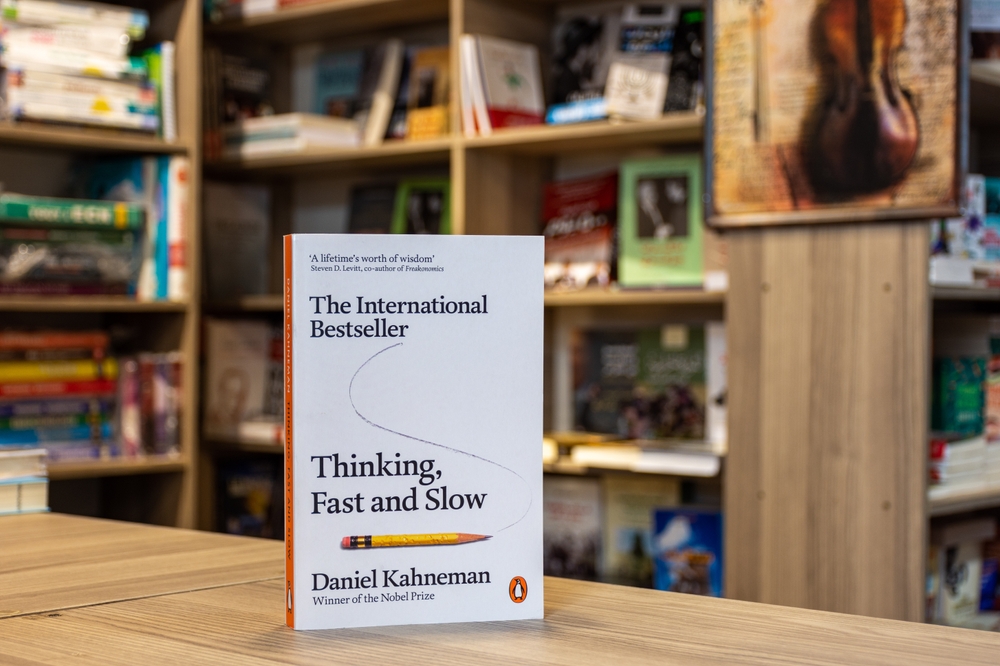
Daniel Kahneman will be missed. But his work on behavioral economics will forever be with us.
Can Federal Reserve (Fed) officials live with such a strong labor market and still start lowering interest rates in June or July?
Investors have been opting for intermediate-term bonds funds as uncertainty over the Federal Reserve's policy looms.