Derive market upside and tax-efficient income with the actively managed NEOS S&P 500 High Income ETF (SPYI).
March was another positive month for markets, continuing the rally to start the year. Improving corporate fundamentals and a supportive economic backdrop drove solid single-digit returns for U.S. markets during the month.
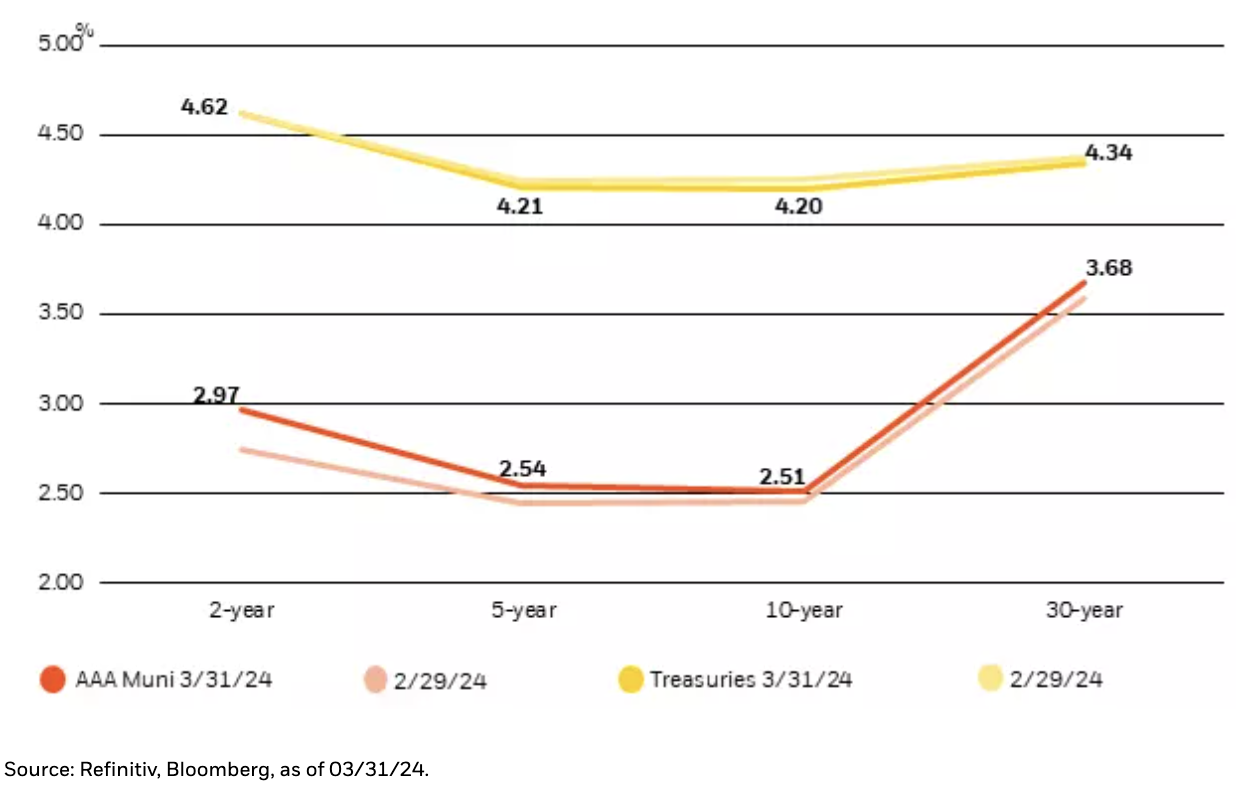
Market update from BlackRock's municipal bond team.
It can be hard work onboarding clients, so the last thing you want is to lose them. Yet many advisors DID lose clients in 2023. Here are some ideas to improve client retention in 2024.
Understanding the social risks posed by climate transition requires discipline, nuance and a systematic approach.
Copper is trading at a 52-week high, oil is above $90 a barrel and the S&P 500 Energy Index just hit a fresh all-time high.
In this video, Chuck Carnevale, Co-founder of FAST Graphs, a.k.a. Mr. Valuation, is going to show you how to invest in very fast super growth stocks so you can make above-average long-term rates of return.
Competition for electric vehicles is mounting, but demand persists. So how can equity investors capture the potential of the fast-changing industry?
A critical question is how do we get as much buying power as possible from the beginning of the crisis through to the other side? Part of the answer is Warren Buffett’s admonition to never bet against America. Better to do as he does, investing in specific parts of America.
From biodiversity and blended finance to a just transition and the cost of drugs, we preview the key ESG issues we’re targeting through research.
The question of whether the US dollar will be dethroned by a cryptocurrency, a stablecoin, or some other digital asset or payments system ultimately misses the point. What really matters is the mix of possible alternatives that today's evolving financial landscape will offer to governments pursuing a geopolitical advantage.
The global investment landscape is set to be transformed in the months ahead as the trajectories of major economies diverge more noticeably.
A favorite Mark Twain aphorism states, “It ain’t what you don’t know that gets you into trouble. It’s what you know for sure that just ain’t so.”
We are normally reluctant to use trendy phrases to explain either our good and/or bad calls regarding the U.S. economy. However, saying that ‘this time is different’ is more than fitting today to understand what has happened to the U.S. economy since the recovery from the COVID-19 pandemic.
An economic soft landing in 2024 remains our base case. Inflation continues to cool, which we think will prompt central banks to follow through on rate cuts by late in the second quarter. Meanwhile, political and policy risks could rise, as over half the world holds key elections in the coming months.
In this video Chuck Carnevale, Co-Founder of FAST Graphs, a.k.a. Mr. Valuation is going to share a surefire method or strategy to beat the overvalued S&P 500 in both a total income basis as well as a total return basis.
My last blog was titled “A Start to Remember for the Markets”—and it’s a story that continues to play out as we move further into 2024. With March’s closing price, the S&P 500 is now up 10.16 percent on the year.
While China obviously needs to boost private-sector confidence and revive growth with a more sustainable economic model, it is not clear that Chinese leaders fully appreciate the challenges they face. The shift back to state capitalism over the last decade is plainly incompatible with President Xi Jinping’s development goals.
Andy Acker and Dan Lyons, Portfolio Managers of the Healthcare and Biotech strategies, discuss why the rematch in this year’s U.S. presidential election could be neutral for the healthcare sector.
A flurry of investor interest is taking place in the corporate bond market as investors scramble for yield before rate cuts.
Japan is finally experiencing much needed inflation, and the subsequent wage gains could be a catalyst for stock involvement.
Emerging-market local-currency bonds have rallied sharply since last October, along with other risky segments of the global bond market. However, navigating the market can be challenging.
At the beginning of the year, we took the view that emerging markets in Asia as well as Japanese equities would perform well but that the first few months would be unsettled. That's largely how it has played out.
Market rally driven by a broadening of the market and optimism that the Federal Reserve will deliver rate cuts later this year.
Gold started this week at an all-time high. It’s up about 10% since the start of the year. That’s roughly on par with the S&P 500. All of this while inflation is trending down (with some bumps).
In this video, Part 2, Chuck Carnevale, Co-Founder of FAST Graphs, a.k.a. Mr. Valuation, is going to go over how earnings growth drives dividends and shareholder returns in the long run.
Investors have been selling inflation protection in the mistaken belief that it’s no longer needed. They’ve helped create a unique opportunity.
In 1983 Bonnie Tyler's ‘Total Eclipse of the Heart’ rocked the FM airwaves, reaching number 1 on the Billboard chart. My father, who couldn't get enough of the tune and played it over and over.
Emerging markets equities and the related exchange traded funds have long been responsive to Fed decisions on U.S. interest rates.
VettaFi examines growing natural gas production from the Permian and the related midstream/MLP growth projects.
Technical measures and valuations all suggest the market is expensive, overbought, and exuberant. However, none of it seems to matter as investors pile into equities to chase risk assets higher. A recent BofA report shows that the increase in risk appetite has been the largest since March 2021.
Inflation looks to still be trending lower, but a relatively stubborn decline will likely inspire the Fed to start cutting rates later (and slower) than expected.
Too many companies with solid earnings growth haven’t been rewarded in narrow equity markets. That may be about to change.
Evidence of overstretched households is emerging, which could threaten the soft landing scenario.
With technology changing the way we live, we are taking a trip down memory lane to look back at a piece of technology that has entertained generations: classic video games.
ESG is a massive topic; in fact, so big that it is hard to give it justice in the approximately 1,500 words I have at my disposal in these monthly letters. Consequently, I have decided to split it over two months.
Several years ago some politicians started demanding that the Federal Reserve get audited. We think the idea has some merits but also some drawbacks, as well.
Spot bitcoin ETFs have proved to be a big story in markets this year, with asset management leaders discussing at Exchange this year.
ETFs such as the WisdomTree International Quality Dividend Growth Fund (IQDG) could be on the receiving end of renewed attention.
As a child, baseball became the core of my life. Collecting baseball cards, watching games on TV, and playing in Little League and neighborhood games absorbed my time outside of grade school. Out of this came a desire to know baseball history and become a statistics junkie.
Thursday marked the final trading day of the week, month and quarter. It seemed only fitting the two major data releases delivered the overarching message of 2024.
As the Magnificent Seven shifts into a new mode, active investing can take look ahead to further changes in the market narrative this year.
What next for stocks after a strong start to 2024? While a near-term pullback wouldn’t be surprising, we see fuel for the positive momentum to continue throughout the year ― but with selection growing more important.
Over the past 70 years, rising government debt generally has been accompanied by weaker economic activity. But it's not a simple relationship.
Negative interest rates have more cons than clear pros.
Bond investors who are overly focused on individual data points may lose sight of the bigger opportunity picture.
For lack of a better word, the fixed-income mantra is getting stale. Interest rates have peaked, and they remain at elevated levels, allowing investors to take advantage of higher income and ample cash flow opportunities.
Quarterly commentary giving an overview of the markets and the importance of having and implementing a strategy when investing in the markets.
We need a much more conservative approach to projecting budget outcomes.
A downside of investing in defensive sectors is that those groups command above-average valuation and below-average volatility traits.