Readers of a certain age will no doubt recall President Ronald Reagan launching one of the most ambitious military buildups in American history.
Market breadth can help gauge strength or weakness. Methods include tracking the number of stocks trading above or below moving averages or making new highs or lows.
Growth is expected to decelerate, but not come crashing down.
In a recent newsletter, we explored the explosive growth of ETFs and the implications for portfolio construction. In this follow-up blog post, Lauren and I wanted to take that conversation a step further—diving deeper into how advisors can navigate the ever-expanding ETF universe while staying true to their investment philosophy.
Chief Economist Eugenio J. Alemán discusses current economic conditions.
Thematic investing has experienced cycles of popularity over time. In less cautious market environments, investors often turn their attention to ambitious ideas — such as disruptive technologies or other transformative future trends — looking beyond traditional equity ETFs.
In 1852, Karl Marx said "Men make their own history, but they do not make it as they please; they do not make it under circumstances chosen by themselves, but under circumstances directly encountered and transmitted from the past."
This article will help you evaluate whether it’s still a good time for clients to gain Bitcoin exposure—even after its recent all-time high—and how to do so responsibly. You’ll learn how Bitcoin fits into a diversified portfolio, what leading financial institutions forecast for its future, and why spot Bitcoin ETFs offer a regulated, practical entry point for long-term investors.
The United States’ tariff announcement on April 2, 2025, created significant market volatility, as the tariffs were perceived as higher, broader, and more punitive than expected, and the implementation sooner.
Market uncertainty needs a tailor-made approach to fixed income for advisors to construct the ideal portfolio for their clients. There’s an easier solution that encompasses an active management approach, various income sources, and low cost. It’s the Vanguard Multi-Sector Income Bond ETF (VGMS).
Join the experts at KJLK & Co., LLC as they explore a strategic approach to alternative, private market exposure and unpack why it matters in today’s market environment.
Stocks are wrapping up a stellar quarter at all-time highs amid signs of progress in US trade talks while hopes the Federal Reserve will resume its rate cuts drove Treasuries toward their biggest first-half stretch in five years. The dollar eyed its longest monthly slide since 2017.
For years, Americans have lamented that rising housing prices and elevated mortgage rates have made homeownership unaffordable for too many first-time homebuyers, while prompting many homeowners to stay put rather than sell.
Thematic ETFs are making a comeback, and one theme in particular dominates conversation. Artificial Intelligence remains top of mind for investors. TMX VettaFi’s Zeno Mercer and Todd Rosenbluth discussed the disruptive technology.
Despite concerns regarding the electrical power grid, there are solutions to meet the surge in AI-driven energy demand. For example, nuclear energy is making a comeback.
One of the enduring challenges of portfolio management is the inability to follow all news flow relevant to portfolio positions. AI and cloud-based workflows are helping us overcome this problem.One of the enduring challenges of portfolio management is the inability to follow all news flow relevant to portfolio positions. AI and cloud-based workflows are helping us overcome this problem.%MCEPASTEBIN%
It’s a widely held belief among economists that President Donald Trump’s tariffs will boost inflation notably over the next few months. But muted price increases so far have called that assumption into question, emboldening the White House and opening up divisions at the Federal Reserve.
VettaFi’s Head of Research Todd Rosenbluth discussed the JLens 500 Jewish Advocacy U.S. ETF (TOV) on this week’s “ETF of the Week” podcast with Chuck Jaffe of “Money Life.”
Are we experiencing an energy transition? According to geologist and fund manager Jane Woodward, we are — and it’s proceeding more quickly than almost anyone expected.
Treasury Secretary Scott Bessent indicated it wouldn’t make sense for the government to ramp up sales of longer-term securities given where yields are today, though he held out hope that interest rates across maturities will be falling as inflation slows.
The S&P 500 Index just rallied back to all-time highs, brushing off the April tariff shock, the conflict with Iran and the insidious and persistent increase in US continuing jobless claims.
British oil and gas giant Shell Plc has quashed a rumor: It’s not buying BP Plc. But last week’s forceful denial doesn’t address why the M&A chatter gained so much traction, which has less to do with the parlous state of BP than with Shell itself.
The digital assets platform Republic is touting plans to give retail investors access to the world’s hottest private companies starting with Elon Musk’s SpaceX via mirror tokens.
Alphabet Inc.’s Google has agreed to purchase 200 megawatts of power from Commonwealth Fusion Systems’ planned first commercial plant, which is expected to begin delivering electricity to the grid in the early 2030s.
The Fed’s credibility rests not on never being wrong, but on being adaptive and forward-looking. Inflation has cooled, wage growth has moderated, and economic momentum is slowing. Now is the time for the Fed to focus not on headline fears, but on real-time data.
We continue to suggest an "up in quality" fixed income bias for the short run, but investors can still consider some of the riskier parts of the fixed income market in moderation.
Until recently, commercial real estate appeared poised for a long-awaited rebound. However, 2025 has revealed a new reality: Uncertainty has become structural.
It’s often said there are only two certainties in life: death and taxes. However, the tax landscape may become somewhat murkier, as the recently passed U.S. House budget bill may potentially lead to some non-U.S. investors paying more taxes than previously anticipated.
As the advisory landscape continues to evolve, one theme is increasingly clear: advisors need more flexibility to meet the diverse and growing expectations of their clients.
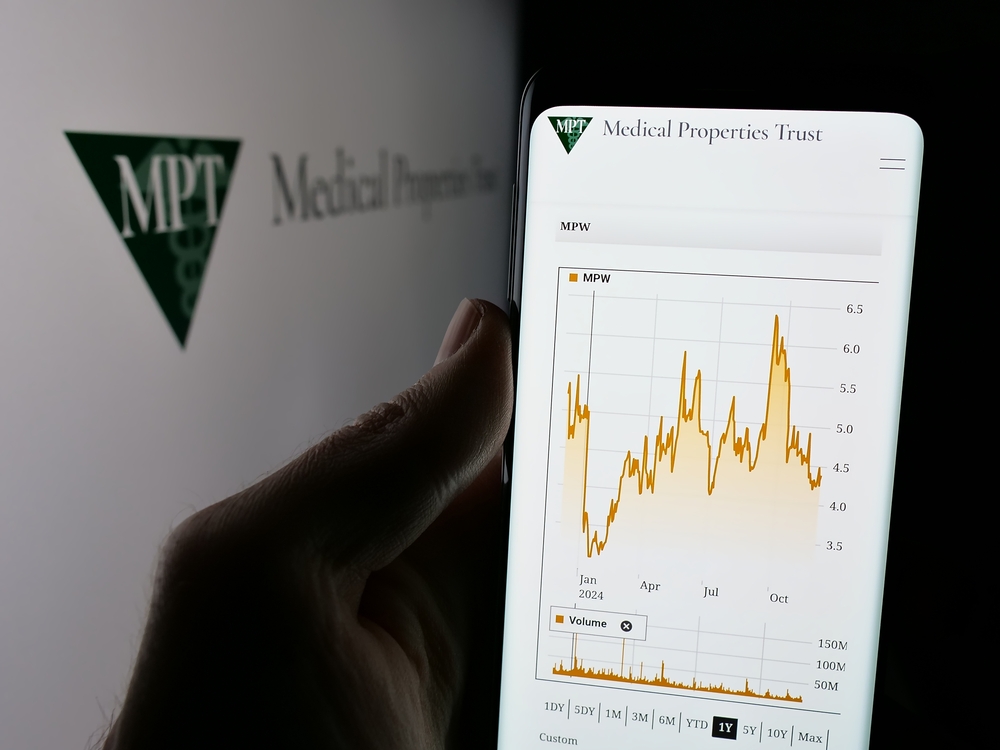
Chuck Carnevale provides an update on Medical Properties Trust (MPW), a hospital real estate investment trust (REIT) he has held for several years.
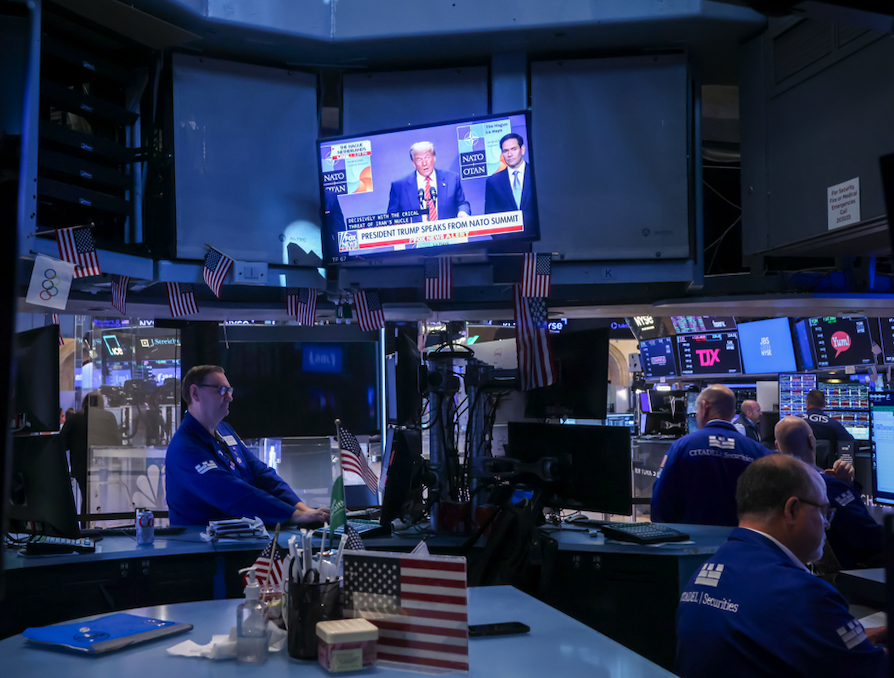
NATO's new spending pledge eases security concerns but adds to fiscal pressures.
Until that US government debt-crisis moment arrives, which we will get through, things will muddle along.
Last week's economic data presented a mixed picture, emerging against the backdrop of a record market rally and rising inflation.
Index futures inched upward premarket as the headline May PCE data landed in line with expectations, though the core data and annual figures were up slightly.
US consumer sentiment rose sharply in June to a four-month high and inflation expectations improved notably as concerns eased about the economic outlook and personal finances.
It’s a story that has played out many times in the history of China’s tech sector. Notoriously fierce competition means that whenever a new craze comes along, scores of rivals emerge ready to pounce.
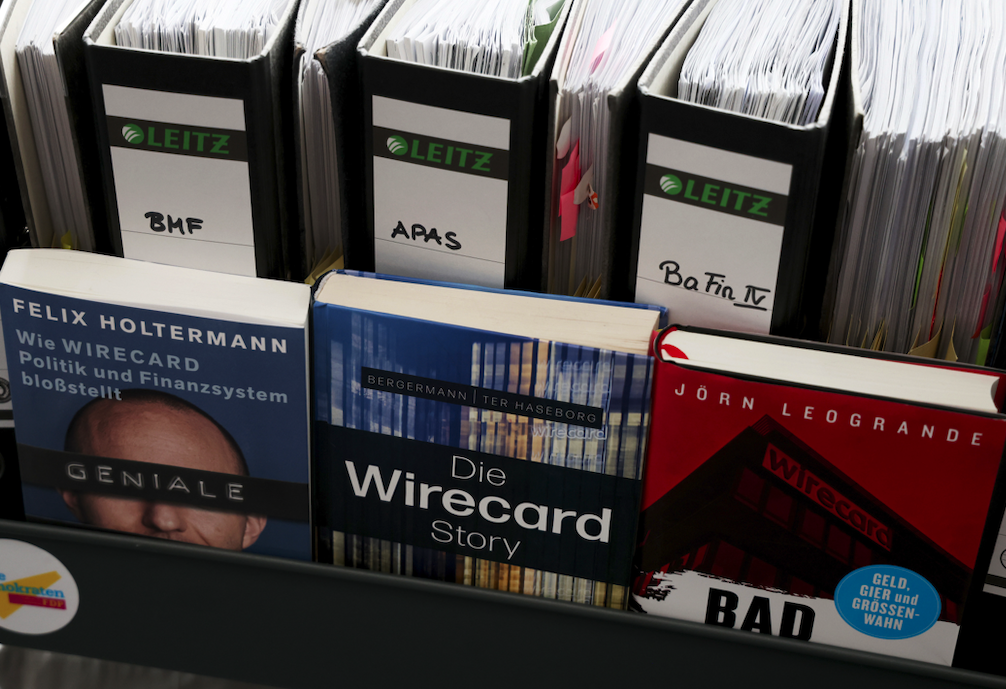
Short selling ought to have gotten easier in Europe since Wirecard AG filed for insolvency five years ago this week.
The Federal Reserve is aiming to lessen the costly fluctuations in bank capital demands created by its annual stress tests. But big lenders are pushing for more relief while the central bank is politically weakened and some board members seem keen to please the White House.
Unlike us mere mortals, time is usually on Tesla Inc.’s side. The launch of its robotaxi service this week has inverted that, and at a moment of particular weakness for the company.
The US apartment-building boom that began about a decade ago appears to have ended last year, but it did so with a bang. It was the biggest year for apartment completions since 1986 and the biggest year ever for apartments in large buildings — that is, those with 30 to 49 and 50 or more units.
Money Metals Midweek Memo host Mike Maharrey isn’t buying the recent bearish turn in gold forecasts from Wall Street.
There’s plenty of talk about how India’s 600-million-strong workforce gives it a unique edge in the US-China spat over trade and technology.
Join Innovator ETFs and VettaFi for an insightful discussion on how these strategies are reshaping portfolios and preparing investors for a range of outcomes in the second half of 2025.
US stocks climbed Thursday, ending the day on the cusp of a record as optimism around potential rate cuts stoked risk-on sentiment across financial markets.
Today’s investment landscape, shaped by persistently above-target inflation, structurally higher debt and deficits, and reduced global dollar recycling into US financial markets, has contributed to elevated market volatility alongside historically high policy uncertainty.
Two years after Nvidia Corp. made history by becoming the first chipmaker to achieve a $1 trillion market capitalization, an even more remarkable milestone is within its grasp: becoming the first company to reach $4 trillion.
First, they came for the currency market. Then, the money market. Now, crypto’s big disruptors are targeting the multi-trillion-dollar heart of global capitalism: the stock market.
Masayoshi Son acknowledged the outlines of a succession plan at SoftBank Group Corp., addressing what may be investors’ single biggest concern regarding the long-term future of the Japanese company.
The US and China finalized a trade understanding reached last month in Geneva, US Commerce Secretary Howard Lutnick said, adding that the White House has imminent plans to reach agreements with a set of 10 major trading partners.
The newest generation of college graduates will switch jobs more than a dozen times over the course of their careers. They will juggle side gigs, launch businesses, and step in and out of traditional roles.