One serious risk to financial wellbeing in retirement that is difficult to talk about is financial exploitation. Someone whose cognitive abilities are declining is vulnerable to harm from both financial predators and their own financial misjudgments.
CEFs stand out due to their fixed capital structure, allowing portfolio managers to focus on long-term investment strategies without the need to manage daily inflows and outflows.
As tensions in the Middle East mounted to start the week, Wall Street strategists had a message for US equities investors: Stay calm and buy into market declines. The call looked prescient on Tuesday after President Donald Trump announced a ceasefire between Israel and Iran.
If we’ve seen the worst of the oil price shock from the Israel-Iran conflict, then another ostensible impediment to Federal Reserve interest rate cuts may have just disappeared.
Now that the Big Tech conference season is behind us, the smart money in Apple Land is saying that Chief Executive Officer Tim Cook should be preparing to open his checkbook for a huge AI deal, so apparent are the company’s shortcomings.
Investors have been waiting years for the chance to buy a stake in hedge fund Millennium Management.
The current round of budget discussions in Washington will have a significant impact on America’s fiscal trajectory decades into the future. A key underpinning of this year’s debate has roots that go decades into the past.
When navigating the unknown, an experienced guide can ensure you don’t veer off the path to your chosen destination, can prevent you from stumbling over hazards, and ensure you have the tools you need to finish the journey safely and soundly.
For the fourth meeting in a row, the Federal Open Market Committee (FOMC) decided to keep rates unchanged, leaving the Fed Funds trading range at 4.25%–4.50%.
The U.S. Dollar Index, when measured against a basket of other major currencies, has declined by approximately 10% this year through mid-June and is currently trading at its lowest level in three years.
Like all appetites, the consumer typically reaches some point of appeasement. That could be the case for central bank gold purchases, which have started to show signs of receding. But market experts do not see it faltering anytime soon.
In a new Siemens AG factory that makes large switchboards for data centers in Fort Worth, Texas, artificial intelligence is doing a lot of work.
Looking back on it, the first quarter of the year was a complete anomaly. Real GDP declined at a 0.2% annual rate, and the left side of the political spectrum said this proved current policies were a disaster.
Portfolio Managers John Kerschner and John Lloyd and Client Portfolio Manager Steve Preikschat investigate the case for multisector bond funds as a core fixed income allocation.
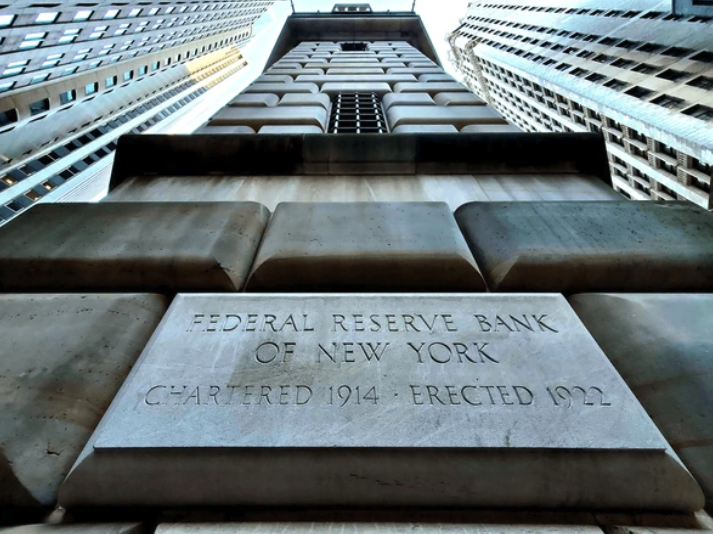
Federal Reserve Vice Chair for Supervision Michelle Bowman warned the current approach to leverage ratio requirements has led to unintended consequences in the market while adding she could support lowering interest rates as soon as July.
Join JLens and VettaFi for an in-depth webcast exploring how financial advisors can support Jewish clients who want their investment strategies to reflect both performance goals and personal values.
When investors approach the financial markets, there’s a tendency to imagine that conditions can be judged as favorable or unfavorable based on one single measure or another. The fact is that market conditions at any moment in time are a composite of interdependent forces.
VettaFi’s Head of Research Todd Rosenbluth discussed the Invesco S&P 500 Momentum ETF (SPMO) on this week’s “ETF of the Week” podcast with Chuck Jaffe of “Money Life.”
The yield curve for U.S. government bonds is currently very unusual — it’s U-shaped. In addition to the changes in shape, also note the level of interest rates.
Here are some brilliantly simple lessons for us all that I learned from Warren Buffett.
While the bond market is in general pretty efficient in its pricing, there may be times when it can be significantly out of line with investor expectations. At such moments, investors should be well-rewarded for making the effort to decode what the bond market is saying.
Wall Street has a new favorite investor. They’re young, they’re affluent and they’re skeptical that traditional markets can deliver wealth over the long haul. Shaped by financial crises and fueled by tech optimism, this well-heeled class of Millennials and Gen Z are moving their money into the buzzy world of alternative assets.
It may seem as if Treasuries are the better bet these days with the US stock market back near record highs and government securities offering respectable yields again. But stocks are still likely to pay more.
The rush of cash into the US money-market funds is showing few signs of slowing as it secured a record $7.4 trillion in assets.
The dollar rose to the highest level in nearly a month as US strikes on Iran spurred demand for the haven currency while underscoring the risks posed by climbing oil prices.
Fiserv Inc. is lauching its own stablecoin and joining with both traditional and crypto payments firms PayPal Holdings Inc. and Circle Internet Group Inc. to develop products for financial institutions and merchants within the banking technology provider’s ecosystem.
This week the news is about the Israel-Iran conflict. It’s terrifyingly real for those in the crossfire, while we who are safe naturally wonder what it means for us. As investors, we think about the economic and market effects. But are we seeing signal or noise?
Given the uncertainty of future events, global investors seek a “safe haven” for investment dollars. As such, U.S. Treasury Bonds and the U.S. dollar appreciate given their perceived “financial safety.” Last week, global investors were already starting to make that shift with the dollar rising.
Last week's economic data painted a picture of broad cooling across several sectors, with consumers pulling back significantly on spending.
Mid-2025 is approaching, and exchange traded fund demand continues its robust growth. Last year was a landmark year for the ETF industry, with industry net inflows for the first time surpassing $1 trillion and one ETF exceeding $100 billion in net inflows.
The Fed held the federal funds rate steady but noted that the risks of inflation and potentially higher unemployment remained high.
529 plans are a popular choice among families looking to save for college due to their flexibility and tax benefits. However, each family’s educational journey and associated costs can vary significantly. This means you may require a tailored savings strategy to best meet your future student’s needs.
Market concentration rewarded passive investors who held market weights in the surging mega-caps. Since late 2014, passive index returns ranked in the 10th percentile of all portfolios in eVestment’s US Large Cap Growth Equity universe. In other words, only 10% of active managers outperformed.
GMO has posted a new 7-Year asset class forecast as of May 31, 2025.
With the House passing of The Big Beautiful Bill, the challenges facing chief financial officers and treasurers across health-care systems are likely to grow. The proposed cuts to reimbursements will have varying impacts across organizations depending on their payer mix.
Powell & Company at the Federal Reserve sees an elevated stagflation threat. In response, they decided to do nothing.
While stocks experienced a roller-coaster ride powered by policy uncertainty, fixed income generally held up well despite the broader market turbulence. Will it be the same story in the second half? Let’s take a closer look.
The U.S. Federal Reserve left interest rates unchanged in June, as widely expected, but revisions to its economic projections indicate a more uncertain outlook.
Fixed-income investors concerned about tariffs and US exceptionalism may find opportunities in hedged global bonds.
The Federal Reserve held rates steady today, while also projecting slow economic growth, higher unemployment, and higher inflation. And while the Fed signaled that two further rate cuts are still their base-case for the remainder of 2025, the timing of those cuts remains up in the air.
After running a surplus in April thanks to tax day, the federal government was back to business as usual in May, spending massive amounts of money and charting another big budget deficit.
At Parametric, our years of experience have taught us that markets can swing up and down quickly and without warning. Since no one can time these swings, we believe it's imperative to seek both loss harvesting and benchmark tracking simultaneously.
On Monday, Tortoise Capital expanded its fund library with the launch of the Tortoise Energy Fund (TNGY). Formerly a mutual fund, the Tortoise Energy Fund is now an ETF available on the New York Stock Exchange.
A 529 plan is a popular tool for saving for college expenses. When it comes to who maintains control over the 529 plan’s assets, in most cases, it’s the account owner. This is often a parent or grandparent. The owner also has the ability to make investment choices and manage withdrawals.
US stocks rose on Friday as investors returned from the Juneteenth holiday break to evaluate recent comments from a top Federal Reserve official as well as the latest developments in the conflict between Israel and Iran.
Given that the bill’s failure to reduce the deficit is due in part to its extension and expansion of the special tax treatment for non-corporate businesses that Johnson insisted on in 2017, which will cost an estimated $820 billion over the next decade, the senator does not make for the most credible of deficit hawks.
The president recently expressed his support for a great idea: investing an additional $3 billion in trade schools.
The most powerful institution in global finance is as completely and utterly confused as the rest of us.
US banks seem likely to get the changes they want to an obscure but important rule known as the supplementary leverage ratio.
AI is advancing at an astonishing pace and undermining the core businesses of tech giants like Google, Microsoft, and Apple. But it is not only transforming the applications we use; it is also reshaping the very process of software development, threatening to render much of today’s tech sector obsolete.