Over the past several years, high-yield bonds have delivered impressive returns, outperforming most other sectors of the fixed income market.
Billionaire investor Stanley Druckenmiller is concerned that the Federal Reserve has boxed itself into a corner when it comes to future interest-rate cuts.
Ever since Prime Minister Narendra Modi announced his “Make in India” policies shortly after being elected prime minister in 2014, New Delhi has chased the dream of a prosperous manufacturing sector. There have been some successes — when it comes to making mobile phones, for example.
With interest rates lower, inflation collapsing and wages rising faster than prices, there’s potential for a very happy holiday for US retailers.
The various bestselling books on income inequality cite a variety of driving factors. Robert Kuttner blames global capitalism. Paul Krugman pins it on bad domestic economic policies. Thomas Piketty writes of capitalists as if they are rentiers, extracting royalties from the system.
It might not be time to really get nervous about US money markets, but it’s definitely time to pay more attention. Signs of strain emerged as September turned into October this week — it wasn’t completely wild, but the tensions were the worst since early 2020.
The world could be undergoing a transformation akin to past technological revolutions. But the speed, size and impact of that investment is highly uncertain. We think leaning into the transformation and adapting as the outlook changes will be key.
September is typically the weakest month of the year for stocks, but thanks to the much-anticipated federal funds rate cut, the S&P 500 turned in its first positive performance in a September since 2019
We expect bond yields to trend gradually lower—but it may be a bumpy ride. These seven strategies may help investors take advantage.
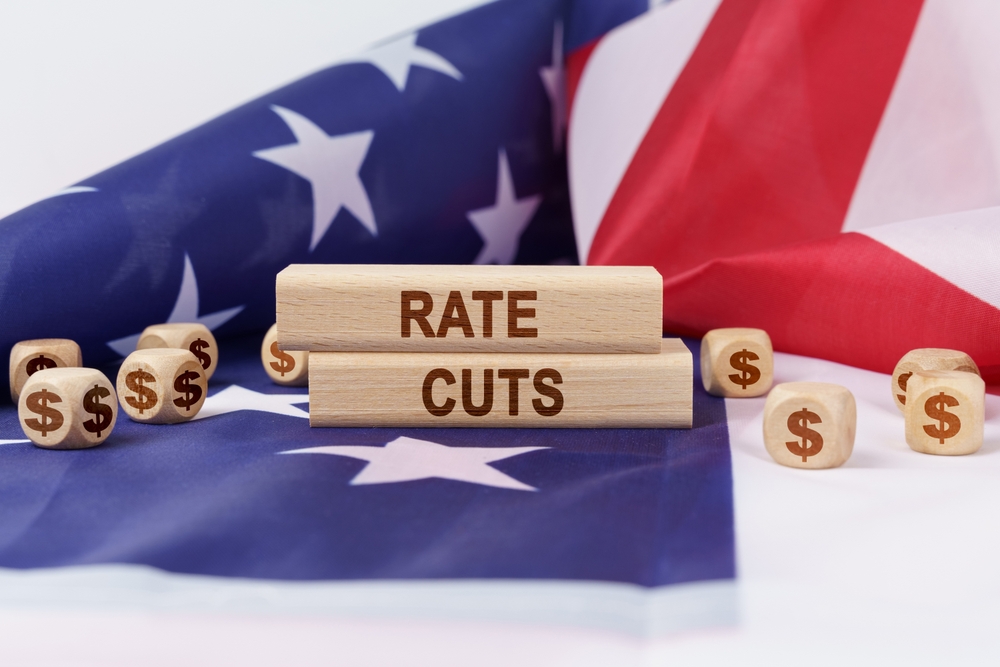
The major market event in September was the Fed's 50 basis point rate cut following the September 18th Federal Open Market Committee meeting. There was broad consensus the Fed would cut rates, though the 50 basis points (as opposed to 25) and perhaps the tone of Jay Powell's press conference surprised to the upside...
Semiconductor stocks continue to rally and will continue to do so as long as the AI and data center themes stay hot.
On the latest edition of Market Week in Review, Senior Director and Chief Investment Strategist for North America, Paul Eitelman, and Head of AIS Portfolio & Business Consulting, Sophie Antal-Gilbert, discussed the rally in Chinese equities.
The expiration of the Tax Cuts and Jobs Act (TCJA) in 2025 could mean a tax increase for many taxpayers. But the impact varies widely based on income, location, and personal circumstances. Our Bill Cass shares the details.
About eight in 10 investors (81%) believe they must fund their own retirement as opposed to relying on private and public pensions.
When building a portfolio, advisors need to optimize asset allocations and manage risk. But they also need to understand the trends happening in the market and the tools that can be leveraged to meet the moment.
Nvidia Corp. insiders have cashed in on shares worth more than $1.8 billion so far this year — and more selling is on the horizon.
Direxion Funds has launched two exchange-traded products that focus on a single emerging-market stock — Taiwan Semiconductor Manufacturing Co. — allowing investors to make outsized bullish bets on it or take positions against the direction of the market.
While a strike by East Coast port workers is strangling the flow of goods from Maine to Texas and grabbing headlines, news of machinists at Boeing Co. about to enter their fourth week of picketing near Seattle has receded a bit into the background.
I’ve been too pessimistic about the risks of a so-called hard landing for the US economy over the past few years. Although most of my conclusions that led to that view were correct, such an outcome remains very much in doubt.
Guys, you were so close. If it wasn’t for that last little bounce of Wall Street optimism on the last day of September, Tesla Inc.’s latest sales figure would have beaten estimates — just.
After falling to their lowest level last year (in Wall Street Horizon's eight years of data), the total number of announced global corporate buybacks has been improving throughout 2024.
CLOs have delivered the most attractive risk-adjusted returns in fixed income over the past decade, but are often deemed 'too complex.'
We believe municipal bonds currently offer a compelling balance of risk and reward for investors in higher tax brackets.
For many investors, the fixed income portion of their portfolio is intended to be the ballast of the portfolio.
We think it would be a mistake for investors to let tighter spreads and upcoming maturities deter them from the euro high-yield market.
In the report, Head of Greater China & Portfolio Manager Victoria Mio, explains why China’s decisive pivot from debt control to growth support could be the catalyst needed to restore confidence and unlock value in China’s markets.
Because of recent significant investments, economic growth is occurring in long-neglected areas and changing the geography of development.
Join the experts at VettaFi and KraneShares for an in-depth exploration of the generative AI space and learn how you can set your portfolio up to capture the potential of this exciting new technology.
Earned media acts as a third-party stamp of approval for your firm, generating more referrals while boosting existing referrals.
Storytelling allows you to describe what you do, and whom you do it for, in a way that is transferrable and understandable.
By aligning your event format with the brain’s natural tendencies, you can create more engaging, effective, and enjoyable experiences for your audience.
Nvidia Corp. has expanded a partnership with technology consultant Accenture as part of an effort to drive adoption of artificial intelligence within businesses and boost orders for the chipmaker’s products.
Fidelity Investments has raised $250 million for its first fund dedicated to venture capital investments, pushing the firm further into private assets.
A lot of people are worried about the shrinking number of public companies in the US, but quality is an even bigger problem than quantity.
Ray Dalio’s family office and Sheikh Tahnoon bin Zayed Al Nahyan’s artificial intelligence firm G42 have abandoned plans to set up an asset management venture together in Abu Dhabi, according to people familiar with the matter.
For all the talk of a soft landing in the US, there’s one corner of the economy where the hazard lights are flashing: the $1.6 trillion motor-vehicle lending market, which accounts for around a quarter of non-mortgage consumer credit. For the past three years, bad debts have been rising.
The M2 money supply growth rate in the U.S. accelerated, marking the first time the monthly change exceeded a 5% annualized rate after several months of more moderate increases. A 5% money supply growth is a desirable target, as it reflects 2-3% growth in the economy with 2% inflation. Thus, the uptick in money growth is reassuring and supports the possibility that we will avert a hard landing for the economy.
While new tax proposals are grabbing election headlines, it’s important to remember that campaign rhetoric is not necessarily future policy.
Explore the significant opportunities for wealth advisors in managing 401(k) plans. Our Mike Dullaghan explains how these plans can help both advisors and clients with financial growth and retirement planning.
Emerging-market stocks are showing signs of life amid hints of earnings improvements. Where should investors look?
An analysis of Presidential Candidate Trump’s policy proposals recently suggests that tax cuts will increase the deficit. While the raw analysis is correct, as it subtracts the potential for reduced tax collections from the tariff revenue, it ignores the impact on economic growth.
Our experts explore the implications of wider S&P 500 earnings growth, potential Fed rate cuts, and the outlook for global equities and bonds amidst ongoing economic shifts.
Financial conditions are a collection of asset prices and interest rates that have the potential to affect the real economy.
The economy reached an inflection point, with labor market conditions squarely in focus.
The bond market is overextrapolating recession risk.
With all eyes on the Federal Reserve and White House, many investors are reassessing their portfolios.
Historically, staying invested has been, in our view, an effective strategy and one to consider when it comes to election years and beyond.
The Northern Trust Economics team shares its outlook for growth, inflation and interest rates in major markets.
BlackRock Inc. Chief Executive Officer Larry Fink said infrastructure is a major component to help stimulate growth in every economy and there’s enough capital in the private sector to fund investment.
After the first rate cut in two years went according to market expectations as the Fed reduced the federal funds rate by 50 bps, markets have continued to run with the Fed’s ball and seem to have a ‘sugar rush.'