Apple Inc. lost its court fight over a €13 billion ($14.4 billion) Irish tax bill and Google lost its challenge over a €2.4 billion fine for abusing its market power, in a double boost to the European Union’s crackdown on Big Tech.
The next-generation processor was unveiled six months ago, but has faced engineering snags that delayed its release. While Chief Executive Officer Jensen Huang tried to reassure the market last month that revenue from the chip is coming soon, some investors were left wanting for details.
The all-in view of Tesla Inc. was summed up in a line from a report this summer by one of the more all-in analysts covering the company: “The car is to Tesla what the video game chip is to Nvidia.
When John D. Rockefeller wanted to punish a rival, he cut prices to force them to operate at a loss. The father of the modern oil industry had a name for it: a “good sweating.” A century later, OPEC+ is giving Big Oil the modern equivalent of Rockefeller’s time-tested tactics. Not everyone will be fit enough for it.
On the back of recent cooling in economic growth, an uptick in unemployment, and moderating inflation, the Federal Reserve (Fed) looks set to begin its rate-cutting cycle at its September meeting.
An analysis of the leadership reversal and market sell-off observed in recent weeks and why an emphasis on equities with consistent fundamentals is justified.
August’s employment report, which was weaker than markets were expecting but stronger than our call, cements our view that the easing cycle will begin during the next FOMC meeting, September 17-18.
The BRICS Pay initiative aims to better integrate currencies for trade and facilitate cross-border transactions among its members.
Last week’s big day in the markets and for the economy was on Friday. I characterized the jobs report as being weakish—not disastrous but certainly not strong. The payroll report came in a bit short of expectations with weak lowered revisions to past reports, and although the unemployment rate adjustment was expected, the U-6 unemployment rate, a broader measure of labor underutilization, continued to rise indicating underlying weakness in the job market.
Friday’s employment report suggests the US economy may be slowing down faster than most investors think
Last week, the BlackRock Target Allocation Team reduced their equity exposure and reduced some growth allocations in favor of value.
Shares of Nvidia are down 17.22% for the week ending Sept. 4. The firm is widely viewed as one the equity proxies on the AI investment theme.
To tackle the costs of higher education, many families use a 529 plan to bolster savings. An ETF strategy can bring long-term savings growth.
78 million baby boomers are about one-third of the voter-eligible population and 77 percent of them vote, so there are 60 million baby boomer votes. That 60 million is 38 percent of the 158 million votes cast in the 2020 presidential election. The baby boomer voters’ bloc is a big deal.
Part one of this series described the burgeoning bull steepening yield curve environment and what it implies about economic growth and Fed policy. It also discussed the three other predominant types of yield curve shifts and what they suggest for the economy and Fed policy.
In this article, we’re going to throw some cold water on the DI love-fest by explaining why most tax-sensitive investors would be better off with a simpler approach to tax loss harvesting.
US Bitcoin exchange-traded funds have posted their longest run of daily net outflows since listing at the start of the year, part of a wider retreat from riskier assets in a challenging period for global markets.
Bond traders who struggled to predict how high the Federal Reserve would raise interest rates are finding the way down just as vexing.
Cloud computing has been one of the first industries to get a demonstrable boost from artificial intelligence. Oracle Corp.’s quarterly results on Monday are likely to extend that trend.
The US stock market has given us plenty of real and perceived calendar anomalies to think about. There’s the observed tendency for stocks to experience a “Santa Claus rally” (during the last five trading days of the year and the first two of the next) and the weekend effect (where stocks have a habit of slumping on Mondays).
American consumers have surprised many economists this year by continuing to spend even as their savings shrink and the labor market cools. They’ve been aided in part by pockets of deflation that have boosted their purchasing power on things such as gasoline, automobiles and airfares.
Stock buybacks have boomed in recent years. With corporate cash flows remaining high and potential rate cuts from the Fed, the trend appears set to continue.
Since the end of the “Yen Carry Trade” correction in August, bullish positioning has returned with a vengeance, yet two key risks face investors as September begins. While bullish positioning and optimism are ingredients for a rising market, there is more to this story.
Shopping around for an active ETF? This strategy has outperformed SPY recently thanks to its ability to over- or underweight certain stocks.
We are entering a time I think will include a deep crisis. We are going to need each other. We really do need to “find our tribe.”
ETFs saw a record number of inflows in August, including bond-focused funds, which are offering opportunities in corporate debt.
The U.S. economy may be heading into choppy waters, and investors might be wise to buckle up.
High-yield investors put off by today’s narrow spreads could be missing out.
On the latest edition of Market Week in Review, Investment Strategist BeiChen Lin assessed the state of the economy, including the health of the services and manufacturing sectors, and the likelihood of a big rate cut at the upcoming Federal Reserve meeting.
The main focus for investors should is no longer if the Fed will cut rates in 2024, but how much and how quickly the Fed will lower interest rates.
Recent growth data have been muddled and subject to conflicting interpretations. There have been mixed signals from leading indicators and hard data and divergent readings across major economies.
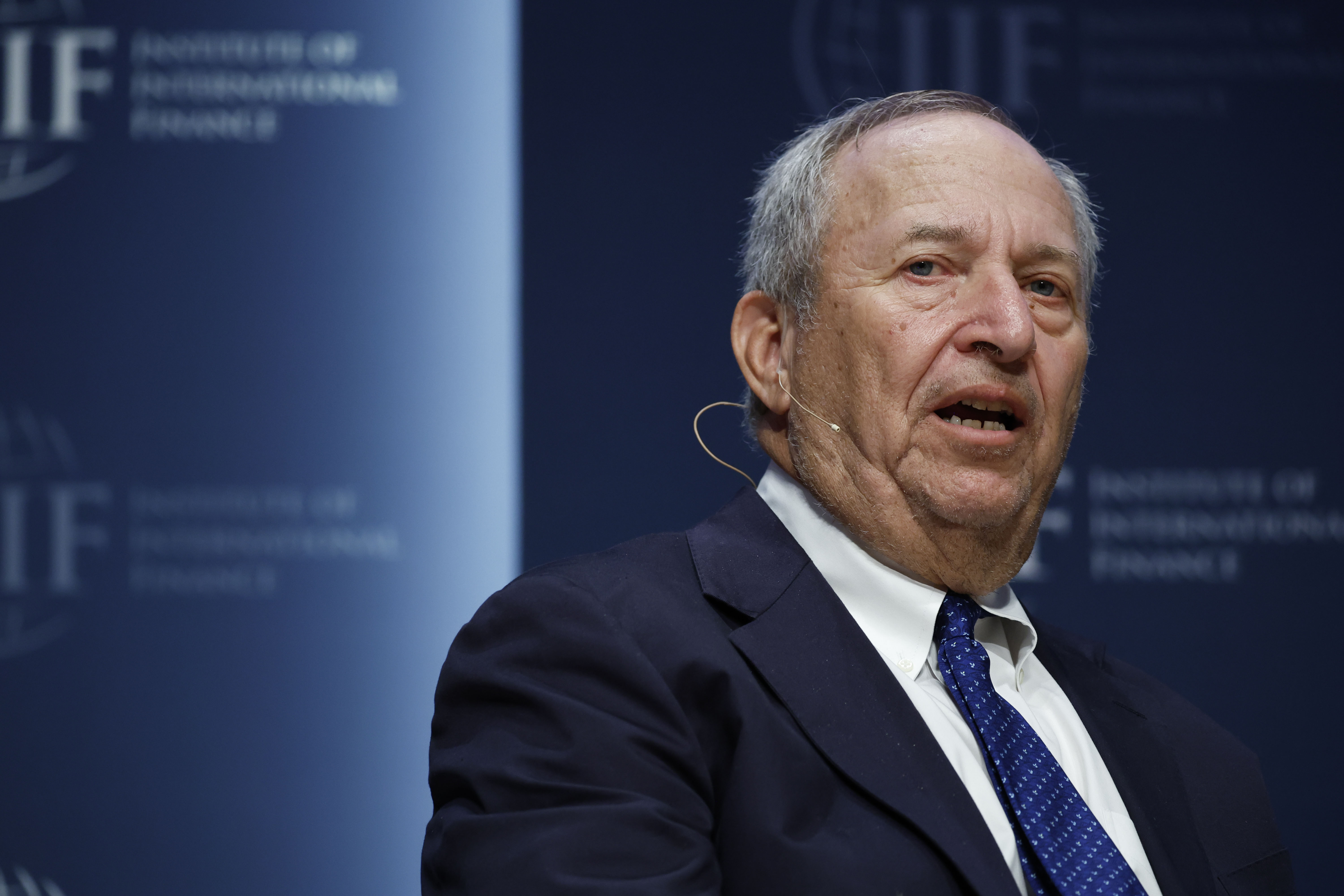
Former Treasury Secretary Lawrence Summers said that while the August employment report wasn’t particularly poor, it did make predicting the size of the Federal Reserve’s likely interest-rate cut this month a tougher call.
Amundi SA and First Eagle Investment Management are looking to raise as much as $5 billion for a new private credit strategy that will offer wealthy individuals in Europe, the Middle East and Asia access to private loans made to mid-size US companies.
In this video, Chuck Carnevale, Co-Founder of FAST Graphs, a.k.a. Mr. Valuation and Professor Nathan Mauck, Phd. are going to talk about how to approach dividend growth stocks-focusing on the health of the dividend, the growth of the dividend. Smart investing with research-driven principles.
Nvidia Corp. has wiped out more than $400 billion in value this week, weighing on key equity benchmarks as jitters spread over the health of the US economy and an AI trade that may have gotten ahead of itself.
As market sensitivity to economic data continues, investors would do well to consider active strategies amidst ongoing volatility.
After two days of record sales in the US blue-chip corporate debt market, another 11 companies are looking to sell bonds on Thursday, and demand for the securities is holding strong by key measures.
Former President Donald Trump’s proposals for targeted tax breaks are resonating with battleground-state voters, who overwhelmingly approve of his ideas to eliminate taxes on tipped income and retirement benefits.
Despite what you may have heard from the doomers, the US labor market is hardly falling apart at the seams. Layoffs are still extraordinarily low and a report Friday showed that the overall unemployment rate slipped to just 4.2%.
We think the decline in the S&P 500 Index on Tuesday may be more technical than fundamental.
The concept of portable alpha is over 40 years old. And while it has evolved through various forms over that time, it continues to be a valuable portfolio tool for institutional investors. Arguably, the most popular iteration right now is adding alpha expected from hedge funds on top of synthetic beta exposure.
Gold is typically an asset that doesn’t generate yield, but there are ETFs that deliver yield on a gold position through options.
OPEC+ is like a teabag – it only works in hot water. The late Robert Mabro, one of the savviest oil-market observers, liked to say the cartel only got the job done when it was under prolonged financial pain. To judge by its latest actions, OPEC+ has yet to realize it’s inside a warming kettle.
Most people see “blockchain” and “funds” in the same sentence and immediately think of pools of money betting on cryptocurrencies like Bitcoin and Ether. That isn’t how Singapore sees the utility of distributed ledgers.
US hiring fell short of forecasts in August after downward revisions to the prior two months, a development likely to fuel ongoing debate over how much the Federal Reserve should cut interest rates.
US Treasuries gained and traders ramped up their bets that the Federal Reserve will opt for a supersized interest-rate cut this month after a mixed report on the US labor market.
The world’s biggest asset manager is taking some chips off the table as markets enter a “new phase” of turbulence ahead of a Federal Reserve interest rate cutting cycle and the US presidential election.
In a recent discussion with Adam Taggart via Thoughtful Money, we quickly touched on the similarities between the U.S. and Japanese monetary policies around the 11-minute mark. However, that discussion warrants a deeper dive. As we will review, Japan has much to tell us about the future of the U.S. economically.
Money can still be a factor in inflation.
Candidate tax policies could affect municipal bonds, but the bigger picture is important too.