The 2011 U.S. reality television show Doomsday Preppers showed an uncommon side of life, spotlighting families that prepared to survive extreme, potentially fatal scenarios. Their plans included accumulating a surplus of food, fuel, and other essentials, all of which came at a cost.
Yes, we have banking problems. No, this is not 2008. It’s much more like the 1970s Savings & Loan problems.
If the Fed pauses, will that revive risk assets? Tom Nelson and Miles Sampson of Franklin Templeton Investment Solutions weigh in on the investment implications of the latest US central bank actions.
Today’s competitive landscape is creating an interesting opportunity for discussions between money managers and their small business owner clients looking to incorporate more technology-centric investments into their portfolios.
For this edition of Bull vs. Bear, Karrie Gordon and Nick Peters-Golden debated the long-term investing case for gold ETFs. Have the yellow metal’s fundamentals fundamentally changed?
Many investors are choosing to access bitcoin and broader crypto themes through traditional ETF wrappers due to their relative simplicity and familiarity.
Taking risks is no longer necessary to make a return on your savings.
Equities rise as jobs surprise the upside. The U.S. jobs market remains resilient as nonfarm payrolls beat expectations in April.
Portfolio Manager John Paul Lech explores the defining changes of the last three years and how they have informed his approach to the years ahead.
A direct repercussion of higher central bank policy rates is on the cost of capital for corporations and other issuers of debt. However, not all issuers feel the impact of higher rates at the same time, and we’re more cautious on asset classes that are experiencing higher interest costs sooner.
Key Takeaways
If there was a message the Federal Reserve (Fed) wanted to make clear after the end of the Federal Open Market Committee (FOMC) meeting on May 3, it was that it reserves the right to remain hawkish.
World economic growth is slowing. That’s so obvious, very few will disagree. I suppose there are people out there predicting imminent 1990s-like expansion, but they are few and far between. If recession begins soon, it will be the most anticipated one in history.
The U.S. regional banking crisis is intensifying as rising interest rates put smaller banks at risk, leading to significant losses in the sector. Amid the turmoil, gold and gold mining stocks may offer investors a potentially safer alternative to manage risk.
Japan’s business and government leaders have undertaken efforts to revitalize the country’s economy. Dina Ting, Franklin Templeton ETFs’ Head of Global Index Portfolio Management, discusses some of these positive developments.
This is part of a continuing series of analyze out loud videos prepared at the suggestion of subscribers to the FAST Graphs’ YouTube Channel on how to research stocks.
Since early March bonds and growth stocks have rallied, and for the first time since 2021 bonds have resumed their role as an equity hedge.
The big picture is that this week’s adjacent decisions by two major central banks point to a near-term divergence in policy paths between the US and Europe: the Fed is on hold and the ECB is still raising rates.
It is not yet clear when or if we’ll have a recession in 2023— but it has certainly been a challenging market environment, and with dislocation comes opportunity.
An investment in Comcast today offers the opportunity to more capital appreciation with a margin of safety, a dividend yield approaching 3%, and is growing rapidly.
On the heels of its 10th consecutive rate hike since March 2022, the Federal Reserve hedged its bets on pausing rate adjustments.
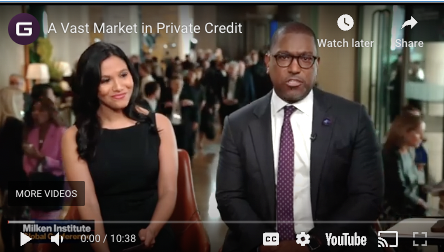
Anne Walsh, CIO of Guggenheim Partners Investment Management, joins Bloomberg TV from the Milken Global Conference to discuss the implications of ongoing issues in fixed income and how capital rationing favors private credit.
Along with identifying your goals and time horizon, assessing risk is a key part of building a holistic financial plan. And while affluent investors generally have higher risk tolerances, determining their individual risk profiles isn’t straightforward.
Investment Strategist Devon McKenna believes intermediate-maturity corporate bonds can offer a fresh value proposition that may help defend the segment against rallying rates and widening spreads.
I want to write a bit about artificial intelligence from the standpoint of a market person who knows little about technology.
Floating-rate bank loans tend to do well when conditions are just right: the Federal Reserve is raising rates and the economy is growing. But such conditions typically don’t last long.
Despite US efforts to de-escalate tensions with China and Chinese officials’ wariness of economic decoupling, attempting to restore trust between the two powers seems futile. In this increasingly fraught climate, fragmentation trumps cooperation, and the danger of a military conflict over Taiwan looms large.
With unanimity, the Federal Open Market Committee raised the Fed funds rate by 25 basis points in May and signaled that further tightening will depend on various economic factors.
The Fed raised short-term interest rates by another quarter percentage point today to a range of 5.00 – 5.25%, just like most analysts and investors expected. In addition, policymakers made changes to its official statement that hint that this rate hike might be the last of the cycle.
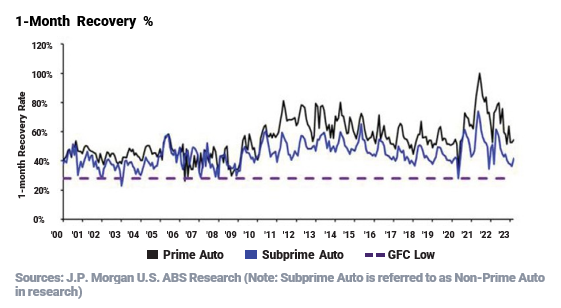
US subprime auto loans are highly stressed, with a new delinquency peak of 1.8%. Rising living costs, interest rates, lack of stimulus, negative equity, declining vehicle values, and rising rates are putting pressure on borrowers.
As the name implies, loss aversion is our instinct to not just prefer a gain over a loss but to prioritize avoiding losses over almost anything. It might sound wise to try avoiding losses but taking it too far could keep you from realizing your financial goals.
Leadership shifts at the sector and style levels warrant some additional caution, as well as a closer look as to what investors are buying when it comes to "growth vs. value."
Though equities have proven resilient, more of the long-expected effects of the Federal Reserve’s (the Fed’s) rapid interest rate-raising policy arrived in April.
Markets posted a strong first quarter, though it was a rollercoaster ride. The path forward will likely stay turbulent, with bank turmoil likely tightening credit conditions and the Fed still wrestling with inflation.
The big economic story today will be the end of the regular meeting of the Fed and what it decides to do about interest rates. Markets are expecting a 25 bp increase, to a range of 5 percent to 5.25 percent, with a slight bet on no hike at all.
In the early 2020s, the stock market looked much like basketball used to: a big man’s game. As examples, money management firms like Vanguard and Blackrock lumbered to higher heights of assets while the passive firms swallowed more market share.
We are one third of the way through 2023, and it has certainly been interesting in the bullion markets thus far.
Despite its commitment to curbing China’s geopolitical ambitions, the Biden administration has done little to counter the country’s expanding economic footprint in South America. Given the region’s crucial role in the fight against climate change, the US can no longer afford to take its southern neighbors for granted.
As of April 25, the Bloomberg U.S. Mortgage-Backed Security (MBS) Index was trading at an option-adjusted spread of 65 bps, which ranked in the 91st percentile since 2010. We believe moves in the asset class have been overdone and that current valuations present an opportunity.
Lending standards are a lot like carbon monoxide since they operate in the back ground. When the Senior Loan Officer Opinion Survey (SLOOOS) showed that banks significantly increased lending standards in the third quarter, no one on Wall Street noticed.
With markets sending mixed signals, see why it may make sense for equity investors to look at earnings and the impact of a recession.
For nine of the last fifteen years, few people thought about the Fed. Sure, we discussed QT and QE, but the Federal Reserve held interest rates at zero year after year.
Jerry Parker and I discuss the importance of mindset, and how it made him the only Turtle trader to succeed out of 20 that were all taught the same rules by the same trend-following legends.
The Fed is likely to lay the groundwork for a pause, and push back against an early pivot.
In the past three years, special purpose acquisition companies (SPACs) experienced stratospheric growth, became a manic bubble as sponsors raised new IPOs with a relentless fervor along with a market happy to oblige.
There have been glimmers of hope in 2023 that the inflation fixation of 2022 was a transitory phenomenon. In particular, the market has begun to more closely monitor jobs market data releases to try to spot signs of a labor market and wage slowdown.
The pandemic hurt small retailers by hastening the transition to digital commerce and emptied office buildings by turning living rooms into workspace. But it also fueled a warehouse building boom and unleashed a torrent of pent-up travel-and-leisure spending when economies reopened, underscoring the diversity of commercial real estate.
Next week also brings what could be a pivotal Federal Reserve policy meeting. We use this word “pivotal” to say an event is important. Taken literally, it means to turn in a different direction than you were previously going.
In life, there are things that we should be convicted and committed to. For example, the love for our families, spouses, and religious beliefs. We can also be convicted about other things, such as political ideologies, social issues, and environmental causes.
Cryptocurrency adoption in the U.S. increased amid fears of a full-blown banking crisis, a new poll finds. According to Morning Consult, 22% of Americans, over one in five, said they owned at least one form of crypto in April, representing a four-percentage-point increase from January.