Without a doubt, the number-one story in the financial markets of late has been the run-up in longer-dated Treasury (UST) yields. Indeed, headlines in both traditional and social media have centered on the fact that bond yields are now at levels not seen in nearly 20 years, or the time period right before the Financial Crisis hit in 2007.
The 30-year U.S. Treasury yield has touched roughly 5.3% in the past week, a level not seen in nearly two decades. Global counterparts in Europe, the U.K., and Japan have climbed to similar heights.
For the past five weeks, markets have been focused on a steady stream of corporate earnings, supported by upbeat management commentary and another quarter of strong results. But with second quarter 2026 earnings season nearing its end, investors' attention is shifting back to the macro backdrop.
Something strange has been happening in America lately. The Wall Street Journal says this is the summer when the U.S. became “a nation of Luddites.” The Economist calls it “the Summer of Ludd.”
U.S.-listed ETFs pulled in a record $193.42 billion in July, pushing year-to-date net inflows to $1.23 trillion. That total is the strongest seven-month haul on record, according to ETFGI’s July 2026 U.S. ETF industry report.
When it comes to equities exposure, investors typically gravitate toward a passive, market-cap-weighted index as the default strategy. These strategies are often billed as an efficient, low-cost method to capture broad market returns. As such, cap-weighted funds that track the S&P 500 or MSCI World have taken in trillions of dollars in global capital. However, within these market-cap-weighted indexes, a structural flaw exists.
The debt problem is real. It just isn’t a bomb. As we’ve written before, the debt and deficit problem isn’t what you think. It’s a tax on future growth, collected slowly, and normal interest rates are simply the price of money doing its job, not the crisis the headlines keep selling.
Most of us try to be mindful not to put all our eggs in one basket. But the now-familiar concern that most portfolios are quite concentrated in a relatively small group of large US tech companies means that investors may still be doing just that.
Today, the backdrop for real assets has reset. Growth is returning, but in different parts of the market than many investors remember. While in the post-pandemic period performance was defined by scale, now it is the result of adaptability and having access to a broad array of organization sizes and business plans.
The minutes from the most recent Federal Open Market Committee (FOMC) meeting, released this week, revealed a committee that remained broadly hawkish. Policymakers continued to characterize inflation as elevated and emphasized that upside inflation risks persist.
To some, the debate over inflation targeting is largely an academic exercise. But its outcome will have direct consequences for the paths of global interest rates and global markets. Some background on how we arrived at this juncture, and where we might go from here, follows.
In this video, Chuck Carnevale examines 20 fast-growing businesses that appear reasonably or attractively valued, focusing on the GARP principle—Growth at a Reasonable Price. The central message is that investors shouldn’t simply look for great companies; they should look for great businesses at sensible valuations.
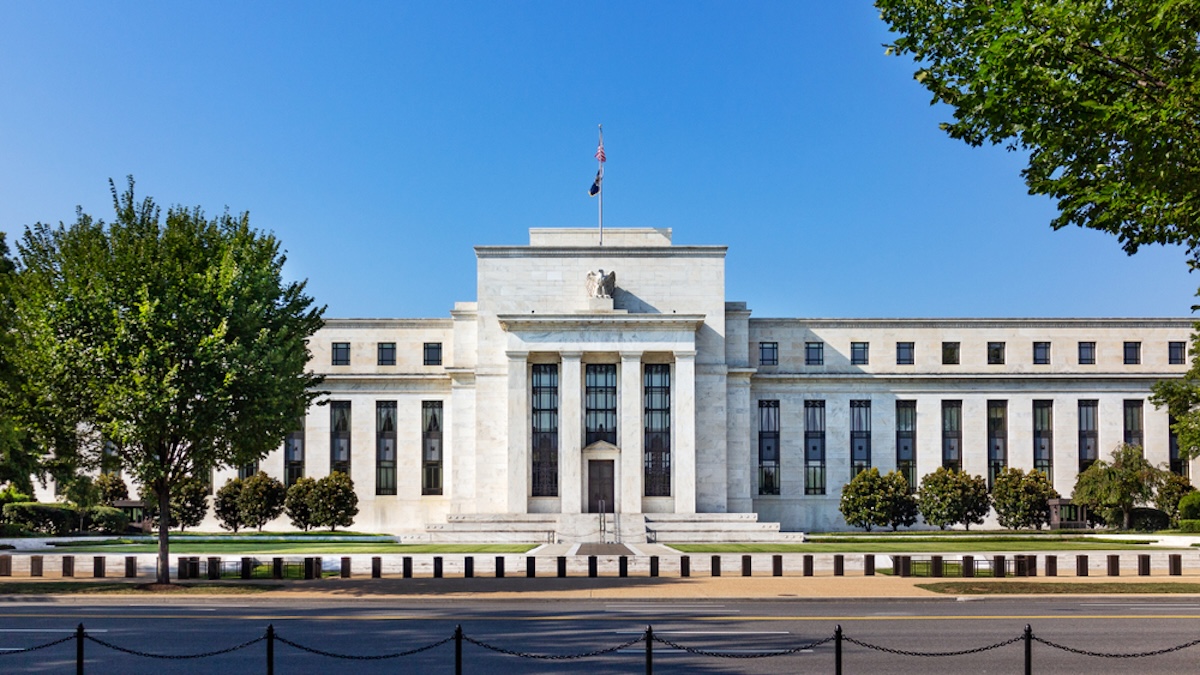
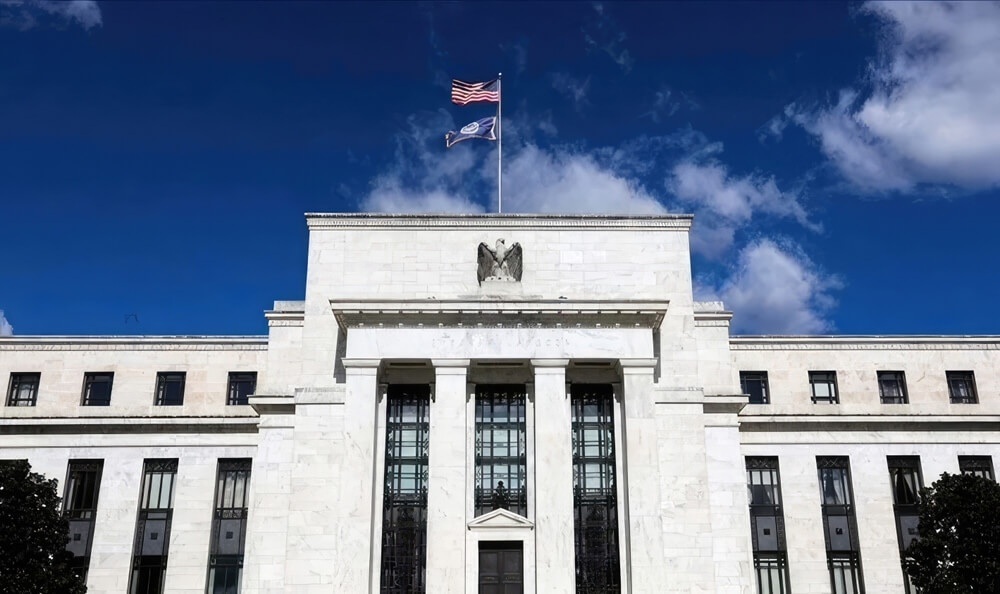
In the early weeks of Kevin Warsh’s start as chair of the U.S. Federal Reserve, there has been renewed focus on how “underlying” inflation should be measured to guide decisions on interest rates.
On the back of the White House’s cryptocurrency confab, which brought together policymakers and leaders of the digital asset community, Bitcoin notched a double-digit gain over August 19-20 — a rally that pumped new life into the largest digital currency.
For 11 of the 12 years following the 2008 financial crisis, U.S. stocks beat international markets. But that trend has flipped: Over the past four years, international equities have taken the lead.
Artificial intelligence is the topic of the day. It seems everyone has an opinion but not much actual factual knowledge. I’ve been dragging emails and research into my AI folder for a very long time. Today (and next week) I review those emails, as we are going to look at the reasons there is so much opposition to AI data centers.
The truth about the runaway costs of healthcare turns out to be a little more complex than any single source we've named. Hospitals, insurers, private equity, administrators, pharmaceutical companies… pull the thread on any one and we land in the same overextended, bloated, extractive system.
U.S. debt may not be at an immediate breaking point, but persistent deficits, higher rates, and rising interest costs are narrowing fiscal space and market tolerance.
GMO’s liquid alternatives are hedge fund strategies (e.g., equity long-short, global macro, event-driven) managed with an emphasis on risk control and liquidity. The GMO Alternative Allocation Strategy (“ALTA”) is a liquid alternative solution combining several underlying strategies; ALTA is available in a mutual fund with daily liquidity.
Morningstar's study, Mind the Gap 2026 reveals a 1.2% return gap. Learn how financial advisors can use automation to protect client wealth.
On August 19, the US Treasury announced that it will at least double the size of its long-term bond buybacks, from $2 billion to $4 billion per operation, between September 9 and the November Quarterly Refunding. The announcement followed a rise in the 30-year Treasury yield to roughly 5.3% and is drawing attention to how the Treasury may respond if pressure at the long end persists.
Outdoor sports and exercise are more difficult at the height of summer. Runners slow their paces, and teams start their practices early to beat the heat. Competitors must marshal their energy carefully to perform at their best.
Leading asset managers T. Rowe Price announced the acquisition of $19 billion F/m Investments in a press release Thursday afternoon. The deal brings F/m’s suite of leading fixed income strategies and ETFs into T. Rowe Price’s fund stable, reinforcing those areas in the latter’s list.
For years, Russell index reconstitutions have been treated as a routine maintenance event. Thousands of stocks are ranked, memberships are adjusted, and markets move on
High-yield municipal bonds are one of the best performing asset classes this year but that doesn't mean we think all investors should consider adding them to their portfolio.
After recovering from the “tariff tantrum” that saw stocks of all sizes and styles bottoming out in early April of 2025, equities finished 2025 in admirable shape, carrying the positive momentum into 2026.
The headline U.S. unemployment rate has been falling for several months, but a closer look at who is leaving the workforce – and who isn’t entering or returning to it – reveals why average wages are stagnating, and why labor markets aren’t a source of inflationary pressure.
For many of the past several years, investor enthusiasm has been concentrated in a narrow group of AI-related and technology stocks. As liquidity conditions tighten and speculation begins to recede, broader market fundamentals are gaining importance.
Our job is to lead our investors to success in the “winding.” Most investors in US common stocks have found their way on the most spectacular gravy train in the history of common stock investing. This gravy train has been terrific for 17 years since the stock market bottomed in 2009.
There’s new life in the gold market, and that momentum could represent a buying opportunity for bullion-enthused investors seeking income. The NEOS Gold High Income ETF (IAUI) is ready to meet the moment.
The 2026 midterms could reshape control of Congress, raising the odds of divided government and near-term market volatility, but investors should stay focused on long-term goals.
It has been a stellar Q2 earnings season, but we aren’t done yet. After the big retailers this week, Jensen Huang and NVIDIA grab the spotlight on Wednesday, August 26. Then Kevin Warsh takes the podium on the 28th. Through it all, daily market swings hinge on the latest AI developments, along with consumer trends and what’s happening geopolitically.
Market leadership has broadened beyond mega-cap tech, but the next phase is likely to reward disciplined, diversified investors, write Chris Galipeau and Lukasz Kalwak of Franklin Templeton Institute.
Hedged equity as a liquid alternative uses an options-based equity strategy — specifically Swan Global Investments’ Defined Risk Strategy (DRS), in continuous operation since 1997 — as a permanent alternatives allocation that stays invested in the equity market while actively managing downside risk through LEAPS put options
U.S. equities were mostly higher last week, though gains were modest and trading was quiet. The S&P 500, an index of the largest U.S. companies, rose 0.4 per cent and closed on Thursday at a new record high.
Investor appetite for fixed income continues to expand, as evidenced by the latest weekly ETF inflows report from TD Securities. For the week ending August 14, 2026, U.S.-listed ETFs gathered $41.0 billion in total weekly net inflows, which included $13.2 billion into fixed income funds.
Global business activity is showing signs of stabilization, but beneath the surface, the world economy remains divided. Growth momentum has improved in several major developed economies, led by a stronger U.S. expansion and a tentative recovery in parts of Europe.
Margin of safety has nearly vanished from today’s market, as heavy AI debt, off-balance-sheet financing, and a stressed bond market leave stocks little room for error.
Anthropic’s preliminary second-quarter results reignited enthusiasm across the artificial intelligence sector, lifting semiconductor stocks 1% on Monday despite broader tech sector declines. Q2 revenue topped $11.5 billion — a 14x surge year-over-year and more than 2x last quarter’s figures.
FactSet finds core clients still favor cheap funds, while active ETF buyers pay a premium for performance, a trade-off advisors should watch.
Learn how RAFI fundamental indexing offers an alternative to market-cap weighting in this interview with Rob Arnott and TMX VettaFi.
GMO has posted a new 7-Year asset class forecast for July 31, 2026.
With the US fiscal year 2027 (FY27) state budget season now largely complete, several important trends have emerged. Most states and local governments adopted their budgets without major delays or political impasses, an encouraging sign for two important credit considerations: governance and financial management.
BDC bonds have recovered most of their underperformance while equities continue to lag, suggesting investors are demanding a higher risk premium to compensate for uncertainty around portfolio valuations.
Gold’s outlook has brightened considerably following its first-half correction. Spot prices have rebounded to flirt with $4,400 per ounce, supported by renewed central-bank buying, softer economic data, and diminished expectations for further Fed tightening.
Equity markets continued to push higher this week, with nearly all major indices in the U.S. and abroad closing near or at record highs. While longer-term interest rates continued to drift higher, shorter-term interest rates moved lower as investors pushed out both the timing and magnitude of potential Federal Reserve rate hikes.
The biggest political news of recent months is the rise of the Democratic Socialists of America. We suppose this started in New York City, with the election of Mayor Zohran Mamdani, but it has spread to Michigan and other states.
The market continues to impress, with the S&P 500 reaching another record high despite a surprisingly weak retail sales report. I had to look twice at the numbers because the weakness was broad, including the important control group, with the previous month also revised slightly lower.
Governments can print money, but they cannot print credibility. Once investors begin to question a country's fiscal trajectory, borrowing costs rise, confidence erodes, and policy choices become increasingly constrained. The age of cheap debt allowed many governments to overlook these limits. Today, they are becoming harder to escape.
Discounted municipal bonds could expose you to unexpected taxes. Here's what to know before you buy.